Welcome back. In our previous lesson, we conducted a critical assessment of Pakistan's education system, diagnosing it as a crisis of both structural inequality and implementation failure. We saw how the gap between the constitutional promise of education and the reality on the ground creates profound challenges for human development. This lesson continues our exploration of governance and human development by turning to another fundamental area: public health.
Today, we will analyze the key challenges within Pakistan's public health and sanitation sectors and evaluate the effectiveness of current policies. Much like education, health outcomes are a direct reflection of state capacity and policy priorities. We will begin by outlining the scale of Pakistan's public health crisis. Then, we will delve into the critical role of water and sanitation, quantifying their immense economic and social costs. We will connect these issues to the broader failures of water governance before finally evaluating proposed reforms and a path forward.
Part 1: Anatomy of a Public Health Crisis
To understand the challenges, we must first define the scope of the problem. As a former Special Assistant to the Prime Minister on National Health Services, Dr. Zafar Mirza, explains, health is not merely the absence of disease but a state of complete physical, mental, and social well-being. By this measure, Pakistan is facing a profound public health crisis.
How to Address a Public Health Crisis in Pakistan | Dr. Zafar Mirza | TEDxSTMU
In this TEDx talk, Dr. Zafar Mirza provides a stark overview of Pakistan's public health situation, grounding the discussion in the World Health Organization's holistic definition of health.
Please watch the following segments to grasp the scale of the challenges: Defining Health: Begin by watching the introduction, from this point, where Dr. Mirza introduces the WHO's definition of health and frames the subsequent analysis. The Statistical Reality: Next, watch the crucial section from this timestamp. Pay close attention to the specific statistics he provides for key indicators: Child Stunting: 40% of children are affected. Immunization: A quarter of children are not immunized against preventable diseases. Communicable Diseases: The high prevalence of Hepatitis C and the persistence of Polio. Non-Communicable Diseases: The alarming rates of diabetes and hypertension. Mental Health: The prevalence of perinatal depression and childhood emotional problems.
The statistics presented by Dr. Mirza paint a grim picture of a system failing to deliver on its most basic functions. These are not isolated issues but symptoms of a deeper structural malaise. The scarcity of public health infrastructure is a major contributing factor.
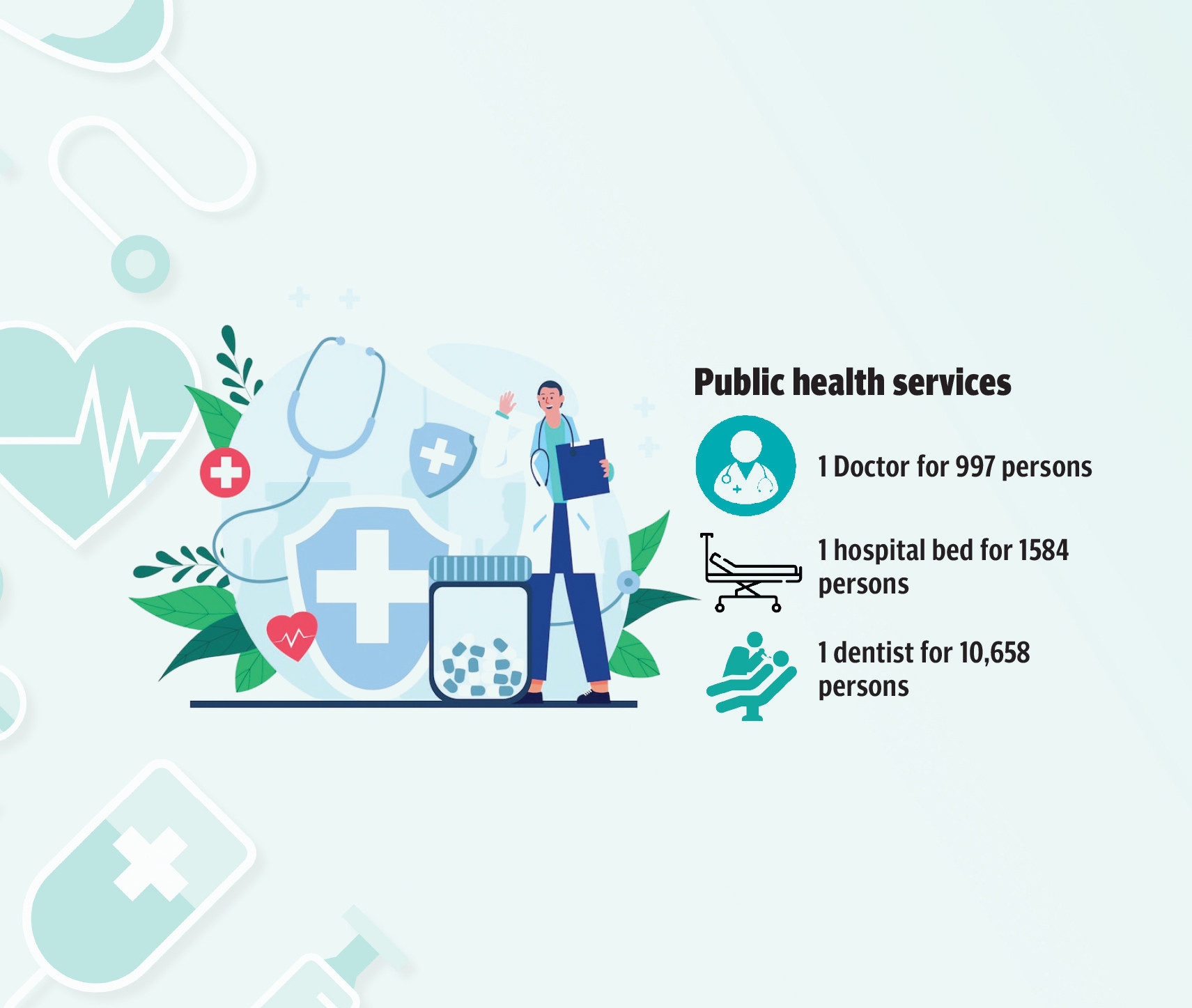
Dr. Mirza argues that the crisis is a result of fundamental misorganization and mismanagement. The state has created a system that prioritizes expensive, curative, tertiary-level hospitals over affordable, preventive, primary healthcare that is closer to the people.
How to Address a Public Health Crisis in Pakistan | Dr. Zafar Mirza | TEDxSTMU
Here, Dr. Mirza explains the core policy failure behind the crisis.
Watch his analysis from this segment. He highlights that Pakistan spends less than 1% of its GDP on health, with a staggering 70% of that funding going to tertiary care, leaving only 30% for the far more impactful primary healthcare sector.
This lopsided policy focus means that preventable diseases are not prevented, and manageable conditions are left to escalate until they require expensive and often inaccessible hospital care. A significant portion of this preventable disease burden stems directly from failures in sanitation and access to clean water.
Part 2: The High Cost of Poor Sanitation
Inadequate water, sanitation, and hygiene (WASH) are not just peripheral issues; they are central drivers of the public health crisis and impose a colossal burden on Pakistan's economy. A 2024 academic study from the NUST School of Social Sciences & Humanities provides a detailed cost-benefit analysis, putting a precise figure on this challenge.
[PDF] The Economic Cost of Inadequate Water and Sanitation in Pakistan
This 2024 paper is essential for a high-level exam answer, as it provides the specific data needed to quantify the problem. It translates public health failures into tangible economic losses.
Please read the following sections to build a data-driven understanding of the WASH crisis: The Big Picture: Start with the Abstract (page v). The key takeaway is that inadequate WASH costs Pakistan 1.91% of its GDP annually (PKR 910.40 billion / USD 4.96 billion). The Human Dimension: Read the Introduction (pages 1-2) to understand the disparity in access. Note that while 98% of the richest have basic water services, only 78% of the poorest do. For sanitation, the gap is even starker: 97% versus 30%. The Health Costs: Focus on the section on Health-Related Impacts (pages 4-7). This details the link between poor sanitation and major diseases like diarrhea, Acute Respiratory Infections (ARIs), and malaria. The Broader Costs: Review the sections on Water-Related Impacts and Welfare-Related Impacts (pages 8-11). These sections quantify costs beyond direct healthcare, such as households paying for bottled water and the time lost fetching it. Crucially, it highlights the impact on women and school absenteeism. The Breakdown: Finally, examine Table 5.1 ("The Overall Economic Impact") and the accompanying text (pages 29-34). This provides a detailed breakdown of the costs across the health, water, welfare, and tourism sectors.
The data from this study provides a powerful analytical framework. The health crisis is not just a social tragedy; it is an economic disaster. The hundreds of billions of rupees lost annually to treating preventable diseases and to lost productivity represent a massive drain on national resources that could otherwise be invested in development.
Part 3: Water Governance as a Public Health Failure
The challenges of sanitation and clean water are, at their core, a crisis of governance. This is not simply about a lack of water, but about the inequitable, opaque, and failing systems that manage it. A forward-looking analysis in Dawn from late 2025 projects how these long-simmering issues are set to converge into a full-blown national security and public health emergency.
2025 — Pakistan’s year of water wars - Pakistan - DAWN.COM
This article frames the water crisis not as a future threat but as a present reality where systemic governance failures are having devastating public health consequences.
Please read the following sections to connect water governance directly to health outcomes: Systemic Failures Exposed: Read the section From extremes to failures. Note how floods are no longer just "natural disasters" but "systemic stress tests" that contaminate drinking water sources and trigger disease outbreaks. A Public Health Emergency in Sindh: Continue to the section on Sindh. This is a critical case study showing how an irrigation crisis directly "morphed into a public health emergency," with rising water-borne diseases. The Governance Verdict: Finally, read the section discussing the Asian Development Bank's report, The question of water governance. The key conclusion is that Pakistan's crisis is less about scarcity and more about poor governance, with "rural water security... marked by poor water quality, limited piped supply, sanitation deficits, and a high burden of water-borne disease."
As the Dawn analysis and the commentary in the World Times video on the water crisis make clear, Pakistan's lack of a coherent, holistic national water policy is a central cause. This policy vacuum allows for mismanagement, exacerbates inter-provincial disputes, and ultimately leaves public health and sanitation as collateral damage. The issue becomes a self-reinforcing cycle: poor water management leads to health crises, which in turn place further strain on a fragile economy, leaving even fewer resources to invest in the necessary infrastructure and governance reforms.
Part 4: Evaluating Policies and Pathways to Reform
Given the scale of the crisis, what are the solutions? Evaluating policy requires us to look at both what is being done wrong and what could be done right.
As we've established, the current policy of prioritizing tertiary care is a primary failure. Effective reform must begin with a strategic shift in this mindset. Dr. Zafar Mirza proposes a comprehensive five-point agenda to reorient the entire system towards public health.
How to Address a Public Health Crisis in Pakistan | Dr. Zafar Mirza | TEDxSTMU
In this final segment of his talk, Dr. Mirza lays out a clear and actionable framework for reform.
Please watch his proposed solutions from this clip. He outlines five key pillars for change: Mindset Change: Re-prioritizing primary and preventive care. Universal Health Coverage (UHC): Providing an essential package of services and financial protection for all citizens. Strengthening Primary Healthcare: Investing in Basic Health Units (BHUs), Rural Health Centers (RHCs), and Lady Health Workers. Protecting Against Health Risks: A "health in all policies" approach that tackles root causes like unsafe drinking water and pollution. Public-Private Partnerships: Mobilizing the not-for-profit sector to support government efforts.
This proposed agenda aligns perfectly with the evidence we have reviewed. The economic case for these reforms is undeniable. Investing in primary care and WASH is not a cost, but a high-return investment.
[PDF] The Economic Cost of Inadequate Water and Sanitation in Pakistan
Let's revisit the 2024 academic paper to see the quantified benefits of the very interventions Dr. Mirza advocates for.
Please read two final sections from this paper: Economic Benefits of Interventions: Read the section titled Economic Benefit from Water, Sanitation, and Hygiene (WASH) Interventions (pages 34-36). The numbers are staggering: targeted WASH interventions could generate economic gains of over PKR 1.8 trillion, far exceeding the costs. Policy Implications: Conclude by reading the Policy Implications section (page 38), which recommends behavior change campaigns and investments in improved sanitation and water quality as top priorities.
The policy imperatives for 2026 outlined in the Dawn article reinforce this agenda, calling for water quality to be elevated to a "public health emergency" and for water access to be anchored in social justice and upheld as a fundamental right.
Conclusion
Our analysis of Pakistan's public health and sanitation sectors reveals a multi-layered crisis rooted in decades of policy mismanagement and governance failure. It is a crisis with profound human consequences and staggering economic costs, undermining the nation's development potential.
- Key Takeaways:
- Pakistan's health sector is defined by poor outcomes and a structurally flawed policy that over-funds expensive curative care while neglecting cost-effective preventive and primary healthcare.
- Inadequate sanitation and access to safe water are primary drivers of this crisis, costing the economy nearly 2% of its GDP annually through direct health expenses and lost productivity.
- These challenges are symptoms of a deeper failure in water governance. Inequitable systems, a lack of holistic policy, and poor infrastructure management turn water, a source of life, into a vector for disease.
- Effective reform requires a radical shift in priorities. The path forward involves implementing Universal Health Coverage, strengthening primary healthcare, and adopting a "health in all policies" approach that treats water quality as a public health and national security imperative.
In our next lesson, we will shift our focus from human security to state security as we evaluate the National Action Plan, examining its objectives, implementation record, and impact on Pakistan's complex security landscape.