Welcome to the next stage of our course. In our previous lesson, we confronted the harrowing human cost of Partition, focusing on the "ethnic cleansing" in Punjab and the mass displacement that tore a centuries-old society apart. That tragedy, however, was not the end of the story but the violent birth of a new one.
Today, we will analyze the formidable challenges that threatened the very existence of the newly created state of Pakistan between 1947 and 1949. This period, often called Pakistan's "trial by fire," is a recurring theme in CSS examinations, which frequently ask candidates to assess the crucial initial years of the nation. We will dissect three interconnected existential threats: the complete collapse of the administrative machinery, the overwhelming refugee crisis, and the profound ideological struggle that culminated in the Objectives Resolution of 1949.
The Challenge of State-Building: An Administrative Vacuum
Pakistan was born into a void. Unlike India, which inherited the established capital of New Delhi and the entire machinery of the central government, Pakistan had to build its state from the ground up. The challenges were staggering and immediate.
- A Capital Without a Home: Karachi was chosen as the capital, but it was a provincial city, completely unprepared to house a federal government. There was a desperate shortage of office buildings, residences for officials, and basic infrastructure. Government work began in makeshift barracks and requisitioned buildings.
- A Skeleton Bureaucracy: The civil service, the "steel frame" of the British Raj, was fractured. Most senior Hindu and British officers opted to stay in India. Pakistan was left with only around 100 experienced officers from the Indian Civil Service to run the entire country. Files, records, and even furniture were scarce.
- Financial Crisis: The new state was virtually bankrupt. India was slow to release Pakistan's share of the British Indian government's cash balances, withholding crucial funds at a time of extreme need. The Reserve Bank of India, which temporarily served both dominions, was also accused of obstructing Pakistan's financial operations.
Against this backdrop of near-total collapse, the leadership under Quaid-e-Azam Mohammad Ali Jinnah had to perform the monumental task of creating a functioning state.
THE DAWN OF PAKISTAN - DAWN.COM
This feature from Dawn highlights the foundational steps taken to establish the new state's administrative and financial structures.
First, read the brief section under the heading "ENTER THE GOVERNOR-GENERAL," focusing on the part that lists the cabinet members. This shows the immediate formation of a government. Then, scroll down to the section "PIECING TOGETHER PAKISTAN" and read the text beside the images of Jinnah consulting with Liaquat Ali Khan and inaugurating the State Bank. Pay close attention to the paragraphs describing Jinnah's role in steering national policy and the symbolic and practical importance of establishing the State Bank on July 1, 1948, ahead of the deadline.
The establishment of the cabinet, the reorganization of the civil service with the few available officers, and the creation of the State Bank were critical first steps. These actions were not just administrative; they were powerful assertions of sovereignty, signaling that despite the chaos, a state was indeed taking form.
The Deluge of Humanity: The Refugee Crisis
Simultaneously, Pakistan was being inundated by a sea of desperate and dispossessed people. The violence in East Punjab, Delhi, and other parts of India had sent millions of Muslims fleeing for their lives towards a "promised land" that was itself struggling to be born.
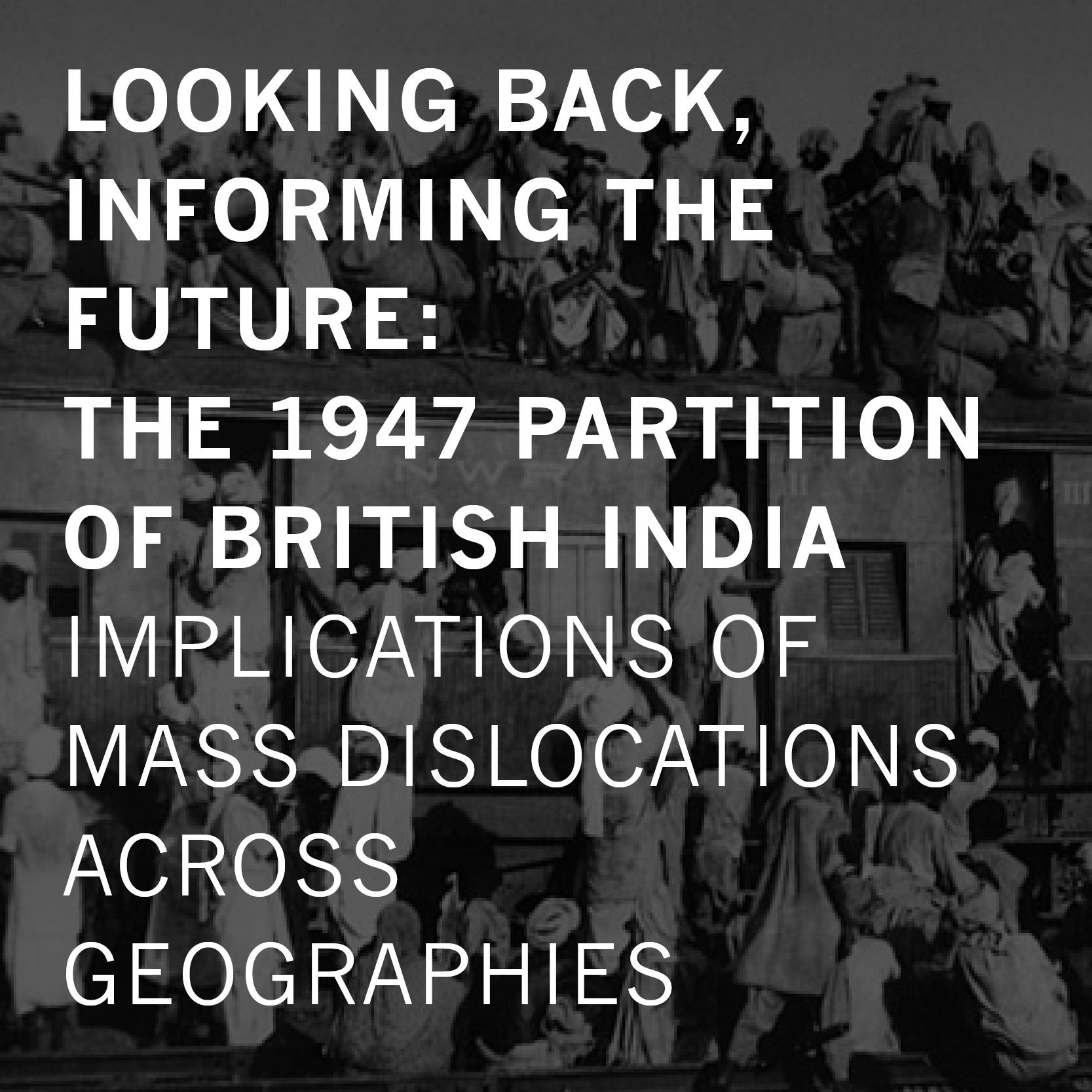
The scale of the crisis is difficult to comprehend. The new nation had to absorb a refugee population that amounted to over 10% of its existing population, all within a matter of months.
THE DAWN OF PAKISTAN - DAWN.COM
This article provides stark figures and descriptions of the refugee crisis, which overwhelmed the nascent state.
Start at the very beginning of the article to grasp the overall scale of displacement and death. Next, find the section "DELHI AUGUST 1947." Read about how the violence in Delhi transformed historical sites into refugee camps and led to a massive exodus, with hundreds of thousands fleeing to Pakistan. Finally, review the section titled "HOLOCAUST," particularly the subsections "EXODUS" and "A PUNJAB TORN ASUNDER." Focus on the descriptions of the population exchanges, the violence against refugee trains, the destruction in Lahore and Amritsar, and the exodus from Sindh, which was initially peaceful but later succumbed to violence.
The arrival of these millions of muhajirin (migrants) placed an unbearable strain on Pakistan's non-existent resources.
- Humanitarian Catastrophe: Providing food, shelter, and medical care for millions of destitute and traumatized people was a task beyond the capacity of any government, let alone one that was just days old. Refugee camps sprung up everywhere, particularly in the cities of Punjab and Sindh.
- Economic Strain: The economy was crippled. The refugees were mostly destitute, having left everything behind. Their resettlement and rehabilitation required enormous expenditure, which the government simply did not have.
- Social Upheaval: The influx of refugees changed the demographic and social fabric of Pakistan, especially in urban centers like Karachi, whose population exploded. This led to tensions over housing, resources, and the allocation of "evacuee property" left behind by fleeing Hindus and Sikhs.
Managing this crisis was Mian Iftikharuddin's responsibility as the first Minister for Rehabilitation of Refugees. His efforts, though monumental, were inevitably dwarfed by the sheer scale of the tragedy. The successful absorption of millions of refugees, while fraught with difficulty and pain, remains a testament to the resilience of both the people and the nascent state.
The Soul of the State: The Objectives Resolution (1949)
Having navigated the immediate crises of administration and refugees, Pakistan's leaders faced a more profound question: What was the ideological foundation of this new country? Was it to be a secular democracy that happened to have a Muslim majority, or was it to be an Islamic state?
This debate pitted two powerful visions against each other:
- The Modernist Vision: Championed by Quaid-e-Azam himself, most famously in his speech of August 11, 1947, where he declared, "You are free to go to your temples, you are free to go to your mosques... that has nothing to do with the business of the state." This vision implied a modern nation-state with equal citizenship for all, regardless of faith.
- The Islamic State Vision: Advocated by the Ulema (religious scholars) and various Islamic parties, many of whom had ironically opposed the creation of Pakistan. They now demanded that the new country be governed explicitly according to Islamic law (Sharia).
In March 1949, Prime Minister Liaquat Ali Khan attempted to bridge this divide by presenting the Objectives Resolution to the Constituent Assembly. This document was intended to serve as a guiding framework for the future constitution.
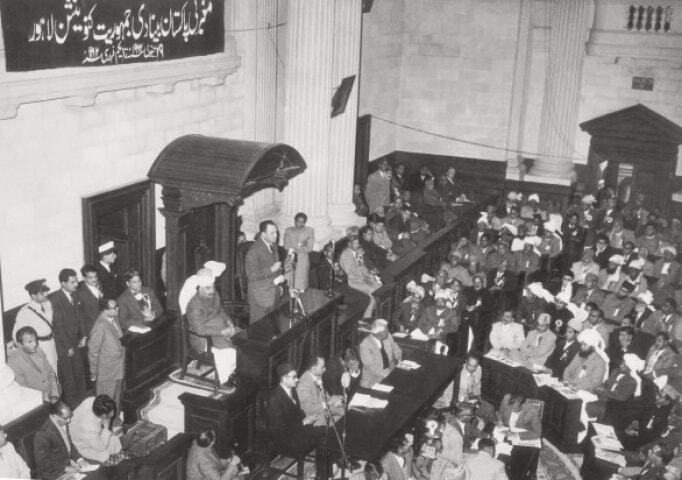
The Resolution was a masterful, if controversial, act of political compromise. To understand how it attempted to satisfy both modernists and religious conservatives—a key point for CSS analysis—let's examine its core tenets.
From Modernist Vision To Conservative Dogma: The Evolution Of Pakistan’s State Ideology
This analysis by Shakil Akhtar Rai for The Friday Times is crucial for understanding the ideological compromise at the heart of the Objectives Resolution.
Please read the first three paragraphs of the article under the subheading "Ideology Takes Shape." Focus on how Liaquat Ali Khan introduced the Resolution and how modernist scholars at the time interpreted it as a unifying force, not a theocratic code.
The Objectives Resolution declared that:
- Sovereignty over the entire universe belongs to Allah Almighty alone, and the authority which He has delegated to the State of Pakistan is a sacred trust.
- The principles of democracy, freedom, equality, tolerance, and social justice, as enunciated by Islam, shall be fully observed.
- Muslims shall be enabled to order their lives in accordance with the teachings of Islam.
- Adequate provision shall be made for the minorities to profess and practice their religions and develop their cultures.
- Fundamental rights shall be guaranteed for all citizens.
- The judiciary shall be independent.
The Resolution was a delicate balancing act.
- For the religious groups, the declaration of God's sovereignty was a major victory. It affirmed the state's Islamic character.
- For the modernists, the inclusion of terms like "democracy," "fundamental rights," and an "independent judiciary" seemed to safeguard the structure of a modern state.
However, this compromise was contentious from the start. Non-Muslim members of the Assembly, like Sris Chandra Chattopadhyaya, argued vehemently that making God's sovereignty the foundation would inevitably turn minorities into second-class citizens and mix religion with politics. This debate highlights the central tension that has defined Pakistan's constitutional history. As the article you just read states, the state has been "appeasing and retreating in the face of conservative orthodox forces since the adoption of the Objectives Resolution." Though initially a preamble, its principles were later made a substantive and legally enforceable part of the Constitution by General Zia-ul-Haq, demonstrating its enduring and powerful legacy.
Conclusion
The period from 1947 to 1949 was one of existential struggle for Pakistan. The nation's survival was far from guaranteed. Key takeaways from this lesson are:
- Survival Against Odds: Pakistan was born into administrative and financial chaos, lacking the basic machinery of a state. Its leadership, under Jinnah, had to create a government from scratch while facing immense internal and external pressures.
- The Defining Human Crisis: The refugee crisis was the single greatest immediate challenge. The state's ability to absorb millions of destitute people, while imperfect, was a crucial factor in its survival.
- The Ideological Compromise: The Objectives Resolution was a foundational document that attempted to define Pakistan's identity. It created a hybrid framework, combining principles of Islamic morality with the structures of Western democracy. This compromise, however, sowed the seeds of a long-standing and unresolved debate about the role of religion in the state.
Having survived these initial challenges and laid down a tentative ideological roadmap, Pakistan embarked on the long and arduous journey of drafting its first constitution. In our next lesson, we will analyze why this process was so delayed, exploring the contentious debates over federalism, representation, and the very Islamic principles enshrined in the Objectives Resolution that dominated the political landscape from 1947 to 1956.