Introduction
Welcome to our next lesson. In our previous discussion, we deconstructed the structural impediments holding back Pakistan's agricultural sector. We concluded that despite its foundational role, a web of water, input, and policy issues has created a persistent gap between its potential and actual performance. This analysis of the primary sector naturally leads us to scrutinize the secondary sector: industry.
Today's lesson directly addresses the learning outcome: Evaluate the structural and policy-related problems hindering Pakistan's industrial sector and formulate evidence-based recommendations. This is a frequent and critical topic in CSS examinations, as seen in the 2021 paper which asked candidates to "Highlight the main problems in the industrial sector of Pakistan and also suggest measures for its improvements."
Our goal is to move beyond a simple list of issues. We will diagnose the deep-seated, structural reasons why Pakistan has struggled to achieve robust, export-led industrialization, a path followed by nearly all successful emerging economies. We will explore why the country's economic trajectory has often been characterized by a consumption-driven "boom-bust" cycle rather than sustained, industry-powered growth. Finally, we will synthesize a coherent reform agenda based on authoritative, contemporary analysis.
The Stagnation of Pakistan's Industrial Engine
At the heart of Pakistan's economic challenges lies a fundamental structural imbalance. Unlike many East Asian economies that transitioned smoothly from agriculture to manufacturing and then to services, Pakistan experienced what can be termed a "premature deindustrialization." The country largely leapfrogged from an agrarian base to a service-based economy, leaving its industrial sector underdeveloped and its share of GDP stagnant for decades.
The consequence is an economy reliant on consumption, often financed by remittances and debt, rather than on the sustainable engine of industrial exports. This fuels a recurrent cycle: economic growth accelerates, imports surge to meet consumption demand, foreign exchange reserves deplete, and the country faces a balance of payments crisis, forcing a painful economic slowdown.
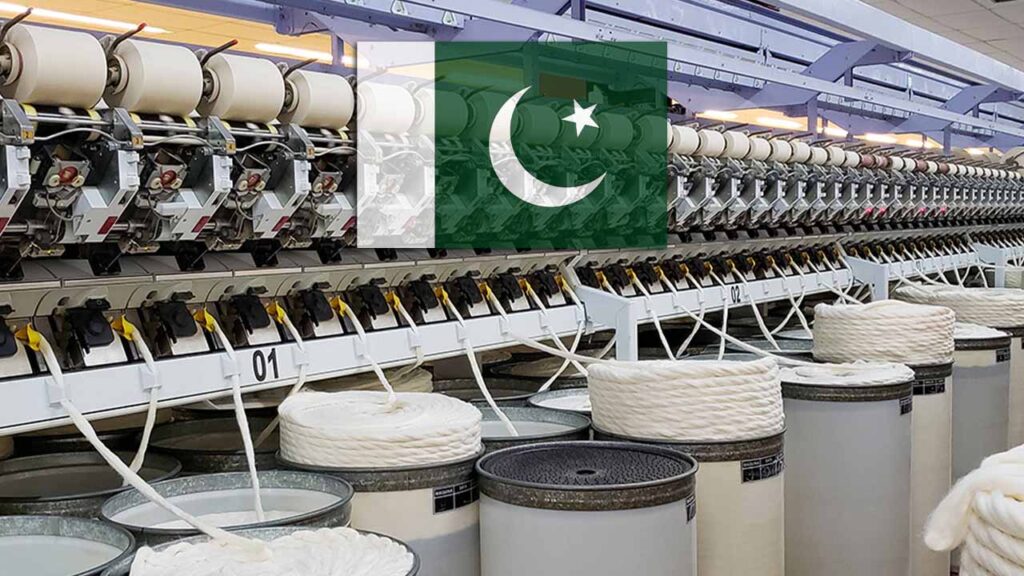
The performance of the industrial sector is not uniform. Recent data shows a mixed picture, where some sub-sectors show resilience while others, particularly the most critical ones for a modern economy, are faltering.
[PDF] updated-Industrial-Structure-Deficit-16-04-2024.pdf - IPRI
To understand this nuanced picture, we will consult a detailed 2025 analysis from the Islamabad Policy Research Institute (IPRI). This paper provides a granular breakdown of the industrial sector's performance.
First, please read the section titled "Pakistan Industry Sector" up to the end of the first paragraph. This sets the stage. Then, review the summary of performance and the data in Table 5. Pay close attention to the paragraph analyzing the components, from the analysis. Note the stark contrast between the strong growth in Small-Scale Manufacturing (SSM) and Slaughtering versus the near-zero growth of Large-Scale Manufacturing (LSM) and the significant contraction in the Electricity, Gas, and Water Supply sector. This data is crucial for appreciating that the problem is not a simple industrial collapse, but a deep structural malaise in its most vital components.
The IPRI paper's data clearly shows that while locally-oriented SSM is robust, the engine of modern industrialization, LSM, has stalled. This stagnation, coupled with the crisis in the energy sector, is a primary symptom of the underlying structural diseases we will now diagnose.
Diagnosing the Structural and Policy Pathologies
The weakness of Pakistan's industrial sector is not a recent phenomenon nor is it due to a single cause. It is the result of a complex interplay of distortionary policies, capital constraints, infrastructure deficits, and low firm-level productivity.
1. Policy-Induced Distortions: The Anti-Export Bias
For decades, Pakistan's trade policy has been highly protectionist, creating a strong "anti-export bias." This means the policy framework inadvertently makes it more profitable for firms to sell to the protected domestic market rather than compete globally. The primary tool for this has been a complex and high tariff structure.
The World Bank's 2025 Development Update provides a definitive analysis of this problem, detailing how layers of customs duties and para-tariffs have damaged industrial competitiveness.
Pakistan-Development-Update-Staying-the-Course-for-Growth-and-Jobs-October-2025.pdf
This report is essential for understanding how flawed trade policy has directly undermined the industrial sector's export potential.
First, read the introductory section of "Powering Growth Through Exports," from the introduction. This will frame the core argument about the US$60 billion "export gap." Next, focus on the sub-section "Tariff reform to lower the cost of inputs for exporters and reduce anti-export bias." Read from the historical overview. Pay special attention to Figure 4.15, which shows that a 1% increase in upstream protection (tariffs on inputs) is associated with a 0.6% decline in downstream productivity. This is a powerful, evidence-based link between policy and performance.
This protectionist stance not only raises costs for exporters who need to import raw materials and machinery but also shields domestic firms from the international competition that drives innovation and efficiency. The result is a low-productivity trap from which it is difficult to escape.
2. Capital and Financial Constraints
A modern industrial sector requires vast amounts of capital, both for short-term operations (trade finance) and long-term investment in technology and capacity. Pakistani firms face severe constraints on both fronts.
-
Crowding Out and Limited Access to Finance: The World Bank report highlights a critical issue: massive government borrowing to finance fiscal deficits "crowds out" the private sector. Banks find it easier and safer to lend to the government than to businesses. As a result, credit to the private sector in Pakistan is drastically lower than in comparable economies. This is compounded by the recent phasing out of subsidized Export Finance Schemes (EFS), which, despite their flaws, were a crucial lifeline for many exporters.
-
Lack of "Patient Capital": The IPRI analysis points to a deeper issue: an over-reliance on short-term commercial bank loans. The country lacks a developed ecosystem for long-term financing—such as corporate bonds, development finance institutions, and venture capital—that can fund the large-scale, long-horizon investments needed for industrial upgrading.
-
Misaligned Foreign Direct Investment (FDI): Paradoxically, the econometric analysis in the IPRI report finds that FDI has had a negative long-run impact on industrial value-added in Pakistan. The report suggests this is because FDI has often been misaligned, focusing on non-productive sectors, establishing import-intensive operations that do not build local supply chains, or simply extracting profits without meaningful technology transfer.
3. Foundational Infrastructure Deficits
Even with sound policies and available finance, industry cannot function without reliable and affordable foundational inputs.
- The Energy Crisis: As noted in both the World Bank and IPRI reports, the high cost and unreliability of electricity is a crippling constraint. The World Bank report (Figure 4.31) shows that industrial electricity prices in Pakistan are significantly higher than in competitor countries like India and Bangladesh. The IPRI paper identifies the energy sub-sector's deep contraction as a major drag on all industrial activity.
Structural Reforms in Pakistan's Economy By Arslan Zahid Khan| #arslanzahidkhan
The energy crisis is perhaps the most widely discussed impediment. This video provides a concise explanation of the problem and the proposed shift towards renewables.
Please watch the segment from the discussion on Pakistan's energy problem. The speaker frames it as a dual crisis of being both expensive and unsustainable, highlighting the immense potential of solarization to provide a vital boost to the industrial sector.
- Weak Logistics and Trade Facilitation: Competitiveness in the 21st century is about speed and reliability. Here, Pakistan lags severely. The World Bank report notes that customs and logistics bottlenecks remain a major constraint, with firms reporting that it takes nearly twice as long to handle import/export compliance compared to peer countries. This inefficiency directly translates into higher costs and lost business.
4. Firm-Level Technological Stagnation
The final piece of the puzzle lies at the firm level. Shielded from competition and starved of capital, many Pakistani industries have failed to invest in technology and human capital, locking them into producing low-value-added goods.
- Low R&D and Productivity: The IPRI report identifies "neglected technology and low productivity" as a core burden. There is a critical need to foster linkages between academia and industry to drive innovation.
Structural Reforms in Pakistan's Economy By Arslan Zahid Khan| #arslanzahidkhan
This clip illustrates the importance of research and development (R&D) with a concrete example from the textile sector.
Watch the section on high-tech manufacturing and R&D. The example of the National Textile University developing fiber from banana peels for export-grade shirts powerfully demonstrates how targeted R&D can create high-value products and enhance competitiveness.
- Inefficient State-Owned Enterprises (SOEs): A significant portion of the industrial landscape has been occupied by large, inefficient, and loss-making SOEs like Pakistan Steel Mills. These entities are not only a massive drain on the national budget but also distort the market and crowd out more efficient private players.
A Reform Agenda for Industrial Revival
Formulating recommendations requires a holistic approach that simultaneously addresses the interconnected problems we have diagnosed. The IPRI and World Bank reports provide a clear, evidence-based roadmap.
[PDF] updated-Industrial-Structure-Deficit-16-04-2024.pdf - IPRI
The IPRI paper concludes with a comprehensive set of actionable policy recommendations and a detailed "Action Matrix." This provides an excellent framework for structuring an answer on this topic.
Please read the list under "Policy Recommendations". Then, skim the "Action Matrix" that follows, noting how it organizes solutions by area (e.g., Global Competitiveness, Industrial Decarbonization) and assigns actors and timelines. This matrix is a superb template for a well-structured policy response in an exam.
Synthesizing the recommendations from our resources, a comprehensive reform agenda emerges with four key pillars:
1. Reorienting Trade and Investment Policy:
- Implement the National Tariff Policy: This is the single most critical step. Staying the course on the five-year plan to reduce and simplify tariffs, especially on raw materials and intermediate goods, is essential to reduce costs and dismantle the anti-export bias.
- Align FDI with National Goals: Shift from a passive acceptance of all FDI to actively promoting investment that brings technology, supports local value chains, and targets high-growth export sectors.
2. Fixing the Financial and Institutional Architecture:
- Fiscal Consolidation: Reduce the budget deficit to stop the crowding out of private sector credit. This is a prerequisite for making capital available for industrial investment.
- SOE Privatization: Address the drain from loss-making SOEs. The "Thatcher Privatization Model" mentioned in the video resource offers a historical precedent for turning such entities from liabilities into revenue-generating, efficient private companies.
- Operationalize the EXIM Bank: The new EXIM Bank must be fully capacitated to fill the gap left by the old export finance schemes, offering innovative and accessible trade finance products, especially for SMEs and new exporters.
3. Upgrading Foundational Infrastructure:
- Energy Sector Reform: The priority is to provide cheap and reliable electricity. This involves improving the management of distribution companies (DISCOs), implementing cost-reflective tariffs, and aggressively expanding renewable energy sources, particularly solar.
- Modernize Logistics: Fully implement the WTO Trade Facilitation Agreement and the Pakistan Single Window to digitize and streamline customs, reducing time and cost for traders.
4. Investing in Firm-Level Productivity:
- Promote R&D and Technology Adoption: Foster academia-industry linkages and provide incentives for firms to invest in modern machinery and green technologies. This is key to moving up the value chain from basic commodities to complex, high-value goods.
- Skill Development: Launch national programs to close the skills gap, ensuring the workforce is equipped for a modern industrial economy. This turns the "labour force" from a negative to a positive contributor to industrial value.
Conclusion
The challenges confronting Pakistan's industrial sector are structural, deep-rooted, and mutually reinforcing. A protectionist policy environment has fostered a low-productivity, inward-looking industrial base, starved of capital by fiscal imbalances and hampered by a severe energy crisis and weak logistics. The result has been a failure to develop a powerful export engine, leaving the economy vulnerable to perennial boom-bust cycles.
Key Takeaways:
- Structural Deficit: Pakistan's industry suffers from a "structural deficit," having been largely bypassed in the country's economic transition from agriculture to services.
- Core Problems: The key impediments are:
- Policy Distortions: A high and complex tariff structure has created a strong anti-export bias.
- Capital Constraints: Government borrowing has crowded out private credit, and a lack of long-term "patient capital" has stifled investment.
- Infrastructure Gaps: The crippling energy crisis and inefficient logistics are major competitive disadvantages.
- Low Productivity: A technological lag, a persistent skills gap, and inefficient SOEs have locked firms into low-value production.
- Path Forward: A comprehensive and sustained reform agenda is required. This must include implementing the National Tariff Policy, fixing the financial architecture to channel capital to the private sector, resolving the energy crisis, and making direct investments in firm-level productivity through R&D and skill development.
Preview of the Next Lesson:
Our analysis of the agricultural and industrial sectors has revealed deep-seated issues that contribute to broader macroeconomic instability. In our next lesson, we will connect these sectoral problems to the national balance sheet by addressing the learning outcome: "Analyze Pakistan's 'twin deficit' problem (fiscal and current account), examining its causes and consequences in the current economic context." We will see how the failure of industry to generate sufficient exports is a primary driver of the persistent current account deficit.