Welcome back. In our previous lesson, we dissected Ayub Khan's 1962 Constitution, concluding that its highly centralized, presidential system was designed to concentrate power and suppress political dissent. While it created a facade of stability, it systematically marginalized East Pakistan and deepened the very regional grievances it sought to control. Today, we will witness the tragic culmination of those unresolved tensions.
This lesson analyzes the complex web of political, economic, and social factors that led to the separation of East Pakistan in 1971. The fall of Dhaka is one of the most painful and pivotal moments in Pakistan's history, and a topic of recurring importance in CSS examinations. Our objective is to move beyond simplistic narratives of blame and develop a sophisticated, multi-faceted understanding of the systemic failures that precipitated the crisis. We will trace the long-term structural flaws and the immediate political triggers that led to the dismemberment of the country.

The Long Fuse: A Legacy of Disparity and Alienation
The seeds of 1971 were sown long before the crisis erupted. From the very inception of Pakistan, a pattern of structural inequality and political marginalization began to form, creating a deep-seated sense of alienation among the Bengali population of East Pakistan, who constituted the majority of the new state.
1. Political and Administrative Marginalization
Despite making up over 56% of Pakistan's population, Bengalis were acutely underrepresented in the institutions of power. This disparity was a holdover from colonial-era recruitment policies that favored so-called "martial races" from West Pakistan, but it was perpetuated and exacerbated in the post-independence years. The civil bureaucracy and, more critically, the armed forces—the ultimate arbiters of power in Pakistan—were overwhelmingly dominated by West Pakistanis.
[PDF] 3. PAKISTAN'S DISMEMBERMENT 1971 - Maryam Mastoor
To understand the statistical reality of this marginalization, we will turn to Maryam Mastoor's detailed analysis in "PAKISTAN'S DISMEMBERMENT 1971."
In the section titled Aching for respectable acceptability, please study the text and the two tables provided. Table 1, showing the composition of the Central Secretariat in 1955, and Table 2, detailing the military elite in the same year, starkly illustrate the lack of Bengali representation in the state's key decision-making bodies.
This institutional imbalance meant that the interests and perspectives of the Bengali majority were consistently ignored at the center of power. This feeling of being ruled by a distant, non-representative elite was a core political grievance.
2. The Language Controversy: A Cultural Assault
The first major eruption of Bengali resentment occurred over the issue of language. In 1948, the central government's declaration of Urdu as the sole national language was perceived not just as an administrative decision, but as a direct assault on the rich and ancient Bengali culture and literary heritage. The fierce protests, particularly by students in Dhaka, and the subsequent violence in 1952, created the first martyrs of the Bengali nationalist movement.
This controversy was a critical turning point. It transformed a demand for cultural recognition into a potent political movement and laid the ideological foundation for a distinct Bengali national identity separate from the state-sponsored Pakistani identity.
[PDF] 3. PAKISTAN'S DISMEMBERMENT 1971 - Maryam Mastoor
The Mastoor paper provides a concise explanation of this pivotal event.
Please read the section titled The Language Movement. Focus on the rationale behind Quaid-e-Azam's initial stance and the fierce resentment it generated, which cemented the language issue as a symbol of Bengali nationalism.
3. Economic Disparity: The "Colony" of East Pakistan
Perhaps the most potent fuel for Bengali nationalism was the pervasive sense of economic exploitation. East Pakistan's jute exports were the country's primary source of foreign exchange earnings, yet a disproportionately small share of this revenue was reinvested in the province. The central government, dominated by West Pakistani interests, channeled resources, development funds, and foreign aid predominantly into the Western wing.
Untold Stories Behind The Fall of Dhaka 1971, Pakistan Under Ayub Khan & The Real Reasons @raftartv
The video "Untold Stories Behind The Fall of Dhaka 1971" by Raftar TV provides a clear summary of this economic disparity.
Watch the segment from the beginning of the discussion on Ayub Khan's era. It presents clear figures on the widening gap in per capita income and the lopsided allocation of federal expenditure, vividly illustrating Sheikh Mujib's famous remark that he could "smell the fragrance of jute on Islamabad's roads."
This systematic transfer of resources created a dynamic often described as one of internal colonialism, where the more populous Eastern wing was treated as a resource-rich periphery for the development of the Western wing's industrial and military complex.
The Breaking Point: Escalation and Confrontation (1965-1970)
The simmering resentments of the first two decades boiled over in the late 1960s, driven by a series of critical events that pushed East Pakistan from demanding autonomy to demanding liberation.
-
The 1965 War with India: This conflict was a watershed moment. East Pakistan was left virtually defenseless, reinforcing the Bengali perception that the West Pakistani-dominated military was solely concerned with the defense of the Western border. This shattered the strategic logic of a united Pakistan and fueled the demand for self-sufficiency in defense.
-
Sheikh Mujibur Rahman's Six-Point Programme (1966): In response to this vulnerability, Sheikh Mujib, leader of the Awami League, announced his famous Six Points. This was a radical manifesto for provincial autonomy, demanding that the central government's powers be limited to only defense and foreign affairs, with all other powers, including taxation and currency control, vested in the provinces. For the West Pakistani establishment, this was tantamount to secession.
-
The Agartala Conspiracy Case (1968): The state's response to the Six Points was to arrest Mujib and dozens of others, accusing them of conspiring with India to break up Pakistan. The case backfired spectacularly. It was widely seen in the East as a politically motivated witch-hunt, transforming Mujib from a regional leader into the undisputed symbol of Bengali resistance—the "Bangabandhu" (Friend of Bengal).
The Final Act: Cyclone, Election, and Civil War
The period from 1969 to 1971 was a rapid, tragic slide into chaos, marked by three final, decisive events.
1. The Bhola Cyclone (1970)
In November 1970, one of the deadliest tropical cyclones in history struck the coast of East Pakistan, killing an estimated 500,000 people. The response of General Yahya Khan's military government was slow, inadequate, and widely perceived as callous. This catastrophic failure of the state to protect its own citizens was the final emotional blow, severing any remaining bonds of loyalty for many Bengalis.
Special report: The Breakup of Pakistan 1969-1971
The special report from Dawn captures the significance of this event.
Read the paragraph in S. Akbar Zaidi's article starting The Devastating Cyclone. Then, glance at the archived news report from Dawn on November 20, 1970, titled National Mourning, to get a sense of the contemporary reporting on the disaster's scale.
2. The 1970 General Election
Yahya Khan, miscalculating that the vote would be split, held Pakistan's first-ever direct general election in December 1970. The results were a political earthquake.
- The Awami League, running on the Six-Point platform, won 160 out of 162 seats in East Pakistan.
- The Pakistan People's Party (PPP), led by Zulfikar Ali Bhutto, won 81 out of 138 seats in West Pakistan.
Crucially, neither party won a single seat in the other wing. The election, meant to unify the country under a democratic government, instead revealed a nation starkly polarized along geographical and ethnic lines. The Awami League had a clear, absolute majority in the National Assembly and thus the democratic right to form the government and frame a constitution based on its Six Points.
3. The Political Standoff and Military Crackdown
What followed was a catastrophic failure of political leadership.
- Zulfikar Ali Bhutto, unwilling to accept a secondary role, refused to attend the National Assembly session in Dhaka. His infamous statements, threatening to "break the legs" of any West Pakistani member who went, and the slogan "Idhar Hum, Udhar Tum" (We here, you there), effectively challenged the election's democratic verdict and signaled an alliance with the military establishment.
- General Yahya Khan and the military junta, deeply suspicious of Mujib and fearful of losing their grip on power, sided with Bhutto. They postponed the National Assembly session indefinitely.
This postponement was the final betrayal. It triggered a massive civil disobedience movement in East Pakistan, with Sheikh Mujib effectively running a parallel government. After a series of sham negotiations, the military leadership made a fateful decision. On the night of March 25, 1971, the Pakistan Army launched Operation Searchlight, a brutal military crackdown on the Bengali population in Dhaka.
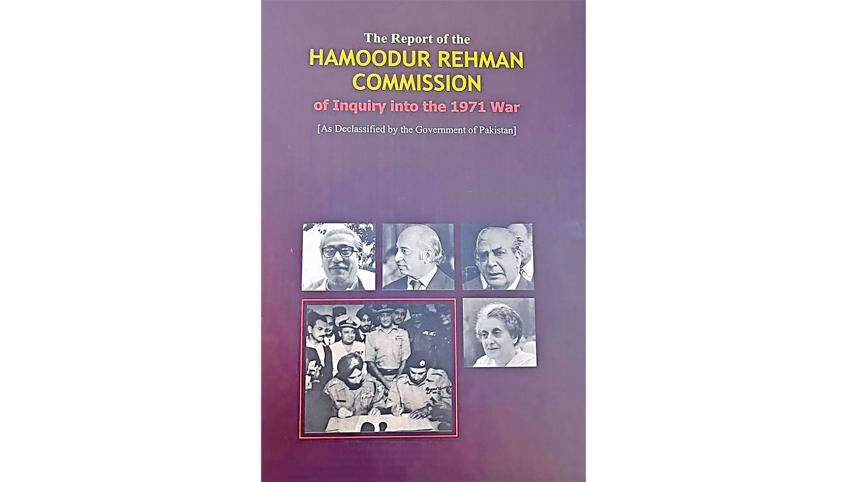
This act of state violence against its own citizens was the point of no return. It ignited a full-blown civil war, leading to the creation of the Mukti Bahini resistance force, a massive refugee crisis into India, and ultimately, direct Indian military intervention in November-December 1971. On December 16, 1971, the Pakistani forces in Dhaka surrendered, and the independent state of Bangladesh was born.
Conclusion
The separation of East Pakistan was not a single event but the result of a long and tragic process of systemic failure. While the actions of key individuals like Yahya Khan, Sheikh Mujib, and Zulfikar Ali Bhutto were instrumental in the final crisis, they were acting within a political structure already fractured by deep-seated grievances.
Your key takeaways should be:
- Structural Imbalances: Decades of political marginalization, economic exploitation, and cultural insensitivity created a profound sense of alienation in East Pakistan.
- Failure of Democracy: The refusal of the West Pakistani military-political elite to honor the clear democratic mandate of the 1970 elections was the immediate trigger for the conflict.
- Primacy of Internal Factors: While India's role was significant in the final outcome, the conditions for separation were created internally by Pakistan's own ruling establishment. The decision to use overwhelming force instead of seeking a political solution sealed the country's fate.
Having established the critical domestic causes of the 1971 crisis, our next lesson will shift focus. We will critically evaluate the role of international powers—including the United States, the Soviet Union, and China—and analyze the diplomatic battle that took place in the UN Security Council as Pakistan was breaking apart.