Welcome back. In our previous lesson, we examined the 1956 Constitution and concluded that its failure was not due to an inherently flawed text, but rather the absence of a democratic political culture and the persistent interference of a powerful civil-military elite, which ultimately led to its abrogation in 1958.
The man at the center of that power seizure, General Ayub Khan, believed that the parliamentary system was unsuited to what he called the "genius of the Pakistani people." His solution was a new constitutional order, one designed to ensure stability and executive authority above all else. This lesson focuses on the 1962 Constitution he promulgated. We will analyze its key features, with a particular focus on the presidential system it introduced, its specific Islamic provisions, and its overarching role in concentrating power at the center. Understanding this constitutional framework is essential, as its centralizing nature directly contributed to the political tensions that would define the next decade.
A New Order: The Philosophy of the 1962 Constitution
After taking power, Ayub Khan's regime operated under martial law for nearly four years. His goal was to create a political system that was, in his view, immune to the instability and political horse-trading that plagued the 1950s. This philosophy was characteristic of many post-colonial leaders of that era who were often described as "modernizing authoritarians"—believing that economic development required a strong, centralized hand, unburdened by fractious democratic debate.
To create a veneer of public consultation, Ayub Khan established a Constitution Commission in February 1960, headed by former Chief Justice Muhammad Shahabuddin. However, the commission's mandate was heavily guided by Ayub's own preferences for a presidential system and indirect elections.
Constitution of Pakistan 1962 |Pakistan Studies Lecture Series|Islamic Provisions|1962 Constitution|
To understand the context in which this constitution was created, watch this short segment from the video "Constitution of Pakistan 1962" by CSS PMS Guide.
Watch the introduction, which covers the background of the constitution's creation. Pay attention to the role of the Constitution Commission and the instructions Ayub Khan gave it, emphasizing the need for a system tailored to the "genius of the people" and administrative stability.
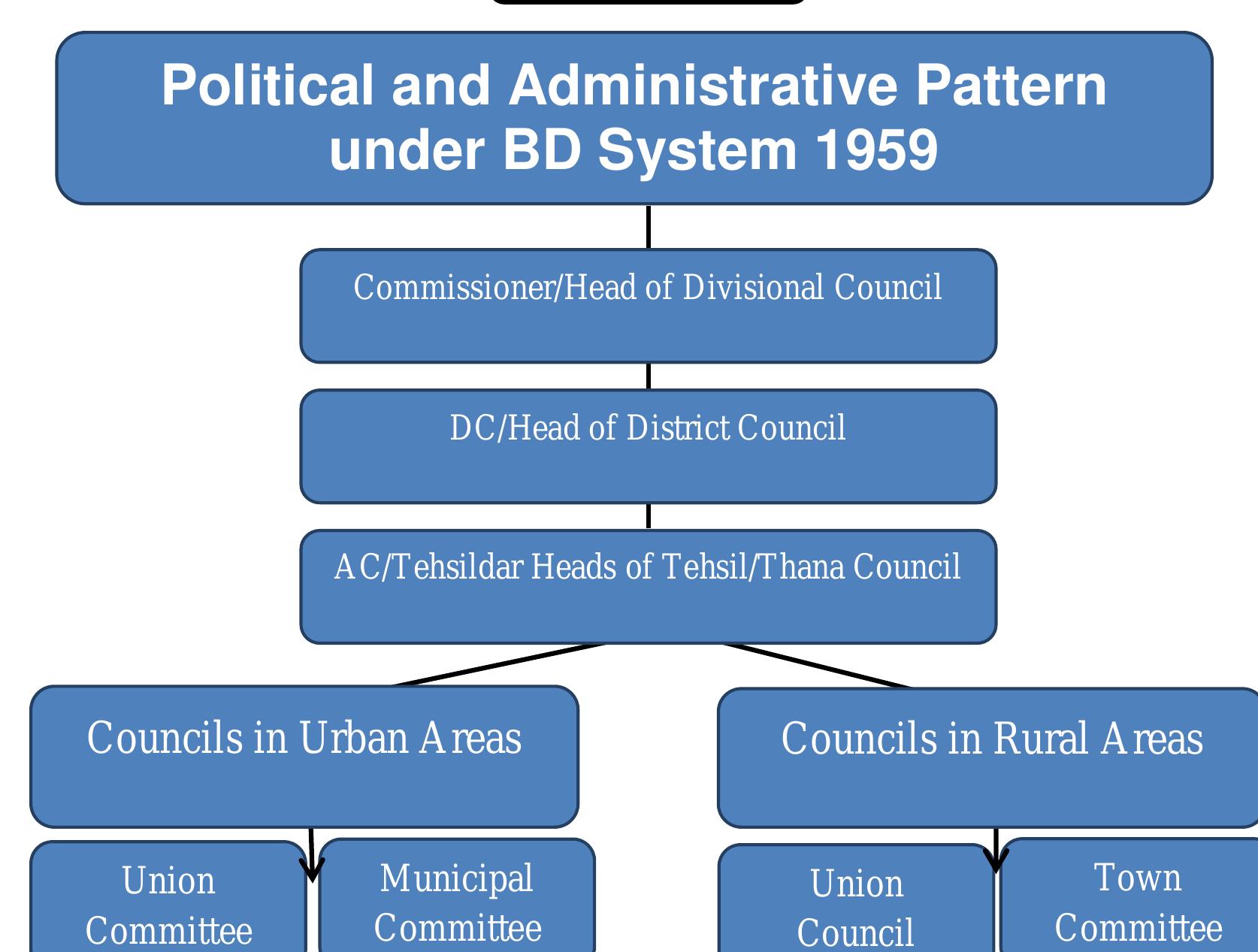
The foundation of Ayub Khan's political structure was the Basic Democracies (BD) system, introduced in 1959. This was a four-tiered system of local government. At the lowest level, 80,000 "Basic Democrats" (40,000 from each province) were elected by the people. This group of 80,000 then served as the Electoral College, responsible for electing the President and the members of the National and Provincial Assemblies. It was a system of indirect democracy, designed to filter the popular will through a manageable and, in theory, more easily controlled body of electors.
Salient Features: A Presidential Republic
Promulgated on June 8, 1962, the constitution was a lengthy document with 250 articles. It fundamentally restructured the Pakistani state, moving away from the British parliamentary model toward a powerful presidential one, drawing inspiration from the French and American systems but concentrating even more power in the executive.
Constitution of 1962| Constitution of 1962 salient features
For a concise summary of the constitution's main features, this video provides a useful starting point.
Please watch the following segments: Written Form & Preamble: This confirms it was a written constitution and included the Objectives Resolution. Form of Government: This is the most crucial part, explaining the shift to a presidential system. Languages, Legislature, and BD System: This covers other key structural features. Parity and Elections: Note the principle of parity and the indirect election method.
Let's dissect these features in greater detail by consulting the primary source itself.
1. The All-Powerful Presidential System
The 1962 Constitution was defined by the immense power it vested in the office of the President. Unlike the 1956 Constitution, where the President was a ceremonial Head of State, here the President was the undisputed center of all executive and legislative authority.
[PDF] The Constitution of The Republic of Pakistan 19621
To grasp the extent of presidential power, we will examine the relevant articles from the constitution's official text.
Please review the following articles to see how power was structured: Executive Authority: Read Article 31, which vests all executive power in the President. Also look at Article 33, which makes the Council of Ministers accountable only to the President, not the Assembly. Control over Provinces: Read Article 66. This article demonstrates the President's direct control over the provincial governments through appointed Governors. Legislative Supremacy: The President's power over law-making was immense. Review Articles 27 and 24, which detail the President's ability to veto legislation and refer it to a referendum. A presidential veto could only be overridden by a two-thirds majority, and even then, the President could force a referendum. Also, see Article 29 on the President's sweeping powers to issue ordinances when the Assembly was not in session. Centralization of Law: Finally, read Article 131 and Article 134. These articles establish the absolute supremacy of central law over provincial law, reinforcing the highly centralized federal structure.
As these articles demonstrate, the system was presidential in name but dictatorial in practice. The President was not just the Head of State and Government but also held supreme command of the armed forces, appointed all key officials including ministers and governors, and had the final say on all legislation. The National Assembly was reduced to a subordinate body with limited financial powers and no ability to remove the President or his cabinet.
2. Islamic Provisions: A Contested Space
As a modernizer, Ayub Khan's emphasis was on development and administrative efficiency, not theology. However, he could not completely ignore the demand for an Islamic character for the state. The constitution's Islamic provisions reflect this balancing act.
A significant point of contention was the country's name. The constitution initially named the state the Republic of Pakistan, dropping the word "Islamic" from the 1956 title. This caused a significant public outcry, forcing the regime to pass the First Amendment in 1963, which restored the name Islamic Republic of Pakistan.
The main Islamic provisions were:
- The President was required to be a Muslim.
- The "Principles of Law-making" stipulated that no law should be repugnant to Islam. However, a crucial caveat in Article 6 made this principle non-justiciable. This meant that the validity of a law could not be challenged in a court on the grounds that it was un-Islamic. The responsibility to ensure compliance was left to the legislature itself.
- Two key institutions were created:
- Advisory Council of Islamic Ideology: An advisory body to recommend ways to enable Muslims to live according to Islam and to advise the President and Assemblies on the Islamic validity of laws.
- Islamic Research Institute: An organization tasked with undertaking research on Islam to assist in the "reconstruction of Muslim society on a truly Islamic basis."
[PDF] The Constitution of The Republic of Pakistan 19621
Let's refer back to the constitution's text for these provisions.
Read the first Principle of Law-making under Article 6. Note the very next sentence about the non-justiciable nature of these principles. Then, browse Part 10 (Articles 199-207) to understand the role and function of the Advisory Council of Islamic Ideology and the Islamic Research Institute.
3. Fundamental Rights and a Weakened Judiciary
Similarly to the Islamic principles, fundamental rights were initially listed as non-justiciable "Principles of Law-making." This was a significant regression from the 1956 Constitution. However, the same First Amendment (1963) that restored the country's name also made fundamental rights justiciable, allowing citizens to seek their enforcement in courts. This was a major concession to public pressure.
Despite this, the judiciary's overall power was curtailed. The President held the authority to appoint and transfer judges, and the courts' power of judicial review over executive actions was severely limited, reinforcing the supremacy of the executive branch.
The Constitution's Role in Centralizing Power
In every aspect, the 1962 Constitution was an instrument for the centralization of power.
- Political Centralization: It replaced a potentially unruly parliamentary system with a single, powerful executive. The indirect election system insulated the President from direct public accountability.
- Administrative Centralization: The provinces were effectively run by Governors who acted as agents of the President, not as representatives of their provincial populations.
- Legislative Centralization: The central legislature had supreme authority, and within the center, the President held dominance over the National Assembly.
- Economic Centralization: As the Dawn article "The Changing of the Guard" notes, this political structure facilitated an economic model that concentrated wealth in specific regions of West Pakistan and in the hands of a few, fueling massive regional disparities.
This extreme centralization, while creating a superficial "political stability" praised by some Western observers at the time, sowed the seeds of deep political discord. The system completely marginalized the politicians and population of East Pakistan, who viewed it as a constitutional justification for the permanent dominance of the West Pakistani military-bureaucratic establishment.
Conclusion
In this lesson, we have analyzed the 1962 Constitution as Ayub Khan's answer to the perceived failures of the parliamentary democracy of the 1950s. It was a document meticulously crafted to institutionalize and legitimize a highly centralized, authoritarian rule.
Your key takeaways should be:
- A Shift to Presidentialism: The constitution replaced the parliamentary system with a presidential one, concentrating vast executive and legislative powers in the President's hands.
- Instrument of Centralization: It systematically weakened the legislature and the provinces, creating a unitary state in all but name, with power flowing from the top down.
- Indirect Democracy: The Basic Democracies system served as an electoral college, detaching the government from the direct will of the populace and creating what many saw as a 'controlled' democracy.
- Contested Islamic and Rights Provisions: The Islamic provisions and fundamental rights were initially non-justiciable, reflecting a modernizing agenda that prioritized state authority. Concessions were only made after significant public pressure.
The stability this constitution provided was brittle. By denying genuine political participation and exacerbating economic and regional grievances, particularly in East Pakistan, it created the very conditions for the profound crisis that would soon engulf the nation. In our next lesson, we will examine the political, economic, and social factors that led directly to the 1971 war and the separation of East Pakistan.