Welcome to our new lesson. In the preceding sessions, we have thoroughly examined the internal and international factors that culminated in the separation of East Pakistan in 1971. We saw how domestic political failures created the crisis and how the geopolitical chessboard of the Cold War sealed the military outcome. Today, we move from the event itself to its profound ideological aftermath.
This lesson tackles one of the most persistent and complex questions in Pakistan Studies, a favorite of CSS examiners: Did the creation of Bangladesh negate the Two-Nation Theory? We will unpack this debate by constructing two distinct, evidence-based arguments. First, the argument that the event proved the theory flawed, and second, the counter-argument that it paradoxically validated the theory's core premise. Your goal is to master both sides of this debate, enabling you to formulate a nuanced and scholarly response in your examinations.
Revisiting the Foundation: What is the Two-Nation Theory?
Before we can debate its validity, we must be precise about what the Two-Nation Theory is and what it is not. At its heart, it is the proposition that the Muslims of the Indian subcontinent constitute a distinct nation, separate from the Hindus, based on profound differences in religion, culture, history, and social values. This ideological conviction formed the bedrock of the demand for Pakistan.
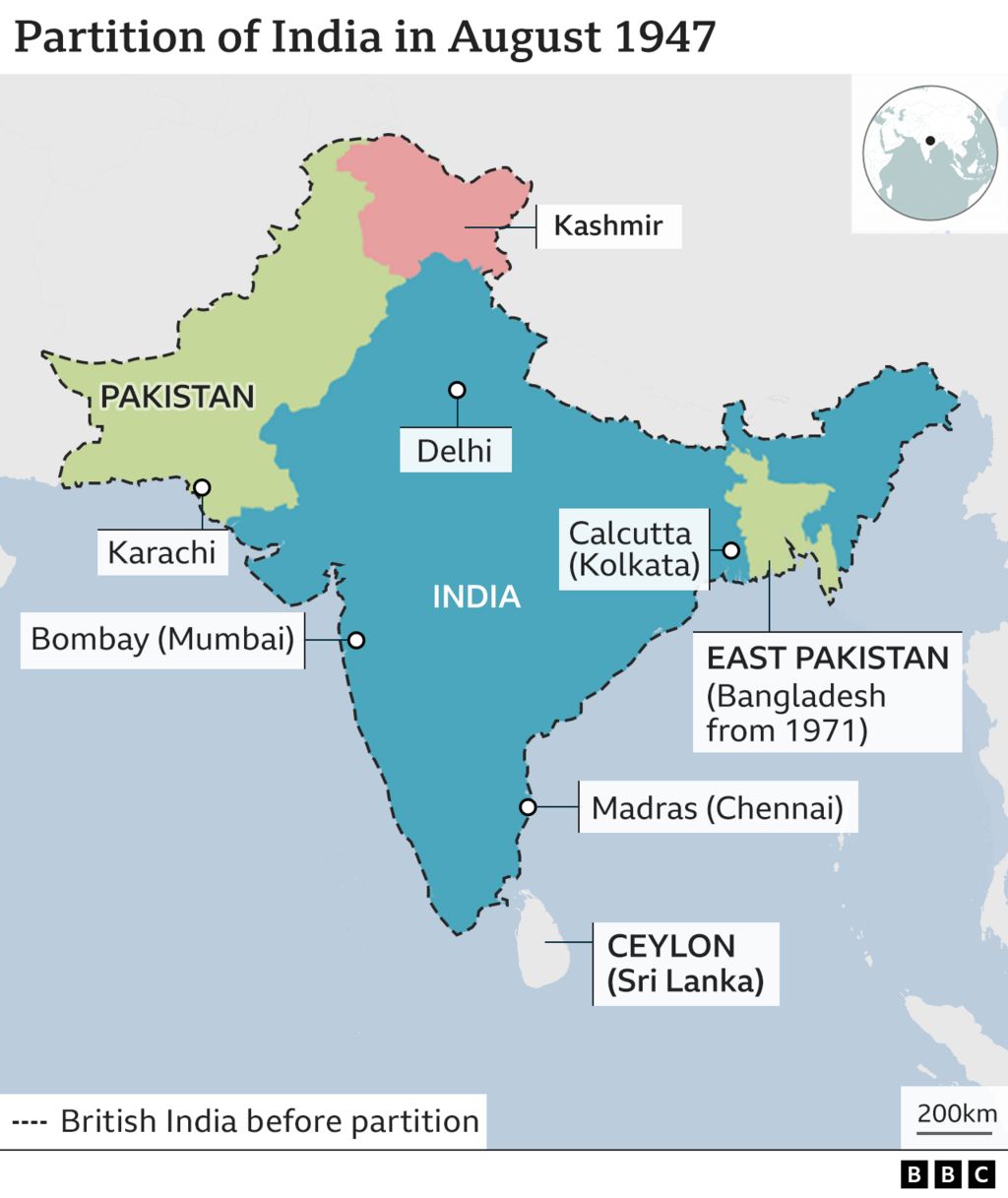
To ensure we have a solid foundation for this debate, let's review the theory's origins and its various interpretations.
Two-Nation Theory (Pakistan) | Encyclopedia MDPI
This encyclopedia entry provides a concise overview of the Two-Nation Theory, its historical evolution, and its core tenets.
Please read the introduction to understand the basic definition and its differing interpretations. Then, proceed to the section titled "Roots of Islamic Separatism in Colonial India" and read from the beginning of that section until the end, marked by this text. Pay close attention to the contributions of Sir Syed Ahmad Khan, Muhammad Iqbal, and Muhammad Ali Jinnah in articulating this ideology.
As you've read, the theory was not monolithic. One interpretation simply called for autonomy, while a stronger version argued that Hindus and Muslims were fundamentally incompatible and could not coexist in a single state. It was this latter interpretation that ultimately led to Partition. Now, let's use this understanding to analyze the impact of 1971.
Argument I: The Theory Was "Sunk in the Bay of Bengal"
The most direct interpretation of the 1971 crisis is that it dealt a fatal blow to the Two-Nation Theory. Proponents of this view argue that the very foundation of Pakistani nationhood was proven to be built on sand. This argument rests on several key points.
1. Primacy of Ethnicity and Language over Religion
The creation of Bangladesh demonstrated that a shared religion (Islam) was insufficient to bind two distinct ethnic and linguistic groups into a single nation. The Bengali people of East Pakistan, despite being overwhelmingly Muslim, ultimately prioritized their unique cultural and linguistic identity over a shared religious identity with West Pakistanis. This gave rise to the potent force of Bengali nationalism, which proved stronger than the religious nationalism that created Pakistan.
2. The Real Drivers: Political and Economic Grievances
The alienation of East Pakistan was not rooted in religious disputes. As we've studied, it was fueled by tangible, secular grievances:
- Economic Exploitation: The perception and reality that East Pakistan's jute export earnings were funding the industrialization of West Pakistan.
- Political Marginalization: The refusal of the West Pakistani-dominated military-bureaucratic elite to transfer power to the Awami League, the legitimate winner of the 1970 elections.
- Cultural Suppression: The attempt to impose Urdu as the national language on a Bengali-speaking majority.
These factors suggest that justice, economic parity, and political rights were more critical to national cohesion than a shared faith. The failure to provide these led to the fracture.
[PDF] The Two-Nation Theory: Historical Roots, Political Implications and ...
This research paper from the Pakistan Social Sciences Review directly analyzes why the Two-Nation Theory failed to hold the country together.
Please read the three paragraphs starting from this point. The analysis here clearly outlines how linguistic imposition, economic disparities, and political marginalization were the primary causes of the separation, demonstrating that religion alone could not create a bonded nation.
3. The Logical Contradiction
If the original argument was that Hindus and Muslims were two separate nations, the 1971 split implied that West Pakistanis and Bengalis were also two separate nations. This breaks the simple binary of the original theory and suggests that nationhood in South Asia is a far more complex tapestry of language, ethnicity, and regional identity, not just religion. As some critics quipped, the Two-Nation Theory was replaced by a "Three-Nation Theory."

Argument II: The Theory Was Vindicated, Not Negated
A more complex and, for a CSS exam, more analytically powerful argument is that the creation of Bangladesh did not negate the Two-Nation Theory but, in a paradoxical way, validated its core thesis. This argument requires looking beyond the internal split and focusing on the theory's original purpose.
1. The Theory Was About the Hindu-Muslim Divide
The central claim of the Two-Nation Theory was not that all Muslim groups would forever remain in a single state. Its fundamental assertion was that Muslims, as a distinct nation, could not live securely within a united, Hindu-majority India. The 1971 conflict was an internal family dispute—a tragic and violent one—between two Muslim groups over power and resources. It was not a conflict between Hindus and Muslims. Therefore, it does not disprove the original premise about the incompatibility of Hindu and Muslim nationalisms within a single state.
2. Bangladesh Did NOT Merge with West Bengal
This is perhaps the most compelling piece of evidence for this side of the debate. If Bengali linguistic and ethnic identity had truly superseded religious identity, the logical outcome would have been the merger of Muslim-majority Bangladesh with the Bengali-speaking, Hindu-majority Indian state of West Bengal.
This did not happen. Bangladesh chose to become a sovereign, independent Muslim-majority nation-state. This act of remaining separate from India, despite a shared language and culture with West Bengal, strongly implies that a distinct Muslim national consciousness endured. As the Indian diplomat J.N. Dixit noted, Bangladeshis wanted to be an "independent Bengali Muslim country," thus inadvertently proving the impulse behind the theory correct.
3. The Post-1971 "Resurrection" of Islamic Identity
The events after 1971 further bolster this argument. While Sheikh Mujibur Rahman's initial government promoted secularism and Bengali nationalism, this phase was short-lived. Following his assassination in 1975, subsequent regimes, notably that of General Ziaur Rahman, actively moved Bangladesh back towards an Islamic identity.
- Secularism was removed from the constitution.
- The country's name was moved towards "Islamic Republic of Bangladesh."
- A growing anti-India sentiment developed, rooted in the perception of Indian regional hegemony.
This political evolution, culminating in recent mass protests against Indian influence, suggests that the "Muslimness" of the Bangladeshi identity was not erased in 1971; it was merely suppressed temporarily.
The following documentary provides a compelling narrative, arguing that recent events in Bangladesh show a resurgence of the very identity politics that underpinned the Two-Nation Theory.
Two Nation Theory & Bangladesh: The Resurrection
This documentary, "Two Nation Theory & Bangladesh: The Resurrection," traces the political and ideological journey of Bangladesh from 1971 to the present day.
First, watch the introduction from the beginning to understand the video's central question. Then, skip to the crucial final section from this point onwards. This part details the post-1971 political shifts under Ziaur Rahman, the growing influence of India under Sheikh Hasina, and culminates in the 2024 student-led protests. Focus on how the narrator connects these recent events back to the enduring relevance of a distinct Muslim identity, separate from India, as a validation of the Two-Nation Theory's core idea. (Note: The narration is primarily in Urdu).
Synthesis: Crafting a Balanced Conclusion
For your CSS exam, you are not required to be a polemicist for one side. You are required to be an analyst who understands the nuances of both. An excellent conclusion would synthesize these two arguments.
The separation of East Pakistan was undoubtedly a catastrophic failure of state-building in Pakistan. It proved that religious solidarity is insufficient to forge a nation without political equality, economic justice, and cultural respect. The West Pakistani leadership's inability to manage the country's diversity and accommodate legitimate Bengali aspirations led directly to the breakup.
However, the failure of the Pakistani state does not automatically mean the failure of the Two-Nation Theory. The theory was an ideological response to the specific question of Hindu-Muslim coexistence in the subcontinent. The fact that Bangladesh emerged as and remains an independent Muslim-majority nation, consciously separate from Hindu-majority India, suggests that the underlying premise of a distinct Muslim political identity retains its potency.
Therefore, you can argue that while 1971 exposed the fatal weaknesses in Pakistan's initial political structure, it did not negate the foundational ideology that there are distinct Hindu and Muslim nationalisms in South Asia.
Key Takeaways:
- Argument for Negation: The primacy of Bengali ethnic nationalism, fueled by political and economic grievances, proved that religion was not a strong enough basis for a single Pakistani nationhood.
- Argument for Validation: The theory was about the Hindu-Muslim divide, not internal Muslim unity. Bangladesh's decision to remain an independent Muslim state, separate from Bengali-speaking India, and its subsequent re-embrace of an Islamic identity, validates the core idea of a distinct Muslim political consciousness.
- Synthesis: Distinguish between the failure of state-building (inability to manage diversity and ensure justice) and the alleged failure of the ideology. The 1971 tragedy highlights the former without necessarily disproving the latter.
In our next lesson, we will turn our focus to the political reconstruction of the post-1971 Pakistan. We will analyze the political and democratic dynamics of the Zulfiqar Ali Bhutto era (1971–1977), examining how Pakistan attempted to redefine itself after the trauma of its dismemberment.