Welcome to our next lesson. In our previous discussion, we established the foundational determinants of Pakistan's foreign policy and introduced the contemporary doctrine of "strategic autonomy"—a strategy of leveraging national assets to maintain freedom of action between competing global powers. Today, we will examine this doctrine's most critical test case: the multifaceted relationship with the United States.
This lesson will evaluate Pakistan-USA relations from the post-9/11 alliance through the US withdrawal from Afghanistan to the current dynamics. This topic is a perennial focus in CSS examinations, often framed through critical phrases like Ayub Khan's "Friends Not Masters," which question the nature and equity of the partnership. We will trace this relationship through its three distinct modern phases: the post-9/11 "marriage of convenience," the subsequent period of deep strain and mistrust, and the current tactical recalibration following the US withdrawal from Afghanistan.
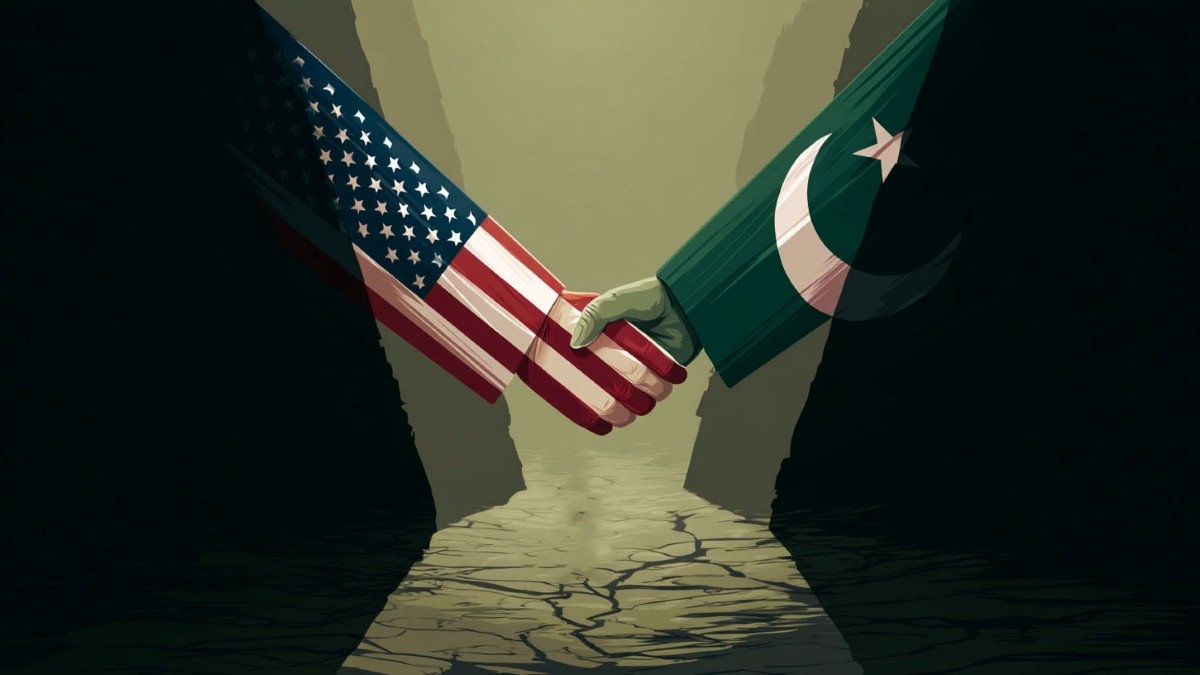
Phase 1: The Post-9/11 Alliance and Its Heavy Toll (2001–2011)
To understand the post-9/11 alliance, we must recall Pakistan's position in 2001. The country was economically weak and politically isolated, labouring under multiple US sanctions related to its nuclear program and the 1999 military coup. The 9/11 attacks presented General Pervez Musharraf's government with a stark choice, famously framed as "you are either with us, or you are with the terrorists."
Pakistan's decision to become a frontline ally in the US "War on Terror" was a pragmatic, if difficult, choice. In return for logistical support, intelligence cooperation, and access to air and ground routes for operations in Afghanistan, the US lifted sanctions, cancelled debts, and provided billions of dollars in economic and military aid. This revived the transactional dynamic that has long characterized the relationship.
However, this alliance came at a staggering and devastating cost to Pakistan's domestic stability and socioeconomic fabric. A comprehensive academic analysis published in the Global Political Review meticulously documents these consequences.
This paper provides an essential scholarly breakdown of the profound and negative impacts the War on Terror had on Pakistan. Understanding these costs is crucial for a critical evaluation of the alliance.
Please read the following sections to build a comprehensive picture of the damage incurred: Start with the Introduction and Background of the Study to grasp the context of the pre-9/11 sanctions and the post-9/11 realignment. Next, read the section on the policy shifts to understand the initial terms of the deal. Now, systematically review the sections detailing the consequences: Rise of Terrorism, which covers the birth of the TTP. Impact on FDI and Domestic Investment. The staggering scale of the economic damage. The severe harm to the tourism industry. The rise of social extremism and the devastating human cost. The crisis of Internally Displaced People (IDPs). Finally, the targeted destruction of education infrastructure. As you read, focus on creating a mental balance sheet: on one side, the financial aid and diplomatic support from the US; on the other, the catastrophic internal security and economic consequences for Pakistan.
The analysis from the paper makes it clear that while the alliance brought short-term economic relief and removed diplomatic isolation, its long-term blowback was immense. It unleashed a wave of terrorism that killed tens of thousands, displaced millions, and crippled the economy for years, fundamentally reshaping Pakistan's internal security landscape.
Phase 2: From Mistrust to Withdrawal (2011–2021)
The decade from 2011 onwards saw the transactional alliance fray and unravel into deep-seated mistrust. Several key events accelerated this decline:
- The Raymond Davis Affair (2011): A CIA contractor killed two Pakistanis in Lahore, exposing covert US activities and sparking a diplomatic crisis.
- The Abbottabad Raid (2011): The unilateral US operation that killed Osama bin Laden was seen in Washington as proof of Pakistani duplicity and in Islamabad as a violation of sovereignty.
- The Salala Attack (2011): A NATO airstrike killed 24 Pakistani soldiers, leading to the suspension of NATO supply lines for months.
This period was defined by a "double game" narrative, with US officials accusing elements within Pakistan's establishment of supporting the Afghan Taliban, while Pakistan pointed to the heavy price it was paying in blood and treasure. The relationship became almost entirely focused on managing the endgame in Afghanistan.
The following video provides a concise overview of this turbulent period, leading up to and including the US withdrawal.
Shifts and Strains U.S.- Pakistan Relations Post Afghanistan Withdrawal | Drishti IAS English
This analysis by Drishti IAS English provides a clear chronological summary of the relationship's deterioration and the immediate consequences of the US exit from Afghanistan.
Please watch the following segments: Historical Engagements: This gives a quick "roller coaster" overview of the relationship's history. Post-Withdrawal Shifts: This section details the diplomatic freeze under the Biden administration, Imran Khan's anti-US rhetoric, and the growing US-India alignment. Impact of Withdrawal: Focus on the consequences for Pakistan, including the resurgence of the TTP and border instability. Final Analysis: This concluding part summarizes how the US exit reduced Pakistan's strategic significance to Washington.
The 2021 US withdrawal from Afghanistan marked the end of an era. With no troops on the ground, Pakistan's logistical importance to the US plummeted. The relationship entered a period of strategic neglect, with Washington pivoting its focus almost entirely to its partnership with India as a counterweight to China.
Phase 3: A Tactical Reset in an Era of Great Power Competition (2022–2026)
After the diplomatic freeze of the early 2020s, the relationship has undergone another surprising recalibration. This is not a return to the deep partnership of the "War on Terror" but a more limited, tactical détente driven by new geopolitical realities. An in-depth report from The Express Tribune in late 2025 provides an exceptional analysis of this current dynamic.
Three Cs a ceasefire how Pakistan won Trump over
This article, based on the political context of 2025, details the reasons behind the renewed, albeit transactional, engagement between the second Trump administration and Pakistan.
First, read the introductory section and the subsequent paragraphs that detail the events leading to the reset, including the extradition of an IS-K operative and the May 2025 India-Pakistan conflict. Next, read the sections that define the new relationship and the motivations of the US: A ‘tactical’ détente: Understand why experts label the relationship as functional and tactical, not strategic. Pakistan — too important to ignore: Focus on the US strategic calculus, including the desire to balance China's influence in Pakistan. Irritation with India: Note how the US is using its warmth towards Pakistan to , reminding India of its vulnerabilities and strategic options.
This renewed engagement is not based on shared values but on a cold, pragmatic calculation of interests on both sides. Pakistan, by skillfully applying its doctrine of strategic autonomy, found new ways to make itself relevant to Washington.
The "Three Cs" and Pakistan's Leverage
According to analysts cited in the Tribune article, Pakistan successfully appealed to the transactional nature of the Trump administration by offering what has been termed the "Three Cs":
- Counterterrorism: With the resurgence of IS-K in Afghanistan, Pakistan's intelligence and counter-terrorism capabilities remain vital for US security interests in a region where it has no military presence.
- Critical Minerals: Pakistan's untapped reserves of rare earth elements and other critical minerals (like copper in Reko Diq) present an opportunity for the US to diversify supply chains away from Chinese dominance.
- Crypto: This reflects a niche but notable interest of the Trump administration, where Pakistan can offer cooperation.
Three Cs a ceasefire how Pakistan won Trump over
Now, let's explore the specific levers of influence used by both sides.
Read the following sections to understand the deeper motivations: Reading Trump right: This section explains how Pakistan's diplomatic style and the army chief's role were effective in dealing with President Trump's personality. Factoring in Afghanistan: This reinforces Pakistan's continued relevance for regional stability. Rare earth to crypto: This is the core of the "Three Cs" argument. Islamabad’s strategic calculus and the conclusion: This explains Pakistan's own motivations, including economic relief, internal stabilization, and gaining strategic space.
This tactical reset demonstrates how Pakistan has adapted its foreign policy. Instead of being solely dependent on its role in Afghanistan, it is now leveraging great power competition, new economic opportunities (minerals), and its enduring counter-terrorism utility to maintain a relationship with the US, all while deepening its strategic partnership with China.
Conclusion
The Pakistan-US relationship has been a tumultuous journey, moving from a costly alliance to a period of hostile neglect, and now to a cautious, transactional détente. A critical evaluation reveals a partnership consistently driven by shifting strategic utility rather than shared democratic values.
- Key Takeaways:
- The post-9/11 alliance was a marriage of convenience that brought Pakistan short-term economic gains but inflicted devastating long-term socioeconomic and security costs.
- The US withdrawal from Afghanistan in 2021 marked a fundamental shift, drastically reducing Pakistan's strategic importance to Washington and leading to a period of diplomatic estrangement as the US prioritized India.
- The current re-engagement (as of 2025-2026) is a tactical and transactional reset, driven by US-China competition, Pakistan's enduring counter-terrorism value, and new interests like critical minerals.
- Pakistan is navigating this complex environment by employing a doctrine of strategic autonomy, skillfully leveraging its assets to maintain maneuvering room between Washington and Beijing. The relationship remains a clear case of needing "friends, not masters."
In our next lesson, we will turn our attention to the other central pillar of Pakistan's foreign policy. We will analyze Pakistan-China relations, with a special focus on the evolving economic and strategic significance of the China-Pakistan Economic Corridor (CPEC), the very project that gives Pakistan much of its leverage in its balancing act with the United States.