Greetings. In our last lesson, we examined the deeply troubled relationship between Pakistan and Afghanistan, a dynamic dominated by the security crisis stemming from the Tehrik-i-Taliban Pakistan (TTP). We now shift our focus from the Durand Line to Pakistan's southwestern frontier with Iran. This relationship, while sharing a similar context of a long and porous border, is governed by a different, more intricate set of rules.
This lesson will guide you to assess Pakistan's bilateral relations with Iran, focusing on border management, economic cooperation, and regional alignment. While not defined by the overt hostility seen with India or the proxy conflict with the Afghan Taliban, the Pakistan-Iran relationship is a study in "complex cordiality." It is a partnership born of geographic necessity, marked by shared civilizational history, but perpetually constrained by mutual suspicion, regional rivalries, and immense geopolitical pressure. Understanding this delicate balance is crucial for a comprehensive grasp of Pakistan's foreign policy challenges.
A Historical Arc: From Alliance to Ambivalence
The history of Pakistan-Iran relations can be broadly divided into two distinct eras, a point well-articulated in several overviews of the topic. A foundational understanding of this history is key to deciphering the present.
Lecture 5 : Pakistan Iran Relations
This lecture from the CSS Learners Academy provides a clear historical demarcation of the relationship before and after 1979.
Please watch the following two segments to understand the fundamental shift in the relationship's dynamics: The Pre-Revolutionary Era: Note the warmth of the early relationship. Iran was the first country to recognize Pakistan, and they were close allies in the US-led Cold War bloc (CENTO). This section highlights the deep security cooperation, including Iran's support for Pakistan during the 1965 and 1971 wars. The Post-1979 Shift: This segment explains how the 1979 Iranian Revolution fundamentally altered the geopolitical landscape. Iran's new anti-US posture placed Pakistan, a key American ally, in an incredibly difficult position, effectively "sandwiched" between its traditional partner (the US) and its revolutionary neighbour (Iran).
The events of 1979—the revolution in Iran and the Soviet invasion of Afghanistan—created a strategic divergence. Pakistan aligned closely with the US and Saudi Arabia to support the Afghan mujahideen, a policy that positioned it opposite Iranian interests. This period sowed the seeds of mistrust and initiated the complex balancing act that has defined Pakistan's Iran policy ever since.
Pillar 1: Border Management – A Frontier of Friction and Fraternity
The 909-kilometer border between Pakistan and Iran, running through the restive Balochistan region (known as Sistan-Baluchestan in Iran), is a microcosm of the entire relationship. It is simultaneously a conduit for cultural exchange and trade, and a source of significant security threats.
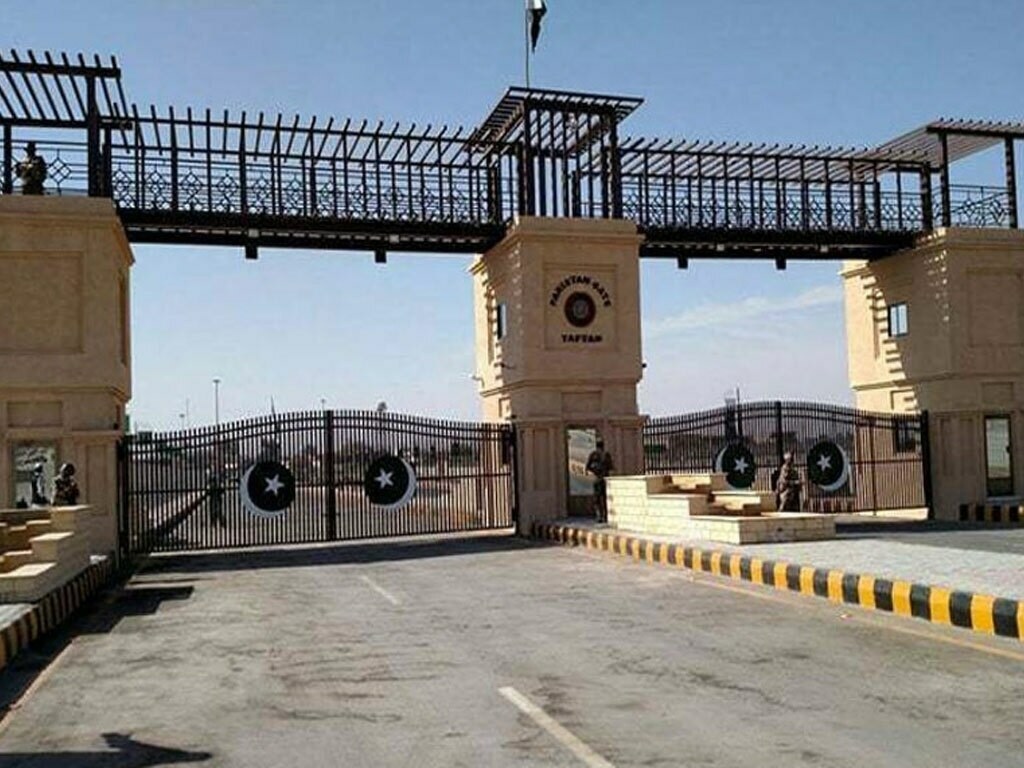
The primary challenge is cross-border militancy. Unlike the one-way threat from the TTP in Afghanistan, the Iran-Pakistan border issue is often reciprocal.
- Iran's Concern: Iran accuses Pakistan of not doing enough to curb Sunni militant groups like Jaish al-Adl, which operate from Pakistani soil and carry out attacks against Iranian security forces.
- Pakistan's Concern: Pakistan has long alleged that Baloch separatist groups, such as the Balochistan Liberation Army (BLA), have found sanctuary and support within Iran.
This simmering tension erupted spectacularly in January 2024 with unprecedented tit-for-tat military strikes. This event serves as a critical case study in the security dynamics of the relationship.
Pakistan Iran Relations: Recent Crisis and Opportunities I Ahmed Ali Naqvi I Episode 110
This analysis by Ahmed Ali Naqvi breaks down the motivations behind the surprising 2024 border clashes.
Watch the segment from the unexpected strikes. As you watch, focus on the logic presented for both sides' actions: Iran's Motives: The video suggests Iran's strike inside Pakistan was driven by internal pressure to appear strong and to distract from domestic issues, projecting power in the region at a time when it felt under pressure from Israel and the US. Pakistan's Rationale for Retaliation: Pakistan's response was not just about retribution. It was a calculated message to multiple audiences—Iran, India, and Afghanistan—that any violation of its sovereignty would be met with a firm and credible response, re-establishing deterrence.
The rapid de-escalation that followed the strikes demonstrated that neither country desires a full-blown conflict. Instead, the strikes were a dangerous form of communication. Despite this volatility, mechanisms for cooperation exist. High-level visits and joint commissions continually reaffirm the need for coordinated border patrols and intelligence sharing to manage these "common threats," as a recent analysis from the Institute of Strategic Studies Islamabad (ISSI) notes.
[PDF] strategic significance of president pezeshkian's visit - ISSUE BRIEF
This brief from ISSI highlights the diplomatic efforts to stabilize the border.
Read the section on page 3 that begins "An equally important dimension". This passage details the agreements reached during Iranian President Pezeshkian's visit to Pakistan in August 2025, emphasizing joint efforts against terrorism and the institutionalization of border markets to promote stability.
Pillar 2: Economic Cooperation – Ambition Restrained by Sanctions
Economically, the relationship is one of vast, unrealized potential. Both countries share a vision of deep economic integration, but this ambition is severely hampered by the stringent international sanctions regime imposed on Iran, primarily by the United States.
The most prominent symbol of this dilemma is the Iran-Pakistan (IP) Gas Pipeline.

First conceived in the 1990s, the pipeline is a strategically vital project for energy-deficient Pakistan. However, the threat of US sanctions under the Countering America's Adversaries Through Sanctions Act (CAATSA) has repeatedly stalled Pakistan's construction of its segment, leaving the project in limbo for years.
Beyond the pipeline, the focus is on boosting bilateral trade. In 2025, both nations reiterated a highly ambitious goal.
[PDF] strategic significance of president pezeshkian's visit - ISSUE BRIEF
This ISSI brief outlines the latest economic agenda agreed upon by both countries.
Please read the two key paragraphs discussing the economic vision: On page 2, review the paragraph at the core of the visit, which highlights the shared goal to raise the bilateral trade volume to USD 10 billion annually and identifies the key impediments, such as sanctions and lack of banking channels. On page 3, read the paragraph on connectivity and infrastructure. Note the strategic proposal to link Pakistan's Gwadar port with Iran's Chabahar, framing them as complementary "sister ports" that can create a corridor to Central Asia.
The idea of linking Gwadar and Chabahar is a sophisticated strategic pivot. Instead of viewing them as rivals (with Chabahar often seen as an Indian-backed counter to the Chinese-backed Gwadar), this policy reframes them as synergistic hubs that can enhance regional connectivity for both nations.
Pillar 3: Regional Alignment – A Perennial Balancing Act
The most complex dimension of Pakistan-Iran relations is the geopolitical tightrope Pakistan must walk. Its foreign policy is a constant effort to balance its vital relationship with Iran against its deep-rooted ties with Iran's primary regional and global adversaries: Saudi Arabia and the United States. An April 2026 analysis from the Stimson Center provides an incisive look at this dynamic.
The Motives and Constraints Behind Pakistan’s Mediation Between the US and Iran • Stimson Center
This article offers a masterclass in analyzing Pakistan's geopolitical predicament, written in the context of de-escalating a hypothetical US-Iran conflict in 2026.
Please read the article in its entirety. As you do, focus on these key constraints and motivations: The US-Saudi-Iran Triangle: Analyze how Pakistan maintains a counter-terrorism partnership with the US and a mutual defense pact with Saudi Arabia, while simultaneously trying to engage with Tehran. The IRGC Factor: Note the distinction between Iran's civilian government and the powerful Islamic Revolutionary Guard Corps (IRGC). The article points out that Pakistani officials struggle to engage the IRGC, which they blame for past provocations. The Domestic Imperative: Understand how Pakistan's large Shi'ite population (the second-largest in the world) gives it a strong domestic reason to prevent regional conflict involving Iran, as such a conflict could trigger sectarian instability within Pakistan. Strategic Hedging: Recognize that with a hostile eastern border (India) and an unstable western one (Afghanistan), Pakistan simply cannot afford a third active and hostile frontier with Iran.
This balancing act is evident in Pakistan's policy choices. For example, in 2015, Pakistan's parliament voted to remain neutral in the Saudi-led war in Yemen, refusing to commit troops despite immense pressure from its Gulf allies. This decision was crucial in preserving a working relationship with Tehran.
Furthermore, both Pakistan and Iran share common ground on several issues. They are two of the strongest voices in the Muslim world on the Palestinian cause, and both have an interest in a stable Afghanistan, even if they differ on the means to achieve it. The rise of China as a mutual strategic partner also creates a new impetus for cooperation, as Beijing's Belt and Road Initiative (BRI) envisions an integrated Eurasian economic bloc where both Pakistan and Iran are key nodes.
Conclusion
The Pakistan-Iran relationship defies easy categorization. It is a partnership defined by pragmatism, where shared geography and a desire for regional stability compel cooperation, even in the face of significant strategic divergence and external pressure.
- Key Takeaways:
- The relationship is a complex mix of cooperation and competition, shaped by a history that shifted from a close alliance before 1979 to strategic ambivalence afterward.
- Border Management is a persistent challenge, characterized by mutual accusations of harbouring militants, as exemplified by the January 2024 tit-for-tat strikes. However, both sides remain committed to de-escalation and joint management.
- Economic Cooperation holds enormous potential, particularly in energy (IP Pipeline) and trade, but remains severely constrained by US sanctions against Iran.
- Regional Alignment is a delicate balancing act, as Pakistan navigates its ties with Iran, the US, and Saudi Arabia. Domestic factors, such as Pakistan's Shi'ite population, and the need for a peaceful western flank are powerful motivators for maintaining this balance.
In our next lesson, we will broaden our aperture from bilateral relations with neighbours to Pakistan's role in multilateral forums. We will evaluate Pakistan's engagement with the Organisation of Islamic Cooperation (OIC) and the European Union (EU), examining how it pursues its national interests on the global stage.