Introduction
In our last lesson, we concluded our exploration of Pakistan's constitutional journey by assessing why the 1973 Constitution has proven so resilient. We saw how a combination of its consensual origins, structural safeguards, and its role as a banner for democratic struggle has cemented its place as the nation's foundational legal document. Having established this legal and political framework, we now pivot to examine the physical and material foundation upon which the state is built: its geography.
This lesson addresses a cornerstone topic for your CSS preparation: the strategic importance of Pakistan's location. We will move beyond a simple description of its borders to conduct a nuanced analysis. Our goal is to evaluate the classic advantages conferred by its geography, such as its role as a gateway to Central Asia, and then critically examine the shifting vulnerabilities and new opportunities that have emerged in the 21st century. This includes grappling with complex security dilemmas and the intense competition between global powers that is playing out across the region, with Pakistan at its very center.
The Geographical Pivot: An Enduring Advantage
Pakistan's strategic significance begins with its unique placement on the world map. It sits at the convergence of three of the world's most critical regions: South Asia, Central Asia, and West Asia (the Middle East). As the scholar Stephen Cohen famously noted, "While history has been unkind to Pakistan, its geography has been its greatest benefit." This position has historically made Pakistan a pivot state, a conduit between different civilizations, economies, and strategic zones.
To grasp the fundamentals of this strategic geography, a brief overview is helpful.
Geo-Strategic Importance of Pakistan | New Dimensions| International Relations| Dr Sohail Ahmad |
This video provides a concise summary of Pakistan's core geographical position and the traditional arguments for its strategic importance, tailored for CSS preparation.
Please watch the following segments to build a foundational understanding: First, get a quick overview of the basic geographical data from the beginning until the border details. Next, watch the explanation of Pakistan's position at the crossroads of three vital regions. Finally, watch the concluding segment where the lecturer cites Stephen Cohen's famous quote and summarizes Pakistan's role as a bridge and its continued relevance.
As the video outlines, Pakistan's strategic value stems from several key geographical attributes:
- A Nexus of Regions: It is the only country that serves as a direct link between the population centers of South Asia, the energy-rich states of the Middle East, and the resource-abundant, landlocked nations of Central Asia.
- Gateway to Central Asia: For the landlocked Central Asian Republics (CARs) like Uzbekistan, Tajikistan, and Kyrgyzstan, Pakistan offers the shortest and most direct route to the warm waters of the Arabian Sea and the global maritime trade network.
- Proximity to Energy Routes: Its coastline, particularly Gwadar Port, is located near the Strait of Hormuz, a critical chokepoint through which a significant portion of the world's oil supply passes.
- A Bridge for China: It provides China with a crucial overland route to the Indian Ocean, a strategic alternative to the long and vulnerable sea lanes that pass through the Strait of Malacca.
This final point has been dramatically amplified in the modern era by the China-Pakistan Economic Corridor (CPEC).
CPEC: Amplifying the Geographic Advantage
CPEC is not merely an infrastructure project; it is the modern manifestation of Pakistan's geographical advantage. For China, it represents a solution to a major strategic vulnerability known as the "Malacca Dilemma." Most of China's energy imports and trade must pass through the narrow Strait of Malacca, a waterway that could easily be blockaded in a conflict. CPEC provides a direct, overland corridor from Kashgar in western China to Gwadar on the Arabian Sea, effectively bypassing this choke point.
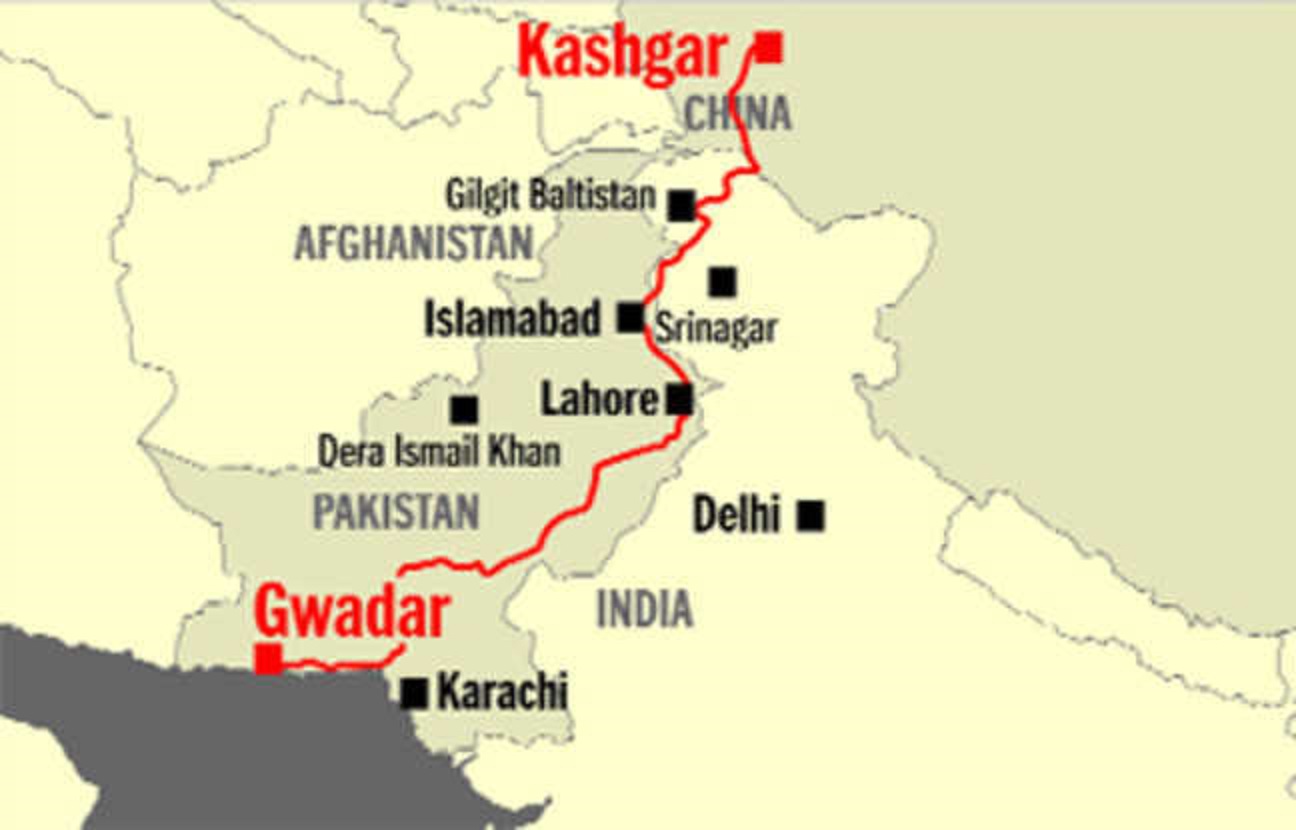
This corridor not only offers China strategic security but also provides a much shorter and cheaper trade route for its less-developed western provinces.
Geo-Strategic Importance of Pakistan | New Dimensions| International Relations| Dr Sohail Ahmad |
This video explains the strategic logic behind CPEC from China's perspective, highlighting the concepts of maritime choke points and the development of its western regions.
To understand the "why" behind CPEC, please watch two key explanations: The section on maritime choke points, which clarifies the "Malacca Dilemma." The discussion on how Gwadar offers a shorter route for China's western provinces, linking the project to China's internal economic goals.
By becoming the lynchpin of this vast project, Pakistan has leveraged its geography to embed itself in the strategic and economic future of a rising global power. However, this same geography also presents profound challenges.
The "Tyranny of Geography": Shifting Vulnerabilities
While geography has been a benefit, it has also been a burden—a "tyranny," as one analyst put it. Pakistan's location has historically exposed it to a difficult "two-front" security situation, caught between a rival, India, to the east and an unstable Afghanistan to the west. In the contemporary era, this has evolved into an even more complex "three-front" challenge.
The tyranny of geography - Newspaper - DAWN.COM
This 2025 article from Dawn provides an excellent, up-to-date analysis of the security challenges emanating from Pakistan's geography. It argues that the country is currently facing an unprecedented three-front security dilemma.
Please read the entire article. As you read, focus on how the author defines and provides evidence for each of the three fronts: The traditional two-front nightmare scenario involving India and Afghanistan. The shift to a contemporary three-front challenge, which adds the internal dimension. The specific nature of the challenges on the eastern front with India, the western front with Afghanistan, and the internal front of militancy.
As the article argues, Pakistan's strategic environment has become significantly more dangerous:
- The Eastern Front: Remains tense with an assertive India, requiring constant military preparedness.
- The Western Front: Has deteriorated significantly due to the sanctuary provided to anti-Pakistan militants like the TTP in Afghanistan, leading to cross-border hostilities.
- The Internal Front: Is characterized by a surge in militant attacks across the country, straining security resources and undermining stability.
This multi-front pressure, a direct consequence of its location, represents the primary vulnerability in Pakistan's strategic calculus. It also forces a difficult re-evaluation of the long-held dream of being a stable gateway to the West.
Re-evaluating the "Gateway" Dream: Act West or Act East?
For decades, Pakistan's foreign policy was premised on a "Look West" approach, aiming to leverage its location to become the primary trade and energy corridor for Central Asia and Iran. However, persistent instability in Afghanistan and international sanctions on Iran have frustrated this ambition. This has led some strategists to question this core assumption and draw lessons from India's successful "Act East" policy.
This opinion piece from The Express Tribune offers a provocative and highly relevant strategic analysis for your exams. It contrasts Pakistan's geography-based "Act West" policy with India's market-based "Act East" policy and suggests a new direction for Pakistan.
Please read the following sections to grasp this critical argument: Begin with the introduction, which frames the unfulfilled geopolitical dream of a western corridor. Next, focus on the sharp comparison between Pakistan's corridor-centric approach and India's production-centric "Act East" policy. Finally, read the concluding paragraph, which proposes that Pakistan should consider its own "Act East" policy as a way to diversify its options and complement CPEC.
This analysis introduces a crucial distinction for your CSS essays: leveraging geography versus leveraging markets. While Pakistan has focused on its potential as a physical corridor, India has focused on integrating with the high-growth economies of Southeast and East Asia. The argument that Pakistan should now also "Act East" by strengthening linkages with ASEAN countries is a powerful example of adapting strategic thinking to shifting realities. It suggests that the future may lie not in choosing one direction, but in pursuing both.
The New Great Game: Navigating Superpower Rivalry
The final and most significant layer of Pakistan's strategic reality is its position at the heart of the burgeoning rivalry between the United States and China. China's Belt and Road Initiative (BRI), with CPEC as its flagship, is being directly countered by US-led initiatives like the C5+1 (USA and the five Central Asian Republics).
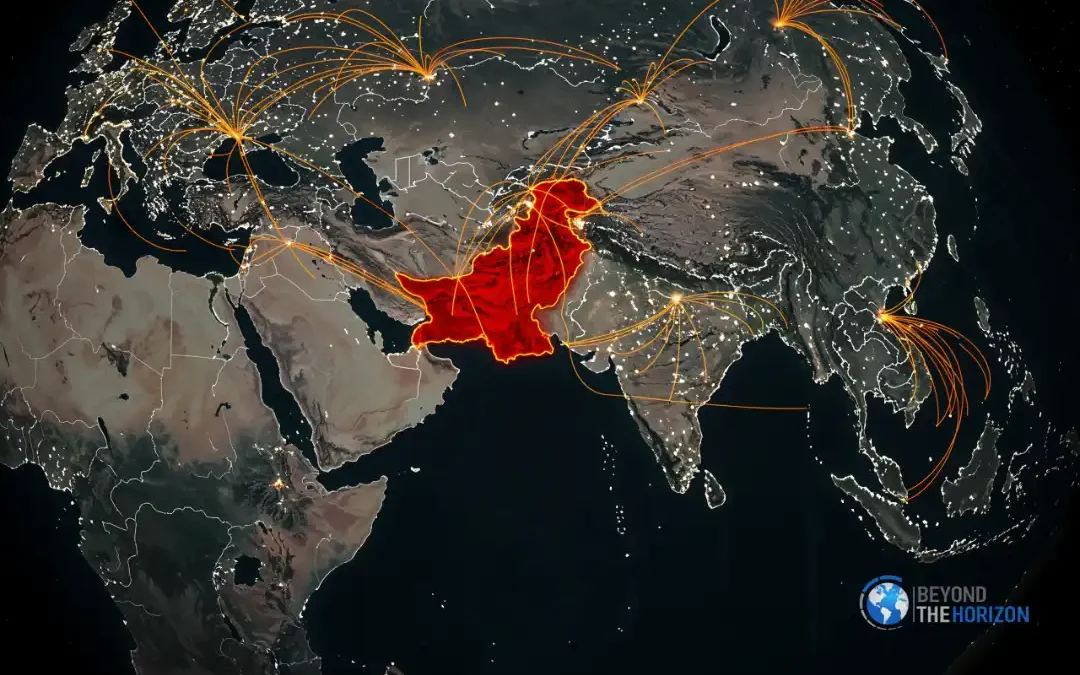
This places Pakistan in an incredibly delicate and opportune position. Both superpowers need access through or partnership with Pakistan to realize their regional ambitions.
Geo-Strategic Importance of Pakistan | New Dimensions| International Relations| Dr Sohail Ahmad |
This lecture provides an excellent explanation of the competing US and Chinese initiatives in the region and the challenge this poses for Pakistan.
Please watch these crucial segments: First, understand the US-led C5+1 initiative, presented as a competitor to China's BRI, and the surprising interest of Central Asian countries in investing in Pakistan's coastline. Next, listen to the analysis of the strategic balancing act Pakistan must perform to manage its relationships with both the US and China without being forced to choose a side.
The emergence of these competing blocs transforms Pakistan's geography from a static advantage into a dynamic chessboard. The challenge for Pakistan's policymakers is to skillfully navigate this rivalry, extracting economic and strategic benefits from both sides without becoming entangled in their conflicts. Successfully managing this balancing act is the ultimate test of Pakistan's diplomatic and strategic acumen in the 21st century.
Conclusion
In this lesson, we have analyzed the complex and evolving nature of Pakistan's strategic importance. We have seen that its geography is a profound double-edged sword.
Key Takeaways:
- Enduring Advantage: Pakistan's location at the crossroads of South, Central, and West Asia, coupled with its warm-water ports, gives it an inherent and lasting strategic significance. This has been greatly enhanced by CPEC, which positions Pakistan as a crucial artery in China's global strategy.
- Shifting Vulnerabilities: This same location exposes Pakistan to a daunting "three-front" security challenge from India, Afghanistan, and internal militants, which complicates its ability to act as a stable regional hub.
- Strategic Re-evaluation: The persistent instability to its west is forcing a re-evaluation of its traditional "Look West" policy, with strategists proposing a complementary "Act East" policy to build ties with Asian economic powerhouses.
- The New Great Game: Ultimately, Pakistan's geography has placed it at the epicenter of the 21st-century competition between the US and China. Its greatest contemporary challenge and opportunity lie in navigating this rivalry to its advantage.
Preview of the Next Lesson:
Having examined Pakistan's strategic geography from a macro, geopolitical perspective, our next lesson will zoom in. We will analyze Pakistan's key physical features—its mountains, deserts, rivers, and plains—and explore how these geographical realities have directly influenced its economy, demographic patterns, and national security.