Introduction
In our last lesson, we explored the 25th Amendment, a significant act of federal integration that merged the former FATA with Khyber Pakhtunkhwa to bring a marginalized region into Pakistan's constitutional mainstream. Today, we shift our focus from territorial integration to an even more fundamental aspect of constitutional law: the balance of power between the core institutions of the state. As you know from your study of political history, the relationship between the legislature, the executive, and the judiciary—often complicated by the overarching influence of the military establishment—has been a central and contentious theme in Pakistan's political evolution.
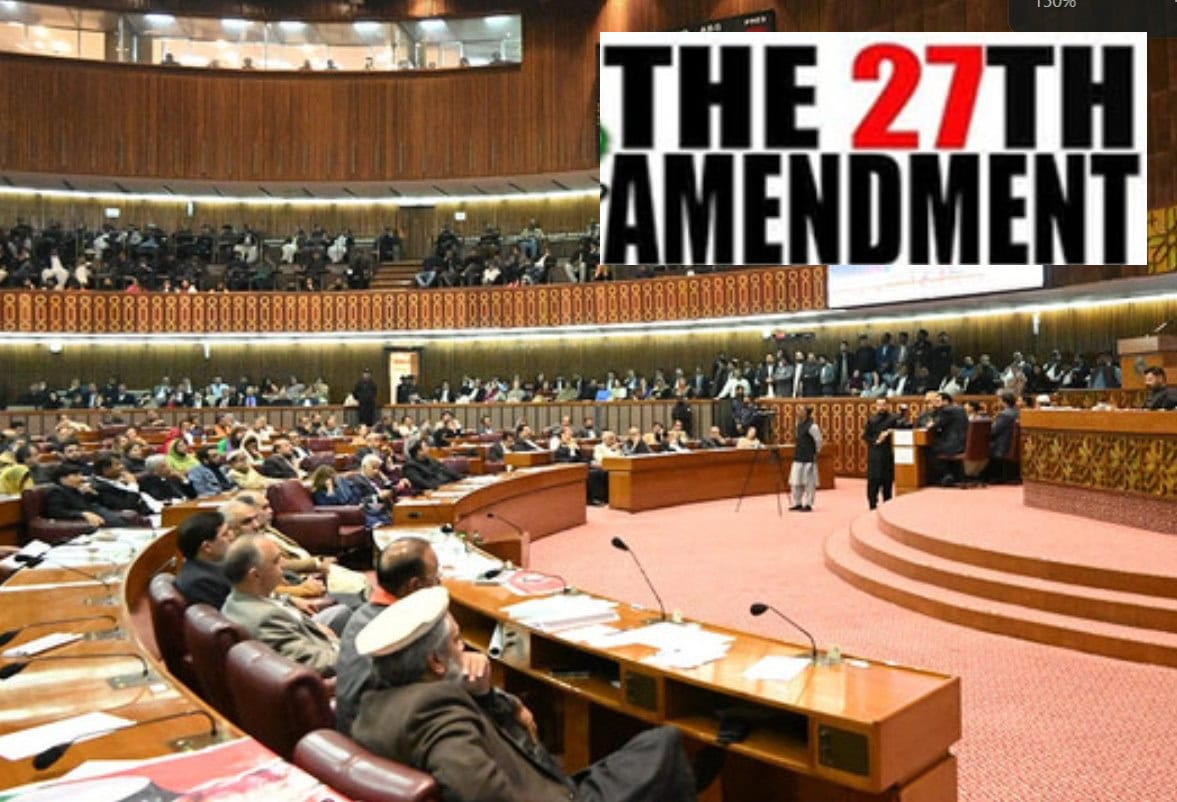
This lesson analyzes the 26th and 27th Constitutional Amendments, two interconnected pieces of legislation from 2024 and 2025 that profoundly reshaped this balance. As we will see, these amendments, passed under the banner of "judicial reform," had far-reaching implications for the principle of political representation. Our goal is to dissect their stated purpose and then critically evaluate their consequences for judicial independence, executive authority, and ultimately, the structure of governance in Pakistan. This topic is directly relevant to your CSS preparation, as questions on recent constitutional amendments are common.
The Rationale and Controversy: A Push for "Reform"
The genesis of the 26th and 27th Amendments lies in a long-standing and often acrimonious debate about the role of the judiciary in Pakistan. Proponents of the changes, primarily the ruling coalition, argued that the superior judiciary had engaged in "judicial overreach," particularly through the expansive use of suo motu powers under Article 184(3) of the Constitution. This, they claimed, created legal uncertainty and encroached upon the domain of the executive and legislature.
The international news channel WION captured the political division surrounding the proposed 27th Amendment, which encapsulates the broader debate.
Pakistan’s Proposed 27th Amendment: Will the Military Seize Control? | WION
This news report provides a concise overview of the political climate in which these amendments were debated.
Watch the following segments: The introduction, which frames the debate as reform versus assault. The opposition's view, presented by a PTI senator, who calls the move a conspiracy against the constitution that would roll back the achievements of the 18th Amendment. The concerns raised within the PPP, highlighting specific proposals like adjustments to military command, the creation of constitutional courts, and the transfer of judges.
The government's official justification, or the 'Statement of Objects and Reasons' for the 26th Amendment, provides the formal rationale. It cited a need to enhance transparency in judicial appointments, give Parliament a "meaningful role" in the process, and create dedicated constitutional benches to clear case backlogs.
The 26th Amendment (October 2024): Restructuring Judicial Authority
The 26th Amendment, passed in October 2024, was the first and arguably more subtle phase of this constitutional reconfiguration. It focused primarily on altering the appointment process for judges and curtailing the Supreme Court's jurisdiction.
The Dawn newspaper provided a detailed breakdown of these changes.
What is the 26th Constitutional Amendment? - Pakistan - DAWN.COM
This article offers a clause-by-clause explanation of the amendment, which is essential for a detailed analysis.
Please read the following sections to understand the core changes: Under the heading "Appointment of CJP; expansion of parliamentary committee," focus on the changes to Article 175A. Note how the CJP appointment process shifts from seniority to a recommendation by a Special Parliamentary Committee. Read the section on curtailing judicial powers, which explains the restrictions placed on the suo motu jurisdiction of both the Supreme Court and the high courts. Finally, review the official "Statement of Objects and Reasons," which articulates the government's formal justification for these reforms.
The 26th Amendment introduced several key changes:
- Appointment of the Chief Justice of Pakistan (CJP): It ended the convention of appointing the senior-most judge as CJP. Instead, a twelve-member Special Parliamentary Committee, with proportional party representation, would nominate the CJP from the three most senior judges.
- Curtailment of Suo Motu Powers: It added provisos to Articles 184 and 199, explicitly stating that the Supreme Court and High Courts could not exercise suo motu jurisdiction beyond the scope of an application filed before them.
- Expansion of Parliamentary Role in JCP: The composition of the Judicial Commission of Pakistan (JCP), the body responsible for judicial appointments, was altered to include more members from Parliament.
On the surface, these changes could be framed as strengthening political representation by increasing the oversight of elected representatives over the unelected judiciary. However, critics immediately warned that this was a step towards politicizing the judiciary and making it subservient to the executive's agenda.
The 27th Amendment (November 2025): A Fundamental Overhaul
If the 26th Amendment was a subtle restructuring, the 27th Amendment, passed a year later, was a seismic shift that fundamentally altered the constitutional landscape. It went far beyond reform, creating new institutions and granting sweeping powers and immunities that dismantled the existing separation of powers.

For a comprehensive analysis of this complex amendment, the following video provides an excellent breakdown from a CSS-exam perspective.
27th Amendment | EVERYTHING You Need To Know | Analysis and Review
This video, from a channel dedicated to CSS preparation, offers a clear and structured analysis of the 27th Amendment's provisions and implications.
Please watch the following segments carefully: Start with the summary of proposals, which outlines the major changes to the judicial system and military command structure. Next, watch the detailed analysis of the impact on the judiciary, executive, and presidency. Pay close attention to the creation of the Federal Constitutional Court and the provision of lifetime immunity. Then, focus on the impact on the military and civil-military relations, noting the creation of the "Chief of Defence Forces" and the formalization of military dominance. Finally, the video provides a crucial summary of "Who wins and who loses," which directly relates to our analysis of its impact on political representation.
As the video and critical commentary from sources like Dawn explain, the 27th Amendment's key features were revolutionary:
- Creation of the Federal Constitutional Court (FCC): A new apex court was established to hear all constitutional matters, effectively demoting the Supreme Court to a mere appellate court for civil and criminal cases. Crucially, the FCC's first judges were to be handpicked by the executive, and its decisions would be binding on the Supreme Court.
- Executive-Dominated Judiciary: The JCP's composition was further altered to ensure a majority of executive-branch and political members, giving the government decisive influence over judicial appointments, elevations, and even transfers of High Court judges.
- Restructuring of Military Command: The position of Chairman Joint Chiefs of Staff Committee (CJCSC) was abolished and replaced with a new, more powerful role of Chief of Defence Forces, consolidating command over all three services.
- Sweeping Immunities: The amendment granted lifetime immunity from all criminal and civil proceedings to the President and high-ranking military officials, including the Army Chief.
Implications for Political Representation: A Shift in Power
Analyzing the combined impact of the 26th and 27th Amendments reveals a systematic dismantling of the checks and balances essential for meaningful political representation. The purpose was stated as reform, but the implication was a profound concentration of power.
- Erosion of an Independent Judiciary: An independent judiciary is the ultimate guarantor of citizens' fundamental rights and the rule of law. By making judicial appointments and tenure dependent on the executive's will, these amendments transformed the judiciary from a check on state power into an instrument of it. This severely weakens political representation because citizens lose an impartial arbiter to defend their rights against the state.
- Creation of an Imperial Executive: With control over the judiciary and key figures shielded by lifetime immunity, the executive branch was elevated above the law. This concentration of power diminishes the role of Parliament and makes the executive less accountable to the people's elected representatives.
- Constitutionalizing Military Dominance: The changes to the military command structure and the granting of immunity did not just clarify civil-military relations; they constitutionally formalized the military's pre-eminent role in governance. This undermines the core democratic principle of civilian supremacy, where the military is subservient to the elected government that represents the will of the people.
- The End of Separation of Powers: The cumulative effect was the collapse of the separation of powers doctrine. Instead of three co-equal branches of government checking each other, the amendments created a hierarchical structure with a dominant executive-military nexus at the top and a subservient judiciary and legislature below. This is the very antithesis of a system based on broad and fair political representation.
Conclusion
The 26th and 27th Constitutional Amendments represent one of the most significant and controversial transformations of Pakistan's constitutional framework. While ostensibly introduced to reform the judiciary and streamline governance, their practical effect was a radical reconsolidation of power in the hands of the executive and the military establishment. They systematically weakened the independence of the judiciary, hollowed out parliamentary oversight, and granted unprecedented immunities to key state officials.
For the purpose of political representation, the implications are stark. These amendments diminished the power of institutions designed to hold the state accountable and protect citizen rights, while empowering those at the apex of the state structure. This created a profound imbalance, shifting Pakistan's constitutional design away from a democratic, federal republic and towards a more centralized, authoritarian model.
Key Takeaways:
- Stated Purpose: The amendments were justified as necessary reforms to curb judicial overreach, increase transparency, and give Parliament a greater role in judicial appointments.
- 26th Amendment: This first phase curtailed suo motu powers and increased Parliament's role in appointing the Chief Justice, setting the stage for greater executive influence.
- 27th Amendment: This was a radical overhaul, creating a new Federal Constitutional Court, ensuring an executive-dominated judicial appointment process, restructuring military command, and granting lifetime immunities.
- Implications for Representation: The amendments critically weakened political representation by dismantling judicial independence, concentrating power in an unaccountable executive, and constitutionally entrenching the military's dominant role, thereby eroding the principle of civilian supremacy.
This dramatic episode of constitutional engineering raises a vital question: How has the 1973 Constitution, the very document being amended, managed to survive such profound disruptions and remain Pakistan's foundational legal text? In our next lesson, we will explore the resilience and enduring legacy of the 1973 Constitution.