Introduction
Welcome to your first lesson in the course on practical data handling. Your goal is to develop a course for your graduate students, who are experts in statistical theory but need a strong foundation in the practical, real-world aspects of working with data. This course is designed to provide that conceptual framework, starting with the most crucial step: formulating the right questions.
Today's lesson addresses the first learning outcome: Explain why formulating precise questions is the essential first step before collecting or analyzing data. We will explore why jumping directly to data collection or analysis without a clear, well-defined problem is a recipe for failure. We'll see that the question you ask gives your data context and purpose. Without that context, data is just noise.
Let's begin with a powerful visual metaphor.

The Problem-First Principle
In theoretical statistics, you often start with a well-defined problem, a given dataset, and a clear set of assumptions. The real world is far messier. As you prepare to teach your students, it's vital to shift their mindset from a data-first approach ("Here's some data, what can I find?") to a problem-first approach ("Here's a problem, what data do I need to solve it?").
A useful framework for this problem-first approach is the PPDAC model, which stands for Problem, Plan, Data, Analysis, and Conclusion. It explicitly places the definition of the Problem as the starting point for any rigorous investigation.
To understand this better, please read the short introduction to this model in the following article.
Data Skills | Using The PPDAC Model To Guide Your Analysis
This article, 'Using The PPDAC Model To Guide Your Analysis,' introduces a problem-solving framework that is highly relevant to our discussion. It emphasizes that defining the problem is as crucial as the technical analysis that follows.
Please read the first three paragraphs (starting 'Recently I’ve been immersing myself…') and the section titled 'The PPDAC Model' (down to the image of the cycle). Focus on why the author argues for a 'problem-driven approach' and how the PPDAC model structures an investigation.
The key insight here is that statistical tools are components of a larger investigation cycle. Without a clearly defined problem, the application of those tools is arbitrary and often meaningless.
Let's apply this to your areas of interest:
- Bra Design: A vague ambition like "designing more comfortable bras" isn't an answerable question. It's a goal. A well-defined problem is more specific: "Women who wear sizes 34DD-38G frequently experience underwire-related pain and chafing. The problem is to determine which specific structural modifications to the underwire and band can reduce this discomfort without compromising support." This clarity on the problem immediately tells you what you need to investigate.
- Polyamorous Relationships: Similarly, "studying happiness in polyamory" is too broad. A defined problem might be: "In established, non-hierarchical, single-female-multiple-male relationships, there is high variability in long-term stability. The problem is to understand if specific, pre-negotiated communication and scheduling agreements are associated with higher reported relationship satisfaction and longevity from all partners."
In both cases, defining the problem transforms a vague idea into a focused line of inquiry, guiding every subsequent step.
The Perils of an Unquestioned Starting Point
So, what happens when we neglect this first step? We risk basing our entire analysis on flawed foundations. Data rarely arrives as a pure, objective truth. It is the product of collection methods, human choices, and system limitations, all of which introduce potential errors and biases.
The following article provides stark examples of what happens when the complexities of data are overlooked. These examples powerfully illustrate why we must start with precise questions to scrutinize the nature and fitness of our data.
When Data Science Goes Wrong: How Misconceptions About Data ...
The article 'When Data Science Goes Wrong' details how misconceptions about data capturing and processing lead to flawed conclusions. It makes a compelling case for understanding data provenance before beginning any analysis.
Please read the 'Introduction' to see real-world examples of data errors. Then, review the list of common misconceptions in 'Box 1: Misconceptions Due to Data Capturing.' Finally, read the first two paragraphs of the 'Conclusions and Recommendations' section. Focus on how these issues demonstrate the danger of taking data at face value.
The article highlights a critical reality for your students: much of the data they will encounter is secondary data, collected for administrative or operational reasons, not for their specific research. This is why a precise question is not just a guide, but a defense mechanism. It forces you to ask critical meta-questions before you even touch the data:
-
Does this dataset actually represent the population I care about?
- Bra Design Example: You formulate the question: "Does a wider, more cushioned strap design increase perceived comfort for women with a bust-to-band ratio greater than 1.5?" This question immediately makes you challenge a dataset of 'customer measurements.' Does it include the specific bust-to-band ratio you need? Or does it just contain standard bra sizes? Was the data collected from a population that matches your target demographic, or is it skewed towards a different body type? The question reveals the potential mismatch between the data you have and the data you need.
-
Is the meaning of this variable consistent and relevant to my question?
- Polyamory Example: Your question is: "How does the frequency of one-on-one 'date nights' between the female partner and each male partner correlate with her self-reported level of emotional fulfillment?" You are given access to a social research dataset on polyamorous relationships that includes a "relationship quality" score. Your precise question forces you to ask: What does "quality" mean here? How was it measured? Does it capture "emotional fulfillment" as you've defined it, or is it a composite of other factors like financial stability or sexual satisfaction? Without the initial question, you might have accepted the "quality" score uncritically and produced a meaningless finding.
As the statistician John Tukey wisely said (and as quoted in the article), "The combination of some data and an aching desire for an answer does not ensure that a reasonable answer can be extracted from a given body of data." The precise question is your tool for determining if a reasonable answer is even possible.
From 'Why' to 'How': A Glimpse of the SMART Framework
We have established why a precise question is the essential first step. It defines the problem, provides context, and acts as a critical filter for evaluating data suitability.
The next logical step is to ask: how do we formulate such a question? The rest of this module is dedicated to answering that with a practical framework known as SMART. This acronym provides a checklist to ensure your questions are robust and answerable.
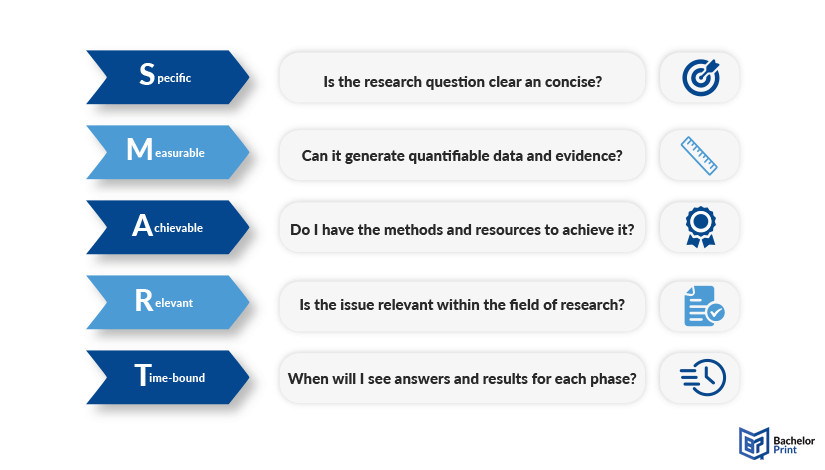
In the upcoming lessons, we will deconstruct each of these five components, using them to build powerful questions in your domains of bra design and relationship dynamics.
Conclusion
In this lesson, we established the foundational principle for all sound data work: every investigation must begin with a precisely formulated question.
Key Takeaways:
- The Problem-First Approach: Effective data analysis is problem-driven, not data-driven. The PPDAC model places "Problem" definition as the crucial first stage.
- Data is Not Truth: Data is a flawed and messy representation of reality. It is shaped by its collection and processing history, which is often outside the analyst's control.
- Questions as a Defense: A precise question is your primary tool for interrogating a dataset's fitness for purpose. It forces you to confront potential mismatches in population, definitions, and scope before you invest time in analysis.
By starting with a clear question, you give your analysis direction, relevance, and a much higher chance of producing valid, meaningful conclusions.
Preview of the Next Lesson:
In our next lesson, we will dive into the first letter of our new framework: 'S' for Specific. You will learn techniques to move from a general area of interest to a sharply defined question that leaves no room for ambiguity.