Introduction
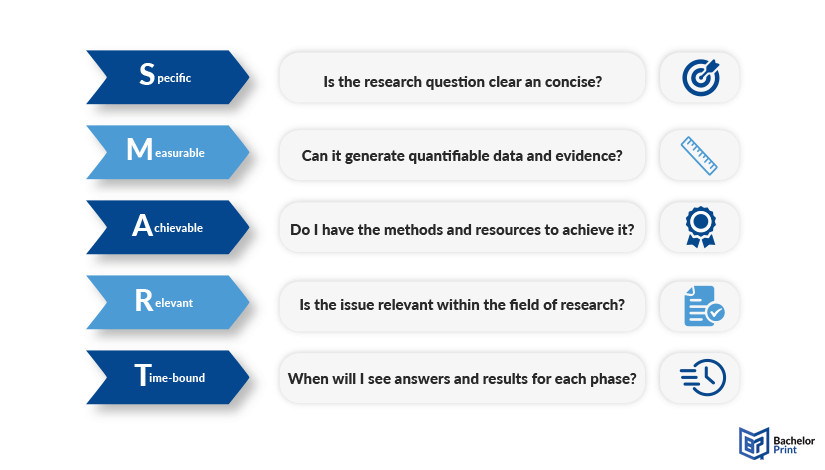
Welcome back. In our previous lesson, we established why formulating a precise question is the foundational step for any data analysis. We saw that without a clear question providing context, data is just noise, and we risk drawing flawed conclusions. We used the PPDAC framework to anchor this "problem-first" mindset and briefly introduced the SMART criteria as the tool for how to construct such questions.
Today, we will dissect the first and perhaps most important of these criteria: 'S' for Specific. This lesson addresses the learning outcome of distinguishing between vague and specific research questions. Our goal is to move from a general topic of interest to a sharply focused question that leaves no room for ambiguity. We'll practice this skill using examples from your areas of expertise: bra design and polyamorous relationship dynamics.
From Vague Ideas to Specific Inquiries
A specific question narrows a broad topic into a focused, answerable line of inquiry. It moves beyond general curiosity (e.g., "What about X?") to a precise problem statement (e.g., "What is the effect of A on B in population C?"). Vague questions often use ambiguous terms like "affect," "improve," or "impact" without defining what those terms mean in context.
To understand the practical difference, let's explore an article that breaks down the common pitfalls of formulating research questions.
How to write a research question that guides your study - Sourcely
The article 'How to write a research question that guides your study' from Sourcely provides excellent guidance on refining broad topics into focused questions. It highlights common mistakes, such as using vague language, and provides clear examples of how to add specificity.
Please read the following sections: 'Mistakes to Avoid,' 'Narrow Your Focus,' 'Focused and Clear,' 'Evaluate Your Question: Good vs. Bad Examples' (pay close attention to the table), and the first FAQ 'How do I know if my research question is too broad or too specific?'. As you read, concentrate on the techniques used to transform a weak question into a strong one.
As the article emphasizes, specificity is achieved by clearly defining the core components of your inquiry. Think of it as answering the essential "W" questions:
- Who or what are you studying? (The population or subject)
- What is the specific factor or intervention you are investigating? (The independent variable)
- What is the specific outcome you want to measure? (The dependent variable)
Let's put this process into practice.
Application 1: Specificity in Bra Design
A common goal in your hobby is to design better-fitting bras. This goal, however, is not a research question. Let's refine it.
Vague Question: "How do different measurements affect bra fit?"
This question is a start, but it's too broad. "Different measurements" could mean anything, and "affect bra fit" is not a defined outcome. We can use more specialized knowledge to add precision. The following article on bra fitting provides the technical vocabulary we need.
Adventures in Bra Sewing: Figuring Out Fit Part 1: Where to Start
This article, 'Adventures in Bra Sewing: Figuring Out Fit,' details the nuances of bra measurement beyond standard sizing. It will provide us with the specific terminology needed to formulate a precise research question.
Please read the sections 'Where to Start with Measurements' and 'Where to Start with Wire Sizing.' Focus on the distinction between basic measurements (high bust, full bust, under bust) and more detailed metrics like Bottom Cup Depth (BCD) and the Breast Root Trace (BRT).
Armed with this new terminology, we can systematically make our question more specific.
-
Original Vague Question: "How do different measurements affect bra fit?"
-
Specify the 'Who': Who are we trying to fit? Let's focus on a population known to have fitting challenges. The article
Adventures in Bra Sewingmentions the "omega shape"—a narrow root with a larger cup volume.- Intermediate Question: "How do different measurements affect bra fit for women with an omega breast shape?"
-
Specify the 'What' (Intervention): What specific measurement technique are we testing? Instead of "different measurements," let's compare the standard method (bust-minus-underbust) with the more precise Breast Root Trace (BRT) mentioned in the article, which is used to select a wire.
- Intermediate Question: "For women with an omega breast shape, does using a Breast Root Trace (BRT) instead of standard measurements improve bra fit?"
-
Specify the 'What' (Outcome): What does "improve bra fit" mean? A common complaint is underwire poking the wearer. Let's define our outcome as a reduction in this specific issue.
- Final Specific Question: "For women with an omega breast shape, does using a Breast Root Trace (BRT) to select the underwire size lead to a lower self-reported incidence of underarm wire-poking compared to selecting the wire based on the standard full-bust-minus-under-bust sizing formula?"
This final version is no longer a vague query. It specifies the population (women with an omega shape), the exact intervention (using a BRT for wire selection), a clear comparison group (standard sizing formula), and a concrete outcome (self-reported wire-poking). It is a testable hypothesis.
Application 2: Specificity in Relationship Research
Now, let's apply the same process to your interest in polyamorous dynamics.
Vague Question: "What determines satisfaction in polyamorous relationships?"
This is a huge topic. "Satisfaction" is a complex, multi-faceted concept, and "polyamorous relationships" describes a vast range of structures.
-
Original Vague Question: "What determines satisfaction in polyamorous relationships?"
-
Specify the 'Who': Let's narrow this down to the specific dynamic you are interested in: a single female with multiple male partners in an established, non-hierarchical arrangement.
- Intermediate Question: "In relationships with one female and multiple male partners, what determines satisfaction?"
-
Specify the 'What' (Intervention/Factor): What factor might influence satisfaction? Given the complexity of managing multiple relationships, time allocation and dedicated attention are plausible factors. Let's investigate the role of scheduled one-on-one time.
- Intermediate Question: "In relationships with one female and multiple male partners, does scheduled one-on-one time determine satisfaction?"
-
Specify the 'What' (Outcome): How do we define "satisfaction"? As a social researcher, you know this requires operationalization. We can't just ask, "Are you satisfied?" We need to break it down. The image below shows an example of a scale used in relationship research, the MRS (Marital Satisfaction Scale), which deconstructs the concept into specific items.
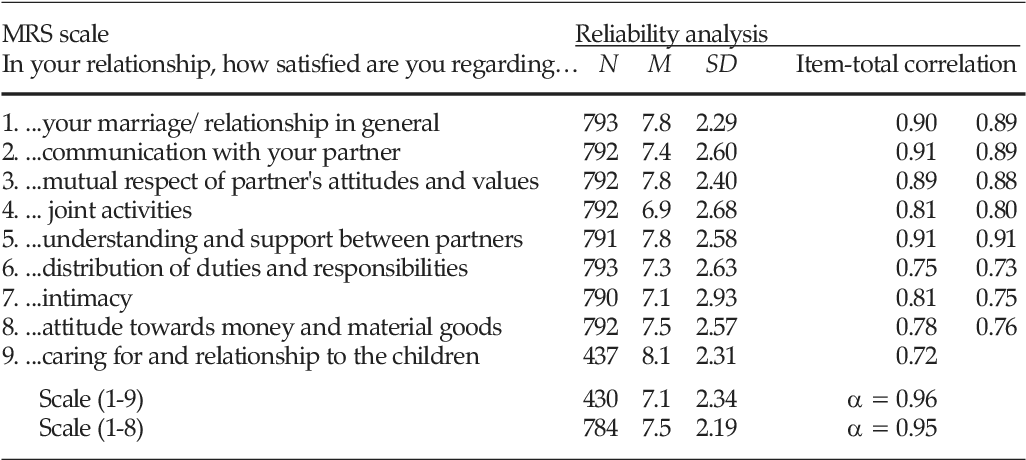
Instead of "satisfaction" in general, we can focus on specific dimensions from such a scale, like communication and intimacy.
- Final Specific Question: "In established, non-hierarchical polyamorous triads consisting of one female and two male partners, is there a positive correlation between the monthly frequency of scheduled, one-on-one 'date nights' and the male partners' individual satisfaction scores on the 'communication' and 'intimacy' items of the Marital Satisfaction Scale?"
This question is now highly specific. It defines the population (a specific polyamorous structure), the independent variable (frequency of date nights), and the dependent variables (scores on specific sub-scales of a validated instrument). This level of precision is exactly what your students need to learn to move from theory to practice.
Conclusion
In this lesson, we moved from the why to the how of formulating research questions by focusing on the 'S' in SMART: Specificity. Transforming a vague question into a specific one is a systematic process of refining the population, the variables, and the context of your inquiry.
Key Takeaways:
- Specificity is about precision: A specific question leaves no doubt about who is being studied, what is being manipulated or observed, and what outcome is being measured.
- Operationalize broad concepts: Vague terms like "satisfaction," "comfort," or "success" must be broken down into concrete, observable components. For a statistician, this is the bridge between a real-world problem and a statistical model.
- Domain knowledge is key: To ask specific questions, you need the right vocabulary. In our examples, knowing terms like "Breast Root Trace" or using a validated scale like the MRS was essential. This is why a deep understanding of the subject matter is indispensable.
Preview of the Next Lesson:
We have now formulated specific questions for our bra design and relationship scenarios. But are they Measurable? In the next lesson, we will tackle the 'M' in SMART. We will discuss how to identify or create the data and metrics needed to actually answer the specific questions we've just learned to formulate.