Introduction
Welcome to our final lesson in the module on SAD Metadata. In the previous lessons, we unpacked the "S" for Structural Metadata, which defines the data's format and organization, and the "A" for Administrative Metadata, which governs the data's lifecycle, access, and management. We saw how a bra pattern's file structure provides its shape and how an ethics protocol defines the rules for handling sensitive relationship data.
Today, we complete the framework by focusing on the "D": Descriptive Metadata. Our learning outcome is to identify descriptive metadata, which provides a summary of a dataset's content. Think of it as the cover and summary of a book. It doesn't contain the full story, but it tells a potential user what the story is about, who wrote it, and whether it's worth reading. This type of metadata is what makes data discoverable, understandable, and ultimately reusable.
1. Defining Descriptive Metadata
At its core, descriptive metadata answers the question, "What is this data about?" While structural metadata provides the blueprint and administrative metadata provides the logbook, descriptive metadata provides the label and the abstract. It gives context to the data's content.
Let's start with a foundational reading that defines the concept and gives some common examples.
This article from IBM, titled 'What is Metadata?', offers a clear introduction to descriptive metadata and its purpose.
Please read the section titled 'Descriptive metadata.' Pay close attention to the examples provided, such as title, author, keywords, and summary. Note the explanation of its function in making data searchable.
As the article notes, descriptive metadata is what allows a data catalog or search engine to find relevant datasets. Without it, you would have a library full of books with blank covers, making it impossible to find what you're looking for without opening every single one.
2. Key Elements of Descriptive Metadata
To effectively identify descriptive metadata, it helps to know its common components. These elements work together to create a rich summary of the dataset.
This image, from a data repository submission form, shows how these elements are captured in a real-world setting.
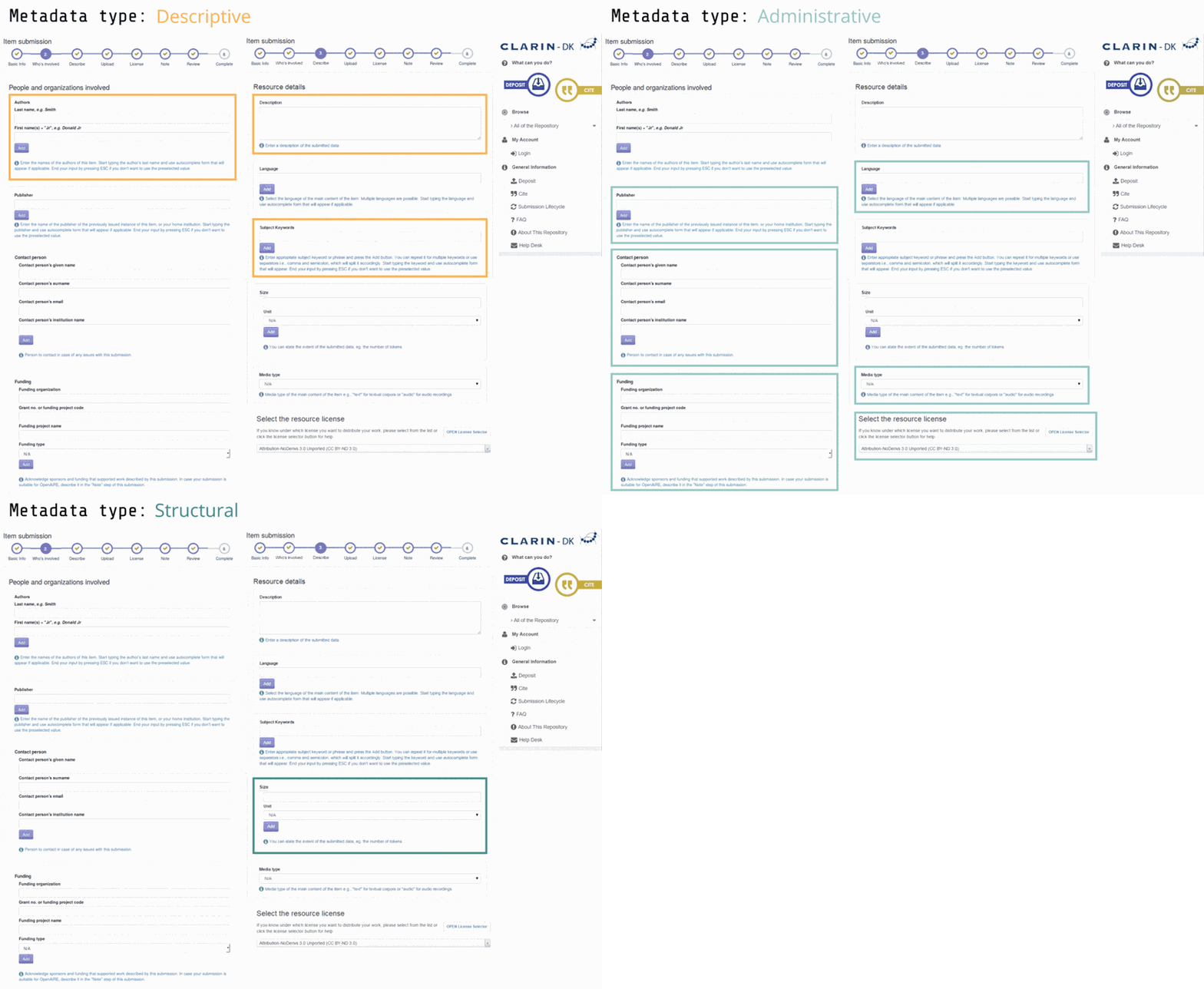
Building on this visual, let's look at a more formal list of common descriptive metadata elements.
Data Description - Research Data Management and Sharing
The University of Chicago Library's guide on Data Description provides a concise table of typical metadata elements, many of which are descriptive.
Please review the table under the 'Metadata' section. Focus on elements like 'Creator', 'Title', 'Description', 'Keywords', and 'Resource type'. These are the core components of descriptive metadata.
Based on these resources, here are the key elements you'll typically identify as descriptive metadata:
- Title: A clear, human-readable name for the dataset.
- Creator / Author: The person, group, or organization that created the data.
- Description / Abstract / Summary: A narrative summary of the dataset's content, purpose, and scope. This is the most crucial element for understanding what the data is about.
- Keywords / Tags: A list of terms that describe the data's main topics, facilitating search and discovery.
- Publication Year: The year the dataset was made public.
- Resource Type: The nature of the data (e.g., dataset, image, text, survey data).
3. Identifying Descriptive Metadata in Your Fields
Let's now apply this understanding to your specific areas of interest. We will create sample descriptive metadata for two hypothetical datasets.
Example 1: Bra Design Dataset
Imagine you have just completed a fit-testing phase for a new bra prototype and have compiled the results into a spreadsheet. The descriptive metadata might look like this:
- Title:
Fit Test Results for 'Aura' Seamless Bra Prototype (P-07) - Creator:
Lingerie Design Team, Acme Brands - Publication Year:
2024 - Resource Type:
Dataset - Keywords:
bra fitting,seamless bra,comfort testing,wear test,prototype development,e-textiles - Description: This dataset contains anonymized fit and comfort feedback for the 'Aura' seamless bra prototype (P-07). It includes data from 75 participants across a size range of 30A to 40G. Variables include standard bust/band measurements, a 7-point Likert scale rating for comfort, support, and aesthetics, and coded qualitative feedback on issues such as band rolling, strap slippage, and fabric feel. Data was collected during a two-week wear test in May 2024.
This description is a perfect example of the learning outcome. It summarizes the dataset's content ("75 participants," "Likert scale rating," "qualitative feedback"), allowing another designer or a new team member to immediately grasp what the file contains without having to open it and decipher the columns.
Example 2: Polyamorous Relationship Study Dataset
Now, consider a dataset from your social research work, where you've conducted a series of interviews.
- Title:
Communication Strategies in Established Single-Female-Multiple-Male Polyamorous Dynamics - Creator:
Dr. [Your Name], [Your Institution] - Publication Year:
2023 - Resource Type:
Dataset (transcripts, coded) - Keywords:
polyamory,polyfidelity,non-monogamy,relationship studies,qualitative analysis,communication - Description: This dataset consists of 30 de-identified, semi-structured interview transcripts with individuals in long-term (5+ years) polyamorous relationships where a single female partner has two distinct male partners (a 'V' configuration). The data explores themes of managing schedules, emotional intimacy with multiple partners, conflict resolution, and the role of communication tools. The dataset includes raw transcripts and a separate file with thematic codes applied using NVivo software. All interviews were conducted between January and July 2023.
Again, this summary allows another researcher to quickly assess the dataset's relevance for a meta-analysis or a follow-up study, demonstrating the power of good descriptive metadata.
4. Descriptive Metadata Within the Data
Descriptive metadata doesn't just describe the dataset as a whole; it can also describe the elements within it. This is crucial for ensuring that data is interpreted correctly.
The following video introduces the concept of a "Business Glossary," which is a perfect example of this internal descriptive metadata.
This short video from ness-intricity101, titled 'What is Metadata Management?', explains how a Business Glossary provides clear definitions for data elements, preventing ambiguity.
Please watch from 03:47 to 04:50. The video discusses what a 'Business Glossary' is and why it's important to have a central location for business descriptions of data elements, like defining what 'Shipment Date' actually means.
In your contexts:
- Bra Design: A data dictionary might state:
comfort_score (numeric)- 'A self-reported score from 1 (very uncomfortable) to 5 (very comfortable), collected after 8 hours of wear.' This description prevents someone from misinterpreting the scale. - Relationship Study: A codebook might define:
comm_freq (numeric)- 'The average number of dedicated, one-on-one conversations reported per partner per week.' This clarifies what "communication frequency" is measuring.
These column-level descriptions are a vital part of the descriptive metadata.
Conclusion
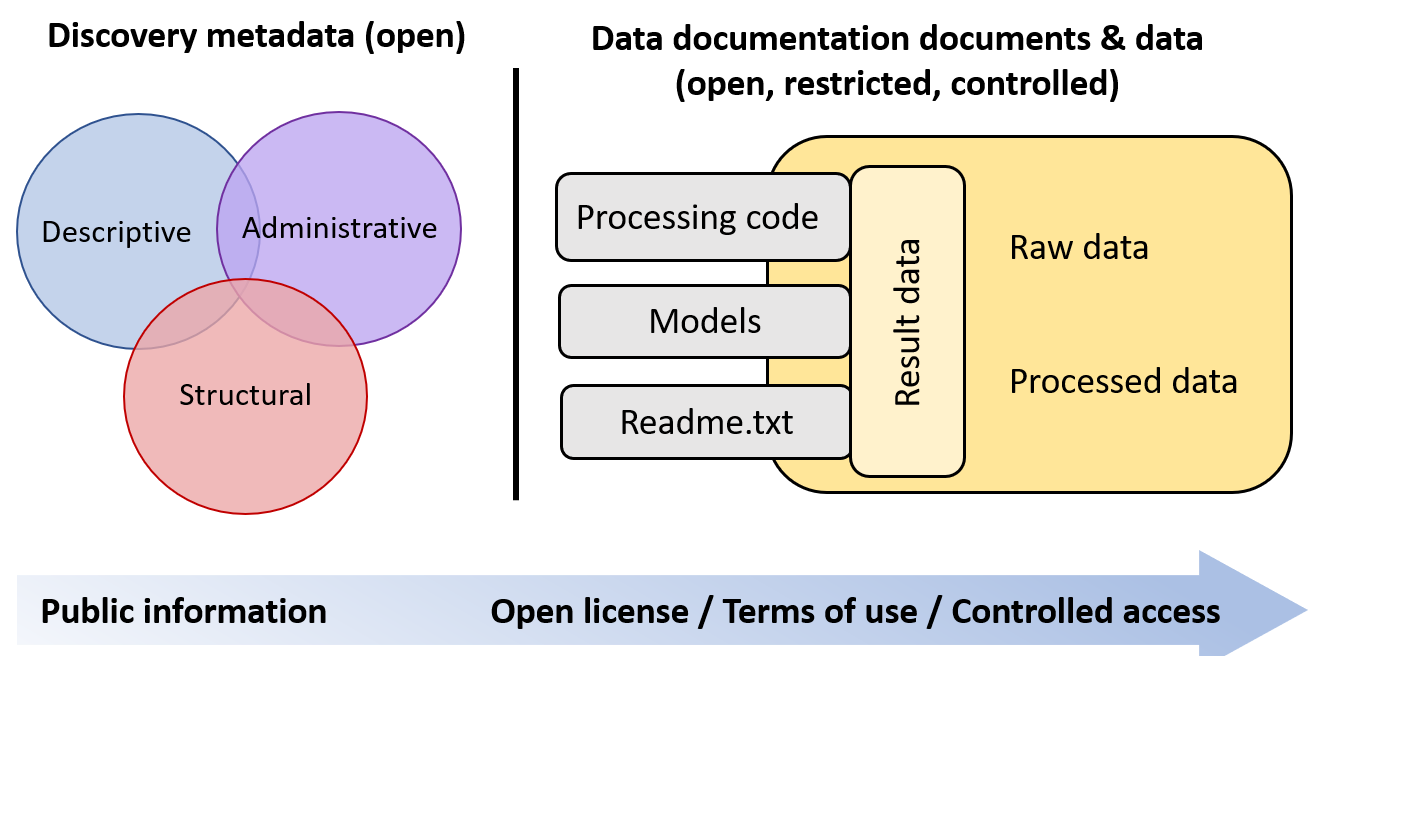
This lesson concludes our journey through the SAD framework. We have defined Descriptive Metadata as the information that answers the question, "What is this data about?" It is essential for making data findable, understandable, and reusable by others.
Key Takeaways:
- Descriptive metadata summarizes the content of a dataset.
- Its primary purpose is to facilitate data discovery and understanding.
- Key elements include title, creator, description/summary, and keywords.
- Descriptive metadata can describe the entire dataset (e.g., an abstract) and the individual elements within it (e.g., a data dictionary or codebook).
Preview of the Next Lesson:
Having completed our module on how to structure and document data with SAD metadata, we will now shift our focus. In the next module, we will begin our study of FLOATER, a framework for validating claims made from data. Our first lesson will tackle a foundational question: why is it so important to systematically validate data-driven claims before accepting them as truth? We will move from describing what data is to scrutinizing what data says.