Introduction
In our previous lessons, you've done the essential groundwork of an entrepreneur: you identified a problem, researched the competitive landscape, defined your target customer, and most recently, you built a landing page to test for real market intent. You've moved from pure hypothesis to gathering valuable data. Today's lesson is the culmination of that effort. We will synthesize everything you've learned about your market and your idea to make your first major strategic decision: which type of digital product to build first.
This is the pivotal moment where you choose your path forward. Based on your goals, you have three primary options: an online course, a coaching offer, or a no-code application. We will analyze the distinct advantages and requirements of each, creating a decision framework that will allow you to select the model that best aligns with the problem you've validated and your personal resources. Your background in business strategy will be invaluable here as we weigh trade-offs like scalability, time-to-market, and revenue potential.
The Core Difference: Course vs. Coaching
Your primary options, online courses and coaching programs, both revolve around sharing your knowledge. However, they deliver value in fundamentally different ways. A course packages your knowledge into a standardized, self-paced format, while coaching provides personalized, interactive guidance.
When To Choose Coaching vs. Online Courses: Complete Guide
This guide from Kajabi, a popular platform for knowledge creators, clearly breaks down the distinction between these two models.
Start by reading the core difference to understand the fundamental distinction in delivery. Then, review the side-by-side comparison table for a quick overview of how they differ across key areas like scalability, pricing, and time investment.
As the article highlights, the choice isn't just about the product; it's about the kind of business you want to build and the way you prefer to interact with customers.
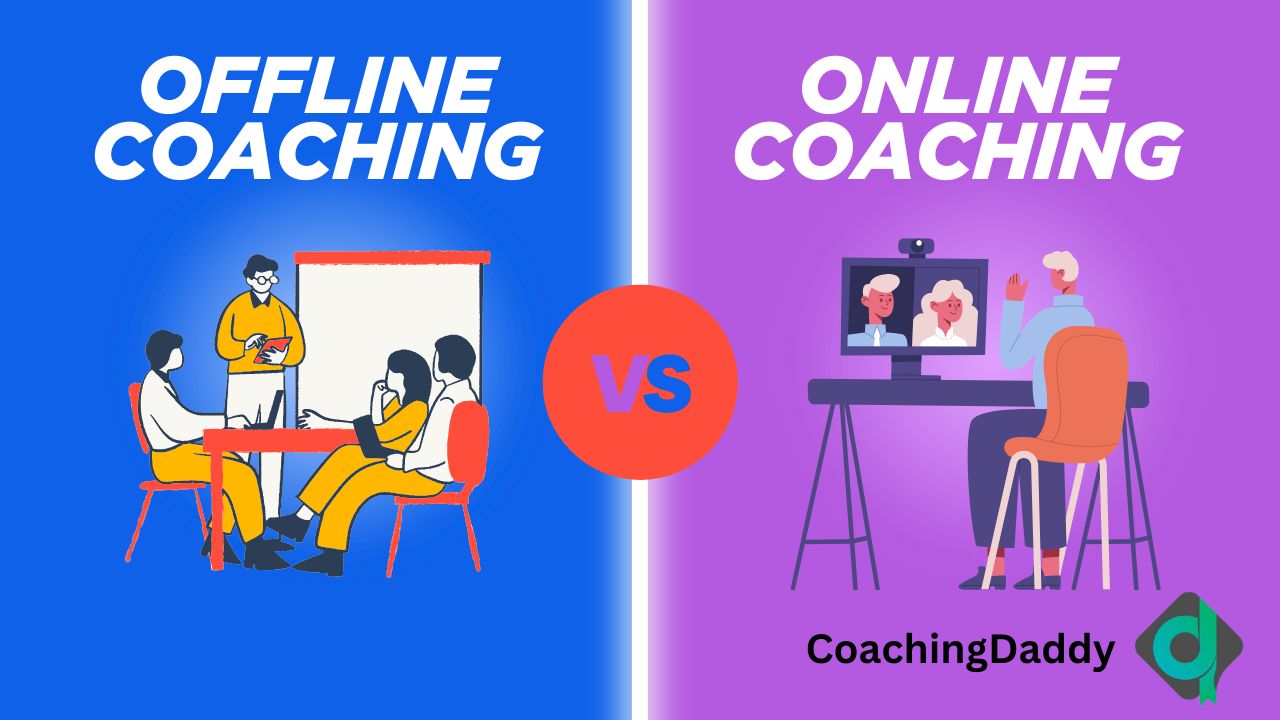
When to Choose Which Path
Making the right choice depends on the nature of the problem you're solving and your goals.
When an Online Course Makes Sense
An online course is an excellent choice when you are teaching a specific, repeatable skill or process with a clear beginning, middle, and end.
When To Choose Coaching vs. Online Courses: Complete Guide
Let's continue with the Kajabi article to explore the specific scenarios best suited for a course.
Read the section "When To Choose Online Courses". As you read, think about the problem you validated. Can the solution be broken down into a repeatable, step-by-step process that would apply to 80% of your potential customers in the same way?
When a Coaching Offer is a Better Fit
Coaching shines when your topic requires personalization, accountability, or guidance through complex, nuanced situations. It's also a powerful way to start.
When To Choose Coaching vs. Online Courses: Complete Guide
Now, let's look at the case for coaching using the same resource.
Read the section "When To Choose Coaching". Consider your survey responses and the pain points you identified. Do they suggest a need for high-touch, individualized support?
Many successful entrepreneurs actually recommend starting with coaching, even if the long-term goal is a scalable course. Let's explore why.
How to Sell AI Digital Products (beginner's guide)
In this video, Nathan Nazareth makes a strong case for why coaching is often the best model for a beginner.
Watch the segment from his number one recommendation. Pay close attention to his arguments about speed to launch, high perceived value, and the ability to scale from one-on-one to one-to-many. He also addresses the common concern of not being "expert enough," which is a crucial mindset for any new coach.
The key insight here is that coaching allows you to get paid while you validate and refine your process with your first few clients. Their problems, questions, and successes become the raw material for a future, battle-tested online course.
The Third Path: The No-Code Application
Your third option is to build a no-code app. This path is fundamentally different. Instead of teaching a solution, you build a tool that is the solution. This is ideal for problems that can be solved with automation, better data organization, or a streamlined workflow. Given your interest, it's important to understand where this fits.
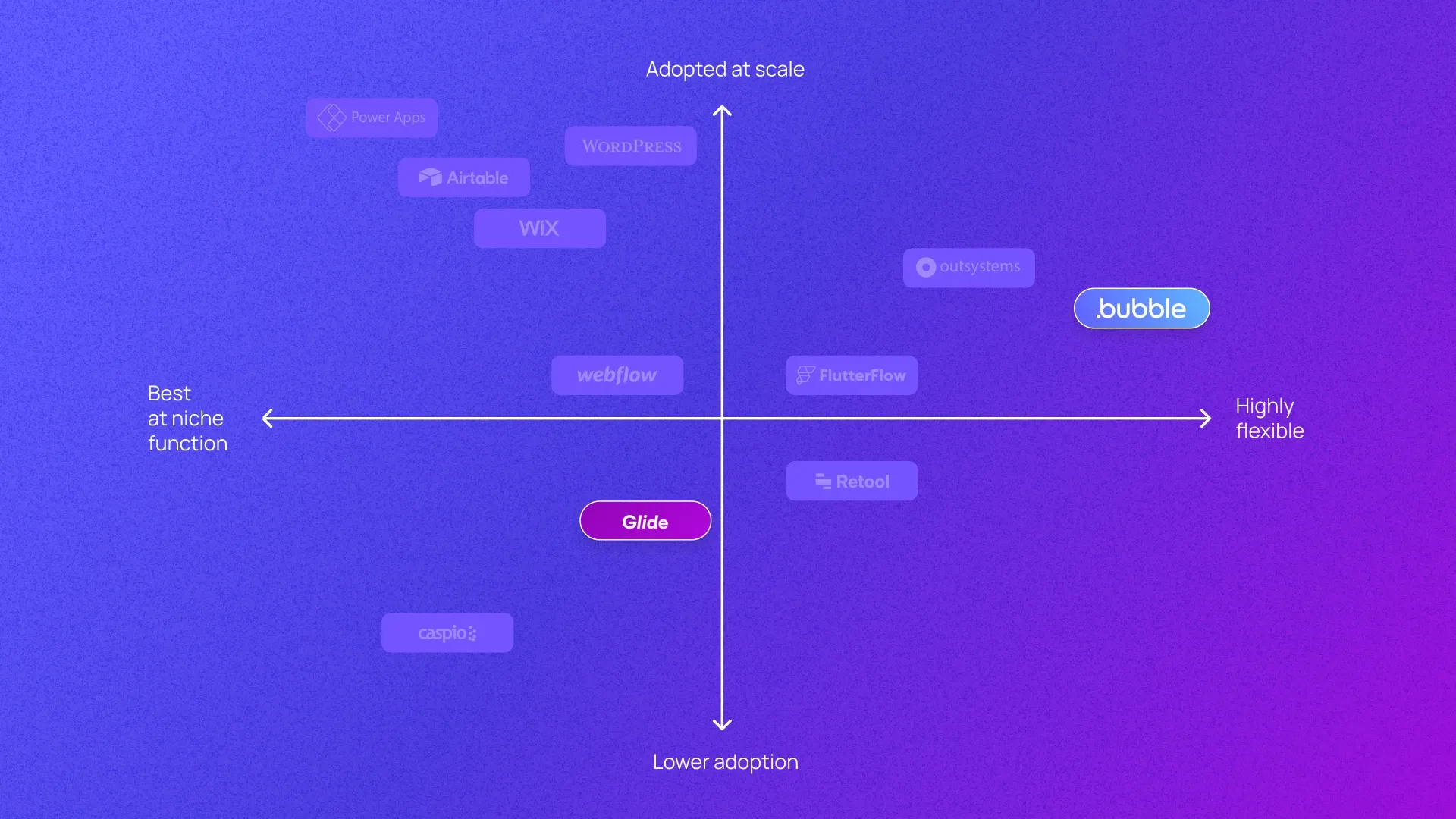
Vibe Coding vs No-Code vs Low-Code Comparison (2026) - Taskade
This article from Taskade provides a clear framework for understanding the no-code landscape and when to choose it.
First, read the section "What Is No-Code?" to get a clear definition and see examples of key tools, including Bubble and Glide. Then, jump to the section "Decision Framework" and focus specifically on the criteria under "Choose No-Code." This will give you a clear checklist to see if your validated problem is a good fit for a software solution.
A no-code app can be highly scalable but often requires a more significant upfront time investment to learn the platform (like Bubble) and build the minimum viable product (MVP).
A Strategic Framework: The Product Ladder
Your decision today is not about a permanent, irreversible choice. It's about choosing the best first step. Successful creators often build a "product ladder" or "monetization ladder," where different offers serve customers at different price points and commitment levels.
How I Would Sell Digital Products (If I Could Start Over)
Creator Sandra Di explains this concept of a "product ladder" and how it creates a cohesive business.
Watch the section from mapping out a product ladder. Notice how she arranges low-ticket, mid-ticket, and high-ticket offers. She explicitly places coaching as a high-ticket offer, demonstrating how it can be the premium tier of your product ecosystem.
This strategic view allows you to see how starting with coaching (a high-ticket offer to validate your process) can naturally lead to creating a mid-ticket online course later on. This "Coaching-to-Course Pipeline" is a proven model. You use the deep insights from your first few coaching clients to build a course that perfectly addresses real-world challenges.
Your Decision Framework
It's time to make your choice. Review the evidence you've gathered—your survey results and waitlist sign-ups—and answer the following questions. Write down your answers to solidify your thinking.
-
Nature of the Solution:
- Is the solution to your customer's problem primarily a transfer of structured knowledge (a repeatable process)? (Leans toward Course)
- Does the solution require significant personalization, accountability, or feedback on unique situations? (Leans toward Coaching)
- Can the solution be automated through a tool, workflow, or new interface? (Leans toward No-Code App)
-
Your Immediate Goal:
- Do you want to generate revenue as quickly as possible with minimal upfront product creation? (Leans toward Coaching)
- Do you prefer to invest time upfront to build a scalable asset that can generate more passive income later? (Leans toward Course or No-Code App)
- Do you want to achieve the highest possible price per customer? (Leans toward Coaching)
-
Your Starting Position:
- Do you have a very small (or no) audience right now? Coaching requires only a handful of clients to be successful.
- How many people signed up for your waitlist? A high number might indicate strong demand for a scalable course, while a smaller, highly engaged group might be perfect for a founding-member coaching program.
- How confident are you in your solution? Coaching allows you to refine your method with real clients, while a course requires you to have the process fully mapped out beforehand.
Based on your answers, make a decision. There is no single "right" answer, only the one that is right for you and your business at this moment.
Conclusion
In this lesson, you've moved from data collection to strategic decision-making. You've compared the three primary digital product models—online courses, coaching, and no-code apps—and analyzed them against the problem you've validated. You learned that coaching is often the fastest way to get started and validate a high-ticket offer, which can then inform a more scalable online course as part of a larger "product ladder." You also identified the specific criteria that make an idea suitable for a no-code app.
Your task was to formally decide which path to pursue first. This decision will dictate the focus of our upcoming lessons.
- If you chose to build an online course, our next module, "Structuring and Planning Your Online Course," will guide you through defining learning outcomes and creating a course outline.
- If you chose to create a coaching offer, we will jump to the "Building Your Coaching Offer" module, where you'll define your niche, structure your packages, and set up your systems.
- If you chose to build a no-code app, we will proceed to the "Introduction to No-Code App Development" module to plan your app's features and get started with Bubble.