Welcome to our next lesson on adaptive planning. In our previous session, we successfully stress-tested our tour plan against a sudden timeline compression. You learned to apply operations management techniques like fast-tracking and crashing to re-optimize for a peak experience under severe time constraints.
Today, we confront a different kind of 'shock' event—one that threatens not the timeline, but the entire operation's integrity. We will shift our focus from temporal optimization to information security. Your objective for this lesson is to stress-test the tour plan against the arrival of an unplanned visitor and specify the adaptive response for maintaining discretion. This scenario demands a systematic approach to risk analysis and the design of robust security protocols.
Framing the Risk: Failure Mode and Effects Analysis (FMEA)
As an efficiency expert, you understand that robust systems aren't just well-planned; they are designed with failure in mind. We will begin by applying a classic tool from engineering and operations management: Failure Mode and Effects Analysis (FMEA). FMEA is a structured way to identify potential failures, understand their consequences, and plan actions to mitigate them.
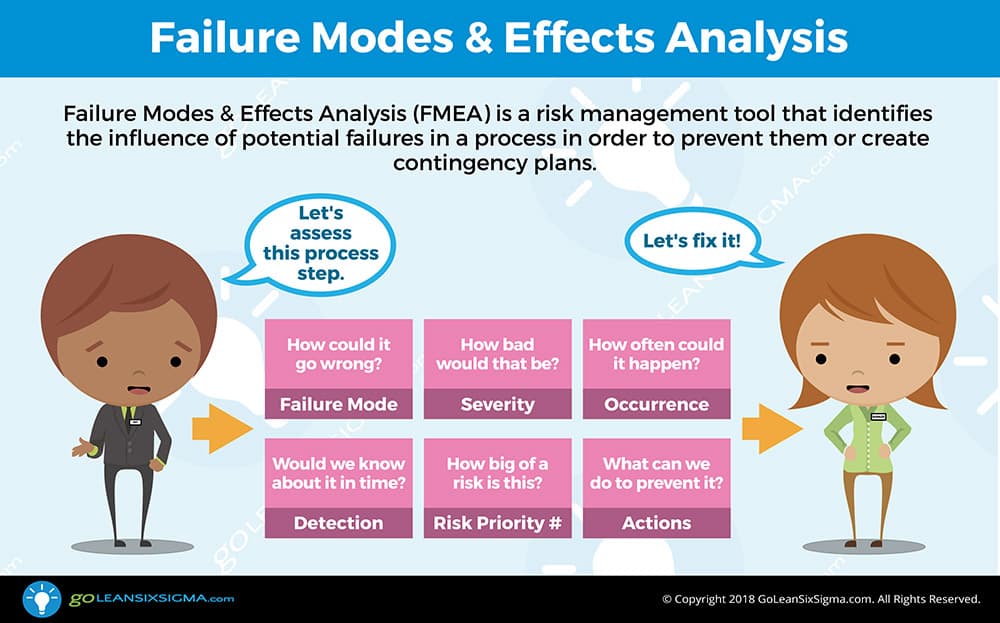
FMEA gives us a framework to move from "What if someone shows up?" to a systematic analysis of the problem.
Understanding Failure Mode and Effects Analysis (FMEA)
This article from Fresh Consulting provides an excellent overview of FMEA. It will formalize the risk analysis process we are about to undertake.
Read the introduction and the section titled What is FMEA? to grasp its purpose as a proactive, systematic method for evaluating and mitigating potential failures.
Let's apply the FMEA logic to our scenario:
- Failure Mode: An unplanned, unannounced visitor (e.g., a relative, neighbor, or mutual friend) arrives at the house during the tour.
- Potential Effects of Failure:
- Exposure of the cuckold-hotwife arrangement.
- Irreparable damage to the friendship with the bull.
- Severe emotional distress for all three parties (jealousy, guilt, panic).
- Violation of the fundamental 'best friend trust' mechanism.
- Severity: The consequences are catastrophic to the primary relationship and the arrangement. On a scale of 1 to 10, this is a 10.
- Potential Causes:
- A well-meaning friend or relative deciding to "check in" on the wife.
- A spontaneous social call from a neighbor.
- An emergency or urgent matter requiring an in-person visit.
Given the extreme severity of this failure mode, we must design a robust set of countermeasures. The "corrective action" in FMEA terminology is our adaptive plan. To build this plan, we will turn to the discipline of Operations Security (OPSEC).
Designing the Countermeasures: Operations Security (OPSEC)
OPSEC is a process originally developed by the military for protecting sensitive information from being discovered by adversaries. In our context, the "adversary" is the unplanned visitor (though their intent is likely not hostile), and the "sensitive information" is the true nature of the bull's presence.
OPSEC provides a powerful framework for managing discretion. It teaches us to think like an observer to identify and eliminate clues that could reveal our activities.
Learn OpSec Fundamentals in 15 Minutes!
This video by Sam Bent provides a concise and structured introduction to OPSEC fundamentals. It will give you the core concepts needed to build our adaptive protocol.
First, watch the section from the definition of OPSEC to understand its purpose: identifying what an adversary can observe and implementing countermeasures. Then, pay close attention to the five main steps of the OPSEC process: identifying critical information, threat analysis, vulnerability analysis, risk assessment, and applying countermeasures. We will use these five steps to structure our plan.
Building the Adaptive Protocol: An OPSEC-Driven Response
We will now use the five-step OPSEC process to design a multi-layered protocol for handling an unplanned visitor.
Step 1: Identify Critical Information
What information must be protected from the visitor?
- The fact that the bull is present in the house.
- The nature of the wife and bull's interaction (intimacy, extreme familiarity).
- Any physical evidence of the bull's extended stay (luggage, toiletries, clothing).
- Any sensory evidence of intimacy (lingerie, specific scents, a "lived-in" bedroom).
Step 2: Threat Analysis
The "threat" is the visitor. Their method of "collection" is passive observation and conversation. They will be looking for anything that deviates from the expected norm—a wife living alone while her husband is away.
Step 3: Vulnerability Analysis
A vulnerability exists where the visitor can observe an "indicator" that exposes critical information. Let's analyze our vulnerabilities using key OPSEC indicator types.
Learn OpSec Fundamentals in 15 Minutes!
This next segment of the "Learn OpSec Fundamentals" video explains the major types of indicators. Understanding these will help you spot your plan's weak points.
Watch the section on OPSEC Indicators. Focus on the concepts of signature, associations, contrast, and exposure.
- Contrast: The bull's car in the driveway creates a strong contrast with the expected "profile" of the husband being away. The presence of a man in the house is a major deviation.
- Associations: Seeing the wife and bull together might seem normal, but if their body language suggests an intimacy beyond friendship, that "association" becomes a critical indicator.
- Signature: A specific item, like the bull's distinctive jacket on the coat rack, can be a unique signature that identifies his presence.
- Exposure: The longer a visitor stays, the greater the exposure and the higher the probability they will observe an indicator.
Step 4 & 5: Risk Assessment and Applying Countermeasures
The risk of detection is high, and the severity is catastrophic. Therefore, we need a robust, multi-layered set of countermeasures. This is our adaptive plan.
The Unplanned Visitor Protocol
This protocol is a cascading response system designed to prevent detection and manage the situation at every stage.
Layer 1: Prophylactic OPSEC (Pre-Tour Controls)
The best way to handle this failure mode is to prevent it.
- Information Control: Before the tour, the wife should proactively message her social circle (close friends, family) that she'll be "busy with a project" or "taking time for herself" and will be less available for spontaneous visits. This reduces the Occurrence rating in our FMEA.
- Environment Sanitization: The 'caretaker' frame for the bull should be established. His car should be parked in the garage or down the street, never in the driveway, to reduce the 'contrast' indicator.
Layer 2: Immediate Response Protocol ("The Doorbell Rings")
This protocol activates the moment a visitor is detected.
- Execute "Code Grey": A pre-agreed-upon phrase (e.g., "The package has arrived") is spoken by whoever spots the visitor first. This triggers the protocol instantly and without panic.
- Containment: The bull immediately and silently moves to a designated and secure "safe room" (e.g., the master bedroom, an office with a lock). He takes his phone and any personal items (keys, wallet) with him.
- Sanitization Sweep: The wife takes 10-15 seconds to do a rapid visual sweep of the main living area, removing any obvious indicators (e.g., a second glass, the bull's shoes by the door, a men's magazine).
- Engage Visitor: The wife answers the door, appearing calm and slightly surprised.
Layer 3: In-Visit Management Protocol ("Hiding in Plain Sight")
The goal is to control the environment and the narrative.
Risk Mitigation: How to Practice Proper OPSEC
The principle of hiding sensitive items is central to in-visit management. This article, while focused on preppers, offers a universally applicable mindset.
Read the section titled Careful Storage. We will adapt this principle from hiding physical supplies to hiding any evidence of the bull's presence.
- Environmental Control: The wife keeps the visitor contained within "safe zones" (e.g., the living room, kitchen). The safe room (where the bull is) is declared off-limits with a plausible excuse ("Oh, it's such a mess in there, I'm in the middle of reorganizing").
- Narrative Control: If the visitor is a mutual friend who might ask about the bull, the wife preemptively reinforces the 'caretaker' frame. "It's been so quiet here. [Bull's Name] was a lifesaver, he dropped by yesterday to help me with some things, but I've just been relaxing since."
- Bull's Protocol (in Safe Room):
- Absolute Silence: No movement, no noise. Phone is on silent, with vibration off.
- Zero Digital Signature: Do not connect to the home's WiFi. Do not make calls or send texts that could create noise.
- Patience: Remain in place until an "all clear" signal is given.
Layer 4: Visitor Extraction & System Reset
The wife's goal is to end the visit politely but efficiently to minimize exposure.
- Polite Extraction: Use a plausible excuse to cap the visit's duration. "It was so lovely of you to stop by! I was just about to start a work call/take a nap, I'm still so tired."
- Confirm Departure: The wife must visually confirm the visitor has left the property and is no longer in a position to observe the house.
- "All Clear" Signal: The wife sends a pre-arranged text to the bull (e.g., "The sky is clear").
- Post-Visit Debrief: Once the bull emerges, they take a few minutes to debrief. What worked? What was close to failing? This data is used to refine the protocol for the future.
Conclusion
You have now stress-tested the tour plan against a critical discretion failure and designed a comprehensive, multi-layered adaptive response. By combining the analytical framework of FMEA with the practical security tactics of OPSEC, you've created a protocol that moves beyond simple hope and into the realm of robust operational planning.
Key Takeaways:
- FMEA frames the risk: It forces a systematic analysis of what can go wrong (Failure Mode), the consequences (Effects), and the urgency (Severity).
- OPSEC provides the solution: It offers a structured process for designing countermeasures by identifying critical information, analyzing vulnerabilities, and eliminating indicators.
- A robust plan is layered: It includes preventative controls (prophylactics), immediate responses (protocols), in-event management, and post-event resets.
- Managing discretion is about managing indicators: Success hinges on controlling what an observer can see, hear, and associate to prevent them from piecing together the true picture.
This lesson concludes our module on adaptive planning for the tour scenario. We've tackled disruptions of time and security. In our next module, we will pivot to the photoshoot scenario, where the challenges are not logistical emergencies but creative and brand-related constraints. Your first task will be to redesign the entire photoshoot narrative when a core element—the saree—is unexpectedly disallowed by the client.