In our last lesson, we navigated a 'Red Zone' disruption where the timeline unexpectedly stretched, forcing a strategic pivot to a remote dynamic. You designed a robust protocol to manage prolonged unavailability, turning a potential failure into an opportunity for psychological intensification.
Today, we confront the opposite challenge: timeline compression. This is another high-stakes 'Red Zone' event, but one that demands a completely different set of adaptive tools from the world of operations management. Your goal for this lesson is to stress-test the tour plan against an unexpected shortening of the husband's tour and specify the adaptive response for activities and reunion. We will move from a strategy of adaptation and substitution to one of intense prioritization and compression.
The Value of Stress-Testing Your Plan
Before we design the response, it's crucial to understand why we are doing this. Any plan, no matter how well-conceived, contains assumptions. Stress-testing is the process of deliberately challenging those assumptions to see where the plan might break.
Why You Should Stress Test Your Recovery Plans
This article from MHA-IT explains the core logic of stress testing in a business context, but the principles are universal. It highlights how plans often rely on overly optimistic assumptions, which is precisely what we want to uncover.
Read the introduction from the beginning to understand the positive role of stress testing. Next, focus on the section Optimistic Assumptions and Unrealistic Tests, which explains how untested plans can fail. Finally, read the concluding section, Leveraging Stress Tests, to grasp that the goal is to identify gaps and create a more realistic, functional plan.
The "shock" we will apply to our tour plan is a sudden, unexpected early return of the husband. This stress test will reveal how robust our planned emotional and logistical arc is against a severe time constraint. Our original plan assumed a certain duration to achieve its goals; this assumption is about to be invalidated.
Defining the Shock and Analyzing the Impact
Imagine the tour is proceeding as planned. There are five days left. The husband calls the wife with this message:
"Great news! I finished the project ahead of schedule. My flight is booked. I'll be home in 48 hours."
This is an "external disruption" that causes what project managers call schedule slippage—in this case, the deadline has moved up. The total time available for the planned experience has been slashed by 60%.
The immediate impacts are significant:
- Truncated Experience Arc: The carefully paced escalation of intimacy and novelty is cut short.
- Invalidated Reunion Protocol: The plan for winding down the wife-bull dynamic and preparing for the husband's return is now obsolete.
- Resource Constraint: Time, the most critical resource for the experience, has become acutely scarce.
Our task is not to panic, but to re-optimize the plan for the new reality.
The Adaptive Strategy: Schedule Compression
Your background in Operations Research provides the perfect mental models for this problem. We need to apply schedule compression techniques to salvage the core objectives of the tour. The two most relevant techniques are Fast-Tracking and Crashing.
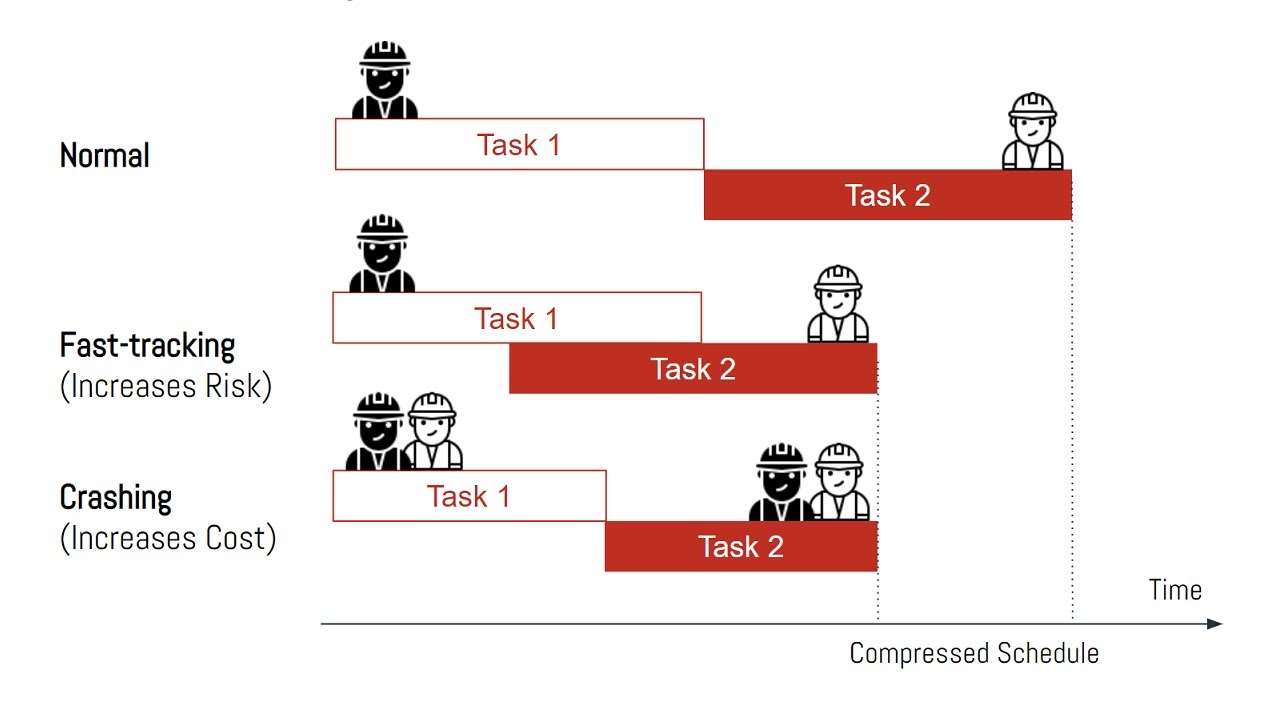
Let's translate these concepts into our scenario:
-
Fast-Tracking (Doing things in parallel): This involves overlapping activities that were originally planned to happen sequentially. For the tour, this means combining emotional connection, intimate encounters, and logistical wrap-up into a condensed timeframe. This technique accepts an increase in risk—the risk of feeling rushed or emotionally overwhelmed.
-
Crashing (Adding resources to shorten duration): This involves applying more resources to a task to get it done faster. In our context, "resources" aren't just people; they are intensity, novelty, and emotional significance. We can "crash" the final encounter by making it exceptionally intense or memorable, compensating for the lack of future encounters. This technique accepts an increase in cost—be it emotional energy, planning effort, or financial expenditure.
Designing the Compressed Adaptive Plan
The objective is no longer to complete the full, leisurely experience. The new objective is twofold:
- Deliver a powerful, memorable peak experience in the final 48 hours.
- Execute a flawless transition protocol to ensure a smooth and positive reunion.
Step 1: Triage and Re-Scope the Plan
First, we must ruthlessly prioritize. What elements are absolutely essential to the tour's success criteria?
- Must-Have:
- One final, significant intimate encounter to fulfill the 'unmet sexual needs' mechanism.
- A clean and unambiguous 'handoff-back' to the husband, reinforcing the 'best friend trust' mechanism.
- Sufficient 'reset' time for the wife between the bull's departure and the husband's arrival.
- Cut from Scope:
- Any planned intermediate dates or activities.
- The slow, multi-day sartorial escalation (it will be compressed into one evening).
- Any 'nice-to-have' exploratory activities.
Step 2: Apply Fast-Tracking and Crashing
With the scope reduced, we now compress the remaining critical tasks.
-
Action (Fast-Tracking): The "final date" and the "peak intimate encounter," originally planned for separate days, are now merged into a single, cohesive evening. This single event must now carry the weight of the entire final phase of the tour.
-
Action (Crashing): We increase the 'resource intensity' of this final evening.
- Crashing the Date: Instead of a simple dinner, the bull books a last-minute luxury hotel room for the evening. This creates a novel, high-stakes environment that elevates the significance of the final encounter. This is a direct injection of financial resources to accelerate the creation of a peak memory.
- Crashing the Encounter: This final intimate session is framed as the grand finale. It's not just another encounter; it is the encounter. It should be designed to be the most intense and fantasy-fulfilling of the entire tour, perhaps incorporating elements from the lingerie wardrobe that were being saved for later. This leverages the resource of intensity to maximize impact in a short time.
Step 3: Design the Compressed Reunion Protocol
This is the most critical phase from a risk management perspective. A flawed handover can undermine the entire tour. The concept of "buffer time" from project management is essential here.
How to prevent & fix schedule slippage in projects? - Birdview PSA
This article on schedule slippage provides a useful concept for our reunion protocol.
In the section "Fixing poor time estimation & unrealistic scheduling," read the short sub-section Apply buffer time. We will apply this principle to the emotional transition.
The compressed reunion protocol looks like this:
- The Final Morning (T-minus 24 hours to return): The bull departs from the hotel or home early in the morning. The departure must be decisive and clean. No lingering.
- The Wife's Buffer Time (T-minus 24 to 8 hours): The wife has the entire day to herself. This is non-negotiable buffer time. It allows her to emotionally reset, process the experience, and shift her mindset from 'hotwife with bull' back to 'wife awaiting husband.' She can use this time for self-care, tidying the home, and mentally preparing for the reunion.
- The Handoff-Back Call (During Buffer Time): A crucial three-way communication to close the loop and reinforce trust.
- Bull to Husband: A brief call. "Heard the good news about your early return! Just wanted to let you know I dropped [Wife] off this morning after our final farewell dinner. She's incredibly excited to have you back. Thanks again for your trust, mate. It meant a lot." This message accomplishes three things: confirms the bull is gone, frames the final event innocuously ("farewell dinner"), and reinforces the friendship.
- The Reunion (T-minus 0 hours): The husband arrives at a calm, prepared home and a wife who is emotionally and mentally ready for his return. The focus is immediately and entirely on the couple's reunion.
Conclusion
You have now successfully stress-tested the tour plan against a sudden timeline compression. Instead of allowing the shock to derail the experience, you have designed a sophisticated adaptive response using core principles from operations management.
Key Takeaways:
- Timeline compression requires a shift from execution to optimization. The goal is no longer to complete every task, but to maximize the impact of the few remaining critical tasks.
- Schedule compression techniques like Fast-Tracking and Crashing are directly applicable. Fast-tracking increases risk (emotional overwhelm), while Crashing increases cost (intensity, money) to achieve the goal in less time.
- The adaptive plan must prioritize creating a 'peak experience' and a flawless transition, rather than trying to salvage the original leisurely pace.
- Buffer time is not a luxury but a critical component of the compressed plan, allowing for the necessary emotional and psychological transition before the reunion.
In our next lesson, we will stress-test the plan against a completely different vector: a security and discretion failure. You will be asked to design an adaptive response to manage the unexpected arrival of a visitor, forcing you to shift your focus from temporal optimization to information control.