Welcome to the next step in our journey from causal analysis to system engineering. In our previous sessions, we successfully deconstructed the causal mechanisms for both the hotwife-cuckold dynamic and the boudoir photoshoot, translating them into sets of controllable decision variables. You now have a clear "control panel" of inputs for both scenarios.
Today, we shift our focus from the inputs to the outputs. In the world of Operations Research, you cannot optimize a system without first defining what you are trying to achieve. An ambiguous goal leads to ambiguous results. Our task is to move beyond a vague objective like "have a successful experience" and define a concrete, measurable set of success criteria for the tour scenario. We will establish the Key Performance Indicators (KPIs) that will tell us if our engineered experience has met its objectives across three critical dimensions: satisfaction, discretion, and trust reinforcement.
The Objective Function: Defining Success
Before we can optimize any process, we must define its objective function. In your work as an efficiency expert, this is second nature—you define KPIs to track productivity, cost, or quality. We will apply the exact same logic here. An engineered relational experience is no different; its success must be measured against pre-defined targets. Without them, you are merely hoping for a good outcome. With them, you are engineering one.
A good KPI, whether in a factory or a relationship, shares several characteristics. It must be specific enough to be meaningful, measurable, and relevant to the overall goal.
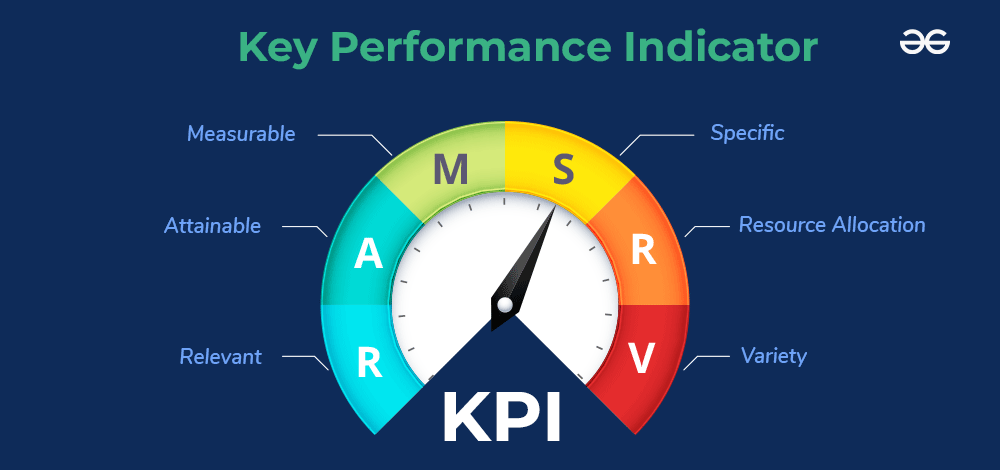
For the husband's tour scenario, we will define success across three distinct but interconnected pillars. A successful outcome requires achieving high performance in all three areas simultaneously:
- Satisfaction: Did the experience meet or exceed the emotional and sexual expectations of all three participants?
- Discretion: Was the privacy of the arrangement perfectly maintained, protecting all parties from social and reputational risk?
- Trust Reinforcement: Did the experience strengthen the existing bonds of trust between the husband and wife, and between the husband and his best friend?
Let's now operationalize each of these pillars into a set of concrete, measurable KPIs.
Pillar 1: Measuring Satisfaction
Satisfaction is inherently subjective, which makes it challenging to measure. To bring quantitative rigor to this, we can adapt tools from clinical psychology and relationship counseling. Your statistical background will appreciate the value of using a validated instrument for this purpose.
The Relationship Assessment Scale (RAS) is a widely used 7-item questionnaire designed to measure global relationship satisfaction. We will use it as the cornerstone for our satisfaction metrics.
Relationship Satisfaction Assessment | RAS | Greenspace (US)
This guide from Greenspace Health provides an overview of the Relationship Assessment Scale (RAS), including the questions, scoring methodology, and interpretation of results. It's a perfect tool for our needs.
Please read the entire guide, but pay close attention to: The summary of what the RAS measures. The seven questions that form the scale. The section on scoring, including the score ranges for 'Low,' 'Average,' and 'High' satisfaction. Note that items 4 and 7 are reverse-scored. The FAQ answer regarding the cutoff score for "relationship distress."
By adapting the RAS, we can establish clear, quantitative KPIs for satisfaction. These assessments would be completed individually by the husband and wife a few days after the tour concludes, to allow for emotional processing.
Satisfaction KPIs:
-
Primary KPI 1: Post-Tour Couple Satisfaction.
- Metric: The husband's and wife's individual scores on the RAS regarding their primary relationship.
- Target: Both scores must be ≥ 22, placing them firmly in the 'High satisfaction' category. A score below 21 for either partner signals a significant issue.
-
Primary KPI 2: Wife's Experiential Fulfillment.
- Metric: A custom, single-item question for the wife: "On a scale of 1 (Not at all) to 10 (Completely), to what extent did this experience fulfill your sexual and emotional needs as anticipated?"
- Target: A score of ≥ 9.
-
Secondary KPI: Husband's Compersion Level.
- Metric: A custom, single-item question for the husband: "On a scale of 1 (Very negative) to 10 (Very positive), what was your overall emotional experience knowing your wife was with your friend?"
- Target: A score of ≥ 8, indicating a positive experience of compersion (the joy one feels for their partner's joy).
These metrics transform the abstract goal of "satisfaction" into a scorable outcome, allowing for a clear-eyed evaluation of success.
Pillar 2: Measuring Discretion
Discretion is a non-negotiable "hoop test" for the entire operation. Unlike satisfaction, which is a continuous variable, discretion is largely binary: it was either maintained, or it wasn't. A single failure is a total failure. Therefore, our KPIs here are focused on a zero-defect target. The article "Guide to Rules Of Hotwife" provides excellent context on the importance of this pillar.
Guide to Rules Of Hotwife - The Monogamy Experiment
This guide from The Monogamy Experiment provides practical advice on establishing rules for hotwife arrangements. We will draw on its insights regarding privacy and discretion.
Please review the following sections: Read subsection 4, "Establish Discretion and Privacy," for a clear articulation of why this is critical. In the "Establishing Ground Rules" section, focus on the part discussing privacy and online presence. Finally, read the section "Navigating Public and Social Perception," which discusses handling potential judgment and maintaining discretion.
Drawing from these principles, we can define the following zero-tolerance KPIs for discretion.
Discretion KPIs:
-
Primary KPI: Information Security Breaches.
- Metric: The number of unauthorized disclosures of the arrangement's existence or details to any third party.
- Target: 0. This is absolute. The "authorized" list of people who know must be defined and agreed upon before the tour begins (in this case, just the three participants).
-
Secondary KPI: Operational Security Lapses.
- Metric: The number of "near misses" where privacy was almost compromised (e.g., an unannounced visit from a neighbor, a suspicious phone call from family that required a cover story).
- Target: 0. While not a full breach, a near miss is a leading indicator of weaknesses in the operational plan. Tracking these is essential for process improvement in future scenarios.
Pillar 3: Measuring Trust Reinforcement
This is perhaps the most crucial—and most complex—pillar. The foundational goal of such an arrangement within an existing relationship is to enhance it. The experience must act as a trust-building exercise, not an acid that corrodes it. Failure here means the entire endeavor was not just unsuccessful, but actively damaging.
The network graph below illustrates how different facets of a relationship are interconnected. Our goal is to ensure the tour experience strengthens the positive links—like those between the sexual relationship (EMS11), communication (EMS5), and fulfillment (PSS1)—while preventing the emergence of negative links driven by jealousy or insecurity.

To measure this, we combine the RAS with behavioral metrics and direct qualitative assessments.
Guide to Rules Of Hotwife - The Monogamy Experiment
We will revisit the "Guide to Rules Of Hotwife" to focus on the elements of trust, communication, and emotional management, which are central to this pillar.
Please read the following sections to understand the mechanisms of trust: The introduction, "Communication: The Foundation of a Hotwife Relationship," details the importance of emotional check-ins and handling jealousy. Subsection 2, "Establish Trust and Respect." The section on "Managing Emotional and Psychological Aspects," which covers jealousy, vulnerability, and the need for reassurance. The section on "Trust and Transparency." Finally, the section "Maintaining Balance," focusing on the need for reassurance and mutual satisfaction.
These principles inform our final set of KPIs.
Trust Reinforcement KPIs:
-
Primary KPI: Change in Relationship Satisfaction.
- Metric: The delta (change) between pre-tour and post-tour RAS scores for the husband and wife.
- Target: A score change of ≥ 0. A neutral or positive change indicates that the relationship's core satisfaction was not damaged and may have been enhanced. Any negative delta is a serious warning sign that requires immediate attention and debriefing.
-
Primary KPI 2: Distress Protocol Activations.
- Metric: The number of times the pre-defined distress protocol (e.g., use of a safe word by the wife, an emergency "I need to talk" call from the husband) was activated during the tour.
- Target: 0. This is another zero-tolerance metric. An activation signifies that emotional safety boundaries were breached.
-
Secondary KPI: Post-Tour Trust Assessment.
- Metric: A custom, single-item question for the husband and wife post-tour: "On a scale of 1 (Severely weakened) to 10 (Significantly strengthened), how has this experience impacted the trust in our relationship?" A similar question would be posed to the husband and bull regarding their friendship.
- Target: A score of ≥ 7 ("Strengthened"). A score below 6 ("No change") is acceptable, but scores of 1-5 indicate damage.
Conclusion
Today, we have laid the critical groundwork for optimizing the tour scenario by defining what success looks like in concrete, measurable terms. By establishing specific KPIs for satisfaction, discretion, and trust reinforcement, you have moved from abstract desires to a clear, data-driven objective function. You now have a scorecard to evaluate the outcome of the engineered experience, allowing you to learn, refine, and improve the process for the future. This is the essence of applying your expertise in efficiency to the complex domain of human relationships.
In our next lesson, we will perform the same exercise for the boudoir photoshoot scenario. We will define its unique success criteria, which will focus on a different set of outcomes, including visual impact, brand messaging, and narrative surprise.