Following our last session where we translated the causal mechanisms of the cuckold-hotwife dynamic into a set of controllable levers, we now turn our attention to the second case study: the boudoir photoshoot. Your goal is to engineer a campaign for a new plunge bra, leveraging the causal insights you previously uncovered about what makes such a photoshoot successful.
Just as before, our task is to move from abstract causal drivers—the 'busty toned figure' and 'persona subversion'—to a concrete list of decision variables. These are the practical, operational inputs you can manipulate to optimize the photoshoot's impact. Your experience designing lingerie gives you an innate understanding of form and presentation, which we will now systematize through the lens of your Operations Research background.
From Causal Mechanism to Controllable Levers
For the photoshoot, the "system" we are optimizing involves visual aesthetics, narrative psychology, and brand messaging. The two causal mechanisms you identified work in concert: the 'busty toned figure' provides the compelling physical subject, while 'persona subversion' creates the narrative hook that captures attention. Our job is to break down each mechanism into its component parts and identify every dial we can turn.
1. The 'Busty Toned Figure' Mechanism (Visual Asset Optimization)
This mechanism is not merely about the model's physique; it's about the deliberate choices made to showcase that physique to maximum effect. The goal is to use technical and artistic elements to sculpt, frame, and highlight the model's key attributes, particularly the bust and toned midsection, in service of promoting the plunge bra.

This mechanism gives us a suite of highly controllable visual variables:
-
Posing and Body Language: This is the most direct lever for shaping the silhouette. How the model positions her body determines which curves are accentuated and where the viewer's eye is drawn.
- Core Body Shape: Creating foundational "S-curves" and "triangles" with the body. This involves specific control over spinal arch, hip position, and limb angles.
- Limb & Extremity Positioning: The placement of hands, feet, and head. Pointed toes elongate the legs, specific hand placements can create a waist or frame the face, and head tilts convey mood.
- Muscle Engagement: Directing the model to tense or relax specific muscle groups to define a toned stomach or create tension in a pose.
-
Lighting and Composition: These technical variables are used to sculpt the body with light and shadow, guiding the viewer’s focus.
- Light & Shadow: The direction, softness, and intensity of light. Dramatic side-lighting can carve out abdominal definition, while soft, diffused light can create a more romantic, less-defined look.
- Camera Angle & Perspective: The height and angle of the camera relative to the model. A low angle can elongate the body and convey power, while a high angle can create a sense of intimacy or vulnerability. The fundamental rule that what is closest to the camera appears largest is a key principle to exploit here.
To master these variables, a deep understanding of posing fundamentals is essential. The following video provides an excellent, systematic breakdown of how to build poses from the ground up.
Boudoir Photography Posing Guide: Curves & Confidence with Yuliya Panchenko
This video from Professional Photographers of America, titled "Boudoir Photography Posing Guide," details the core principles of posing to accentuate female curves. It provides a methodical approach that aligns perfectly with our task of defining controllable variables.
Please watch the following segments: Triangles and Curves: This section explains the two foundational geometric shapes in posing. Pay close attention to how bending limbs creates triangles and arching the body creates S-curves. Accentuating Curves: This part details how to highlight specific curves—hips, back, booty, and breast. This is directly applicable to showcasing the 'busty toned figure'. Note the discussion on how pushing a hip toward or away from the camera alters its perceived size. Building a Pose: This is the most critical section for our purposes. It outlines a step-by-step method for constructing a pose, starting from the legs and moving up through the body. This is the operational sequence for manipulating our variables. Adapting to the Client: This segment discusses how to use posing to either hide insecurities or embrace and reveal body parts, a key consideration for optimization.
2. The 'Persona Subversion' Mechanism (Narrative Impact Optimization)
The second causal driver is the narrative surprise created by transforming the model's persona from modest and traditional to bold and sensual. This leverages the psychological power of contrast. To optimize this, we must control the variables that define both the starting and ending personas, as well as the transition between them.
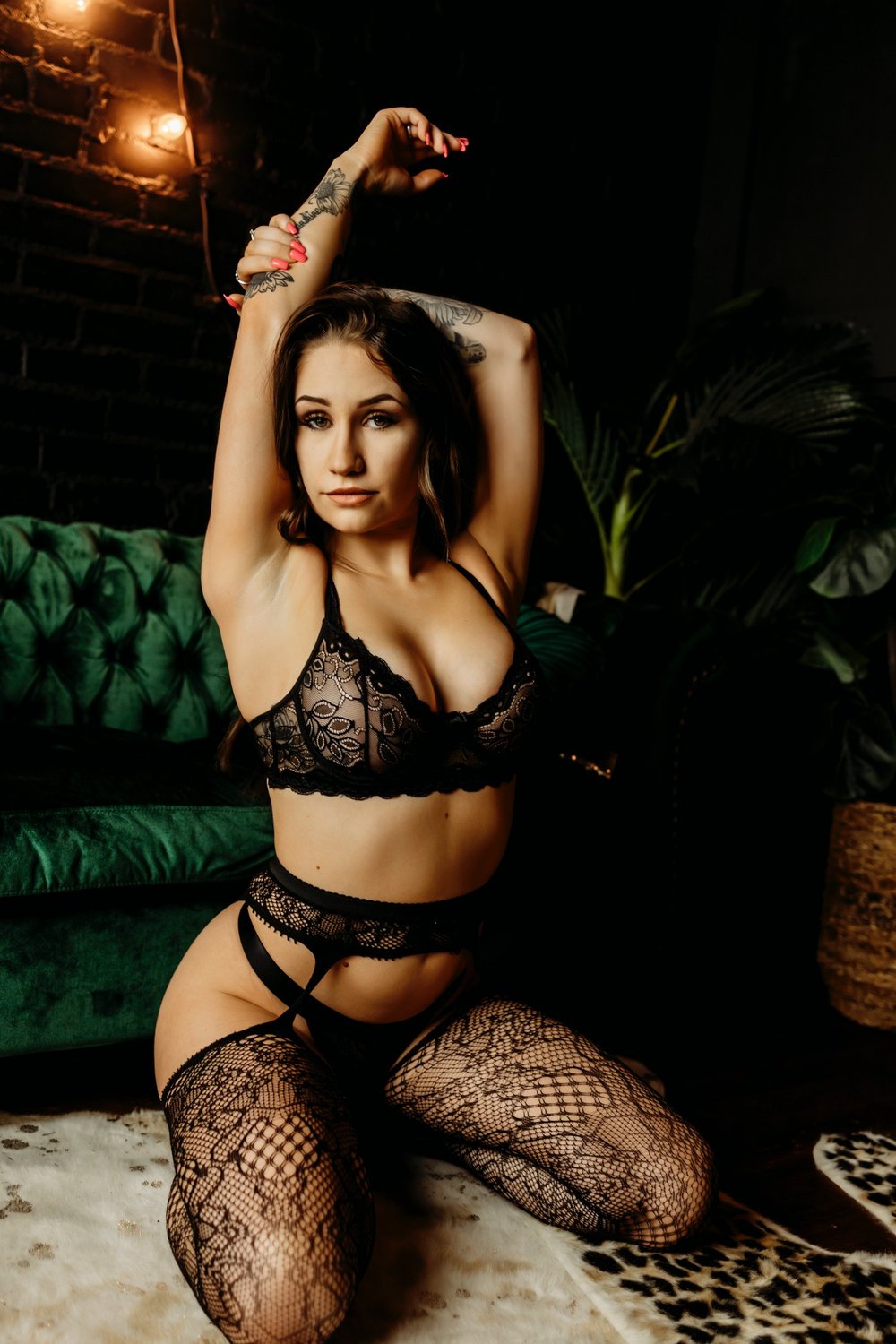
Decomposing this mechanism gives us variables related to storytelling and performance:
-
'Before' State Definition: These variables establish the initial, modest persona. The stronger this baseline, the greater the impact of the subversion.
- Initial Wardrobe: The choice of the "cover" garment. A traditional saree is a powerful choice, but the specific
Fabric,Color, andDraping Styleare all variables that can signal modesty. - Initial Persona Cues: The model's body language and expression in the "before" shots. This includes
Posture(e.g., closed, protective),Gaze Direction(e.g., averted, shy), andFacial Expression(e.g., gentle, demure).
- Initial Wardrobe: The choice of the "cover" garment. A traditional saree is a powerful choice, but the specific
-
'After' State Definition: These variables define the final, empowered persona.
- Final Wardrobe: The plunge bra and complementary lingerie. Key variables here are the
Bra Cut,Color Contrastwith the initial outfit, and theChoice of Thong/Pantythat complements the bra and the model's figure. - Final Persona Cues: The body language of confidence. This includes
Posture(open, expansive),Gaze(direct to camera), andFacial Expression(confident, knowing smile).
- Final Wardrobe: The plunge bra and complementary lingerie. Key variables here are the
-
The Reveal Sequence: This is the dynamic process of the transformation itself.
- Narrative Pacing: The number of shots dedicated to each stage of undressing. Do you show the saree pallu dropping in one shot, or is it a multi-shot sequence?
- Transitional Actions: The specific physical actions of the reveal. The way the model handles the fabric—slowly and deliberately versus quickly and playfully—is a controllable variable that shapes the narrative.
For a comprehensive review of the specific posing, lighting, and styling choices that constitute these variables, the following article provides a detailed guide.
Sexy Photography Poses: Expert Tips for Stunning Pics
This article from ProEdu, "Sexy Photography Poses," offers a wide-ranging guide to the elements we need to control. It covers the technical and artistic variables that bring our two mechanisms to life.
Focus your reading on these key sections: Start with the basics of composition, lighting, and camera angles. Then, review the section on mastering lighting, noting the difference between natural and artificial light sources. In "Wardrobe Selection and Styling," pay attention to the advice on selecting lingerie. Finally, and most importantly, study the sections on pose essentials and the techniques for different body types, as well as the catalogue of specific poses.
Structuring the Variables
As in the previous lesson, we can organize these variables into a clear, hierarchical framework. This converts our causal theory into an operational checklist for planning the photoshoot.
| Dimension | Category | Decision Variables (The Levers) |
|---|---|---|
| Visual-Aesthetic | Figure Presentation | Core Body Shape (S-curves/triangles), Limb & Extremity Positioning (hands, feet), Spinal Arch, Weight Distribution, Muscle Engagement |
| Technical Execution | Light Source Direction & Quality, Shadow Intensity, Camera Angle & Perspective, Shot Framing (close-up vs. full body) |
|
| Narrative-Psychological | Persona Definition | Initial Wardrobe Selection (saree fabric, drape), Final Wardrobe Selection (bra cut, color), Initial Persona Cues (posture, gaze), Final Persona Cues (posture, gaze) |
| Transformation Dynamics | Reveal Sequence Staging (what is removed when), Narrative Pacing (# of shots per stage), Transitional Body Language (actions of removal) |
Conclusion
In this lesson, we have continued our shift from causal analyst to system architect. By dissecting the 'busty toned figure' and 'persona subversion' mechanisms, you have successfully extracted a comprehensive set of controllable decision variables for the photoshoot scenario. These levers—ranging from the precise angle of a limb and the quality of light to the pacing of the narrative reveal—form your control panel for engineering a visually and psychologically impactful brand campaign.
You have now identified the key inputs for both the tour and the photoshoot scenarios. In our next lesson, we will shift focus to the other side of the optimization equation: the output. We will begin by defining concrete, measurable success criteria for the tour scenario, establishing exactly what "success" looks like and how we will measure it.