In our previous lesson, we established the foundational philosophy for your grief coaching program—your "operating system." We touched on the "what" of your coaching: the ultimate outcome you facilitate for your clients. Today, we will bring that outcome into sharp focus by crafting a clear, compelling "from-to" transformation statement.
This statement is the single most important sentence in your program. It moves you from selling time-based sessions to offering a tangible, promised transformation. It serves as the guiding star for your program's design and the hook that will attract the clients you are best equipped to serve.
1. From Selling Time to Selling Transformation
As an experienced coach, you know your work is transformative. However, when clients see offerings based on a number of sessions, they are buying your time. When they see a program built around a clear outcome, they are investing in their own transformation. This is a crucial shift in perspective, both for you and your potential clients.
A structured program isn't about being rigid; it's about providing a reliable path. The following video powerfully argues for selling a "framework" rather than just time. It highlights a common mistake many new program creators make.
Creating Your First Coaching Program? Don’t Make These Mistakes
This clip from Courtney L. Sanders' video, "Creating Your First Coaching Program? Don’t Make These Mistakes," explains the critical difference between selling your time and selling a transformative framework.
Please watch the section "sell a framework". The key idea here is that a program is a specific framework designed to walk someone from point A to point Z. The duration of the program is determined by the framework, not the other way around.
The core of this "A to Z" framework is the transformation itself. To package your coaching, you must first be able to articulate this transformation with precision.
2. Defining the Transformation Statement
A Transformation Statement is essentially a mission statement for your client's journey. It describes who your program serves and the specific shift they will experience, moving from a distinct starting point ("from") to a desired endpoint ("to").
The article "Why Bypassing this 'Statement' Guarantees Your Message Won't Be..." offers an excellent guide to this concept. It will help you get into the mindset of your ideal client to understand both their starting pain and their desired future.
Why Bypassing this 'Statement' Guarantees Your Message Won't Be ...
This article breaks down the concept of a Transformation Statement and why it's so vital for connecting with your audience.
First, read the section What is it? to understand the core definition. Then, move to How to Write a Transformation Statement, which provides the key questions you need to answer. Finally, review the two examples (Leesa and Dorothy) to see how this looks in practice. Notice the bolded "from" and "to" words.
As the article explains, this statement is not about you; it's about the client. It captures their journey in plain, powerful language.
3. The Anatomy of Your Transformation Statement
To make this practical, we can use a simple, effective template. This structure ensures you cover all the essential elements of a powerful transformation statement.
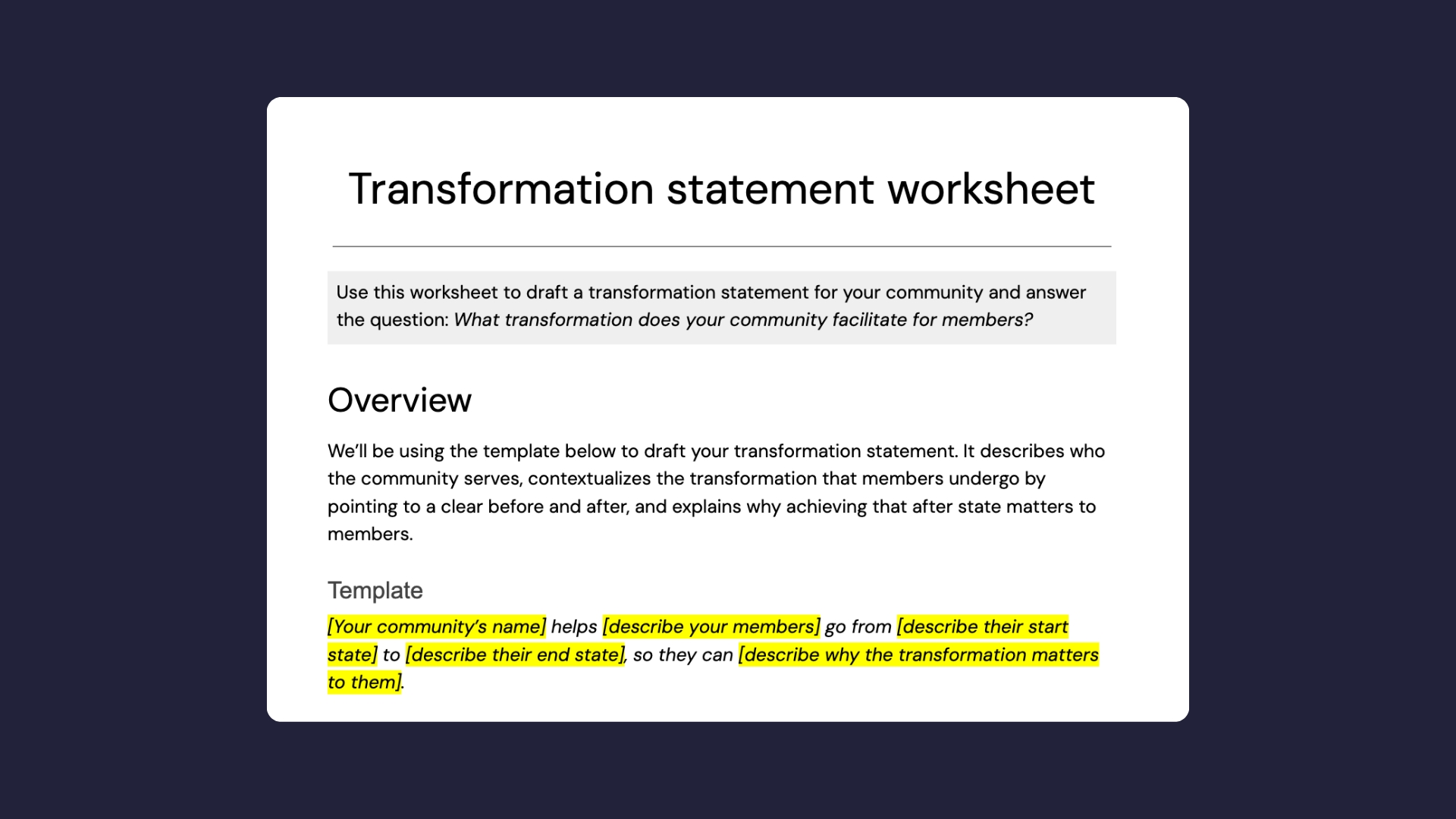
Let's dissect this template in the context of your grief coaching practice:
-
"[Your community's name] helps...": This will be the name of your signature program. We'll work on the name later, but for now, you can just think of it as "My Grief Coaching Program."
-
"[describe your members]": Who is your ideal client? Get specific. Drawing from your experience, are they newly bereaved spouses? Adults grieving a parent? Individuals struggling with disenfranchised grief? The more specific you are, the more your message will resonate.
-
"go from [describe their start state]": This is the "Point A." What are the specific thoughts, feelings, and circumstances of your client when they first seek help?
- Feelings: Overwhelmed, lost, stuck, isolated, defined by their grief.
- Circumstances: Struggling with daily tasks, avoiding social situations, feeling a loss of identity.
- Beliefs: "I'll never be happy again," "No one understands," "I'm doing grief wrong."
-
"to [describe their end state]": This is your "Point B," the core result of your program. Crucially, this should be a single, specific result. Trying to promise too much makes the program vague and less believable.
- A new state of being: Moving towards acceptance, integrating their loss, feeling empowered.
- A new capability: Rebuilding routines with confidence, navigating emotional waves with resilience, finding a new sense of purpose.
- A new perspective: Viewing grief as a part of their story, not the whole story.
-
"so they can [describe why the transformation matters to them].": This is the ultimate benefit. It answers the client's silent question, "Why should I care about this transformation?" It connects the program's outcome to a richer, more meaningful life. Examples:
- ...re-engage with their work and community with renewed energy.
- ...parent their children with presence and hope.
- ...create a future that honors their loved one while embracing new possibilities.
The following resource provides excellent guidance on focusing on ONE specific result, which is critical for this "to" state.
How To Create Your First Signature Coaching Program - Luisa Zhou
This article by Luisa Zhou reinforces the importance of a single, clear promise for your coaching package.
Focus on these sections: Start with the section on focusing on one core offer. This challenges you to identify the one thing you do really well. Then, read the section that asks "What makes a coaching program successful?" It links the promise of your program directly to your ideal client's pain points. Finally, review the section "Set a clear goal for your package." This reinforces the need for a focused, tangible result.
4. Practical Exercise: Drafting Your Statement
Now, let's begin drafting your transformation statement. Use the template from the worksheet image and your reflections on the resources.
Step 1: Reflect and Brainstorm
Think about your past clients and your "From Grief to Gratitude" training.
- Who were they? (e.g., Professional women in their 40s who lost a parent)
- Where were they starting FROM? (e.g., Feeling stuck, performative grieving at work, lost)
- Where did you help them get TO? (e.g., Integrating the loss, finding meaning, renewed self-trust)
- What did that allow them to do (SO THEY CAN)? (e.g., Lead with authentic empathy, pursue new life goals)
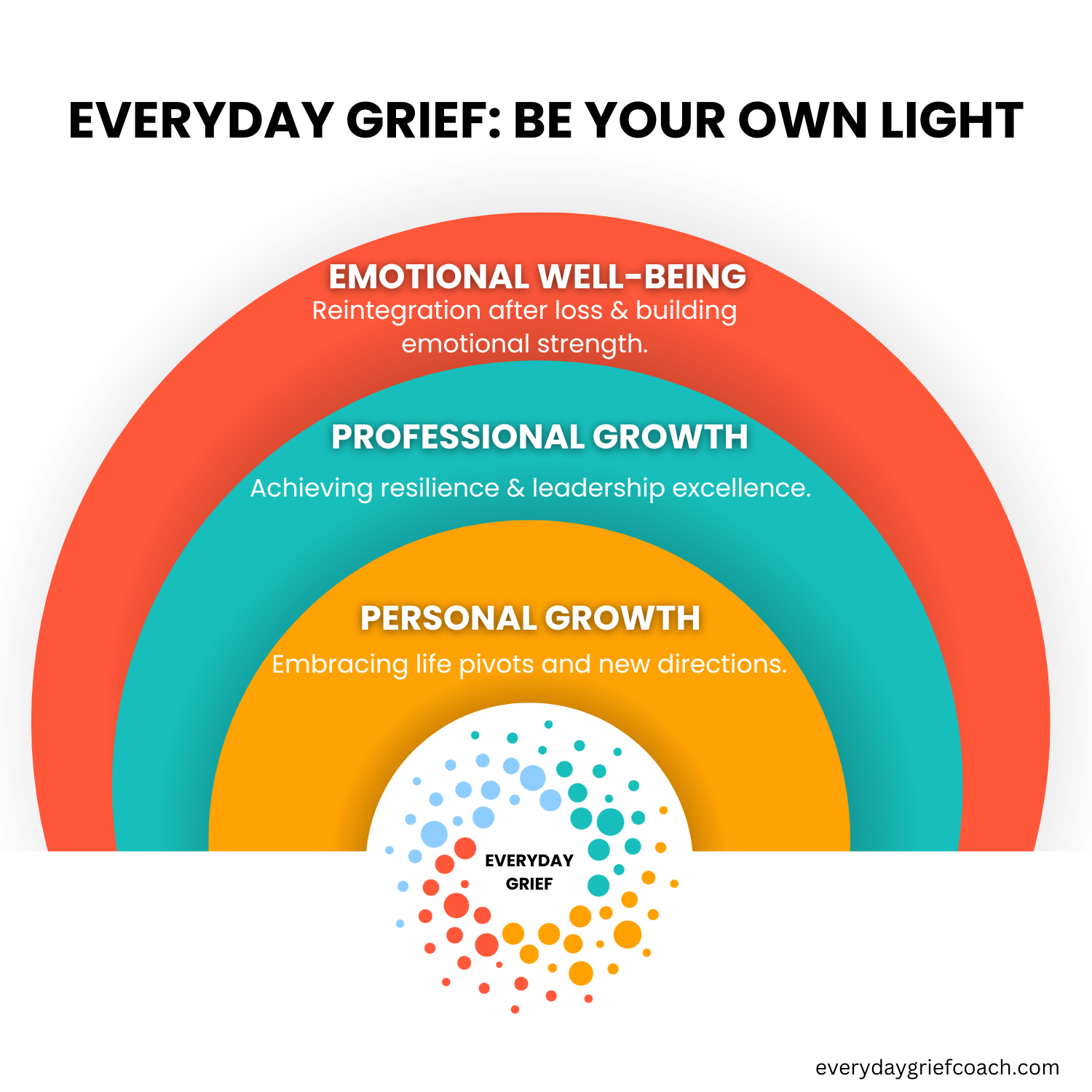
This image might provide some inspiration for the "to" state. It visualizes the journey from the chaos of grief toward different layers of growth and well-being.
Step 2: Write Your First Draft
Fill in the blanks of the template. Don't worry about perfection; just get the ideas down.
"[My Program Name] helps [your specific client] go from [their starting state of pain/struggle] to [your specific, singular outcome], so they can [the ultimate benefit in their life]."
Example Draft:
The "Rebuild & Renew" Program helps professional women who have lost a parent move from feeling directionless and stuck in their grief to integrating their loss into their life story, so they can lead with renewed purpose and create a future that honors their past.
Take 15-20 minutes now to write your own first draft.
Conclusion
Today, you have taken a monumental step in structuring your coaching program. By moving from the abstract concept of an "outcome" to a concrete Transformation Statement, you've created the core promise that will underpin everything else you build. This isn't just a marketing line; it's the DNA of your program.
Key Takeaways:
- A "packaged" program sells a transformation, not just your time.
- A powerful Transformation Statement clearly defines the "who," "from," "to," and "so they can."
- Specificity is key. Your program should promise one primary result to a specific type of client to be most effective.
- This statement will guide the design of your program's curriculum and content.
Your Transformation Statement defines the destination. In our next lesson, we will begin to map the journey itself. We will identify the 3-4 key client milestones that will act as the major "stops" along the path from their starting point to this powerful new end state.