Introduction
Welcome back! In our last lesson, you learned how to use the versatile phrase ... はありますか? (... wa arimasu ka?) to ask for specific items, colors, and sizes in a store. This is a crucial skill for finding what you need while shopping.
But what if you're not looking for anything in particular and just want to browse? In Japan, store staff are often very attentive and may approach you to offer help. This lesson will teach you the essential and polite way to respond in that situation. Today's learning outcome is to use the phrase mite iru dake desu to say "I'm just looking."
The Shopping Scenario
When you enter a store in Japan, especially a clothing or department store, you'll almost always be greeted with a cheerful いらっしゃいませ (irasshaimase), which means "Welcome."
After you've been browsing for a minute or two, a staff member might approach you and ask:
何かお探しですか? (Nanika osagashi desu ka?) - May I help you? (Literally: "Are you looking for something?")
This is your cue to use the phrase we're learning today. It lets the staff know you don't need assistance at the moment, and it's a very common and polite interaction.
The Core Phrase: "I'm Just Looking"
The standard response to Nanika osagashi desu ka? when you're just browsing is 見ているだけです (mite iru dake desu).
Let's break down this useful phrase:
見て (mite)comes from the verb見る (miru), which means "to see" or "to look."いる (iru)indicates a continuing action. So,見ています (mite imasu)means "I am looking."だけ (dake)is a particle that means "just" or "only."です (desu)is the polite ending for the sentence.
Putting it all together: "I am just looking."
To hear the correct pronunciation and see the phrase in context, please review the following resource.
Infographic: Japanese Phrases for Shopping Part 1
The webpage 'Japanese Phrases for Shopping Part 1' presents this interaction very clearly. It provides the staff's question and your potential answer, complete with audio for pronunciation.
On the page, find the phrases 'May I help you?' and 'No, I’m just looking.' Listen to the audio for both to familiarize yourself with the sound and rhythm of the exchange. Notice that the example includes 'いいえ (iie)', which means 'no'.
As you saw in the resource, you can start your response with いいえ (iie), which means "no." This makes it a very direct and clear answer to the question "Are you looking for something?"
いいえ、見ているだけです。(Iie, mite iru dake desu.) - No, I'm just looking.
This is perfectly polite and natural.
Adding Extra Politeness
While iie, mite iru dake desu is fine, Japanese communication places a high value on politeness and acknowledging the other person. You can make your response even better by adding a "thank you." This acknowledges the staff's offer to help.
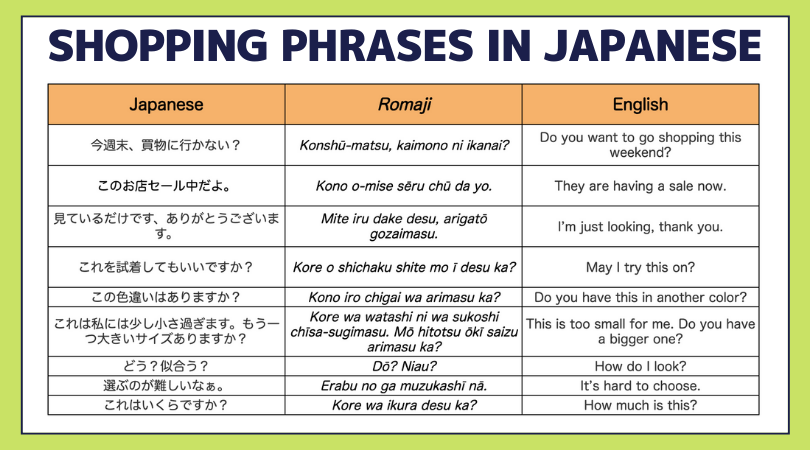
見ているだけです、ありがとうございます。(Mite iru dake desu, arigatō gozaimasu.) - I'm just looking, thank you.
This is a fantastic, polite phrase that you can use with confidence.
To see this phrase used in a more narrative context, let's look at another resource.
Top 15 Shopping Phrases in Japanese : Cash or Credit? - Bondlingo
The article 'Top 15 Shopping Phrases in Japanese' on Bondlingo gives a great play-by-play of a shopping scenario, showing exactly when and how you would use this phrase.
Please read the short scenario under the heading 'When you enter the store...'. It describes being approached by a saleswoman and using our key phrase to respond. Focus on how the phrase fits naturally into the conversation.
The following image provides a great visual summary of this polite variation.
Practice Time
Let's put it all together in a mini-dialogue. Imagine you've just walked into a Uniqlo in Tokyo.
-
Staff greets you:
いらっしゃいませ!- (Irasshaimase!)
- Welcome!
-
You browse for a moment. A staff member approaches:
何かお探しですか?- (Nanika osagashi desu ka?)
- Are you looking for anything in particular?
-
You respond politely:
いいえ、見ているだけです。ありがとうございます。- (Iie, mite iru dake desu. Arigatō gozaimasu.)
- No, I'm just looking. Thank you.
The staff member will likely smile, bow, and let you continue browsing in peace. You've successfully handled the situation politely and effectively!
Conclusion
Well done! You've now added another essential phrase to your travel toolkit. This simple expression is key to having a relaxed and pleasant shopping experience in Japan.
Key Takeaways:
- When a shop assistant asks
Nanika osagashi desu ka?, it means "May I help you?" - The core phrase to respond is
見ているだけです (mite iru dake desu), meaning "I'm just looking." - For a clear and polite response, you can say
いいえ、見ているだけです (Iie, mite iru dake desu). - To be even more polite, add a thank you:
見ているだけです、ありがとうございます (Mite iru dake desu, arigatō gozaimasu).
Preview of the next lesson:
Now that you can browse freely, what happens when you find something you like? In the next lesson, we'll cover the logical next step: asking to try something on using the phrase shichaku shite mo ii desu ka?.