Welcome back. In the previous lesson, you practised checking a stress-amplifying thought against the facts. That can help when you have enough room to think, but stress may first show up as restlessness, tense muscles, or a sense of being stuck. A brief movement break gives you another option. This lesson is about choosing a movement that fits your body, your space, and whether you feel agitated or tired—not about completing a workout.
Allow about 35–40 minutes, including the video, two short readings, and a few minutes to try an adapted break.
Movement is an option, not a prescription
Movement can change how a stressful moment feels, but the best choice depends on what is happening. After hours of sitting, a little walking or stepping may feel welcome. After physically demanding work, more activity may be the last thing you need; sitting down and recovering may be the better response. You can start with a small amount and notice its effect rather than assuming that more intensity will help more.
The following video demonstrates a short tension break. Treat its movements as options. You can remain seated, keep your head and back in a comfortable range, and breathe normally rather than following its cue to take a deep breath. Skip any movement that feels painful, dizzying, or unsafe.
3-Minute Stress Management: Reduce Stress With This Short Activity
Watch “3-Minute Stress Management: Reduce Stress With This Short Activity” from Therapy in a Nutshell for an example of noticing tension, moving briefly, and noticing it again.
Watch the rationale for matching a break to what your body has been doing. Then watch the demonstration, focusing on the shoulder and arm movements and the before-and-after check. The standing leg movements and forward bend are optional, not requirements for completing a break.
There is a distinction between the benefits of regular exercise and what one short break can do. Regular aerobic activity may help moderate the body's response to everyday stress over time. A brief break has a more modest immediate purpose: interrupting stillness or tension and giving you a chance to notice whether a different pace helps.
How to reduce stress and anxiety through movement and mindfulness - Harvard Health
Read this Harvard Health article to distinguish the longer-term case for exercise from the practical choice between slower and brisker movement in a particular moment.
In “How exercise calms the mind,” read the exercise explanation. Then go to “Mind-body techniques.” Read “Rhythmic, repetitive activities” from rhythmic movement, followed by “A mindful walk” from walking pace. Focus on the contrast between a slow walk and a brisker one; neither pace is obligatory.
Make the break fit your body and space
A movement break can be one to three minutes long. It needs no special technique. The safest starting point is a comfortable movement you can stop easily, done at a pace that does not cause pain. If standing is difficult or the floor is crowded, use a stable chair and move your arms or feet while seated. If an arm movement bothers a joint, make it smaller or leave it out.
The CDC guide below is written for group activity breaks, but its advice about adapting movements also works for an individual break. Its appendix is a menu, not a routine to complete.
Physical Activity Breaks for the Workplace, Resource Guide ...
Read the CDC guide for its safety principles and a menu of simple movements that can be done in different amounts of space.
On printed page 4, under “Key Guidelines for Safe Physical Activity,” read from choosing safely. On the same page, under “Tips for Physical Activity Break Leaders,” read from adapting activities. Then skim printed page 20, “Appendix—Sample Movements for Physical Activity Breaks,” from the movement menu. Look particularly for walking in place, stepping side to side, toe movements, arm pushes, and shoulder rolls. Select possibilities rather than trying the whole list.
For a small or shared space, shoulder rolls, gently pushing your arms forward and drawing your elbows back, or moving your feet while seated may be more practical than walking. For limited mobility, choose only movements available and comfortable for you: an upper-body movement, a foot movement, or another small change of position can constitute the break. There is no need to imitate a standing exercise.
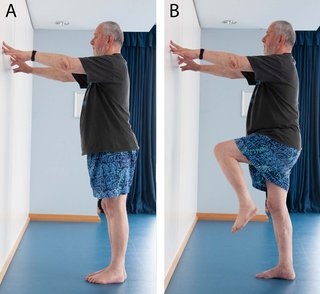
The image shows another way a movement can be modified: the person is near a wall while standing on one leg. Balance work is optional, not a default stress break. Skip it if you feel unsteady, dizzy, or too fatigued to balance comfortably; a seated movement is a complete alternative.
If you have a chronic condition or symptoms that affect activity, seek advice from a health professional about an appropriate type and amount of movement. Stop a movement that hurts. Do not try to push through dizziness, chest pain, or unusual breathlessness.
Match the pace to the moment
Agitated and restless: If moving feels safe, try a minute or two of comfortable walking, stepping in place, or moving your arms. You can slow the pace afterward. The aim is not to exhaust yourself or prove that the stress has gone; it is to see whether movement leaves you better able to choose what to do next. If a brisker pace makes you feel worse, reduce it or stop.
Tense but short on space or privacy: Stay seated or stand in place. Gently roll your shoulders, press your arms forward and bring them back, or alternate moving your feet. Small, unobtrusive movements count. A break you can actually take is more useful than a planned walk that the setting does not allow.
Fatigued or already physically active: Start with the least demanding option, such as changing position and making a few comfortable shoulder or foot movements. Rest may be the more useful choice. Stress management does not require adding exercise to an already tired body.
To try the idea, choose one of those versions for a low-pressure moment. Spend about two minutes moving within a comfortable range, with normal breathing; stop sooner if needed. Notice your tension and energy before and afterward. A break that feels neutral, unpleasant, or impractical is useful information for choosing a different version later—it is not a failed attempt.
Key takeaways
A brief movement break works best when it is adaptable: choose a comfortable movement, fit it to your available space, and adjust its pace to agitation or fatigue. Start small, avoid pain, and use the result to decide whether that version belongs in your coping toolkit. In the next module, you will turn to everyday support for recovery, beginning with a realistic evening wind-down routine.