Hello! Welcome back to our final module, "DevOps Interview and Career Strategy."
In our last lesson, we established the STAR method as your core framework for answering behavioral interview questions. We discussed how to structure your experiences into a compelling narrative of Situation, Task, Action, and Result.
Today, we're sharpening our focus on a specific, high-stakes interview scenario: the incident response question. Your ability to calmly and clearly articulate how you handle a crisis is one of the most powerful signals of seniority and competence you can send. This lesson will teach you how to structure a past incident scenario, covering detection, resolution, and the all-important post-mortem learnings.
1. The Incident Story: A Test of Skill and Temperament
When an interviewer asks, "Tell me about a time you handled a critical production issue," they are doing more than just testing your technical knowledge. They are simulating a crisis to see how you perform under pressure. They want to know:
- Are you systematic? Do you have a logical, structured approach to troubleshooting?
- Are you calm? Can you think clearly when systems are failing and alarms are ringing?
- Are you a team player? How do you communicate and collaborate during an incident?
- Do you learn from failure? Do you just fix the problem, or do you ensure it never happens again?
A well-told incident story is one of the most effective ways to demonstrate your value as a DevOps engineer.
2. The Anatomy of an Incident Response Narrative
A compelling incident response story follows a clear timeline. We can map this timeline directly onto the STAR method you've already learned, but with a specific focus on the phases of an incident.
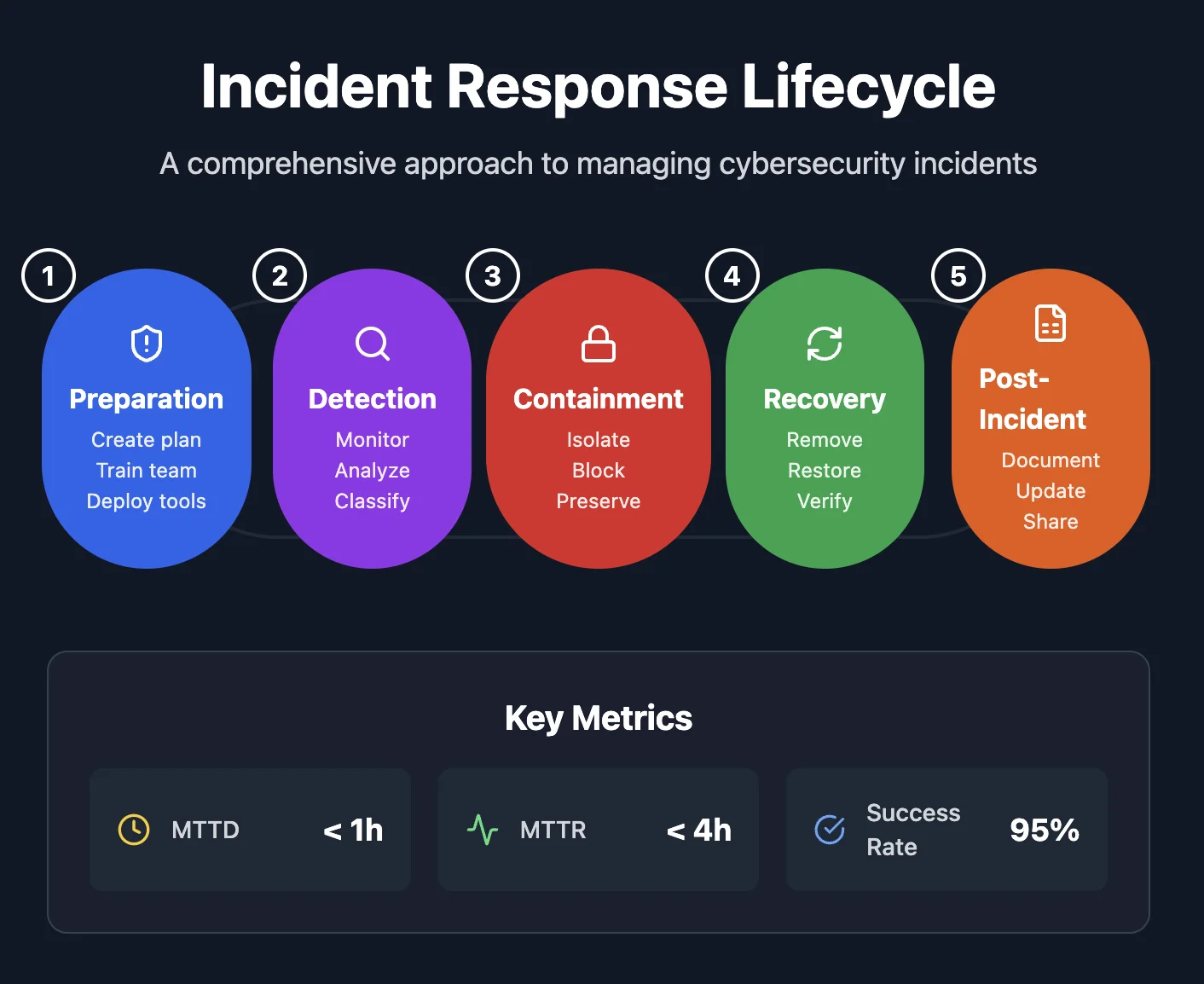
Here is how the STAR method aligns with these phases:
- S - Situation: Set the scene. Describe the system and its normal operating state. Then, describe the moment the incident began. How was it first detected? (e.g., "Our Prometheus Alertmanager fired an alert for high p99 latency," or "Customer support reported users were seeing 500 errors.")
- T - Task: State your immediate goal. This is almost always to restore service as quickly and safely as possible (Containment and Recovery) and to understand the contributing factors.
- A - Action: This is the heart of your story. Describe your troubleshooting process step-by-step.
- Triage & Scoping: What were the first signals you checked? (e.g., "I first checked the Grafana dashboard for the affected service," "I used
kubectl get eventsto check for pod issues.") What was the blast radius? - Hypothesis & Validation: What was your initial theory? (e.g., "I suspected a recent deployment was the cause," or "The symptoms pointed to database pressure.") How did you prove or disprove it? (e.g., "I correlated the spike in errors with the deployment timestamp," "I used
pg_stat_activityto inspect long-running queries.") - Mitigation & Resolution: What was the immediate fix to stop the bleeding? (e.g., "I initiated a rollback of the deployment," "We performed a blue/green traffic shift back to the old environment.") What was the permanent fix? (e.g., "A developer pushed a hotfix for the faulty code.")
- Triage & Scoping: What were the first signals you checked? (e.g., "I first checked the Grafana dashboard for the affected service," "I used
- R - Result: Describe the outcome.
- Service Restoration: The system returned to normal. Quantify this if you can (e.g., "Service was fully restored within 25 minutes.").
- Post-Incident Learnings: This is the crucial final part. What did you and the team learn? What changes were made to prevent this class of problem from recurring? This is the Post-Incident phase.
The following resource provides excellent templates for structuring these narratives, especially the conclusion.
DevOps/SRE Interviews: Incident & Debug Question Bank | Beyz AI
The article 'DevOps/SRE Interviews: Incident & Debug Question Bank' from Beyz AI provides an excellent set of templates for structuring your answers. It correctly frames these interviews as incident simulations.
Please read the following sections: 'Template D: Postmortem summary': Note the five key components of a strong conclusion. 'Incident Snapshot: an answer that interviews reward': This is a perfect example of a concise, powerful story. 'Frequently Asked Questions': Pay attention to the advice on how to discuss postmortems without blaming people.
3. Analyzing a Real-World Example
Let's watch a real-world example from a mock interview. The scenario is a complex Kubernetes upgrade, which isn't a surprise outage but requires the same high-stakes, risk-aware thinking as an incident. Your background with Kubernetes makes this a particularly relevant example.
Ultimate Cloud Engineer & DevOps Mock Interview (Real Questions!)
In this segment from a mock interview by Tech with Ajit, the candidate describes a challenging Kubernetes cluster upgrade. Notice how he structures the story around the problem, the technical solution, the learnings, and the risk mitigation (rollback plan).
Watch from 00:38:48 to 00:45:59. As you watch, map the candidate's story to the STAR framework: Situation: Very outdated K8s clusters requiring a multi-version jump. Task: Upgrade eight clusters with minimal downtime. Action: What specific technical steps did he take? (Control plane vs. node groups, tainting nodes, automation). Result: What was the outcome and what did he learn? Note how the interviewer's question at 00:43:52 prompts him to discuss his rollback strategy and post-mortem thinking.
4. Deconstructing a Written Masterclass
Now let's analyze a perfectly written STAR answer for a classic production outage. This example demonstrates how to weave in specific tools and technical details to make your story credible and compelling. Your experience with AWS, monitoring tools, and databases will help you appreciate the level of detail here.
DevOps Engineer Interview Questions and Answers (STAR Method)
This resource provides a model STAR answer for a critical system outage. It's an excellent template for how to blend narrative with technical specifics.
Read the first question ("Tell me about a time you encountered a critical system outage...") and its detailed STAR answer. Pay close attention to: Action: How the engineer methodically uses specific tools (Kibana, CloudWatch, pg_stat_activity) to diagnose the problem. Result: How the answer covers both the immediate restoration of service and the long-term process improvements identified in the post-incident review.
5. The Blameless Post-Mortem: The Mark of a Senior Engineer
The most important part of your "Result" is the post-mortem. A mature engineering culture practices blameless post-mortems. The goal is not to find who to blame, but to understand what systemic failures (in tooling, process, or architecture) allowed the incident to happen. Focusing on this demonstrates a commitment to continuous improvement.
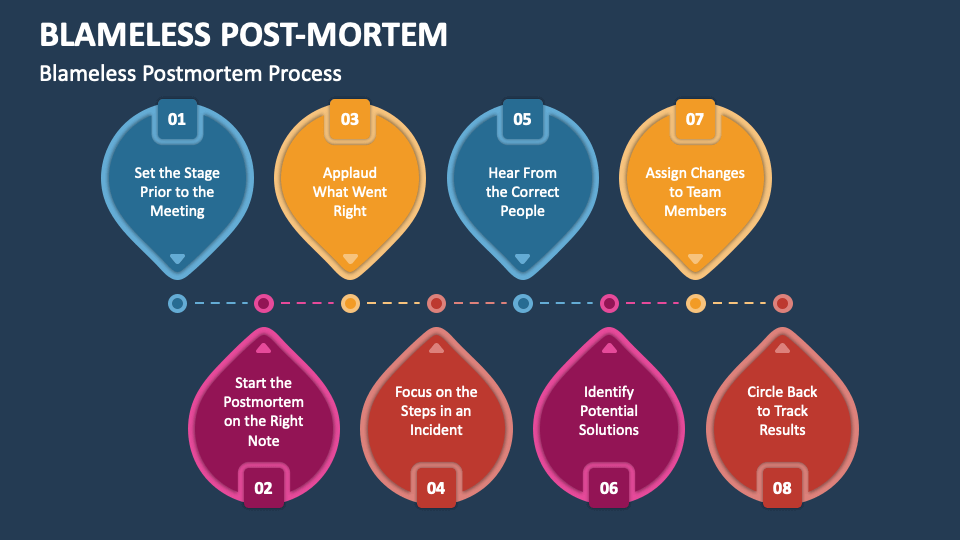
When you describe the learnings, talk about things like:
- "We were missing a key alert for..."
- "Our deployment process lacked a sufficient canary period to detect..."
- "The health checks for that service were not granular enough to catch..."
- "We implemented a new validation step in our CI/CD pipeline to prevent..."
6. Building Your Incident Story Arsenal
Now it's time to think about your own experiences. Given your background in a complex DevOps environment, you have undoubtedly handled incidents. They don't have to be massive, site-down outages. Consider:
- A failing CI/CD pipeline that blocked deployments.
- A Kubernetes deployment causing
CrashLoopBackOfferrors. - A Terraform apply that failed and left infrastructure in a broken state.
- An overloaded database or cache causing application latency.
- A misconfigured AWS security group or network ACL causing connectivity issues.
Use the following resource to jog your memory and find scenarios that match your experience.
DevOps/SRE Interviews: Incident & Debug Question Bank | Beyz AI
To help you brainstorm, this article includes a table of common incident types and several 'mini-story' scenarios.
Review the table under the heading 'A map of incident types and what your answer should contain'. Then, read the 'Incident mini-story: Kubernetes rollout caused downtime'. Does this or any other mini-story remind you of an issue you've personally handled?
Practice exercise: Take 15 minutes to outline one of your own incident stories using the STAR method. Don't worry about perfecting the language yet. Just get the key points down for each section: Situation, Task, your specific Actions, and the Result, including what you learned.
Conclusion
Telling a great incident response story is a skill that combines technical depth with clear communication. By structuring your narrative around the phases of an incident and concluding with strong, blameless learnings, you can turn a past failure into a powerful demonstration of your expertise and maturity as a DevOps professional.
Key Takeaways:
- Incident response questions test your technical skills, problem-solving abilities, and temperament under pressure.
- Structure your answer using the STAR method, aligning it with the incident phases: Detection (S), Resolution (T+A), and Post-Mortem (R).
- Be specific in your Action section. Name the tools you used and the logical steps you took.
- The most critical part of your Result is the post-mortem learnings. Focus on systemic improvements, not blaming individuals.
Next Lesson Preview:
In our next lesson, we will shift from reactive problem-solving to proactive design. You will learn how to explain a CI/CD pipeline design decision, including the trade-offs considered and the final outcome. This will allow you to showcase your architectural thinking and ability to build robust, scalable systems from the ground up.