Welcome to the third lesson in our exploration of core AI concepts. In our last session, we defined "foundation models" as large, versatile AI systems that serve as a reusable base for many different applications. You can think of them as the general-purpose engines of modern AI.
Today, we'll zoom in on the most prominent and widely-used type of foundation model: the Large Language Model (LLM). Understanding what LLMs are and what makes them unique is critical, as they are the specific models you will work with in AWS Bedrock to perform text-based tasks like summarization, generation, and question-answering.
A Specialization of Foundation Models
First, it's important to understand the relationship between foundation models and LLMs. An LLM is not a separate category of technology; rather, it is a specialized subset of foundation models.
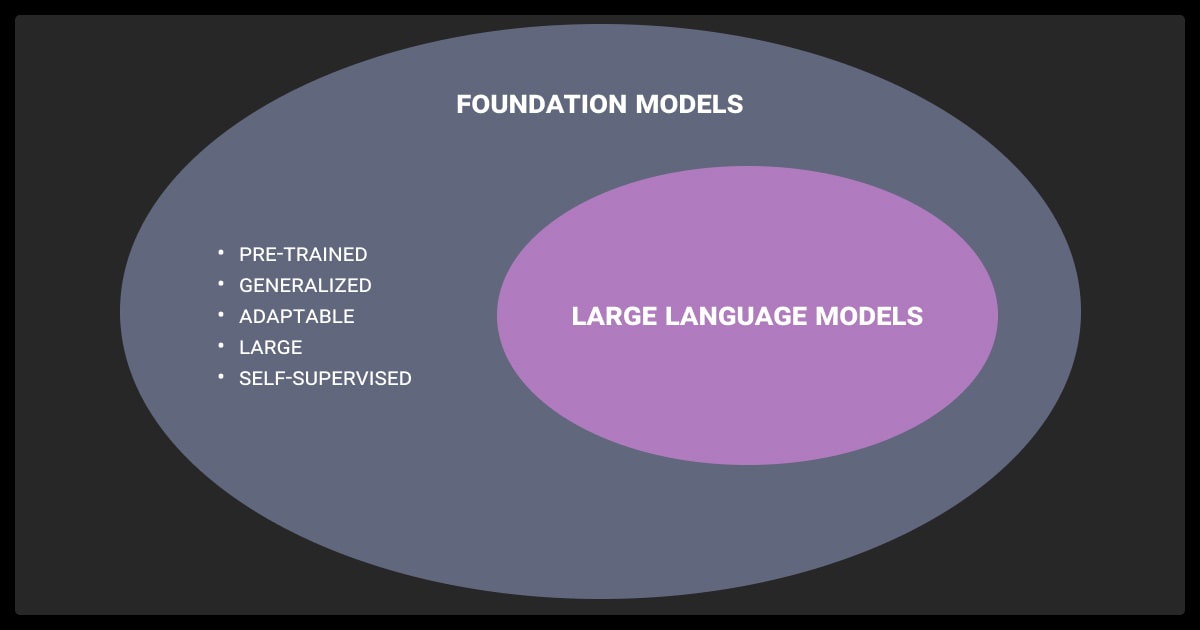
While the term "foundation model" can encompass models that work with images, audio, and other data types, LLMs are exclusively focused on understanding and generating human language.
To visualize this relationship, let's return to the helpful overview from IBM Technology that we saw in the previous lesson. The following clip clearly positions LLMs within the AI hierarchy.
Machine Learning vs. Deep Learning vs. Foundation Models
This video provides a clear, visual hierarchy of AI concepts. We'll watch the part that introduces foundation models and then defines LLMs as a specific type.
Watch the segment from foundation models and LLMs. Pay close attention to how the narrator first defines foundation models as a general base and then introduces LLMs as a specific example focused on language, breaking down the acronym "L-L-M".
Breaking Down the Name: Large Language Model
As the video explained, the name itself tells us a lot about what these models are. Let's break it down:
-
Model: At its core, an LLM is a predictive model. Its fundamental job is surprisingly simple: to predict the next word in a sequence of text. By repeatedly performing this simple task at a massive scale, it can generate coherent paragraphs, answer questions, and even write code. This "next-word prediction" is the basic mechanism that enables all of its complex abilities.
-
Language: This is its domain of expertise. LLMs are trained exclusively on vast quantities of text and code, allowing them to learn the patterns, grammar, context, semantics, and nuances of human language.
-
Large: This refers to two dimensions of scale:
- Training Data: The amount of text data used to train these models is immense—far more than a human could read in thousands of lifetimes.
- Parameters: The "size" of the model itself is measured by its number of parameters. You can think of parameters as the internal "dials" or "weights" that the model tunes during training to define its behavior. Modern LLMs have billions or even hundreds of billions of parameters.
To get a more intuitive feel for this, the following short video provides an excellent conceptual explanation of what an LLM is and how it learns.
Large Language Models explained briefly
This video from the 3Blue1Brown channel is famous for its clear, visual explanations of complex topics.
Please watch from the beginning until the end of the explanation of the "large" aspect. Focus on the core idea of next-word prediction and the concept of a model's "parameters".
LLMs in Practice
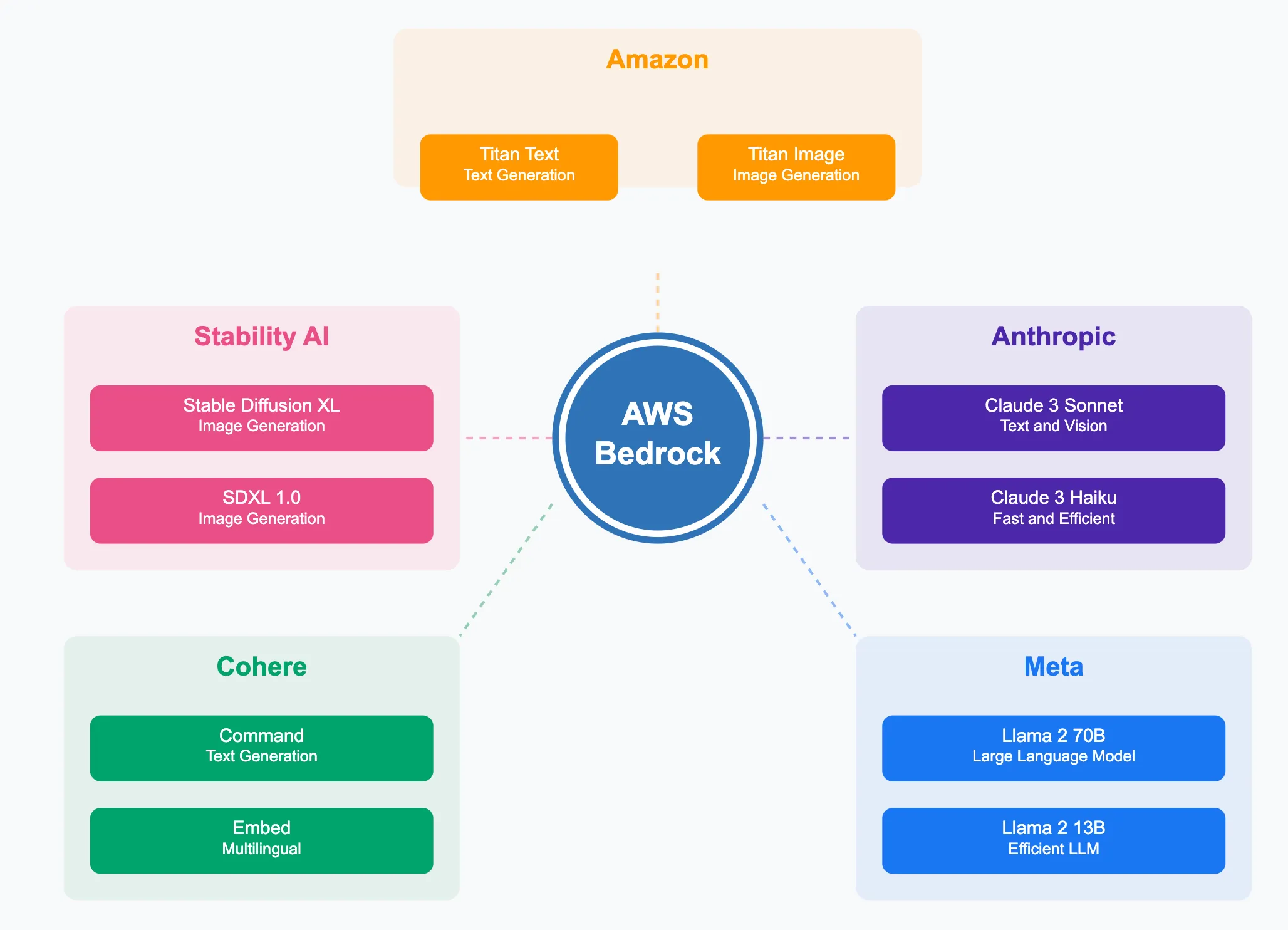
Because of their powerful language capabilities, LLMs are the engines behind many of the generative AI applications you see today, from chatbots to content creation tools. In the context of your goal, Amazon Bedrock is a service designed to give you access to a curated set of powerful foundation models, many of which are LLMs.
The AWS article below gives a great summary of what LLMs are and their common applications. As a product manager, you can think of these applications as the capabilities you can leverage to build features or solve business problems.
What is LLM? - Large Language Models Explained - AWS
This article from AWS provides a concise definition and, importantly, lists several practical applications of LLMs.
Please read the first three paragraphs under the heading "What are Large Language Models?" to get the AWS definition. Then, skip down and read the short section titled "What are applications of large language models?". This will connect the concept to real-world use cases like copywriting, classification, and code generation.
Well-known examples of LLMs that you may have heard of include OpenAI's GPT series (like GPT-4), Google's PaLM, and Meta's Llama models. These are precisely the kinds of models available through services like Bedrock.
Conclusion
In this lesson, we have focused on Large Language Models, the most common type of foundation model and the one most relevant to your goals with AWS Bedrock.
Here are the essential takeaways:
- A Specialized Subset: LLMs are a type of foundation model specifically designed to work with human language.
- The Power of Prediction: Their core function is to predict the next word in a sequence, a simple mechanism that enables complex behaviors like conversation and text generation.
- "Large" is Key: Their power comes from their immense scale, both in the data they are trained on and the number of internal parameters they possess.
- The Engine of Bedrock: Services like AWS Bedrock are built to provide managed access to these powerful LLMs for use in your own applications.
Now that we've defined what foundation models and LLMs are, our next step is to understand the "fuel" they run on. In the next lesson, we will define the concept of 'training data' and explain its critical importance in teaching these models how to perform tasks.