Introduction
In our last lesson, we focused on constructing the specific sonic events that signal change in an arrangement: risers, downlifters, and drum fills. We explored them as functional tools for manipulating listener expectation, drawing on principles of psychoacoustics. Now, we zoom out to see how these individual components fit into the complete architecture of a track.
This lesson marks the culmination of our "Arrangement and Production Techniques" module. We will synthesize everything we've covered by learning how to perform a comprehensive analysis of a finished, professional track. Your goal is to develop a systematic method for deconstructing a song's structure and its dynamic energy flow. This analytical skill is not just an academic exercise; it is the most effective way to learn from the masters and build a mental blueprint for your own productions, which is precisely what we will do in our final lesson.
1. The Framework for Analysis: Structure and Dynamics
Before diving into a reference track, it's crucial to establish what we are looking for. A compelling arrangement is a story told through sound, and our analysis aims to understand its narrative. We can break this down into two fundamental, intertwined components:
- Arrangement (Structure): This is the timeline of events. It answers the question, "What happens, and when?" It involves identifying sections, noting when elements are introduced or removed, and understanding the overall form of the track.
- Energy Flow (Dynamics): This is the emotional or physical intensity of the track over time. It answers the question, "How does the track feel at any given moment?" This involves tracking changes in tension, excitement, and release.
A powerful way to begin this process is by asking a few high-level questions about the track's purpose, as this intent dictates all subsequent structural and dynamic choices.
Understanding Arrangements in Electronic Music Production
This article from audioservices.studio provides an excellent high-level perspective on arrangement, framing it as intentional storytelling.
Please read the introductory sections, starting from the key questions an artist should consider. As you analyze your own reference tracks later, keep these questions in mind: Who is the intended audience? Is it for home listening or a club? Is it a peak-time track or an opening track? The answers are encoded in the arrangement.
With this intentional framework in mind, we can now establish a practical, step-by-step method for our analysis.
2. Deconstructing the Arrangement: A Visual Approach
The most effective way to analyze a track is to bring it directly into your Digital Audio Workstation (DAW). This allows you to listen critically and, more importantly, to visualize its structure.
The Process:
- Choose and Import: Select a reference track from one of your target genres (industrial, techno, house, etc.). Import the audio file onto a single track in your DAW.
- Identify and Mark Sections: Listen through the track and use markers or locators in your DAW to label the primary sections: Intro, Buildup, Drop/Chorus, Breakdown, Verse, Outro, etc. The specific terminology will vary by genre, but the functional changes in energy will be apparent.
- Map the Elements with "Ghost Clips": This is a powerful visualization technique. Create new MIDI or audio tracks for each distinct element you hear (e.g., Kick, Bass, Hi-Hats, Lead Synth, Vocals, FX). On each track, create empty or "ghost" clips that correspond to when that element is playing in the reference track.
The article from audioservices.studio provides a perfect visual guide for this method.
Understanding Arrangements in Electronic Music Production
This reading details the practical steps for creating a visual map of an arrangement inside your DAW.
First, read the section on Song Form to see an example of a fully analyzed track. Then, read the section on Sound Order. This reinforces the idea of using ghost MIDI clips to visually represent the introduction and removal of each sound, creating a clear blueprint of the arrangement.
By the end of this process, you will have a visual representation of the song's structure, showing not only the main sections but also the precise layering of instruments within them.
3. Mapping Energy Flow: The Roller Coaster of Dynamics
Once you have the static structure mapped out, the next step is to analyze the track's dynamic journey. For this, we'll create an Energy Map. Think of this as a graph of perceived intensity over time.
A great way to quantify this is using the "1-9 Method." As you listen through the track, assign an energy value from 1 (lowest energy, e.g., ambient intro or complete silence) to 9 (highest energy, e.g., the peak of the main drop) to each section you've identified. You can literally draw this curve using an automation lane in your DAW.

The Advanced Guide to Tension and Energy in Electronic ...
The article "The Advanced Guide to Tension and Energy" by EDMProd provides a detailed methodology for this kind of analysis.
Please read the section titled Energy Dynamics. Focus on understanding the 1–9 method and the concept of creating an energy map. This systematic approach turns a subjective feeling of "energy" into a semi-quantitative tool for analysis and, later, for composition.
To create an accurate energy map, you need to know which sonic elements have the most significant impact on energy. Your physics background gives you an intuitive understanding of this: energy in a signal is often concentrated in specific frequency bands or transient events.
The following video breaks down the hierarchy of energy contribution in electronic music.
Tech house Arrangement Hacks: Control Energy Like The Pros
In "Tech house Arrangement Hacks," the creator uses a "roller coaster" analogy for energy and analyzes which elements contribute most to the ride.
First, watch from the introduction to understand the macro-level energy flow of a professional track, with its alternating drops and breaks. Then, pay close attention to the section from what elements change the energy the most. The presenter ranks the impact of: Kick and Bass: The foundation, with the most significant energy impact. Leads/Melody: The primary thematic content. Drums (Top Loops): Hi-hats and percussion that drive the rhythm. Effects: Transitional sounds that signal changes but often have less sustained energy.
When you notice a significant jump or dip in your energy map, refer to this hierarchy. Was the kick removed? Was a new lead introduced? Did the hi-hat pattern become more complex? This allows you to connect the what (structural changes) with the why (dynamic impact).
4. Identifying Arrangement Techniques: The Producer's Toolkit
With your structural map and energy map complete, you can now zoom in to identify the specific techniques the producer used to navigate between energy levels. In our previous lesson, we built some of these tools; now we'll see them in context and expand our vocabulary.
We can categorize these techniques into two broad families, corresponding to different timescales:
- Macro-Tension (Large-Scale): Techniques that define the flow between major sections.
- Micro-Tension (Small-Scale): Techniques that create interest and variation within sections.
The following video provides an excellent toolbox of common arrangement techniques used in techno and related genres.
6 key concepts for arranging techno
The video "6 key concepts for arranging techno" from Underdog Electronic Music School offers a masterclass in creating "dynamic interest." The instructor methodically outlines a toolbox of arrangement ideas.
Watch the entire video, paying attention to these specific concepts. As you watch, think about how you would spot them in your reference track analysis: 16-Bar Blocks: The fundamental building block of many dance tracks. Watch this section. Shifting Top Percussion: Creating energy shifts by adding/removing hi-hats and claps between blocks. See examples. Breaks, Turnarounds, and Squeezes: Removing low-end, refreshing a loop at its end, or inserting short, contrasting moments between blocks. Learn these here. Markers and Reverses: Using effects like cymbal splashes or risers to punctuate sections. Explore markers. Call & Response / Layering: Adding conversational phrases or polymetric elements to create "plus" (denser) and "minus" (sparser) sections. See this in action. Scoop-ups & Minimalism Moments: Briefly removing low-end at the start of a block or stripping down to essentials for contrast. Understand this contrast. Performance/Automation: Evolving a core sound over the whole track by automating parameters like filter cutoff. Watch this final part.
As you analyze your reference track, make a list. When the energy rises into the drop, what techniques are being used? A snare roll? A filter sweep on the master? A riser? When a 16-bar section repeats, what is different the second time? Is a hi-hat layer added? Is there a short fill at the end? This detailed inventory is the key to understanding how professional arrangements are built.
5. An Alternate View: The Self-Similarity Matrix
Given your background, you might appreciate a more abstract, data-driven way to visualize musical structure. In Music Information Retrieval (MIR), a common tool is the self-similarity matrix. This is essentially a 2D plot where a song's audio features are compared against themselves over time.
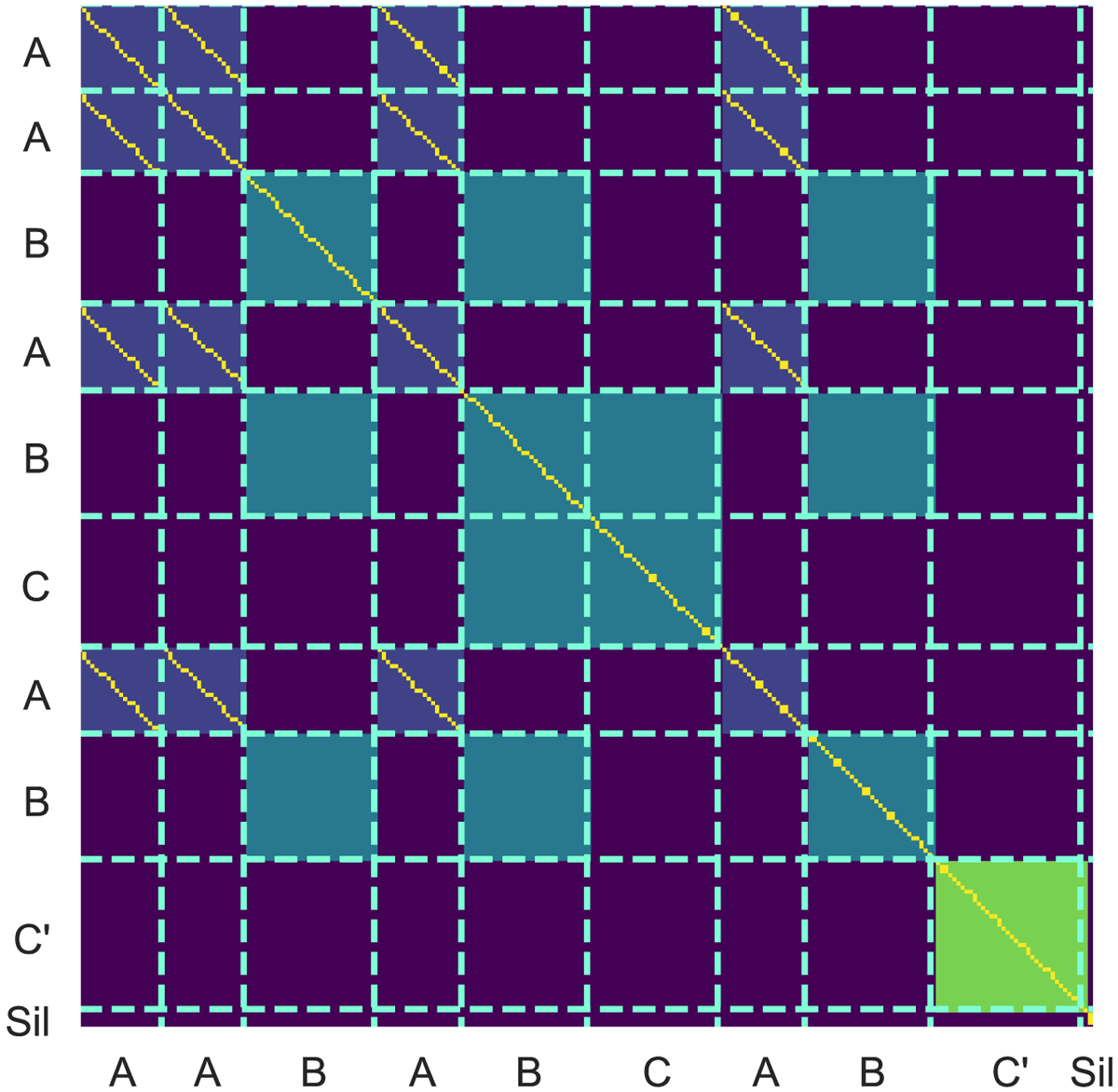
You can think of this as analogous to a recurrence plot in the study of dynamical systems. It visually reveals patterns, repetition, and large-scale form without needing to manually label sections. While creating these requires specialized code, understanding how to read one provides a powerful, objective perspective on song structure that complements the hands-on DAW-based analysis.
Conclusion
Today, we've assembled a comprehensive, systematic framework for analyzing the work of other artists. This process moves from the high-level intent of a track down to the specific micro-details of its execution, providing a complete picture of how it achieves its effect.
Key Takeaways:
- Systematic Analysis: A thorough analysis involves a clear, repeatable process: Import the track into a DAW, map the structure with markers and "ghost clips," and chart the energy flow using an "Energy Map" and the 1-9 method.
- Connect Structure to Dynamics: The goal is to understand how structural changes (adding/removing elements) cause changes in perceived energy. The hierarchy of elements (Kick/Bass > Leads > Drums > FX) is key to this.
- Build a Vocabulary of Techniques: Professional arrangements rely on a toolbox of techniques to create variation and manage tension. Identify these at both macro (sectional changes like breaks) and micro (momentary changes like fills and turnarounds) levels.
- Analysis as a Blueprint: Deconstructing a successful track provides the most valuable template you can have for constructing your own.
In our final lesson, we will reverse this process. You will take a core loop you have created and, using the principles of structure and energy mapping we've learned today, develop it into a full, dynamic arrangement from start to finish.