Hello! Welcome to the final lesson of our course on exciton physics.
Over the past few months, we have journeyed from the foundational principles of excitons to the intricate details of their behavior in a wide range of material systems. We started with the hydrogenic Wannier-Mott model, developed a more rigorous many-body picture using second quantization, and analyzed their optical signatures. We then dove into advanced case studies, exploring the giant diamagnetism of Rydberg excitons in Cu₂O, the strong polaronic effects in perovskites, and the engineered quantum landscapes of moiré superlattices.
Today, we will synthesize this knowledge to look toward the horizon. Our learning outcome is to identify current open questions and future research directions in exciton physics, particularly concerning many-body phenomena and quantum technologies. This lesson will serve as a capstone, connecting the concepts we've mastered to the active, evolving frontiers of condensed matter physics, quantum optics, and materials science.
1. The Frontier of Many-Body Physics and Engineered Quantum Matter
A central theme of modern physics is the search for new collective phases of matter. Excitons and their hybrid counterparts, polaritons, provide a uniquely versatile platform for this pursuit. Your experience with simulations of collective phenomena like avalanches and dune interactions provides a great perspective for appreciating the challenges and opportunities in modeling and realizing these new many-body states.
1.1. Cavity Quantum Materials Engineering
One of the most debated and exciting questions is whether we can fundamentally alter the ground state properties of a material simply by placing it inside an optical cavity, without any external light source. The idea is that the material hybridizes with the vacuum fluctuations of the cavity's electromagnetic field, creating new "electron-photon" ground states.
To explore this frontier, let's turn to a comprehensive review on what is termed "polaritonic quantum matter."
The review 'Polaritonic quantum matter' by Basov et al. provides an excellent overview of the field's future. We will focus on the section outlining the open questions, starting with the challenge of engineering materials with cavities.
Please read the following sections from this review: Section 5: 'What is ahead for polaritonic quantum matter?' (starts on p. 25). Focus on the first subsection, 'Polaritonic materials engineering in cavities and nanostructures'. Pay close attention to the fundamental questions posed: Can we induce conductivity, destroy a Mott gap, or trigger ferroelectricity with vacuum fields? Note the mention of the 'no-go theorem' and the potential ways around it, such as interactions and higher-order coupling. Section 2.3: 'On cavity materials engineering: first data.' (p. 10). This section provides concrete experimental examples of the ideas discussed above. Note the experiments on altering quantum Hall transport and tuning the metal-insulator transition in 1T-TaS₂, which you may have encountered in your CMP courses.
As you've just read, the key open questions in this area include:
- Inducing Phase Transitions: Can strong coupling to vacuum fluctuations induce or significantly modify collective phase transitions, such as superconductivity, ferroelectricity, or magnetism? Theoretical proposals are abundant, but definitive experimental proof remains a primary goal.
- Overcoming 'No-Go' Theorems: A set of theoretical arguments suggests that coupling to a single cavity mode cannot change a system's thermodynamic ground state. A major research effort is focused on understanding the limits of these theorems and exploring ways to circumvent them, for example, by using multi-mode cavities, introducing strong interactions, or moving into the deep-strong coupling regime.
- The Role of Moiré Materials: As we saw in the last lesson, moiré superlattices offer unprecedented tunability of electronic band structures, leading to flat bands where kinetic energy is quenched and interactions dominate. These systems are nearly ideal candidates for reaching the ultra-strong coupling regime where light-matter interaction energy becomes comparable to the electronic kinetic energy, potentially enabling novel entangled electron-photon ground states.
1.2. Correlated Excitonic States
Beyond altering existing material properties, a major goal is to create entirely new phases of matter made of excitons.
- Exciton Crystals: Can we realize an exciton Wigner crystal? In a moiré potential, as the density of trapped interlayer excitons increases, their strong repulsive dipole-dipole interactions could force them to crystallize into a regular lattice. Observing this ordered state of matter is a key experimental challenge.
- Exciton Bose-Einstein Condensation (BEC): While exciton-polariton BEC has been widely observed, it is typically a non-equilibrium, driven-dissipative phenomenon. The quest for a true, thermal equilibrium BEC of long-lived excitons continues. Systems like bilayer TMDCs with long-lived interlayer excitons or Cu₂O with its unique symmetries that suppress recombination are prime candidates.
- Hubbard Model Simulators: The periodic potential of a moiré superlattice creates a natural realization of the Hubbard model, where excitons can tunnel between lattice sites and interact with each other. This platform could be used as a quantum simulator to study fundamental models of strongly correlated physics, a problem that is often intractable for classical computers.
2. The Frontier of Quantum Technologies
Excitons and polaritons are not just objects of fundamental curiosity; their unique properties make them powerful candidates for building next-generation quantum technologies. Your work on photoluminescence spectroscopy gives you a direct appreciation for the optical control and readout that makes these systems so attractive.
The following review on perovskites offers a fantastic perspective on the technological applications being pursued.
Recent advances in exciton-polariton in perovskite
The review 'Recent advances in exciton-polariton in perovskite' by As'ham et al. concludes with a detailed outlook on future applications. Perovskites, with their strong room-temperature excitons and solution-processability, are a key platform for moving these technologies from the lab to real-world devices.
Please read the 'Outlooks' section (starts on p. 15). Pay particular attention to the subsections on: 'Low-threshold polariton laser': How can strong coupling and novel symmetries lead to more efficient nanoscale lasers? 'Single-photon source and quantum computing': Focus on how strong coupling enables the photon blockade effect for creating single-photon sources and how polaritons can be used as qubits.
Drawing from this review and the broader field, we can identify several key technological frontiers.
2.1. Quantum Computing and Communication
- Single-Photon Sources: A reliable source of single photons is a cornerstone of quantum communication and optical quantum computing. The strong nonlinearity provided by an exciton in a cavity can lead to the polariton blockade (or photon blockade) effect. The presence of one polariton in the system shifts the energy levels such that a second photon cannot be absorbed. This turns the device into a deterministic single-photon emitter. Highly excited Rydberg excitons, with their giant interaction radii, are especially promising for realizing strong blockade effects.
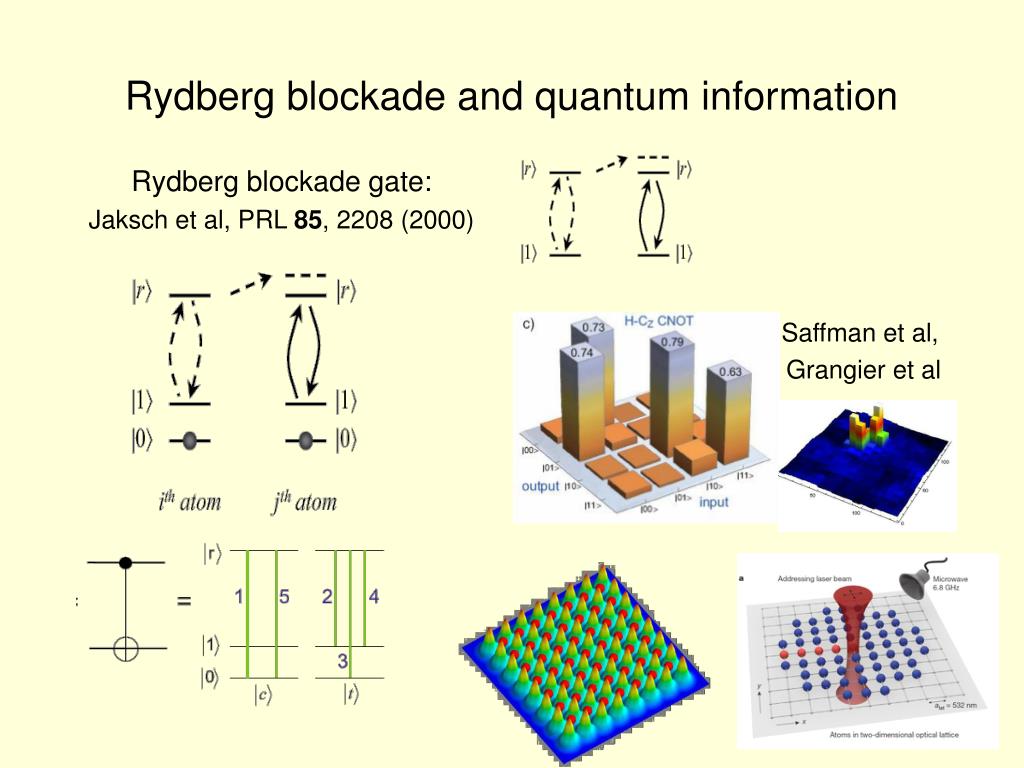
- Polaritonic Qubits: The quantum states of polaritons can themselves be used as qubits. Their hybrid nature is a key advantage: the light component allows for fast optical initialization, manipulation, and readout, while the matter component enables strong interactions necessary for two-qubit gates. Moiré excitons offer a pathway to creating scalable arrays of identical qubits.
- Quantum Simulators: As mentioned earlier, arrays of interacting polaritons in moiré lattices or coupled microcavities can be programmed to simulate the behavior of other complex quantum systems, potentially unlocking new insights into materials science and chemistry.
2.2. Next-Generation Optoelectronics
- Low-Threshold Lasers: Conventional lasers require a population inversion. Polariton lasers, however, operate based on the condensation of polaritons into a single quantum state, a threshold that can be reached at much lower pump powers. Future research focuses on leveraging new materials like perovskites and novel cavity designs (e.g., those using bound states in the continuum, BICs) to create ultra-efficient, room-temperature, electrically-driven polariton lasers for on-chip applications.
- All-Optical Switches and Transistors: The strong interactions between polaritons mean that a weak "gate" beam of light can be used to control a stronger "source" beam, creating an all-optical transistor. The very fast timescales of polaritonic processes (ps) promise switching speeds far beyond what is possible with electronics.
- Enhanced Sensors: The energy levels of excitons are extremely sensitive to their local environment. This sensitivity can be harnessed for building highly effective sensors. For instance, a polaritonic device could detect the presence of a single molecule that slightly perturbs the exciton energy, which is then read out as a shift in a sharp spectral line.
3. Exotic Horizons and New Paradigms
Finally, some research directions challenge our very definition of what a particle is and how it behaves. These frontiers are where the most fundamental discoveries are often made.
3.1. Fractional Excitons and Anyonic Statistics
Recent, tantalizing experimental results suggest the discovery of a new type of quasiparticle: the fractional exciton. These appear to be composite entities formed in the extreme environment of the fractional quantum Hall effect, behaving as if they carry a fraction of an elementary charge and obey neither fermionic nor bosonic statistics.
The Particle That Broke the Rules
To get a sense of this cutting-edge discovery, let's watch a video that explores the experimental evidence and profound implications of fractional excitons. It touches on concepts like the fractional quantum Hall effect, anyons, and topological quantum computing.
Please watch the following segments of 'The Particle That Broke the Rules': The Experimental Breakthrough (02:18 - 07:19): This details the initial observations in graphene under extreme conditions and introduces the core idea. Fractional Charges and FQHE (07:19 - 15:54): This explains the underlying physics of the fractional quantum Hall effect that provides the stage for these new particles. Anyons and New Statistics (39:21 - 47:07): This segment discusses the deepest implication: the potential discovery of anyons, particles that are neither bosons nor fermions, and their relevance for topological quantum computing.
The possible existence of fractional excitons opens up a new paradigm:
- A New Form of Matter: It suggests that the categories of boson and fermion are not exhaustive. In 2D, anyons can exist, whose quantum statistics are described by a continuous phase angle. Fractional excitons may be our first glimpse of bound states of anyons.
- Topological Quantum Computing: Anyons are the basis for topological quantum computing, where information is encoded in the braiding of particle worldlines, making it intrinsically robust to local noise. The ability to create and manipulate excitonic anyons would be a monumental step towards this goal.
3.2. Topological and Time-Varying Systems
- Topological Polaritons: By engineering the geometry of photonic crystals or cavity arrays, it's possible to create photonic states with topological properties (e.g., analogs of topological insulators). Coupling these to excitons results in topological polaritons. These quasiparticles can travel along the edge of a device in "one-way" channels, immune to back-scattering from defects. This offers a path to robust, on-chip transport of quantum information.
- Time Interfaces: Just as an interface in space (like the boundary between two materials) refracts light, an interface in time—an abrupt, uniform change in a material's properties—can do the same. This is an emerging concept in photonics. Because polaritons can have very low group velocities, the requirement for an "abrupt" change is much easier to satisfy. Using time interfaces to control the propagation, frequency, and even time-reversal of polariton wavepackets is a largely unexplored but fascinating future direction.
Conclusion
This brings us to the end of our course. From the simplest electron-hole pair to the prospect of braided anyonic quasiparticles, exciton physics has proven to be a field of extraordinary richness and depth.
Key Takeaways:
- Many-Body Frontiers: Major open questions revolve around engineering new quantum phases, such as altering material ground states in cavities (cavity QED), creating exciton crystals, and achieving equilibrium exciton BEC.
- Quantum Technology Platforms: Excitons and polaritons are leading candidates for building future quantum technologies, including robust single-photon sources and qubits via the polariton blockade effect, ultra-efficient polariton lasers, and high-speed all-optical switches.
- New Paradigms: The field continues to push fundamental boundaries with the search for exotic quasiparticles like fractional excitons and the exploration of new control schemes using topology and time-varying media.
The study of excitons is a perfect example of how fundamental curiosity about the quantum world drives technological innovation. It is a field that sits at the convergence of theory, experiment, and materials engineering, with a landscape of open questions and exciting possibilities ahead. I hope this course has provided you with a solid foundation and sparked your curiosity to potentially contribute to this dynamic field in your future research career. Thank you for your engagement and dedication throughout our journey together.