Introduction
Welcome to our lesson. In our previous session, we delved into a specific public health intervention from Ayurveda—Dhupana Karma—and analyzed its role in environmental purification, linking the classical concept of Janapadodhwamsa to modern challenges like hospital-acquired infections and air pollution. We examined a research study that validated its antimicrobial effects, which served as a perfect example of how traditional practices can be investigated through a modern scientific lens.
That analysis naturally leads to a crucial question: If research exists for Dhupana, what about the hundreds of other Swasthawritta principles? Where are the blind spots? This lesson is designed to equip you with the skills to answer that question. Our learning outcome is to identify key research gaps in Swasthawritta-based public health and formulate three specific research questions.
This is a pivotal skill that transitions you from being a consumer of research to a potential contributor. By learning to systematically identify what isn't known and to frame precise, answerable questions, you lay the groundwork for advancing an evidence-based approach to Swasthawritta in clinical practice and public health policy.
1. Understanding the "Research Gap"
Before we can find a research gap, we must clearly define what it is. It's more than just a topic that hasn't been studied; it's a specific problem or an unanswered question within a field of study that your research can help address.
To get a clear and practical overview of this concept, let's watch a short video.
5 Steps to Finding Your Research Gap and Research Question | Medical and Health Sciences
The video '5 Steps to Finding Your Research Gap and Research Question' provides an excellent, concise framework for understanding and identifying research gaps. It categorizes them into three main types, which is a useful starting point.
Please watch the video from the beginning until 00:35. Focus on the three types of problems the presenter identifies as research gaps.
As the video explains, a research gap can be:
- No solution exists: A specific Swasthawritta intervention has never been formally evaluated for a particular public health issue.
- Conflicting evidence: Different studies on a Swasthawritta practice (e.g., Abhyanga) show contradictory results, leaving its effectiveness unclear.
- The solution isn't good enough: We know a practice works, but we lack effective, scalable methods to implement it in a specific community (e.g., promoting Ritucharya among urban populations).
With this framework in mind, let's explore how to systematically uncover these gaps in Swasthawritta.
2. A Systematic Approach to Identifying Gaps
Finding a research gap is not a random process. It requires a structured approach that combines high-level strategy, clinical observation, and a review of existing knowledge.
Step 1: Align with National Priorities
A good starting point is to understand what the broader public health and research communities consider important. This ensures your research is relevant and addresses pressing needs. The AYUSH ministry and associated bodies have already outlined such priorities.
AYUSH research for New India: Vision and strategies - PMC
The document 'AYUSH research for New India: Vision and strategies' is a key policy paper outlining strategic priorities for AYUSH research. It directly points us toward areas deemed important from a public health perspective.
Please read section 3.4, titled 'Research strategy for AYUSH in public health.' As you read, identify and note down: The priority health areas mentioned (e.g., NCDs, geriatric care). The specific Swasthawritta concepts that are explicitly highlighted as needing exploration (e.g., Dinacharya, Ritucharya). The challenges listed, as these are direct pointers to research gaps (e.g., 'lack of rigor in research,' 'defining outcome measures,' need for 'cohort studies').
This reading clearly signals major gaps. There's a recognized need for high-quality research on how core Swasthawritta principles can be applied to manage NCDs, improve maternal and child health, and support healthy aging. The call for an "AYUSH Epidemiology Network" and "cohort studies" points to a fundamental gap: a lack of large-scale observational data on how Ayurvedic lifestyle practices affect health outcomes over time in different populations.
Step 2: Brainstorm from Clinical and Textual Knowledge
The video we watched earlier advised to "start from where you are." Your clinical experience and deep textual knowledge are invaluable sources of research questions. Think about the "pain points" in your practice:
- What questions do patients ask for which you have a traditional answer but lack modern evidence?
- Where do classical guidelines seem to conflict with modern lifestyles (e.g., adapting Dinacharya for a shift worker)?
- Which Swasthawritta recommendations are most difficult for patients to adhere to?
This is where a review of contemporary literature becomes essential to see how modern science might be catching up with Ayurvedic principles, often revealing new avenues for research.
Chronobiology And Circadian Rhythm-Based Daily ...
The review 'Chronobiology And Circadian Rhythm-Based Daily...' is a perfect example of a paper that bridges Ayurvedic concepts with modern science (chronobiology). Such papers are excellent for spotting research gaps at the intersection of disciplines.
Please read the 'CONCLUSION' section (Section 5). Pay close attention to the sentences that explicitly point towards future research directions.
This paper does the work for us, explicitly stating two major research gaps:
- Validation Gap: A need for clinical trials to validate the health benefits of Dinacharya and Ritucharya.
- Implementation Gap: A need to research and develop digital health solutions to help people adopt these regimens in the modern world.
3. Formulating a High-Quality Research Question
Once you've identified a gap, the next step is to translate it into a focused, answerable research question. A vague idea like "study Ritucharya" is not a research question. We need a precise, structured statement.
Frameworks for Formulation
Two useful frameworks can help structure your question:
-
PICO/PEO: This is a simple and effective framework mentioned in the video.
- PICO (for interventions): Population, Intervention, Comparison, Outcome.
- PEO (for observational studies): Population, Exposure, Outcome.
-
FINERMAPS: This is a more comprehensive checklist to ensure your question is not just well-formed, but also practical and impactful.
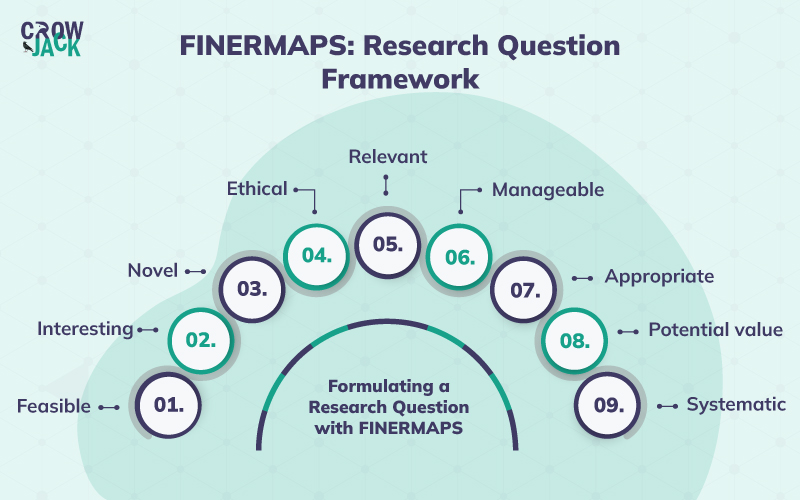
Using these frameworks transforms a broad area of interest into a specific plan of investigation. Let's practice this.
Workshop: Formulating Three Research Questions
Drawing from the gaps we've identified, let's work together to formulate three distinct research questions, each refined using the PICO/PEO framework.
1. Research Question on Vasanta Ritucharya (Validation Gap)
- Identified Gap: The need for clinical trials validating Ritucharya for specific conditions (from LINK & LINK). Let's focus on allergic rhinitis in Vasanta Ritu, a common clinical scenario.
- Initial Idea: Does Vasanta Ritucharya help with spring allergies?
- Refinement using PICO:
- P (Population): Adults aged 20-45 with a clinical diagnosis of seasonal allergic rhinitis.
- I (Intervention): A structured Vasanta Ritucharya protocol, including specific dietary guidelines (Ahara) and lifestyle modifications (Vihara), supervised by an Ayurvedic practitioner for 6 weeks.
- C (Comparison): A control group receiving standard care (e.g., access to over-the-counter antihistamines as needed) and general health advice.
- O (Outcome): The primary outcome will be the change in the Total Nasal Symptom Score (TNSS). A secondary outcome will be the reduction in weekly antihistamine usage.
Formulated Research Question 1:
In adults (20-45 years) with seasonal allergic rhinitis, does a supervised 6-week Vasanta Ritucharya protocol, compared to standard care, lead to a clinically significant reduction in nasal symptom scores and antihistamine use?
2. Research Question on Dinacharya Adherence (Implementation Gap)
- Identified Gap: The need for research on innovative solutions to improve adherence to Swasthawritta practices in modern lifestyles (from LINK).
- Initial Idea: Can a mobile app improve Dinacharya practice?
- Refinement using PICO:
- P (Population): Sedentary corporate employees aged 25-50 reporting moderate to high stress.
- I (Intervention): A mobile health (mHealth) app that provides personalized Dinacharya schedules, reminders, educational content, and self-monitoring features.
- C (Comparison): An active control group receiving the same Dinacharya information via a one-time educational workshop and a printed brochure.
- O (Outcome): The primary outcome will be adherence to key Dinacharya practices (e.g., waking time, meal timing, Abhyanga), measured by a validated self-report diary over 12 weeks. Secondary outcome will be the change in the Perceived Stress Scale (PSS) score.
Formulated Research Question 2:
Among stressed corporate employees, is a mobile health app more effective than a traditional educational brochure at improving adherence to Dinacharya practices and reducing perceived stress over a 12-week period?
3. Research Question on Ritusandhi (Epidemiological Gap)
- Identified Gap: The need for epidemiological data and cohort studies to understand Ayurvedic concepts in a population context (from LINK). Let's focus on the vulnerable Ritusandhi (inter-seasonal) period.
- Initial Idea: How does the body change between seasons?
- Refinement using PEO (Observational Study):
- P (Population): A cohort of healthy volunteers in a specific geographical region (e.g., a city with distinct seasons).
- E (Exposure): The transition from Grishma (summer) to Varsha (monsoon) Ritu, defined as the 14-day Ritusandhi period.
- O (Outcome): Longitudinal changes in Agni (assessed via a validated questionnaire on digestive function), gut microbial composition (via stool sample analysis), and markers of systemic inflammation (e.g., hs-CRP) measured before, during, and after the Ritusandhi period.
Formulated Research Question 3:
In a cohort of healthy individuals, what is the association between the Grishma-Varsha Ritusandhi period and longitudinal changes in digestive function, gut microbiome diversity, and inflammatory biomarkers?
Test your understanding!
Using the gaps we identified related to geriatric care (from resource LINK), try to formulate a basic research question using the PICO framework. Don't worry about making it perfect; just try to define the four components.
Topic: The effect of daily Abhyanga on sleep quality in the elderly.
Show answer
- P (Population): Elderly individuals (age 65+) living in an assisted care facility who report poor sleep quality.
- I (Intervention): Daily self-application of a standardized sesame oil Abhyanga for 15 minutes before bedtime.
- C (Comparison): A control group that performs light stretching exercises for 15 minutes before bedtime.
- O (Outcome): Change in sleep quality measured by the Pittsburgh Sleep Quality Index (PSQI) over 8 weeks.
Formulated Question: In elderly individuals with poor sleep, does daily Abhyanga with sesame oil improve sleep quality more than light stretching over an 8-week period?
Conclusion
In this lesson, you have learned a systematic process for moving from a broad understanding of Swasthawritta to the precise work of scientific inquiry. This is a cornerstone skill for elevating Ayurvedic public health from principle to practice.
Key Takeaways:
- A research gap is an unanswered question where no solution exists, evidence is conflicting, or existing solutions are inadequate.
- Gaps can be identified systematically by reviewing national health priorities, brainstorming from clinical experience, and analyzing review articles that bridge traditional and modern science.
- Frameworks like PICO/PEO and FINERMAPS are essential tools for transforming a broad gap into a specific, feasible, and impactful research question.
- Well-formulated questions are precise about the Population, Intervention/Exposure, Comparison, and Outcomes.
Preview of the Next Lesson:
You have now successfully identified key research gaps and formulated three robust research questions. What's next? In our final lesson of the course, you will learn how to take one of these questions and package it for a formal audience. The learning outcome will be to: Draft a concise project summary and statement of objectives for a Swasthawritta public health research proposal. This will involve translating your research question into the language of grant proposals and study protocols, a crucial step in turning a great idea into a funded research project.