Introduction
In our last lesson, we explored the architecture of cross-sectional studies, a powerful tool in observational research for capturing a snapshot of a population's health practices at a single point in time. We learned how to outline a protocol for such a study, focusing on its ability to show correlations and determine prevalence.
Today, we pivot from observing to intervening. We will delve into the methodology that is widely considered the "gold standard" for establishing cause and effect in clinical research: the Randomized Controlled Trial (RCT). Our learning outcome is to outline the key components of a randomized controlled trial (RCT) protocol to evaluate a Swasthawritta intervention. This lesson is fundamental for you as a clinician and aspiring researcher, as it provides the framework for scientifically validating the efficacy of the therapies you practice, such as a specific Dinacharya routine or an Ayurvedic herbal formulation.
1. What is a Randomized Controlled Trial (RCT)?
An RCT is a type of experimental study where participants are randomly assigned to different groups to receive (or not receive) an intervention. The outcomes of these groups are then compared to determine the intervention's effectiveness.
The core strength of an RCT lies in three key features:
- Intervention: The researcher actively introduces a treatment or practice.
- Control: The intervention group is compared against a control group that receives a placebo, standard care, or no intervention.
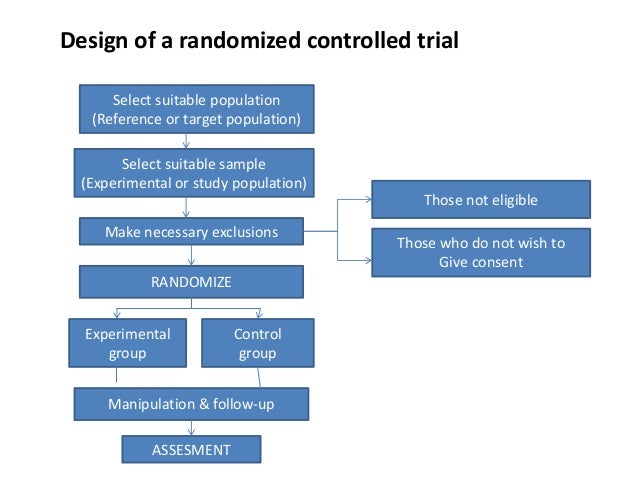
- Randomization: Participants are assigned to groups by chance, which minimizes selection bias and ensures the groups are comparable at the start of the study.
This process allows us to be more confident that any differences observed in the outcomes are due to the intervention itself, not pre-existing differences between the groups.
The following flowchart provides a clear visual of the typical RCT process.
2. The Anatomy of an RCT Protocol
Just as with an observational study, an RCT requires a detailed protocol that serves as the study's master plan. It ensures that the research is conducted ethically, systematically, and reproducibly. Let's break down the essential components.
To start, let's get a quick overview of what a protocol is and what it contains.
Clinical Trial Protocol Part I
The video 'Clinical Trial Protocol Part I' from CLINICAL GYAN provides a concise introduction to the purpose and main elements of a clinical trial protocol, according to international standards (ICH-GCP).
Please watch from the beginning to 03:06. Focus on the definition of a protocol and the list of key topics it should include. We will be exploring these topics in detail.
As you just saw, a protocol is a comprehensive document. We will now explore its most critical sections, focusing on how they apply to a Swasthawritta intervention.
Component 1: Background, Rationale, and Objectives
This section sets the stage for the entire study.
- Background Information: A summary of existing knowledge. What do the classical texts say about the intervention? What does modern scientific literature suggest? For example, if studying Brahmi for memory, you would summarize its description in the Samhitas and also review modern neuropharmacological studies.
- Study Rationale: This is the "why." It justifies the need for the study. It should present a clear argument for why the potential benefits of the intervention outweigh the risks and why the research question is important.
- Study Objectives & Endpoints:
- Objectives are the specific questions the trial aims to answer. They are broken into primary (the most important question) and secondary (additional important questions) objectives.
- Endpoints (or outcome measures) are the specific, measurable variables used to assess the objectives. For every objective, there must be a corresponding endpoint.
Clinical Trial Protocol Part I
Let's return to the 'Clinical Trial Protocol Part I' video to understand these components more clearly.
Please watch from 03:06 to 06:10. This segment explains what to include in the background and rationale, and then clearly defines primary/secondary objectives and endpoints with examples.
Example for a Swasthawritta RCT:
- Primary Objective: To evaluate the efficacy of Gandusha with sesame oil in reducing plaque-induced gingivitis.
- Primary Endpoint: The change in the Gingival Index score from baseline to week 4.
- Secondary Objective: To assess the effect on oral malodor.
- Secondary Endpoint: Volatile Sulfur Compound (VSC) levels as measured by a halimeter.
Component 2: Study Design and Methodology
This is the core operational plan of the trial. For a deeper understanding of the nuances involved in study design, especially in complex interventions, the following resource is invaluable.
IPPCR 2015: Overview of Clinical Study Design
This lecture, 'Overview of Clinical Study Design,' from the NIH provides a high-level perspective from an expert biostatistician. It discusses the difference between study ideals and practical realities, which is particularly relevant for Swasthawritta research.
Please watch two clips from this lecture: 22:48 - 26:17: This explains the fundamental difference between interventional and observational studies. 32:25 - 34:47: This discusses the 'ideal' characteristics of a clinical trial (e.g., control arms, randomization, blinding) and the practical challenges, which is very important context.
Now, let's dissect the key elements of the methodology section.
-
Trial Design: A description of the trial's structure (e.g., "parallel-group," "crossover," "factorial"). The most common is the parallel-group design, where each group receives a different treatment simultaneously.
-
Subject Selection:
- Inclusion Criteria: Characteristics a participant must have to be included (e.g., age 18-65, clinical diagnosis of mild insomnia).
- Exclusion Criteria: Characteristics that disqualify a participant (e.g., pregnancy, use of sleep medication, history of sleep apnea).
-
The Intervention(s): A precise, detailed description of the treatment. For Swasthawritta, this is critical for reproducibility.
- Herbal Medicine: Specify the plant part, dose, standardization, form of administration (Churna, Vati, Kwatha), and frequency.
- Procedure: For practices like Abhyanga or Yoga, specify the technique, type of oil/materials, duration, frequency, and practitioner's required training.
-
The Control Group: The choice of control is crucial and depends on the research question.
- Placebo Control: An inert substance or sham procedure that mimics the active intervention. This is the gold standard for testing efficacy but can be very difficult for lifestyle interventions like Vyayama or dietary changes.
- Active Comparator: Comparison against a known, effective treatment (e.g., comparing an Ayurvedic herb to a standard modern drug).
- Usual Care / Standard of Care: The intervention is added to what patients would normally receive.
- Waitlist Control: The control group receives no intervention during the study period but is offered it afterward.
-
Randomization & Blinding:
- Randomization: The process of assigning participants to groups by chance. The protocol must specify the method (e.g., computer-generated sequence).
- Blinding (or Masking): The process of concealing the group assignment.
- Single-blind: The participant is unaware of their group.
- Double-blind: Both the participant and the investigators/assessors are unaware.
- Open-label: Everyone knows the group assignments. This is common in studies where blinding is impossible (e.g., surgery vs. medication, or a yoga vs. walking study).
The World Health Organization (WHO) provides excellent guidelines on adapting these concepts for traditional medicine.
General Guidelines for Methodologies on Research and Evaluation of Traditional Medicine
The WHO's 'General Guidelines for Methodologies on Research and Evaluation of Traditional Medicine' provides a foundational text on this topic. It directly addresses the challenges and solutions for applying RCT methodology to practices like ours.
Please read Sections 3.3 'Selection of study design,' 3.4 'Clinical trial population,' and 3.5 'Ethical considerations.' Pay special attention to the discussions on Control groups, Randomization, and Blind assessment, and how they can be adapted for traditional medicine research.
Component 3: Assessments and Statistical Plan
- Assessment of Efficacy & Safety: The protocol must detail which outcome measures will be used, how they will be measured, and a schedule of all visits and assessments. It must also describe how adverse events will be monitored, recorded, and reported.
- Statistical Considerations: This section, usually written with a biostatistician, outlines:
- Sample Size: How many participants are needed to have a high probability of detecting a real effect if one exists (this is called statistical power).
- Analysis Plan: The specific statistical tests that will be used to compare the groups.
- Analysis Population: Often specifies an Intention-to-Treat (ITT) analysis, where all participants are analyzed in the groups they were randomized to, regardless of whether they completed the intervention. This reflects real-world effectiveness.
The full structure for a protocol is provided in Annex VIII of the WHO document (LINK, section 6) you just reviewed. It's an excellent reference for seeing all the required components laid out in a formal checklist.
Test your understanding!
You want to design a simple RCT to test if daily Pratimarsha Nasya with Anu Taila improves sleep quality in adults with mild sleep difficulties. Briefly outline the following three components of your protocol:
- The Intervention and Control groups.
- The Primary Objective and a corresponding Primary Endpoint.
- What level of blinding would be most feasible and why?
Show answer
Here's a possible answer:
-
Intervention Group: Instill 2 drops of Anu Taila in each nostril once daily in the evening.
Control Group: Instill 2 drops of a placebo liquid (e.g., saline solution colored and scented to resemble Anu Taila) in each nostril once daily in the evening. -
Primary Objective: To assess the effect of 4 weeks of Pratimarsha Nasya with Anu Taila on self-reported sleep quality.
Primary Endpoint: The change in the total score on the Insomnia Severity Index (ISI) from baseline to week 4. -
Blinding: A double-blind design would be most feasible and rigorous. Because a convincing placebo (similar color, smell, and viscosity) can be created for the nasal drops, both the participants and the research staff assessing the outcomes can be kept unaware of the group assignments. This minimizes both participant expectation bias and observer bias.
3. Case Study: An RCT for a Swasthawritta Lifestyle Intervention
Let's now analyze a published RCT that evaluates a complex Swasthawritta intervention for stress management. This will connect all the components we've discussed to a real-world example.
The Role of Diet and Lifestyle in Managing Stress-Induced ...
This paper, 'The Role of Diet and Lifestyle in Managing Stress-Induced Disorders,' is a perfect case study. It's a randomized controlled trial that compares an integrated Ayurvedic regimen against standard lifestyle advice.
Please read the 'Abstract' and the 'Materials and Methods' section (2.1 to 2.5). As you read, try to identify the key protocol components: study design, participants (inclusion/exclusion), randomization, interventions (for both groups), and outcome measures.
Let's deconstruct the methodology from this paper:
- Study Design: The authors clearly state it is a "prospective, randomized, controlled, open-label, parallel-group clinical study." Open-label means blinding was not used, which is understandable given the complexity of the lifestyle interventions.
- Participants: They enrolled 120 adults (18-55 years) with a specific level of perceived stress (PSS-10 ≥ 18). They also listed clear exclusion criteria (e.g., major psychiatric disorders, pregnancy).
- Randomization: Participants were randomly allocated (1:1) using a computer-generated sequence.
- Interventions:
- Ayurveda Group (AG): A complex intervention including a Dosha-specific diet, Yoga, Pranayama, Dhyana, Abhyanga, and an herbal supplement (Withania somnifera). This is an excellent example of how to describe a multi-component Swasthawritta intervention.
- Control Group (CG): An active control group that received standard lifestyle advice (balanced diet chart and brisk walking).
- Outcome Measures:
- Primary Outcome: Change in the Perceived Stress Scale (PSS-10).
- Secondary Outcomes: GAD-7 (anxiety), ISI (insomnia), HRV (autonomic function), and hs-CRP (inflammation). These are all standardized, validated measures.
This study exemplifies how the rigorous structure of an RCT can be applied to test a holistic, multi-component Ayurvedic lifestyle intervention and produce scientifically credible evidence.
Conclusion
In this lesson, we have dissected the "gold standard" of clinical research, the Randomized Controlled Trial. You now have the foundational knowledge to understand and outline a protocol for testing a Swasthawritta intervention.
Key Takeaways:
- An RCT is an experimental study design that uses an intervention, a control group, and randomization to establish cause-and-effect relationships.
- A comprehensive RCT protocol must meticulously detail the background and objectives, the study design (including subject selection, blinding, and the precise nature of the intervention and control), the assessment methods, and the statistical plan.
- Designing appropriate controls and blinding can be challenging for complex Swasthawritta lifestyle interventions, but well-designed open-label or active-control trials can still provide strong evidence, as shown in our case study.
Preview of the Next Lesson:
We've repeatedly mentioned the importance of "endpoints" or "outcome measures." But what makes a good one? And how can we measure uniquely Ayurvedic concepts like Agni, Ojas, or Nidra in a scientific study? In our next lesson, we will address this directly as we learn to develop measurable, specific, and relevant outcome parameters for Swasthawritta clinical studies.