Introduction
Welcome to your second lesson in the "Foundations of Research in Swasthawritta" module. In our previous lesson, we mapped out the landscape of clinical research, distinguishing between observational and experimental designs. We identified the cross-sectional study as a type of observational study that provides a "snapshot" in time, excellent for understanding the state of a population.
Today, we move from identifying this design to learning how to create a blueprint for it. Our learning outcome is to outline the key components of a cross-sectional study protocol to assess lifestyle practices in a population. This is a highly practical skill that allows you to scientifically survey a community to understand their health behaviors, such as their adherence to Dinacharya or Ritucharya, providing a foundation for targeted public health initiatives.
1. The Cross-Sectional Study: A Quick Review
Let's begin by refreshing our understanding of what a cross-sectional study is. As the name implies, it involves looking at data from a population at one specific point in time.
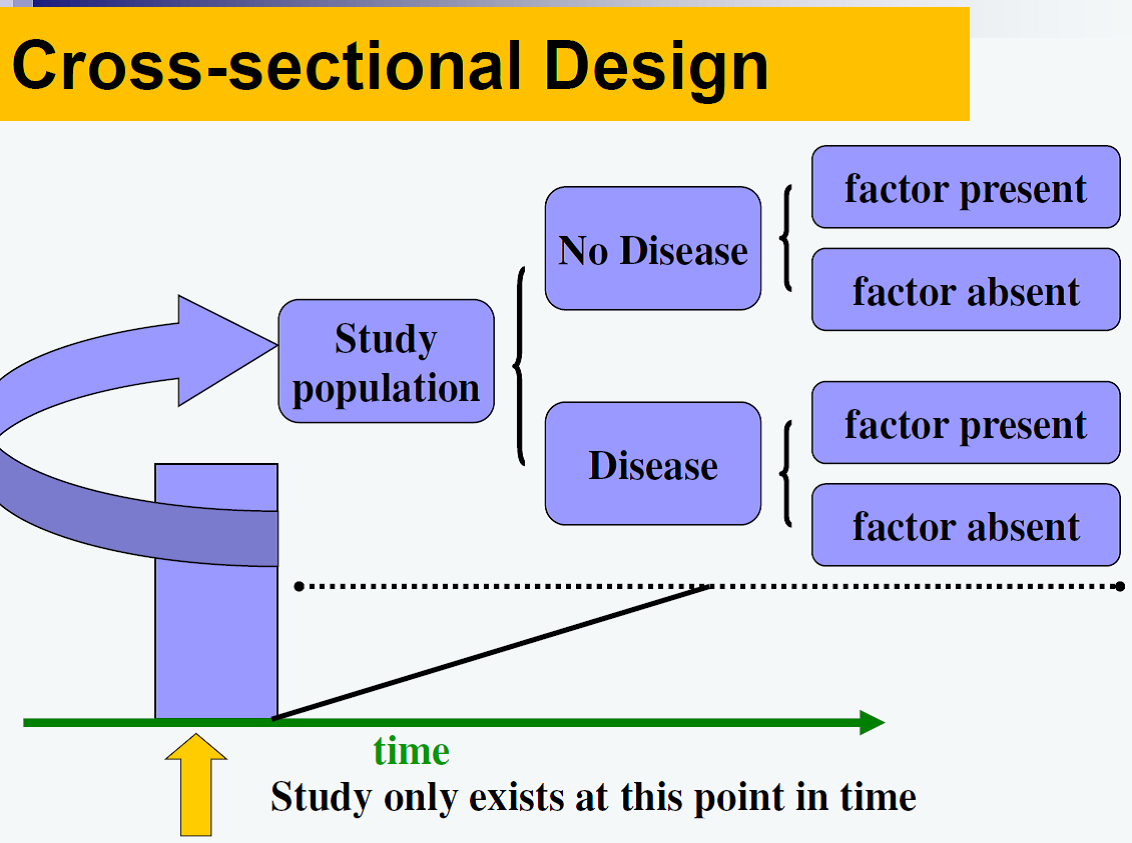
The main goals of a cross-sectional study are:
- To determine the prevalence of a condition or behavior (e.g., "What percentage of adults in this community practice daily Abhyanga?").
- To explore associations between variables (e.g., "Is there a link between the practice of daily Vyayama and lower self-reported stress levels?").
To hear this explained from an Ayurvedic perspective, please watch the following short clip.
Research Study Design l Research Methodology l PG Ayurveda
This video from Ayurveda Academy provides a clear definition and examples of a cross-sectional study, framing it within the context of Ayurvedic research.
Please watch the segment from 27:57 to 31:12. The speaker defines a cross-sectional or 'prevalence' study, explains it as a 'one-time examination,' and provides a relevant example of assessing asthma prevalence and its relation to Prakruti in a specific location and time.
Remember the key limitation we discussed in the last lesson: because exposure and outcome are measured simultaneously, a cross-sectional study can show correlation but cannot prove causation.
2. The Blueprint: Key Components of a Study Protocol
A study protocol is the detailed plan that a researcher creates before beginning any data collection. It ensures the study is conducted systematically and rigorously. Let's build the protocol for a cross-sectional study step-by-step.

The following reading provides a detailed guide to conducting a cross-sectional study. We will refer to it as we break down each component.
How to Conduct and Write a Cross-sectional Study
This article, 'How to Conduct and Write a Cross-sectional Study,' serves as an excellent reference for the practical steps of study design. We will use it to structure our exploration of the key protocol components.
For now, just be aware of this resource. I will guide you to specific parts as we discuss each component of the protocol below. You don't need to read it all at once.
Component 1: Research Question and Objectives
Every study begins with a question. A well-defined research question is the most critical part of the protocol.
- Purpose/Question: What do you want to know? (e.g., "What is the level of adherence to key Dinacharya practices among Ayurvedic students?")
- Objectives: These break down the main question into specific, measurable goals. They should be SMART (Specific, Measurable, Attainable, Relevant, Time-bound).
- General Objective: To assess the knowledge, attitude, and practice (KAP) of Dinacharya among BAMS students.
- Specific Objectives:
- To determine the prevalence of daily practice of Nasya, Gandusha, and Abhyanga.
- To describe the students' knowledge about the benefits of these practices.
- To explore the association between the year of study and adherence to Dinacharya.
In the resource LINK, please review Step 1 – Identify the Purpose and Step 2 – Develop the Objectives for a more detailed explanation of this crucial first stage.
Component 2: Study Population and Sampling
Once you know what you're asking, you need to decide who you're asking.
- Target Population: The entire group you are interested in (e.g., "all adults aged 30-50 in Pune").
- Study Population: A subset of the target population from which you will draw your sample.
- Inclusion/Exclusion Criteria: These are precise rules defining who can and cannot participate.
- Inclusion Criterion: "Adults aged 30-50 residing in Pune for at least one year."
- Exclusion Criterion: "Individuals with a diagnosed cognitive impairment that would prevent them from answering a questionnaire."
- Sample Size & Sampling Method: You can't survey everyone, so you select a sample. The protocol must specify how many people you need (sample size) and how you will select them (sampling method). Common methods include:
- Simple Random Sampling: Everyone has an equal chance of being selected.
- Systematic Sampling: Selecting every nth person from a list.
- Stratified Sampling: Dividing the population into subgroups (e.g., by age) and sampling from each.
Please read Step 3 - Define the Population and Step 4 - Sample Size Computation and Sampling in the resource LINK. Focus on understanding inclusion/exclusion criteria and the different sampling methods described.
Component 3: Data Collection Method & Variables
This is the "how" of gathering information. For cross-sectional studies assessing lifestyle, the most common tool is a questionnaire or survey.
-
Variables: These are the specific pieces of information you collect.
- Exposure variables: The lifestyle practices you're interested in (e.g., frequency of Vyayama, type of oil used for Abhyanga, time of waking).
- Outcome variables: The health aspects you want to connect them to (e.g., self-rated energy levels, sleep quality, frequency of colds).
- Demographic variables: Age, gender, occupation, etc.
-
Questionnaire Design: Creating a good questionnaire is an art. Key considerations include:
- Using clear, simple language.
- Asking one thing per question.
- Using a mix of question types (e.g., Yes/No, multiple choice, Likert scales like "Strongly Agree" to "Strongly Disagree").
The article LINK provides an excellent, practical guide to this. Please read Step 5 - Develop the Data Collection Method, paying close attention to the "5 A's" (Account, Audience, Approach, Ask, Answer) and the best practices for writing questions.
Component 4: Ethical Considerations
Research involving human participants must be ethical. The protocol must detail how you will protect your participants.
- Informed Consent: Participants must understand the study's purpose, risks, and benefits, and voluntarily agree to participate.
- Confidentiality: Ensuring that participants' personal information is kept private.
- Institutional Review Board (IRB) / Ethics Committee Approval: Before starting, the protocol must be reviewed and approved by an ethics committee.
Please review Step 8 – Addressing Ethical Issues in resource LINK.
Test your understanding!
Imagine you want to design a cross-sectional study to assess the dietary habits (Ahara) related to Ritucharya among the general population in your local town during the current Ritu. Briefly outline the following three components of your protocol:
- A specific research question.
- The target population, with one inclusion and one exclusion criterion.
- The primary data collection method you would use.
Show answer
Here is one possible answer. Yours may differ but should follow the same principles.
-
Research Question: "What is the prevalence of consuming Ritu-specific foods (e.g., Madhura rasa dominant foods in Hemanta) and avoiding contraindicated foods (e.g., Dadhi at night) among adults in [Your Town Name] during the current Ritu, and is this practice associated with self-reported Agni status?"
-
Target Population:
- Population: All adults aged 18-65 residing in [Your Town Name].
- Inclusion Criterion: Must have lived in the town for the full duration of the current season.
- Exclusion Criterion: Individuals currently under treatment for a diagnosed gastrointestinal disorder (like IBD or celiac disease) which requires a specific, restrictive diet.
-
Data Collection Method: A self-administered questionnaire, distributed either online or in person. It would contain sections on demographics, a food frequency list with Ritu-specific items, questions about dietary habits, and a validated scale to assess digestive health/Agni status.
3. Case Study: Assessing Dinacharya Practices Among Ayurveda Doctors
Theory is best understood through practice. Let's analyze a real-world example of a cross-sectional study that perfectly aligns with our learning goal. This study assessed the Knowledge, Attitude, and Practice (KAP) of Dinacharya among Ayurveda doctors.
This paper is an excellent case study of a cross-sectional survey designed to assess Swasthawritta lifestyle practices. It demonstrates how the protocol components we've discussed are applied in actual research.
Please read section 3, 'Materials and methods'. This is the 'protocol' section of the paper. As you read, try to identify the research design, sample, and assessment tool used by the authors.
Now, let's deconstruct their methodology using the components we've learned:
- Research Question: Implicit in the title and abstract, the aim was to assess the Knowledge, Attitude, and Practices of Dinacharya among Ayurveda doctors.
- Study Design: The authors explicitly state: "The present work was conducted as Cross-sectional study."
- Study Population & Sample:
- Target Population: "The ayurveda doctors across India (having BAMS degree)".
- Sample: "311 ayurveda doctors across India participated in the survey." This was a convenience sample, as the questionnaire was shared via Google Forms.
- Data Collection Method & Variables:
- Tool: "A closed ended questionnaire was prepared to assess the Knowledge, aptitude and practices of Dinacharya... shared through google form."
- Variables: The questionnaire measured demographic data and the KAP related to practices like waking in Brahma Muhurta, Ushajalapana, Abhyanga, and Vyayama.
This study is a perfect illustration of how a simple, well-designed cross-sectional survey can generate valuable insights into the lifestyle practices of a specific community, highlighting gaps between knowledge and practice.
Conclusion
In this lesson, you have learned to move from theory to practice by outlining the essential components of a cross-sectional study protocol. This design is a pragmatic and powerful tool for any Swasthawritta practitioner interested in community health.
Key Takeaways:
- A cross-sectional study is an observational "snapshot" in time, ideal for measuring the prevalence of lifestyle practices and exploring associations.
- A robust protocol is the blueprint for a successful study and must include a clear research question/objectives, a defined study population and sampling strategy, a well-designed data collection tool (like a questionnaire), and thorough ethical considerations.
- Real-world Swasthawritta research, such as the KAP survey on Dinacharya, effectively uses this design to gather valuable data on community health behaviors.
Preview of the Next Lesson:
Having explored a cornerstone of observational research, we will now shift our focus to the "gold standard" of experimental research. In the next lesson, you will learn to outline the key components of a randomized controlled trial (RCT) protocol to evaluate a Swasthawritta intervention. We will explore why the RCT is so powerful for establishing cause and effect and how it can be used to rigorously test the efficacy of our therapies.