In the last lesson, we defined the core value proposition for your new consultancy, creating a powerful statement that articulates the unique value you offer. That proposition is your promise to the client. Now, we will design the exact process for delivering on that promise.
This lesson addresses the "how": we will map the end-to-end client journey for your new service model. This map will serve as the operational blueprint for your business, detailing every step from the initial client conversation to the delivery of the AI-powered "Executional Model" and beyond. To do this, we'll use a powerful framework from service design that provides the concrete, procedural structure you're looking for.
The Service Blueprint: Your Operational Map
To move from a value proposition to a functioning service, we need a way to visualize all the moving parts. The most effective tool for this is a Service Blueprint. It's a diagram that maps the entire service process, showing not only what the client sees and does (frontstage) but also all the internal work and systems required to make it happen (backstage).
This distinction is crucial for your model. The "frontstage" is where you act as the high-level strategist. The "backstage" is where the AI systems and your technical design work come to life. The blueprint connects them into a single, coherent journey.
To understand the core concepts of this framework, watch this short introductory video from the Service Design Academy.
Service Design Academy: Service Blueprinting
This video provides a clear and concise introduction to Service Blueprinting.
Pay close attention to the explanation of the core components: The difference between frontstage and backstage activities. The breakdown of the blueprint's structure into rows like user actions, touchpoints, and support processes. This is the structure we will use.
Architecting Your AI-Augmented Client Journey
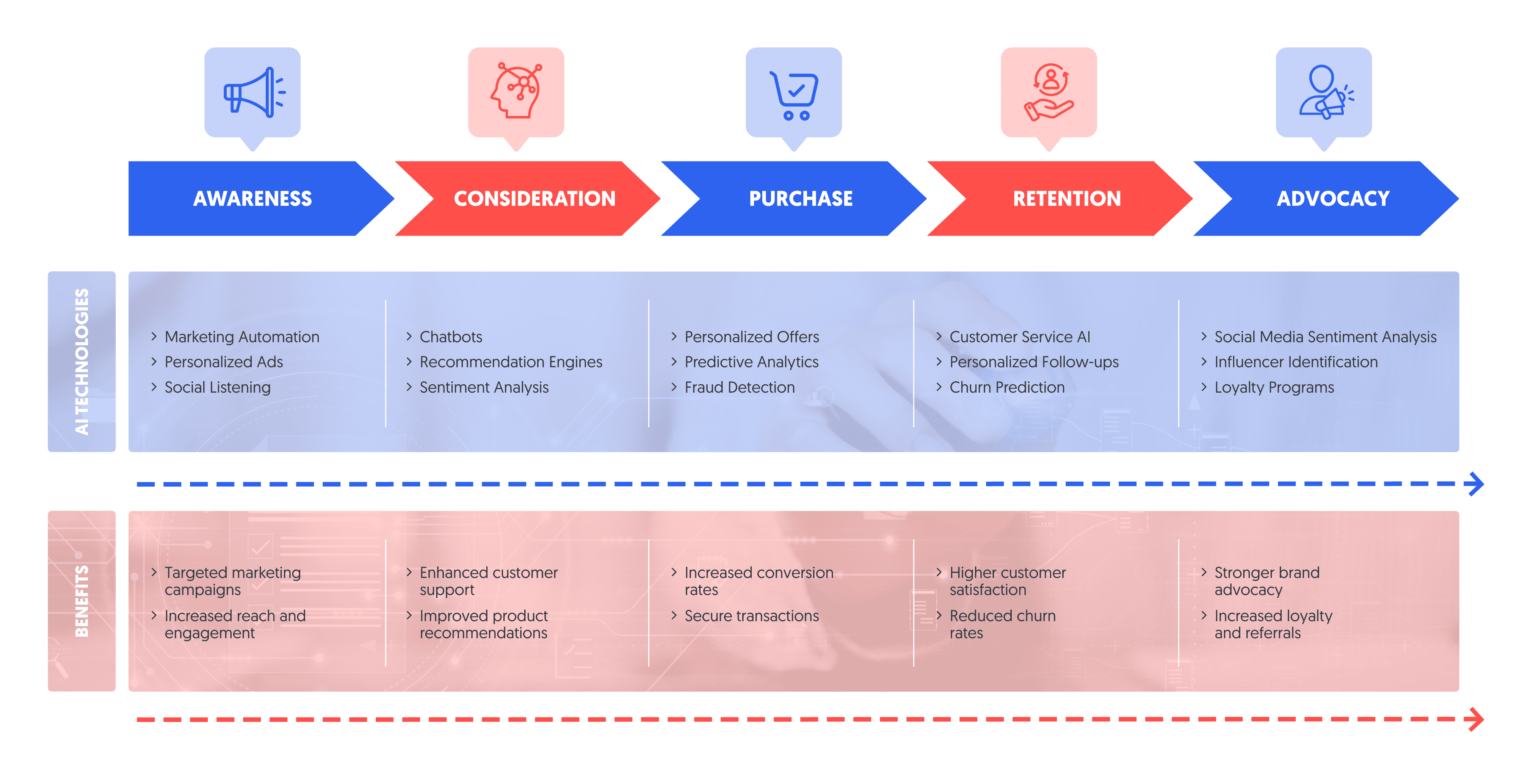
Now, let's use the service blueprinting method to map out the five key stages of your unique client journey. For each stage, we will define what the client does, the touchpoints they interact with, your frontstage actions as the strategist, and your backstage actions as the system architect.
The five stages of your service are:
- Discovery & Strategy
- System Design & Build
- AI Model Delivery & Training
- Performance & Optimization
- Advocacy & Retention
This structure transforms the traditional client relationship into a continuous cycle of value creation, powered by AI.
Stage 1: Discovery & Strategy
This is the foundational stage where you engage the client, uncover their core needs, and co-create the brand strategy. It's almost entirely a frontstage, high-touch experience where you establish your role as a strategic partner.
- Client Actions: Fills out discovery survey, participates in a multi-day workshop, provides feedback, approves strategic direction.
- Touchpoints: Discovery survey (Google Form), video calls, shared digital whiteboard (Miro/FigJam), workshop summary document.
- Your Frontstage Actions (Strategist): Lead initial consultation, facilitate the brand strategy workshop, ask probing questions, guide exercises, present summary of findings.
- Your Backstage Actions (Architect): Analyze survey results, research competitors, prepare the workshop agenda and materials, synthesize workshop notes and recordings into a strategic document.
- Supporting AI/Tech: CRM for lead management, Google Forms for surveys, Miro for workshops, AI transcription tools (e.g., Otter.ai) for meeting notes.
This phase is about deep, human-led strategic work. A well-structured workshop is the key deliverable. The following guide provides a detailed, step-by-step procedure for designing and running one.
Remote Brand Strategy Workshops: A Step-by-step Guide | Toptal®
This Toptal article is a comprehensive manual for conducting a remote brand strategy workshop. It aligns perfectly with your need for a concrete process.
Focus on these key sections: The five stages: This provides an excellent overview of the process from information gathering to implementation. Information Gathering: Note the suggested topics for a brand discovery survey. Day 1 Exercises: These exercises are the core of defining the brand's foundation. Using AI to Synthesize: This section is directly relevant, showing how to use AI in your backstage process to accelerate documentation and formalize the brand voice for later AI implementation.
Stage 2: System Design & Build
With the strategy approved, you transition into the architect role. This stage is primarily backstage. You translate the strategic rules (mission, personality, positioning) from the workshop into a modular, AI-ready brand system.
- Client Actions: Minimal. They are waiting for the system to be built. You might send one or two check-in emails with progress updates.
- Touchpoints: Progress update emails.
- Your Frontstage Actions: Communicate progress and manage expectations.
- Your Backstage Actions:
- Define the visual language (typography, color, imagery) with explicit parameters.
- Document design rules as transferable instructions (prompts).
- Build the core automation workflows (e.g., in n8n or Make.com) that will power the content generation.
- Fine-tune text-to-image models with style and character references.
- Structure the asset and prompt libraries.
- Supporting AI/Tech: Figma for design system documentation, Midjourney/DALL-E for image model training, a no-code automation platform (n8n/Make.com), and potentially a simple front-end framework (like Retool or a custom build) for the client dashboard.
This is where you build the "intelligent, adaptive ecosystem" mentioned in the article from Make My Brand. You are creating the engine that turns a static brand identity into dynamic brand intelligence.
Stage 3: AI Model Delivery & Training
This is the "great reveal." You move back to the frontstage to present the "Executional Model" to the client. The goal is not just to hand over a tool, but to empower the client and demonstrate the immense value of the system you've built.
- Client Actions: Participate in a handover session, learn to use the system, ask questions, begin generating their first assets.
- Touchpoints: The custom AI system itself (ideally a user-friendly dashboard), a client-facing user manual, and video tutorials.
- Your Frontstage Actions: Lead a live demo of the system, walk the client through the manual and tutorials, explain the "rules" of the system, and guide them as they generate their first pieces of content.
- Your Backstage Actions: Final quality assurance checks on the system, ensuring all workflows run smoothly and the UI is bug-free.
- Supporting AI/Tech: The final, packaged AI application, screen-recording software (Loom/ScreenFlow) for tutorials.
A critical success factor here is how you package and present the system. You are not selling a bundle of workflows; you are delivering a piece of custom infrastructure. This reframing is key to commanding a premium price and positioning yourself as a high-level partner.
Don't Sell N8N Workflows, Sell AI Infrastructure - Here's How (Massive Opportunity)
This video by Ethan Nelson makes a powerful argument for selling AI infrastructure with a 'white glove' experience, rather than just the underlying automations. This is central to your business model.
Focus on these key ideas: The core argument: Shift from selling single-use automations to building and selling entire AI applications and infrastructure. Packaging: How to wrap backend workflows (like n8n) in a custom user interface to create a premium product that clients can easily understand and use. The "White Glove Experience": The concept of providing clients with a custom dashboard where they can see the system working and track results in real-time. Watch the section from how this creates a 'white glove experience' that justifies a high-ticket retainer.
Stage 4 & 5: Performance, Optimization, Retention & Advocacy
These final stages represent the ongoing relationship. Once the client is using the system, your role shifts to an advisor and performance analyst. You ensure the system continues to deliver value, which in turn leads to client retention and, eventually, enthusiastic referrals.
- Client Actions: Use the AI system regularly, track marketing results, share performance data with you, request system updates or new features.
- Touchpoints: The AI system's analytics dashboard, monthly performance reports (PDF), quarterly strategy calls.
- Your Frontstage Actions: Host quarterly review meetings, interpret performance data for the client, provide strategic recommendations for new campaigns, propose system upgrades.
- Your Backstage Actions: Monitor AI output quality, analyze campaign performance data, use predictive analytics to forecast trends, update and refine AI prompts and workflows based on new data.
- Supporting AI/Tech: The client dashboard, analytics tools (e.g., Google Analytics), AI-powered sentiment analysis tools, predictive modeling scripts.
This is where your service demonstrates compounding value. You are not just a one-time vendor but an integrated part of the client's growth engine. This is the essence of moving to a retainer or licensing model.
The following article offers a great overview of how AI can be integrated into this ongoing optimization and retention cycle.
How AI Brand Intelligence Drives Growth | MMB
This article details how AI is used not just for creation, but for ongoing strategy and optimization.
Read the following sections to understand the long-term value you provide: Predictive Analytics: This explains how you can use AI to move from reactive reporting to proactive, strategic foresight for your clients. The AI-as-a-Service model: This outlines a four-phase model (Creation, Delivery, Optimization, Retention) that mirrors the journey we've just mapped, reinforcing the structure of your service.
Conclusion
You now have a complete, five-stage service blueprint for your AI-augmented consultancy. This journey map is more than just a plan; it is the fundamental structure of your operations, client relationships, and value delivery.
Key Takeaways:
- The Service Blueprint is your procedural tool for designing a coherent and professional client experience.
- The distinction between frontstage (strategy) and backstage (system architecture) clarifies your dual role and organizes your work.
- Your client journey consists of five key stages: Discovery & Strategy, System Design & Build, AI Model Delivery & Training, Performance & Optimization, and Retention & Advocacy.
- Packaging your "Executional Model" as a custom AI application with a "white glove" dashboard experience is crucial for demonstrating value and justifying premium, recurring revenue.
This blueprint gives you a clear path from a client saying "hello" to them becoming a long-term partner and advocate. In our next lesson, we will get specific about who is the perfect fit for this journey by defining the ideal client profile for your strategic service offering.