Introduction
Welcome back. In our last lesson, we developed a micro-level tool for managing the triad's health: a conflict resolution script based on Nonviolent Communication. This script provided a structured way to handle specific moments of friction where professional and personal roles collide.
Today, we will zoom out from those individual interactions to a macro-level, systemic view. The objective of this lesson is to evaluate the triad's systemic health by applying sociological Exchange Theory to the costs and rewards of each member.
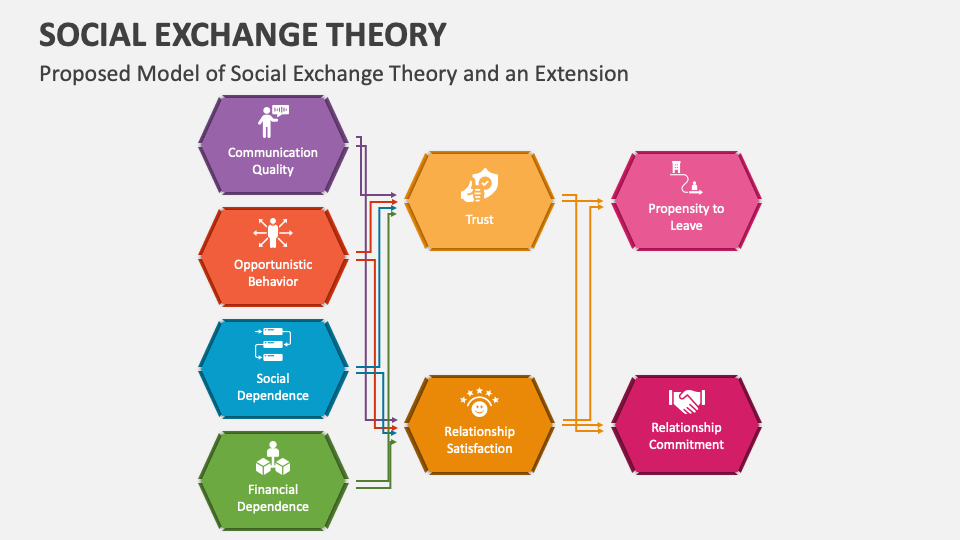
Given your background in statistics and social research, you can think of Social Exchange Theory as a conceptual model that attempts to predict relationship stability and satisfaction. It treats social relationships as a series of exchanges where individuals try to maximize their "profits" (rewards minus costs). By systematically cataloging these exchanges for the husband, wife, and mentor, we can create a balance sheet for the triad, helping us diagnose its overall health and identify potential sources of instability.
The Foundations of Social Exchange Theory
At its core, Social Exchange Theory views human relationships through an economic lens. We enter and maintain relationships because we derive some benefit from them. To begin, let's get a clear overview of the theory's main components.
Social Exchange Theory Explained: The Hidden Economy of Human Interaction 🤝🧠
This short video from the Psychology Exposed channel, 'Social Exchange Theory Explained', provides a concise and clear introduction to the key concepts we'll be using today: costs, rewards, profit, comparison level, and alternatives.
Please watch the entire video (it's less than 3 minutes). Pay close attention to the definitions of each term, as we will be applying them directly to our case study.
As the video explained, the key variables in this model are:
- Rewards: The positive, gratifying aspects of a relationship (e.g., love, support, professional gain, sexual pleasure).
- Costs: The negative or punishing aspects (e.g., conflict, stress, time commitment, compromise).
- Profit (or Outcome): The net result of a relationship, calculated as
Rewards - Costs. - Comparison Level (CL): A person’s subjective standard for what they expect to get out of a relationship, based on past experiences and social norms. Satisfaction is achieved when
Profit > CL. - Comparison Level for Alternatives (CLalt): A person’s assessment of the potential profits available in alternative relationships or by being alone. Dependence on the relationship is high when
Profit > CLalt.

Applying the Theory to the Mentorship Triad
Social Exchange Theory is particularly useful for analyzing complex professional relationships. The mentorship role itself is a prime example of such an exchange.
The Science of Mentoring Relationships: What Is Mentorship?
To see how this applies directly to your triad's professional layer, let's review a resource from the National Academies Press titled 'The Science of Mentoring Relationships'.
Please read the two sections under the heading 'Social Exchange Theory'. The first, 'Primary Tenets', defines the theory. The second, 'Application', explains how it's used to understand the cost-benefit analysis for both mentors and mentees. Focus on how the text describes benefits like career advancement and costs like burnout or reputational risk.
Now, let's create a "balance sheet" of the perceived costs and rewards for each member of your specific triad. This is not about assigning objective values, but about mapping the subjective experience of each person.
| Member | Potential Rewards | Potential Costs |
|---|---|---|
| The Husband | - Professional development and career advancement from mentorship. - Friendship and camaraderie with the mentor. - Witnessing his wife's happiness and growth (compersion). - Stability and security of his primary marital bond. |
- Feelings of professional rivalry and inadequacy. - Feelings of romantic exclusion or jealousy. - Time and energy shared with the mentor. - Emotional labor of managing a non-traditional structure. |
| The Wife | - Love, intimacy, and sexual fulfillment with two partners. - Significant professional guidance and career acceleration. - Intellectual and emotional support from both husband and mentor. - Self-expansion and personal growth. |
- Feelings of guilt or divided loyalty. - The logistical and emotional burden of managing two relationships. - Potential social stigma or judgment. - Pressure to mediate between husband and mentor. |
| The Mentor | - Romantic and sexual intimacy with the wife. - Personal satisfaction from guiding two promising individuals. - Friendship and intellectual peerage with the husband. - Development of his own leadership and teaching skills. |
- Ethical complexity and potential for conflicts of interest. - Psychic weight of dual loyalties (to husband as friend/mentee vs. wife as lover). - Risk to professional reputation. - Emotional responsibility for the stability of the triad. |
This table helps us visualize the complex web of exchanges. It’s a multi-directional flow of costs and benefits.
Grounding the Analysis in Polyamory Research
Your interest in social research will appreciate that these concepts aren't just theoretical. They have been studied empirically in polyamorous relationships. A key study helps us understand the typical cost-reward balance in primary/secondary dynamics, which mirrors the husband/mentor structure in your triad.
Perceptions of primary and secondary relationships in polyamory
This research paper, 'Perceptions of primary and secondary relationships in polyamory,' applies a related framework (Rusbult’s Investment Model) to a large sample of polyamorous individuals. It provides data that validates and nuances our cost-reward analysis.
Read the section under 'Relationship investment and commitment processes' (starts with 'Interdependence theory...'). This introduces the model and its variables, which align perfectly with what we've discussed. 2. Skim the 'Tests of main predictions' section and look at Table 1. Notice how variables like Investment, Satisfaction, and Commitment are higher for primary partners, while the 'Percentage of sexual activity' is higher for secondary partners. This quantifies a key reward/cost tradeoff. 3. Read the section 'Percentage of time spent on sexual activity' in the Discussion. This directly addresses one of the unique rewards of a secondary-style relationship.
This research provides crucial context:
- The husband-wife relationship (primary) likely benefits from higher investment, satisfaction, and commitment, which are huge rewards contributing to stability.
- The wife-mentor relationship (secondary-style) may benefit from rewards like novelty and a higher proportion of time spent on sexual activity, a powerful reward that can fuel that specific dyad.
The Mentor's Perspective During Intimacy: A Cost-Benefit Reflection
As per our course structure, let's analyze how this theoretical framework might manifest in the mentor's private thoughts during a moment of intimacy with the wife.
Mentor's Internal Monologue (during sex with the wife):
"This connection, this pleasure, is an undeniable reward. The intensity is profound. But what is the cost? I'm acutely aware that this joy is conditional on the stability of the whole system. My professional duty to him, my friendship with him... that's the price of admission for this moment. If that foundation cracks, this profit turns to loss instantly. I am 'exchanging' my professional integrity and my loyalty to a friend for this intimacy. Is the exchange rate favorable? Right now, it feels like it is, but the risk of a market crash—a breach of trust—is always present. This pleasure isn't free; it's financed by the trust of all three of us."
This internal calculus, weighing the immense reward of the present moment against the potential catastrophic cost of systemic failure, is the central tension of the mentor's position within the exchange.
Evaluating Systemic Health: Satisfaction, Dependence, and Equity
With all these pieces, we can now evaluate the triad's health.
-
Satisfaction Check (Profit vs. CL): Is each person's net profit
(Rewards - Costs)above their personal Comparison Level (CL)?- Husband: Is the professional growth and compersion he feels greater than what he expects to feel in a complex marriage? If so, he's satisfied.
- Wife: Are the dual rewards of love and career success greater than the guilt and scheduling chaos she expects? If so, she's satisfied.
- Mentor: Is the fulfillment from both love and teaching greater than the ethical strain he expects? If so, he's satisfied.
- A threat to systemic health exists if any member's profit falls below their CL.
-
Dependence Check (Profit vs. CLalt): Is each person's current profit higher than their perceived profit from their best Alternative (CLalt)?
- Husband: Is his current situation more profitable than a simpler, monogamous life (perhaps with less career acceleration)? If so, he is dependent on and committed to the triad.
- Wife: Is her situation more profitable than choosing one partner, or being alone? If so, she is committed.
- Mentor: Is this complex but rewarding life more profitable than a simpler romantic life and a separate professional life? If so, he is committed.
- A system is stable as long as the answer is "yes" for all three members.
-
Equity Check (Fairness of Exchange): Social Exchange is not enough; we must also consider Equity Theory. It's not just about individual profit, but whether the ratio of rewards to costs feels fair across the group.
9.03a social exchange theory, equity theory - Relationships -AQA Alevel Psychology, paper 3
The 'Psych Boost' video we've used before has an excellent segment that introduces Equity Theory as a crucial add-on to our analysis. It explains that even someone who is 'over-benefiting' can feel dissatisfied.
Please watch from 05:40 to 07:17. This part introduces Equity Theory and explains the consequences of imbalance, such as guilt for the over-benefited person and resentment for the under-benefited one.
- Husband: Might feel he is under-benefited (high cost of sharing his wife). This can lead to resentment if he perceives his rewards aren't proportional.
- Wife: Might feel she is over-benefited (receiving love and mentorship from both). According to Equity Theory, this can lead to guilt and distress.
- Systemic health requires not just profit, but a perception of fairness. The triad must actively work to ensure no one feels consistently under- or over-benefited.
Conclusion
In this lesson, we have constructed a powerful analytical framework to assess the health of your triad system. By applying Social Exchange Theory, we've moved beyond anecdotal feelings to a structured evaluation of the dynamics at play.
Key Takeaways:
- Social Exchange Theory provides a model to analyze relationship health by weighing costs and rewards to determine profit.
- A relationship is satisfying if its profit exceeds a person’s Comparison Level (CL) and stable if its profit exceeds the Comparison Level for Alternatives (CLalt).
- Mapping the costs and rewards for the husband, wife, and mentor reveals the intricate web of exchanges that define the triad.
- Equity Theory adds a crucial layer: perceived fairness in the exchange is as important as individual profit. Imbalances can cause resentment or guilt, destabilizing the system.
- Even in moments of peak reward, such as sexual intimacy, a cost-benefit analysis may be occurring, highlighting the inherent tensions and interdependencies of the triad.
Preview of the Next Lesson:
Our discussion of costs, rewards, and dependence leads directly to our next topic: power. Power can be seen as the currency of social exchange—it dictates who has more control over resources and outcomes. In our final lesson of the course, we will evaluate the triad's systemic health by applying sociological Power Theory to the sources of influence among the three individuals.