Introduction
Welcome to the final module of our course, "Capital Management and Corporate Stability." In our last lesson, we focused on the art of communication, exploring how actuaries must tailor their message for different stakeholders like the board, regulators, and technical peers. We saw that each group has a distinct perspective and set of interests. This naturally leads us to today's topic, where we'll see how these different perspectives shape the very definition and purpose of capital itself.
A financial institution's capital is its ultimate safety net. But what that net should look like, how big it needs to be, and what it's meant to catch depends entirely on who you ask. In this lesson, we will dissect the three primary views of capital: working capital, regulatory capital, and economic capital. Our goal is to understand what each type of capital represents, the purpose it serves, and the stakeholder perspective it embodies. This will lay the groundwork for understanding how capital is measured and managed in practice.
The Fundamental Role of Capital
Before we explore the different types, let's establish what we mean by "capital" in the context of an insurance company. At its core, capital is the excess of a company's assets over its liabilities. It functions as a financial cushion or buffer.
To understand its importance, let's begin with a foundational reading from The Geneva Association.
[PDF] The Nature and Role of Capital in Insurance | The Geneva Association
This introductory section explains the fundamental reason for an insurer to hold capital.
Please read the section titled "The Role of Capital in Insurance Companies." Focus on its primary function: protecting policyholders by ensuring the company can meet claims even under very adverse conditions.
As the text highlights, the ultimate purpose of capital is to ensure the insurer can deliver on its promises. It is the resource pool available to absorb unexpected losses, allowing the company to remain solvent and continue operating through periods of stress. Without sufficient capital, an unexpected surge in claims or a sudden drop in asset values could render an insurer unable to pay what it owes.
With this foundational purpose in mind, let's break down the three distinct lenses through which capital is viewed.
1. Working Capital: The Engine Room
The most immediate and operational form of capital is working capital. This is not about surviving a once-in-a-century storm; it's about managing the day-to-day cash flow of the business. It represents the resources a company has available to fund its short-term operational needs.
The calculation is straightforward:
- Current Assets are assets that are expected to be converted into cash within one year, such as cash itself, accounts receivable (premiums due from policyholders), and short-term investments.
- Current Liabilities are obligations due within one year, such as accounts payable (money owed to suppliers), short-term debt, and the portion of claims expected to be paid out soon.
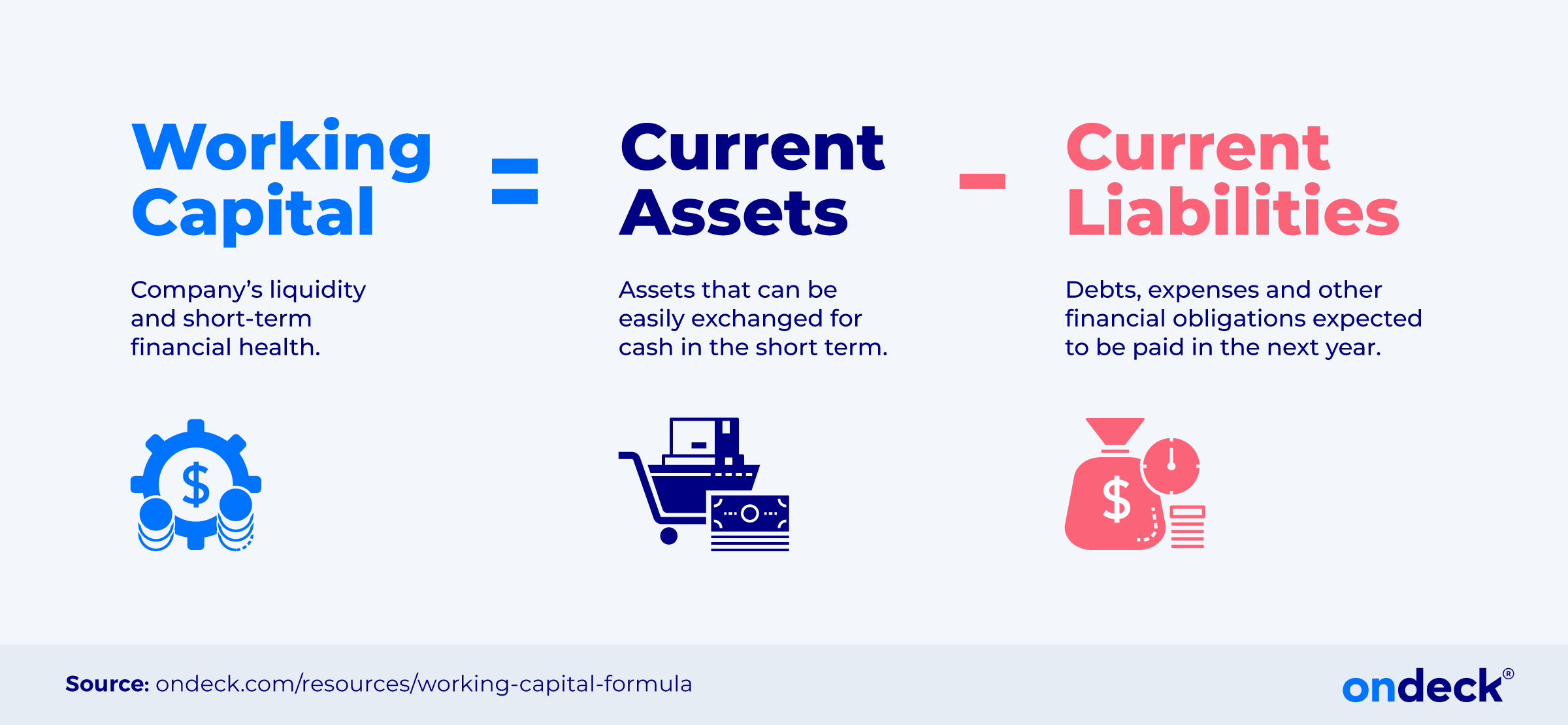
A positive working capital indicates a company has sufficient short-term assets to cover its short-term liabilities. It's a measure of a company's operational liquidity and short-term financial health. Think of it as the cash in a company’s checking account used to pay salaries, rent, and other immediate bills. While essential, it's a very different concept from the long-term solvency capital we will discuss next.
2. Regulatory Capital: The Public Mandate
Regulatory capital is the minimum amount of capital an insurer is required to hold by law. This is capital as seen through the eyes of a supervisor or regulator, whose primary mandate is to protect policyholders and maintain financial stability.
CP1 Actuarial Practice - Actuators Education Institute
This resource from the Actuators Education Institute provides a very concise, exam-ready definition.
Please read the question and answer for "Difference between regulatory capital and economic capital?" to get a succinct overview.
As the definition states, this is a legal requirement. Regulators typically prescribe a formula or a set of rules—such as the Solvency II framework in Europe or the Risk-Based Capital (RBC) system in the U.S.—to calculate this minimum amount. This "standard formula" approach is designed to be objective and comparable across different companies. It ensures a level playing field and a baseline level of security for all policyholders in the market.
Let's explore this concept in more detail.
[PDF] The Nature and Role of Capital in Insurance | The Geneva Association
This reading from The Geneva Association expands on the purpose and nuances of regulatory capital.
First, read the paragraph describing Regulatory capital in the "Three Views of Capital" section. Then, read the section titled "Regulatory Capital" on the next page. Pay close attention to the two reasons why setting the capital bar "very high" is not necessarily in the policyholders' best interests.
The key takeaway is that regulatory capital is an external requirement focused on solvency and compliance. However, there's a delicate balance. As the reading points out, setting requirements too high can make insurance prohibitively expensive, potentially creating protection gaps in society. Setting them too low could leave policyholders vulnerable. This trade-off is a central tension in insurance regulation.
3. Economic Capital: The Internal Compass
While regulatory capital is an external mandate, economic capital is an internal one. It represents the company's own, internal view of the amount of capital needed to support its business, given its specific risk profile and strategic objectives. This is capital as viewed by senior management.
Your background in statistics is particularly relevant here. Economic capital is not typically based on a prescribed formula. Instead, it is derived from sophisticated internal stochastic models that attempt to capture the unique and complex web of risks the company faces—from market crashes and interest rate shifts to insurance-specific risks like pandemics or an increase in longevity.
[PDF] The Nature and Role of Capital in Insurance | The Geneva Association
These sections provide a thorough explanation of economic capital from management's perspective.
Start by reading the definition of Economic capital in the "Three Views of Capital" section. Next, review Box 1 for a clear, standalone definition. Finally, read the section "Economic Capital" that follows. Note its use as a tool for making better risk decisions.
The crucial distinction is that economic capital is a forward-looking, risk-based measure used for internal decision-making. Management uses it to answer questions like:
- How much risk are we truly taking on?
- Are we being adequately compensated for the risks we take?
- Where should we deploy our capital to generate the best risk-adjusted returns?
Unlike the one-size-fits-many approach of regulatory capital, economic capital is tailored to the firm's specific business mix, investment strategy, and risk appetite. It is a core component of a modern Enterprise Risk Management (ERM) framework.
Summary and Cheatsheet
The three types of capital are not mutually exclusive; a single firm must manage all three simultaneously. They are simply different lenses providing different views on the firm's financial strength, each serving a distinct purpose for a different audience.
To help you organize these concepts for revision, here is a comparative framework as you've requested:
| Feature | Working Capital | Regulatory Capital | Economic Capital |
|---|---|---|---|
| Perspective | Operations / Finance Dept. | Regulator / Supervisor | Senior Management / Board |
| Primary Purpose | Ensure short-term liquidity; fund day-to-day operations. | Protect policyholders; ensure solvency; maintain market stability. | Optimize risk-return trade-off; inform strategic decisions; allocate capital efficiently. |
| Calculation Basis | Accounting Formula (Current Assets - Current Liabilities) | Prescribed Formula or Rules (e.g., Solvency II Standard Formula) | Internal, Risk-Based Models (stochastic, tailored to the firm) |
| Key Focus | Cash flow management over the next year. | Compliance and solvency under a standardized, severe stress scenario. | The firm's realistic risk profile and achieving strategic goals. |
| Analogy | A household's monthly budget and checking account balance. | The government-mandated minimum depth for a swimming pool's foundations. | An engineer's custom design for the foundations based on local soil, climate, and intended use. |
Conclusion
In this lesson, we have distinguished between the three fundamental purposes of capital. We've seen that working capital is the lifeblood of daily operations, regulatory capital is the external requirement set by supervisors to protect policyholders, and economic capital is the internal, risk-sensitive measure used by management to steer the company. Understanding these different perspectives is the first step in effective capital management. An actuary's work involves measuring, monitoring, and communicating about all three.
In our next lesson, we will delve deeper into the mechanics of regulatory capital. We will explore the structure of a typical "standard formula" approach, breaking down how regulators quantify different types of risk to arrive at a final capital requirement.