Welcome to your next lesson in the "Life and Health Insurance Products" module. In our previous session, we described the features of individual and group products designed to cover morbidity risk, focusing on health and income protection insurance. We established the fundamental differences in how these products are structured and what needs they serve.
Today, we shift our perspective from the policyholder to the provider. Our goal is to analyze the key risks that an insurance company takes on when it sells individual protection and savings products. Understanding these risks is the first step in learning how to price, manage, and reserve for them, which are core actuarial functions. We will focus on the fundamental risks inherent in simpler products like term assurance, whole life, and basic savings plans.
1. The Insurer's Risk Landscape
When an individual buys an insurance policy, they transfer a personal risk—like the financial impact of premature death—to an insurance company. The insurer accepts this risk in exchange for a premium. By pooling thousands of these individual risks, the insurer relies on the law of large numbers to make the total claims predictable. However, this process of accepting and pooling risk is fraught with its own set of dangers for the provider.
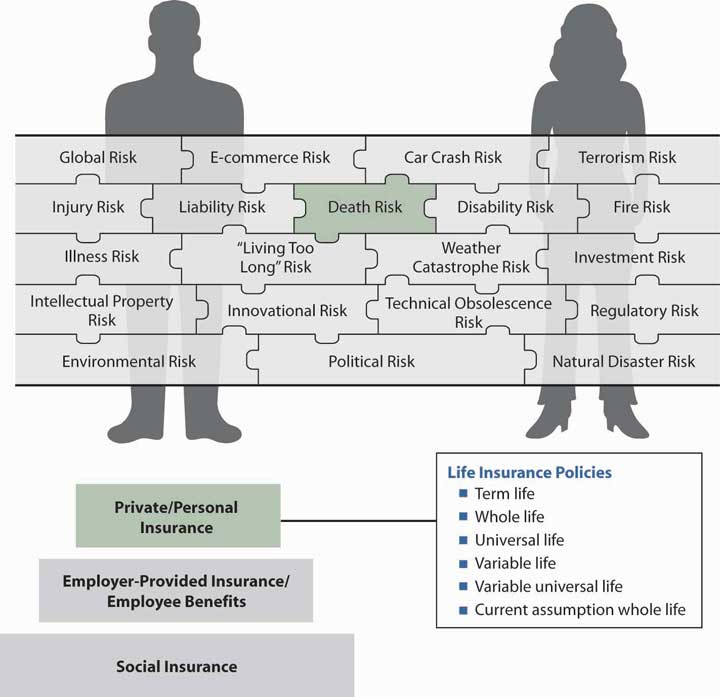
To analyze these risks systematically, we can group them into three broad categories. This framework will be our guide for this lesson:
- Insurance Risks: Risks arising directly from the nature of the insured events and policyholder behavior. These are the core risks the insurer is in the business of managing.
- Market and Financial Risks: Risks arising from movements in the wider financial markets that affect the insurer's assets and the value of its liabilities.
- Operational Risks: Risks of loss resulting from failed internal processes, people, systems, or from external events.
Let's explore each of these categories in detail.
2. Insurance Risks: The Core of the Business
These risks are intrinsic to the "promise" of insurance. They relate to the frequency and severity of claims and the behavior of policyholders.
Information Asymmetry: The Foundational Problem
Many insurance risks stem from a fundamental imbalance known as information asymmetry. This occurs because the customer often knows more about their own risk level (e.g., their health, lifestyle, or intentions) than the insurer does. Your background in probability theory will help you appreciate that this isn't just a communication issue; it's a statistical bias that can systematically skew the insured pool away from the assumptions made during pricing.
Let's read a concise definition of this concept and its two main consequences.
CP1 Actuarial Practice - Actuators Education Institute
These study notes provide clear, exam-focused definitions.
Please read the short section explaining "information asymmetry". Focus on understanding the precise difference between anti-selection and moral hazard.
As the notes explain:
- Anti-selection (or Adverse Selection): High-risk individuals are more likely to buy insurance than low-risk individuals because it represents a better value proposition for them. If not controlled, the insurer's portfolio will be dominated by "bad" risks, leading to higher-than-expected claims.
- Moral Hazard: Once insured, an individual's behavior may change because they are protected from the full consequences of their actions. For example, someone with income protection might be less motivated to return to work after an illness.
These two forces are constantly working against the insurer, and many product features and internal processes are designed specifically to counteract them.
Mortality and Morbidity Risk
This is the most obvious risk for a life and health insurer: the risk that claims experience is worse than assumed. For a life insurer selling protection products, this means more people dying than expected. For a health insurer, it means more or more expensive medical claims.
There are several reasons this can happen.
CP1 Actuarial Practice - Actuators Education Institute
This resource provides a list of common drivers for adverse mortality experience.
Find the section "PART 8: EXPERIENCE MONITORING" and read the answer to the question "Why might mortality experience be worse than expected?".
The key drivers are:
- Random Fluctuation: In any given year, especially with a small portfolio, claims can be higher than the long-term average simply due to chance.
- Catastrophe: A single event, like a pandemic or natural disaster, causes a large number of simultaneous claims.
- Worsening Trend: Long-term societal changes (e.g., rising obesity levels, new diseases) lead to a sustained increase in mortality or morbidity rates that was not predicted.
- Anti-Selection: As discussed, poor underwriting standards fail to screen out high-risk individuals, leading to a portfolio with a higher underlying claims risk.
Underwriting is the primary defense against anti-selection. Let's briefly look at a more detailed description of this process.
This white paper from the American Academy of Actuaries offers a deeper look at mortality risk management.
Please read the subsection titled "Risk Mitigation Activities" within the "Mortality Risk Management" section. This explains how underwriting works to classify risk.
Persistency Risk
Persistency refers to the rate at which policyholders keep their policies in force (i.e., they don't lapse or surrender). Persistency risk is the risk that the actual persistency experience is different from what was assumed in pricing. This is a two-sided risk:
- High Lapses in Early Years: Insurers incur significant upfront costs to sell a policy (commissions to salespeople, underwriting costs, administrative setup). These are called acquisition costs. These costs are intended to be recovered from profits earned over many years. If a policyholder lapses in the first few years, the insurer may not have collected enough premiums to cover these initial costs, resulting in a direct financial loss.
- High Lapses in Later Years (among healthy lives): In later years, policies are generally profitable. The individuals who are most likely to lapse are those who feel they no longer need the coverage, which often means they are healthier than average. When these "good" risks leave the pool, the remaining group of policyholders is, on average, less healthy, leading to higher claims rates than originally projected for that cohort. This is another form of anti-selection.
Let's read a concise definition of this risk.
CP1 Actuarial Practice - Actuators Education Institute
The notes provide a succinct summary of why persistency is critical.
Again in "PART 8: EXPERIENCE MONITORING", read the explanation for "What is “persistency”".
3. Market and Financial Risks
These risks arise from the insurer's interaction with the financial markets, both in its investments (the asset side of the balance sheet) and its obligations (the liability side).
Interest Rate Risk
For providers of long-term products like whole life insurance or savings plans, interest rate risk is multifaceted:
- Valuation and Investment Risk: The insurer invests premiums, primarily in fixed-income assets like bonds, to earn a return to help pay future claims. The pricing of these products includes an assumption about the long-term interest rate that will be earned. If long-term rates fall and remain low, the assets will not generate the expected return, and the provider may not have enough money to meet its promises. This is particularly acute for products with guaranteed cash values or benefits.
- Disintermediation Risk: This is a key risk for savings products. If market interest rates rise significantly, policyholders may be tempted to surrender their existing policies (often with a low guaranteed rate) and reinvest the money elsewhere for a better return. This forces the insurer to sell assets to pay the surrender values. Since interest rates have risen, the value of the insurer's existing bond portfolio will have fallen, forcing them to sell assets at a loss.
This last point is crucial. Let's see how the American Academy of Actuaries describes it.
This paper explains the mechanics of what it calls "Book Value Withdrawals."
Please read the first paragraph of the section titled "Book Value Withdrawals". It clearly explains the dynamic of rising rates and policyholder surrenders.
Liquidity Risk
Liquidity risk is closely related to disintermediation risk. It is the risk that an insurer, while technically solvent (Assets > Liabilities), does not have enough cash or easily cash-convertible assets to meet its short-term obligations like claims and surrenders. A wave of surrenders driven by rising interest rates is a classic cause of a liquidity crisis, as it can force the insurer into a "fire sale" of assets at depressed prices, which can in turn threaten solvency.
CP1 Actuarial Practice - Actuators Education Institute
This provides a quick definition of liquidity risk in an insurance context.
Under "PART 6: CAPITAL & SOLVENCY," read the definition of "Liquidity Risk".
New Business Strain
This is a specific financial risk that arises from the timing of cash flows. As we mentioned under persistency risk, there are high upfront costs when selling a new policy. These costs, combined with the need to set up a regulatory reserve on day one, almost always exceed the first premium received. This creates an immediate drain on the insurer's capital. This is known as new business strain.
While profitable in the long run, writing a lot of new business in a short period can put a significant strain on an insurer's capital position.
CP1 Actuarial Practice - Actuators Education Institute
The notes give a clear and concise explanation of this important concept.
Under "PART 2: PRODUCT DESIGN & PRICING", please read the definition of "New Business Strain".
Expense and Inflation Risk
The premiums charged for a policy include a loading for the insurer's expected future administration expenses. There is a risk that actual expenses will be higher than assumed, reducing the product's profitability. This can be caused by general inefficiency, but a primary driver is higher-than-expected inflation, which increases staff salaries, office costs, and other overheads over the long term of the policy.
4. Operational Risk
This is a broad category covering losses from day-to-day business execution. The Basel Committee on Banking Supervision defines it as "the risk of loss resulting from inadequate or failed internal processes, people and systems or from external events." For an insurer selling individual products, this includes:
- Data Risk: Errors in the data used for pricing and valuation (e.g., incorrect dates of birth, smoking status) can lead to mispriced products and incorrect reserves.
- Systems Risk: A failure in the IT systems could lead to an inability to pay claims, calculate surrender values correctly, or protect sensitive customer data.
- Model Risk: The actuarial models used for pricing and valuation might contain errors or be based on flawed logic, leading to systematic under-pricing or under-reserving.
- Fraud Risk: This can be internal (e.g., an employee creating fake claims) or external (e.g., a customer making a fraudulent claim).
Conclusion and Framework
Today we have dissected the various risks a provider undertakes when selling individual protection and savings products. We've seen that beyond the obvious risk of claims being higher than expected, providers face significant risks from policyholder behavior, financial market movements, and their own internal operations.
Key Takeaways:
- Information Asymmetry (anti-selection and moral hazard) is a fundamental problem that drives many other insurance risks.
- Insurance Risks include higher-than-expected claims (mortality/morbidity risk) and adverse policyholder behavior (persistency risk).
- Financial Risks are critical, especially for long-term products. They include the risk of earning lower-than-expected investment returns, the risk of disintermediation when interest rates rise, and the capital drain from new business strain.
- Operational Risks represent the potential for failure in the day-to-day execution of the business.
To help you organize and memorize these concepts for the CP1 exam, here is the "cheatsheet" framework you prefer:
| Risk Category | Specific Risk | Description | Relevant Products |
|---|---|---|---|
| Insurance | Mortality/Morbidity | Claims frequency or severity is higher than assumed due to random chance, catastrophe, trends, or anti-selection. | All Protection Products |
| Persistency (Lapse) | Policy termination rates are different from assumed, causing loss of acquisition costs (early lapses) or future profits (later lapses). | All Products, esp. long-term | |
| Market / Financial | Interest Rate Risk | Falling rates lead to asset returns being lower than needed to meet guarantees. Rising rates lead to disintermediation and asset losses. | Long-term Protection & Savings |
| Investment Risk | The risk that assets backing liabilities underperform the returns assumed in pricing (distinct from interest rate risk). | All Products with Guarantees | |
| Liquidity Risk | Inability to meet cash outflows (claims, surrenders) without selling assets at a significant loss. | All Products, esp. Savings | |
| Expense / Inflation | Actual administration expenses are higher than the loading in the premium, often driven by inflation. | All Products, esp. long-term | |
| New Business Strain | The initial cash outflow on a new policy (costs + reserves) exceeds the first premium, causing a capital drain. | All Products, esp. with high commission | |
| Operational | Data / Model / Systems | Risk of loss from errors or failures in data quality, actuarial models, or core IT systems. | All Products |
| Fraud Risk | Risk of loss from fraudulent activities by policyholders, intermediaries, or employees. | All Products |
In our next lesson, we will build directly on this foundation. We'll examine the additional, more complex risks that arise when products introduce investment choice for the policyholder and profit-sharing mechanisms. This will lead us to an analysis of the risks of investment-linked and participating products.