Introduction
In our last lesson, we opened the actuary's toolkit and examined the individual instruments of contract design: the terms and conditions, guarantees, options, and charges that form the blueprint of any financial product. We identified what these tools are. Today, we delve deeper to understand how they function in a dynamic balance, exploring the interplay of risk and reward for both the insurer and the customer.
This lesson focuses on the dual nature of contract design features. Nearly every clause in a policy can be seen as a two-sided coin: for one party, it creates security or value; for the other, it introduces a risk that must be managed. Your experience in design, whether creating lingerie or structuring social studies, highlights a similar principle: a feature must be both appealing and functional. A beautiful design that fails under stress is a flawed design. Similarly, an insurance product feature that seems attractive but creates unmanageable risk is a path to failure.
Our goal is to explain how these design features create and mitigate risk for both the provider and the policyholder, turning a static blueprint into a living contract that responds to human behavior and market forces.
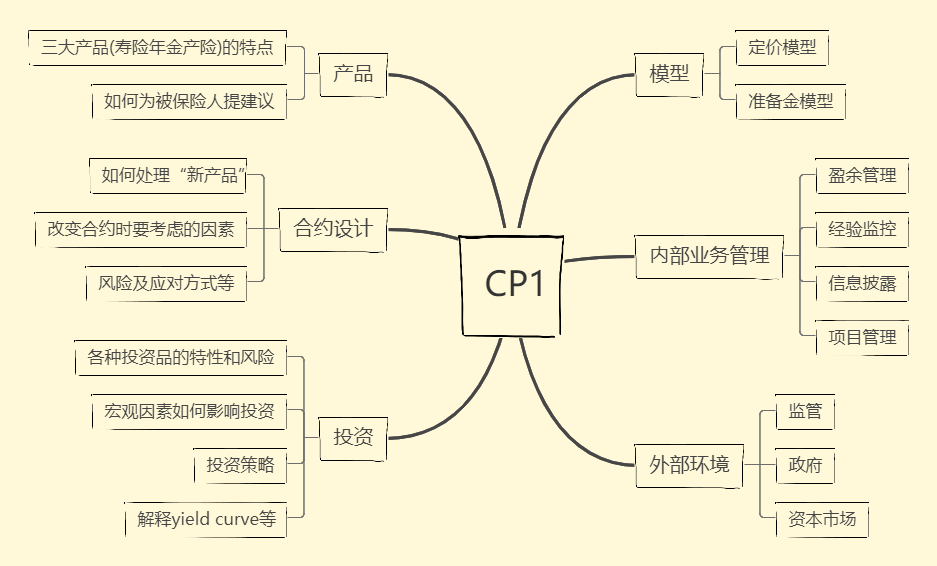
The Two-Sided Coin: Risk and Value in Contract Design
At its core, an insurance contract is an exchange of risks. The policyholder transfers a risk they cannot or do not wish to bear (e.g., the financial impact of premature death) to a provider who is equipped to manage it. Every feature of the contract's design fine-tunes this exchange.
Let's explore this by looking at the main feature categories from the perspectives of both the provider and the policyholder.
1. Guarantees: The Provider's Promise, The Provider's Peril
Guarantees are the fundamental promises made by an insurer and are the primary reason a customer buys a product.
- For the Policyholder: Guarantees create certainty and security. A guaranteed death benefit provides peace of mind. A guaranteed minimum interest rate on a savings product protects against poor investment performance. This is the core value proposition, where the policyholder offloads risk to the provider.
- For the Provider: Guarantees create significant financial risk. These can be market risk (from interest rate or equity guarantees), mortality risk, or longevity risk. Offering these guarantees is the provider's business, but their potential cost is the single largest risk to manage.
The risk from guarantees is that they will "bite" more often or more severely than expected. A key risk management text from the Actuarial Education company explains this well.
[PDF] Subject CP1 - CMP Upgrade 2021/22 - Actuarial Education
This document covers various risk controls. We will focus on the section discussing the specific risks associated with guarantees and options.
Please read the section titled "Managing the risk associated with options and guarantees." Note the two main aspects of risk mentioned: the direct cost of the guarantee and the asset-liability matching challenges.
As you've read, the provider must manage these risks through careful pricing, capital allocation, and hedging. The American Academy of Actuaries' paper on hedging discusses various guarantees and the risks they create. For example:
- Variable Annuity Guarantees (GMxBs): These protect policyholders from equity market downturns but expose the insurer to significant equity and interest rate risk, which they manage through complex "dynamic hedging" programs.
- No-Lapse Guarantees: These promise a policy will stay in force even if the investment account runs out, creating a huge risk for the insurer in a severe market decline.
This paper details various product guarantees and the risks they generate for insurers.
Read the section on "Variable Annuity Guarantees" to understand GMxBs. Then, read the following section on "Other Equity-Based Guarantees" to see the risk posed by no-lapse guarantees.
2. Options: The Policyholder's Flexibility, The Provider's Anti-Selection Problem
Options grant the policyholder flexibility and control, which adds significant value.
- For the Policyholder: The right to surrender a policy, convert it to another type, or take a loan provides valuable flexibility to adapt to changing life circumstances.
- For the Provider: Options are a primary source of anti-selection risk. This is the risk that policyholders will use their knowledge of their own circumstances to exercise options to their benefit, and consequently to the provider's detriment.
Let's consider the most common option: the right to surrender the policy.
From a statistician's viewpoint, anti-selection systematically changes the characteristics of the remaining pool of policyholders. Healthy individuals are more likely to surrender a life insurance policy (as they feel they don't need it), leaving the insurer with a pool of lives that is riskier than originally priced for. This can lead to a "death spiral" if the insurer tries to raise charges to compensate, driving even more healthy lives away.
Similarly, consider a savings product. A policyholder can withdraw their funds at book value. If interest rates rise sharply, they are incentivized to surrender, take their money, and reinvest it elsewhere for a higher return. The provider, however, may be forced to sell assets at a loss in that high-rate environment to pay the surrender value.
The same paper on hedging provides an excellent explanation of the risk created by the surrender option.
Please read the section titled "Book Value Withdrawals." Notice how it frames this policyholder option as a "put option" the customer holds against the insurer.
The Control Levers: Mitigating the Risks of Design
If guarantees and options are the features that create risk for the provider, then other design elements act as control levers to mitigate that risk.
Charges and Penalties
- Provider's Perspective (Mitigation): Surrender charges are a direct tool to mitigate the financial impact of early lapses. They help the insurer recover high initial costs (new business strain) and create a disincentive for policyholders to lapse purely based on short-term market movements.
- Policyholder's Perspective (Risk Creation): These charges represent a cost and a loss of flexibility. The policyholder assumes the risk of needing to exit the contract early and incurring a penalty. This makes the product less "liquid."
Policy Provisions (Exclusions, Waiting Periods)
- Provider's Perspective (Mitigation): Exclusions (e.g., for suicide in the first two years, pre-existing conditions) and waiting periods are powerful tools to mitigate moral hazard and anti-selection. They prevent individuals from buying a policy with the immediate intention of making a claim and protect the insurer from risks that are uninsurable or unquantifiable.
- Policyholder's Perspective (Risk Creation): These provisions create "gaps" in coverage. The policyholder retains the risk for any event that falls within an exclusion or a waiting period. The product is less comprehensive, which should be reflected in a lower price.
Participating Features
Some products, particularly "with-profits" or "participating" policies, have a built-in risk-sharing mechanism.
- Provider's Perspective (Mitigation): The provider charges a higher premium than necessary and then returns the excess profit to policyholders via non-guaranteed dividends or bonuses. If experience is poor (e.g., high claims, low investment returns), the provider can reduce these bonuses, sharing the loss with the policyholders. This makes the product significantly less risky for the insurer.
- Policyholder's Perspective (Risk Creation): The policyholder gives up certainty. Their final payout is not guaranteed and depends on the insurer's performance. They are sharing in the provider's risk in exchange for the potential of sharing in the upside.
This brief section explains how participating contracts work as a risk mitigation tool.
Please read the paragraph starting "Mutual insurance companies."
Case Study: A Cancer Insurance Product
Theory is useful, but seeing it in practice is essential. The following video provides a detailed walk-through of a pricing model for a simple lump-sum cancer insurance product. The speaker's explanation beautifully illustrates how design choices directly create and mitigate risk.
Pricing Models for Life and Health insurance products with a Fellow Actuary
In this video from The Actuarial Guy channel, a fellow actuary explains the design and pricing of a cancer insurance product. It's a masterclass in seeing how design assumptions translate into a tangible product.
Please watch the following segments, paying close attention to the rationale behind each design decision: Product Structure (07:16-09:47): Notice the product pays a lump sum on diagnosis, with no death benefit. This is a key design choice. For the policyholder, it provides a clear, single benefit. For the provider, it eliminates mortality risk; if a policyholder dies from another cause, no benefit is paid, which simplifies the risk profile immensely. Incidence Rates and Assumptions (16:26-20:42): The speaker explains that because premiums are constant for 5-year age bands (a design feature for simplicity and customer appeal), the underlying morbidity assumptions must also be structured that way. This shows how a customer-facing design choice dictates the internal modeling and risk assessment. Policy Term and Lapses (23:04-24:37): The product is yearly renewable, but the 5-year premium structure implies an assumed 5-year term. A lapse assumption of 5% is made. This is a clear example of the provider managing policyholder behavior (lapse risk) through a combination of pricing structure and explicit assumptions. Conservative Reserving (32:50-33:44): This is a crucial point. For reserving (calculating liabilities), the actuary assumes lower mortality than for pricing. Why? Because if fewer people die from other causes, more are alive and eligible to claim the cancer benefit. This is a deliberate risk-mitigating action, creating a buffer against adverse experience. The Role of Judgment (47:43-48:53): The speaker emphasizes that a model is just a tool. Actuarial judgment is the ultimate risk control. A designer must have a "feel for the numbers" and understand the real-world implications of their design, a risk that cannot be modeled away.
This case study demonstrates that every single design choice—from the benefit trigger to the premium structure—is a considered decision that allocates risk between the policyholder and the provider.
Conclusion
We've established that contract design is not merely about listing features. It is the art and science of risk allocation. Guarantees and options create value for the policyholder but introduce significant risk for the provider. In response, actuaries use control levers like charges, exclusions, and participating features to manage these risks. The result is a complex balancing act. A product that is too generous with its guarantees may be uncompetitive or financially unstable. A product that is too restrictive with its exclusions and charges will fail to meet customer needs.
The key is to design a contract where this exchange of risk is transparent, fair, and sustainable. The policyholder should receive value that justifies the premium they pay and the risks they retain (like exclusions or surrender penalties). The provider, in turn, must be able to price, manage, and capitalize the risks they accept.
Our next lesson will build directly on this foundation. Now that we understand how design allocates risk, we will explore how actuaries put a price on that risk in the lesson, "Describe the objectives of pricing."
Key Takeaways & Cheatsheet
Here is a framework summarizing how key design features affect risk for both parties.
| Design Feature | Policyholder Perspective | Provider Perspective |
|---|---|---|
| Guarantees (e.g., Death Benefit, Minimum Return) | Value Created: Certainty, security. Risk Mitigated: Financial loss. | Risk Created: Mortality, longevity, market risk. Cost of guarantees can exceed price charged. |
| Options (e.g., Surrender, Conversion) | Value Created: Flexibility, control. | Risk Created: Anti-selection risk. Healthy lives lapse, policyholders act against insurer's interest. |
| Surrender Charges | Risk Created: Penalty for early exit, loss of liquidity. | Risk Mitigated: Recoups initial expenses (new business strain), discourages anti-selective lapses. |
| Exclusions / Waiting Periods | Risk Created: Gaps in coverage; claim may be denied. | Risk Mitigated: Eliminates unquantifiable/unacceptable risks (catastrophe, moral hazard, initial anti-selection). |
| Participating / With-Profits Features | Value/Risk: Potential for higher returns (upside), but accepts uncertainty (downside). | Risk Mitigated: Shares investment and experience risk with policyholders, creating a powerful capital buffer. |