Hello! Welcome back to our second lesson in the "Thinking in Systems" module.
In our last session, we established the fundamental vocabulary of systems thinking: stocks, flows, and the two types of feedback loops—reinforcing and balancing. We saw how these elements combine to model the behavior of a system, like the growth of a product's user base.
Today, we'll move from definition to application. Our goal is to train your eye to identify reinforcing and balancing feedback loops in a given product scenario. This skill is crucial for an architect because it allows you to look at a product and understand the deep structures driving its success or failure. For you as a UI/UX designer, it helps you anticipate how a new feature or design change will ripple through the entire user experience and business model, often in non-obvious ways.
1. Reinforcing vs. Balancing: A Refresher
Before we dive into product scenarios, let's solidify our understanding of the two fundamental types of feedback loops. Both loops describe a circular chain of cause and effect, but they produce dramatically different behaviors.
Systems Thinking: Causal Loop Diagrams
This video, 'Systems Thinking: Causal Loop Diagrams', provides a clear visual explanation of how to read the arrows (causal links) and identify the two loop types. Pay close attention to how a loop's overall behavior is determined.
Please watch the following segments: Causal Links & Polarity (01:31 - 03:09): Understand what the '+' and '–' signs on the arrows mean. The Reinforcing Loop (03:09 - 04:53): See how population growth acts as a reinforcing (or amplifying) process. The Balancing Loop (04:53 - 05:39): See how the death rate acts as a balancing (or stabilizing) process.
To summarize the key distinction:
-
Reinforcing Loops (R) are engines of amplification. They create exponential growth or collapse. The "story" of a reinforcing loop is "the more we have, the more we get" or "the less we have, the less we get." A small change can quickly snowball into a very large one.
- Example: Money in a savings account earns interest, which increases the account balance, which in turn earns even more interest.
-
Balancing Loops (B) are goal-seeking and create stability. They work to counteract change and keep a system in a desired state or within a certain range. The "story" of a balancing loop is "the more we have, the less we get" or "the less we have, the more we get." They push back against change.
- Example: A thermostat maintains a room's temperature. If the temperature drops, the heater turns on to counteract the drop. If it gets too high, the heater turns off. Your engineering background in control systems deals heavily with balancing loops.
Most interesting systems, especially digital products, contain a mix of both. Reinforcing loops drive growth, while balancing loops create limits or provide stability.
2. Guided Analysis: Spotify's Growth Model
Let's apply this to a real-world product you're likely familiar with: Spotify. A growing user base is great, but what are the underlying feedback loops driving that growth and what might limit it?
Feedback Loops - Strategy Dynamics
This article on Medium, 'Feedback Loops,' breaks down the growth model of Spotify into its core reinforcing and balancing loops. It provides a perfect, concrete example for us to analyze.
Please read the following parts of the article: Start with the 'Key Concepts' to see the definitions of the loops. Read the section 'Example — Spotify’s Growth Model,' focusing on the bullet points under 'What are the reinforcing loops?' and 'What are the balancing loops?'. Skim the 'Examples of Balancing Loops' section to see how churn and market saturation are discussed. Don't worry about the charts for now; focus on understanding the logic of each loop described in the text.
Let's trace the logic of the loops identified in the article:
-
Reinforcing Loop (Product Usage):
- As
Product Usageincreases... - users become more invested and satisfied, which leads to higher
Retention... - which means there are more active users, leading to more overall
Product Usage. - This is an amplifying cycle: usage drives retention, which drives more usage.
- As
-
Reinforcing Loop (Marketing):
- As
Marketing Money Spentincreases... - more potential customers are reached, leading to more
Customers... - which generates more revenue, allowing for more
Marketing Money Spent. - This is the classic growth engine for many businesses.
- As
-
Balancing Loop (Price & Churn):
- If Spotify were to increase its
Price... - perceived value might drop for some users, leading to an increase in
User Churn... - which leads to a decrease in the number of
Customers. - This loop works to counteract unchecked price increases by creating a negative consequence (losing customers).
- If Spotify were to increase its
-
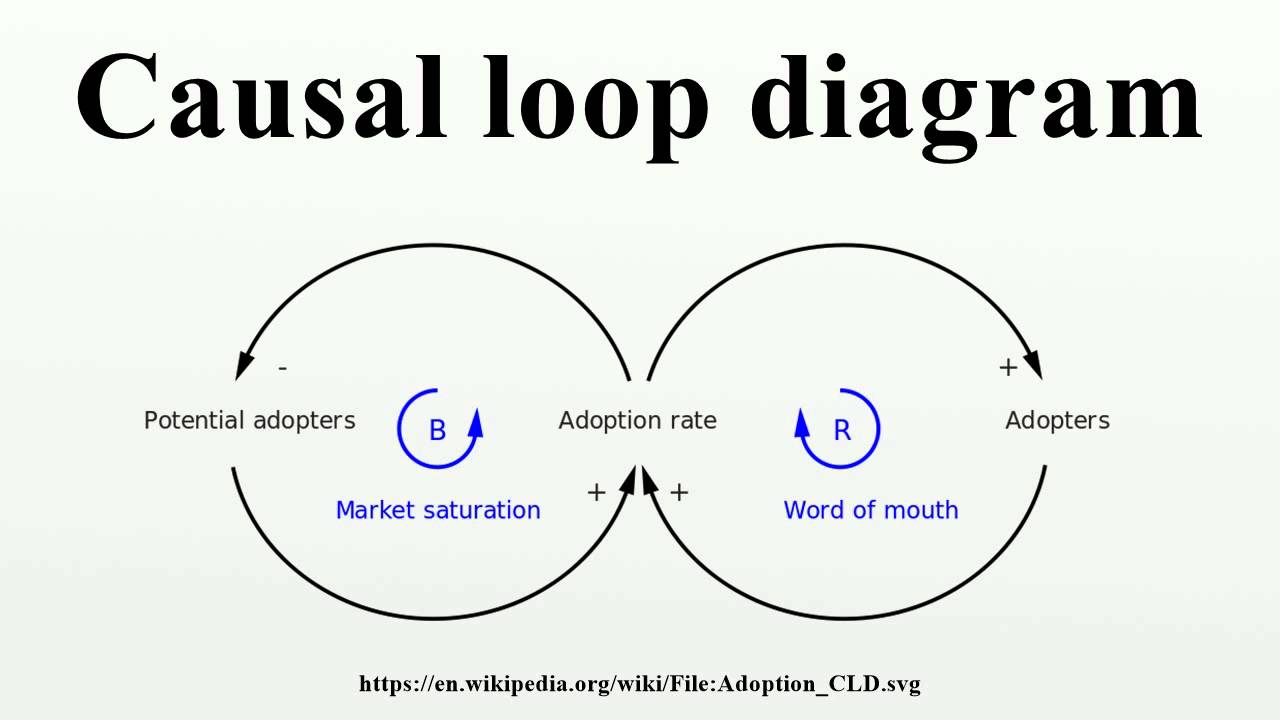
Balancing Loop (Market Saturation):
- As the number of
Adopters(current customers) increases... - the pool of
Potential Subscribersdecreases... - which makes it harder and more expensive to acquire new users, slowing the rate of new
Adopters. - This is a natural limit to growth. No product can grow exponentially forever because its market is finite.
- As the number of
This diagram visually captures the interplay between a reinforcing "word of mouth" loop and a balancing "market saturation" loop.
3. Practice: Identify the Loops
Now, it's your turn. For each scenario below, identify the primary feedback loop at play and briefly explain its dynamic. Is it reinforcing or balancing?
Scenario 1: The AI Recommendation Engine
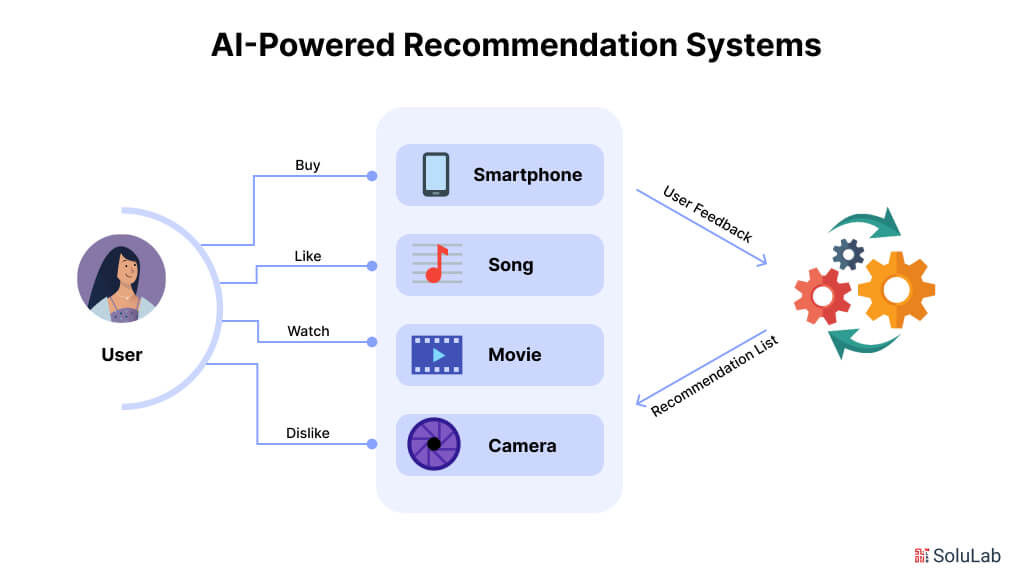
A user watches a few sci-fi movies on a streaming service. The AI algorithm learns this preference and starts recommending more sci-fi titles. The user, pleased with the relevant suggestions, watches more movies, which provides the AI with even more data to refine its recommendations. This leads the user to spend progressively more time on the platform.
- What kind of loop is this? Explain the cycle.
Click to see the analysis
This is a **reinforcing loop**. The cycle is: More `Time Spent Watching` → Better `User Preference Data` → More `Relevant Recommendations` → More `Time Spent Watching`. Each step amplifies the next, creating a powerful engine for user engagement.Scenario 2: A Freelancer's Reputation
A freelance UI/UX designer completes a project and gets a glowing 5-star review from the client. This excellent review makes their profile more attractive on a freelance platform, helping them land a new, higher-profile project. They do a great job on that project as well, leading to another great review and more visibility.
- What kind of loop is this? Explain the cycle.
Click to see the analysis
This is another **reinforcing loop**. The cycle is: A `Good Review` → Increased `Designer Reputation` → Higher `Chance of Getting New Projects` → Opportunity to earn another `Good Review`. This is how reputations are built (or destroyed, if the reviews are negative).Scenario 3: Managing a Project Deadline
A product team is falling behind schedule on a big project. To catch up, they start working longer hours and taking shortcuts on quality assurance. In the short term, their Perceived Progress increases. However, the shortcuts lead to more bugs and system instability. This forces the team to spend unplanned time fixing these new problems, which slows down their actual progress on new features and puts them even further behind schedule.
- What kind of loop is this? What is its name in project management?
Click to see the analysis
This is a **balancing loop with a delay**. The attempt to increase progress by cutting corners is "balanced" or counteracted by the eventual consequence of having to fix the problems created. The cycle is: `Pressure to Go Faster` → `Corners are Cut` → `Bugs & Rework Increase` (after a delay) → `Actual Progress Slows` → `Pressure to Go Faster` increases even more. This is often called the "Fixes that Fail" or "Shifting the Burden" system archetype. The short-term fix makes the long-term problem worse.For more examples of loops in products you've worked with or used, this article from UX Collective provides excellent case studies.
Using systems thinking as a design leader | UX Collective
The article 'Using systems thinking as a design leader' connects these concepts directly to the world of UX and product design, providing more real-world examples.
I recommend reading the section 'The Core Concepts of Systems Thinking' for a quick review, and then the 'Systems Thinking in Practice' section, which analyzes products like Vinted and ClassDojo through a systems lens. Notice how they identify stocks, flows, and feedback loops in these products.
Conclusion
In this lesson, we moved from knowing the definitions of feedback loops to spotting them in the wild. This is a foundational skill for thinking in systems. By seeing products not just as a collection of features but as a dynamic interplay of reinforcing and balancing loops, you can better predict the consequences of your design decisions.
Key Takeaways:
- Reinforcing loops amplify change and are responsible for growth and collapse dynamics (e.g., viral adoption, building a reputation).
- Balancing loops seek stability and try to keep a system near a goal (e.g., thermostat, market saturation, quality control).
- Most products are a dynamic combination of both types of loops. Growth occurs when reinforcing loops are dominant; stability or stagnation occurs when balancing loops take over.
Next Lesson Preview:
You can now define the building blocks of a system and identify feedback loops from a written description. In our next lesson, we will combine these skills and learn how to draw a causal loop diagram from a written product scenario. This will give you a powerful tool to map, communicate, and analyze the invisible forces shaping your products.