Welcome back! In our last lesson, you did some excellent work modeling how optimizing for a single metric—user acquisition—could paradoxically harm a feature's long-term profitability. You saw firsthand in your spreadsheet how increased churn and costs quickly eroded the initial gains.
This was a practical demonstration of Goodhart's Law: "When a measure becomes a target, it ceases to be a good measure."
Today, we move from your simulation to the real world. Our goal is to analyze a real-world case where optimizing a key metric damaged long-term business health. We will examine two powerful examples: one from traditional finance and another from the world of social media, which should resonate with your work in UI/UX design. This lesson will solidify your understanding of why, as a systems architect, you must look beyond the immediate numbers and anticipate unintended consequences.
1. The Proxy-Metric Trap
Before we dive into the cases, let's formally define the problem. Most long-term goals, like "customer satisfaction" or "market leadership," are hard to measure directly and quickly. So, we use proxy metrics—short-term, measurable indicators that we believe are correlated with our long-term goal.
Examples include:
- Using daily active users as a proxy for product value.
- Using 'likes' on songs as a proxy for long-term user retention.
- Using number of new accounts opened as a proxy for market share growth.
Proxies are essential for moving fast. The danger arises when we forget they are just proxies and start building the product specifically to manipulate the proxy, rather than to achieve the real goal.
When Proxy Metrics Break: How Optimizing for Proxies Can Backfire
This article from Spotify's engineering blog gives a perfect name to this problem: the 'Proxy-Metric Trap'. It clearly explains how optimizing for a proxy can break the connection to the real long-term outcome.
Please read the first two sections, 'The Proxy-Metric Trap' and 'Why Proxies Break Under Optimization'. As you read, focus on the analogy of the compass and the magnet. How does this relate to designing features that 'nudge' users versus creating genuine value?
The key insight here is the difference between measuring organic behavior and measuring your ability to extract a click. When you start designing to extract the click, you've fallen into the trap.
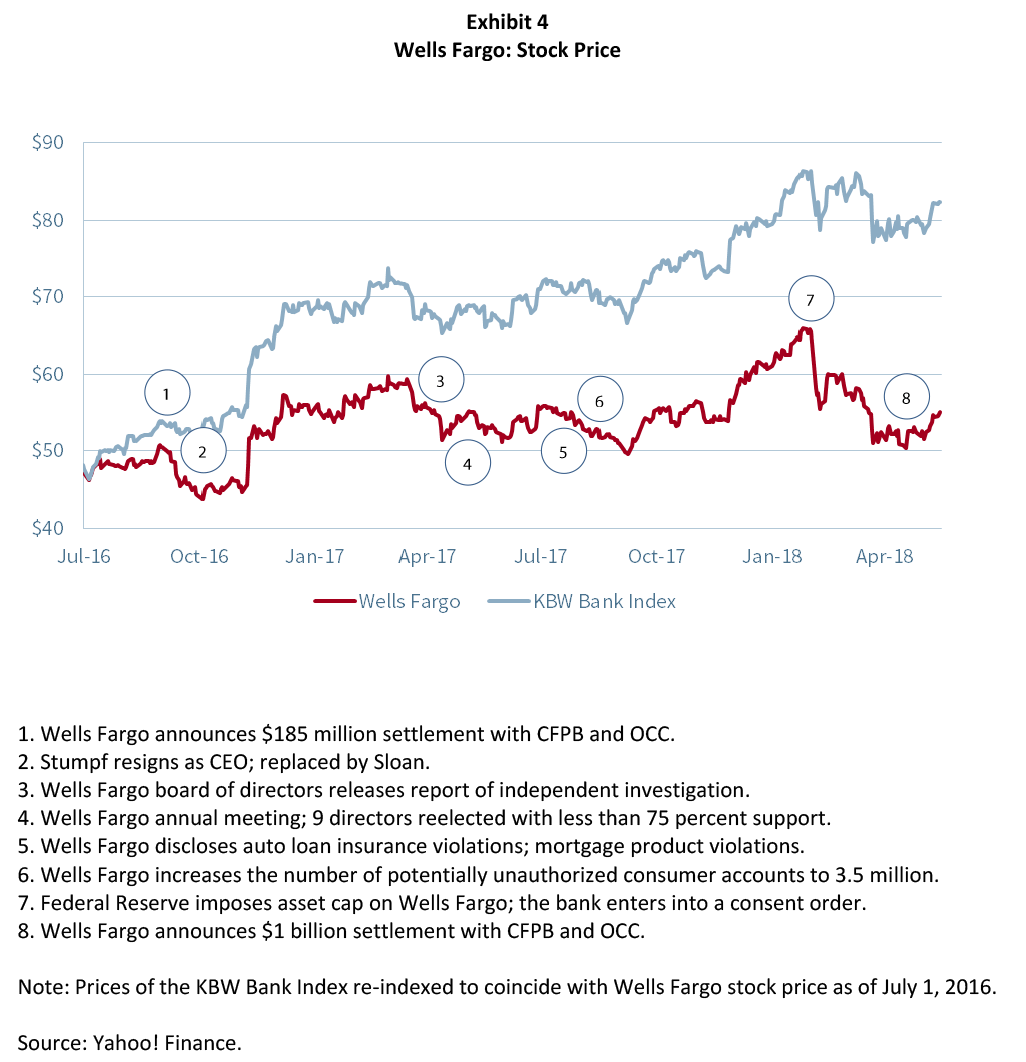
2. Case Study 1: The Wells Fargo Account Fraud Scandal
Now let's look at a case where a simple proxy metric, ruthlessly targeted, led to a catastrophic breakdown of ethics and trust, costing a company billions and destroying its reputation.
The context: In the early 2000s, Wells Fargo's leadership wanted to deepen customer relationships and increase profitability. Their long-term goal was to be the primary bank for their customers. The proxy metric they chose was "cross-selling," measured as the number of products per customer. This led to a simple, memorable, and ultimately disastrous internal slogan: "Eight is great."
This video provides a concise overview of what happened when that target became an obsession.
The Wells Fargo Scandal - A Simple Overview
The YouTube channel Company Man provides a clear and simple overview of the Wells Fargo scandal, detailing how a focus on a single metric spiraled out of control.
Please watch the following segments from the video: The Core Problem (00:22 - 01:18): Understand the scale of the fraud. The Strategy's Origin (03:24 - 04:42): See how the 'good idea' of cross-selling began. The Pressure Cooker (04:42 - 05:49): Learn how the strategy became an obsession with high-pressure targets. "Eight is Great" (06:51 - 08:28): Note the CEO's public focus on the 'eight products per customer' metric. The Aftermath (08:28 - 11:26): Pay close attention to the consequences, especially the fines, regulatory caps, and the loss of trust.
Analysis
The Wells Fargo case is a stark illustration of Goodhart's Law.
- The Goal: Deepen customer relationships and long-term profitability.
- The Proxy Metric: Number of accounts per customer.
- The Distortion: Faced with impossible targets, employees abandoned the goal and focused only on the metric. They "gamed" the system not through clever product design, but through outright fraud—opening millions of unauthorized accounts.
- The Damage to Business Health: The consequences went far beyond financial penalties. The most significant damage was the erosion of the one thing a bank cannot operate without: trust.
3. Case Study 2: Facebook's "Meaningful Social Interactions"
The Wells Fargo example was about sales pressure leading to fraud. But the proxy-metric trap is just as prevalent, albeit more subtly, in digital product design and algorithmic systems. Let's examine a case that's closer to your work in UI/UX and AI-powered products.
Social media platforms want to keep you on their site (the true goal, which drives ad revenue). They use "engagement" as a proxy for user interest and satisfaction. But what "engagement" do you optimize for? A 'like'? A 'comment'? A 'share'?
In 2018, Facebook announced it would change its News Feed algorithm to prioritize "Meaningful Social Interactions" (MSI). The stated goal was positive: to foster more connection between friends and family and reduce passive consumption of brand and media content. To do this, they created a weighted score. The problem lay in the weights.
Understanding Social Media Recommendation Algorithms
This essay from the Knight First Amendment Institute at Columbia University provides a deep dive into how social media algorithms work. We will focus on its excellent case study of Facebook's MSI metric.
Please read the following two sections: Case Study: Meaningful social interactions: This section details how the MSI algorithm worked and the specific weights it used. Notice how a 'reshare' was initially weighted 30 times more than a 'like'. How Engagement Optimization Fails Users, Creators, and Society: This section explains the consequences. Focus on how optimizing for implicit, 'System 1' feedback can amplify outrage and division, directly undermining long-term platform health.
Analysis
This case is more nuanced than Wells Fargo, but it follows the same pattern.
- The Goal: Encourage meaningful connections between users and improve long-term platform health.
- The Proxy Metric: The MSI score, which heavily weighted active engagement like comments and reshares over passive 'likes'.
- The Distortion: The algorithm learned that the most reliable way to generate comments and shares was to show users content that provoked outrage, anger, and division. Content creators and media outlets, in turn, learned to produce more of this content to get algorithmic reach.
- The Damage to Business Health: Instead of making the platform healthier, the change amplified its most toxic elements. This created a backlash from users, advertisers, and regulators, damaging the company's reputation and creating massive business risk—a clear decline in long-term system health. Facebook was trying to fix a problem, but by choosing and weighting its proxy metric poorly, it inadvertently made the problem worse.
Conclusion
Today we analyzed two powerful, real-world examples of Goodhart's Law in action. You saw how a relentless focus on a proxy metric—whether it's "accounts per customer" or an "engagement score"—can cause immense damage to a company's long-term health, finances, and reputation.
Key Takeaways:
- The Wells Fargo case shows how metric fixation can drive unethical behavior and destroy the foundational trust a business is built on.
- The Facebook MSI case demonstrates how, in a complex system like a social media feed, even well-intentioned metric optimization can backfire, leading to unintended negative consequences like the amplification of divisive content.
- As a product and systems architect, you are in a key position to prevent these failures. Your role isn't just to design what the user sees, but to question the metrics that drive those design decisions and to anticipate their second-order effects on both the user and the business.
Next Lesson Preview
Having now examined how systems and their economic models can be distorted, we will shift our focus from analysis to synthesis. In the next module, "Architecting Agentic Systems," you will begin designing the fundamental components for systems that involve AI agents. Our first lesson will focus on explaining and designing capability manifests, the contracts that allow AI agents to understand and use digital tools. This will be your first step into the proactive design of robust, human-agent systems.