Introduction
Welcome to your next lesson. In our previous discussion, we analyzed the rise of successor states like Awadh, Bengal, and Hyderabad. We saw how powerful Mughal governors, operating from within the imperial system, leveraged the empire's decline and the support of financial firms to carve out semi-independent, hereditary domains.
Today, we turn our attention to the northwest, to a different but equally significant model of 18th and 19th-century state formation: the Sikh Empire. This lesson directly addresses the learning outcome: Describe the consolidation of the Sikh Empire under Ranjit Singh, including its administration and military modernization.
We will examine how Maharaja Ranjit Singh, faced with both internal fragmentation and severe external threats, forged a unified and formidable empire from the loose confederacy of Sikh misls. Unlike the successor states, the Sikh empire's origins lay outside the formal Mughal hierarchy, in a distinct religio-political community. Our focus will be on the twin pillars of his success: a modernized military that became one of the most powerful in Asia, and a centralized administration capable of sustaining it. Your background in finance and M&A will be particularly useful in appreciating the profound structural and financial reorganization required to transform a feudal confederacy into a centralized monarchy.
From Confederacy to Empire: The Rise of Ranjit Singh
In the latter half of the 18th century, Punjab was a fractured landscape. Power was divided among twelve Sikh confederacies known as misls. These were kin-based, feudal groups led by chiefs (sardars) who controlled distinct territories. While they shared a common identity in the Dal Khalsa (the collective Sikh army), they were often in conflict with one another.
Into this politically volatile environment, Ranjit Singh emerged. To understand his meteoric rise, we first need to appreciate the context of his early life and the strategic challenges he faced.
How Maharaja Ranjit Singh reunited Sikh territories and crushed Afghan invaders? Medieval India UPSC
This video from StudyIQ IAS provides an excellent narrative of the political situation in Punjab before Ranjit Singh, his early life, and his initial steps toward unification.
Please watch from the beginning of the video until 07:12. Focus on: The description of the Sikh misls as a system of confederacies. The constant external threat posed by Afghan invasions under rulers like Zaman Shah. Ranjit Singh's initial actions to unify the major misls and his early victories, which established his reputation.
As the video highlights, Ranjit Singh's drive for consolidation was not just about personal ambition. It was a strategic necessity. The Sikh polity was caught between two major threats:
- The Afghan "Menace": Repeated, destructive invasions from the west aimed to reassert control over Punjab.
- The East India Company (EIC): A rising, militarily superior power expanding from the east.
To ensure the survival and sovereignty of the Sikh nation, the fragmented misls had to be united into a single, powerful state capable of defending its borders.
Territorial Consolidation: The Conquests of the "Lion of Punjab"
Ranjit Singh’s unification project was a masterclass in diplomacy, strategic alliances, and, when necessary, military force. His capture of Lahore in 1799 from the Bhangi misl was the pivotal first step, giving him the historical capital of Punjab and immense prestige. From this base, he launched a series of campaigns that systematically brought the region under his control.
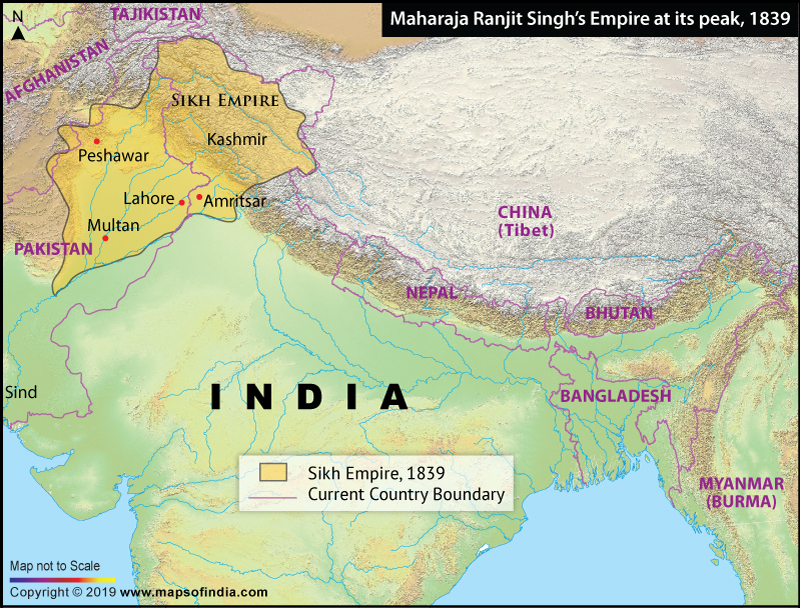
The following video section details the major military campaigns that defined the empire's expansion, particularly against the Afghans, who were the dominant power in the northwest.
How Maharaja Ranjit Singh reunited Sikh territories and crushed Afghan invaders? Medieval India UPSC
Let's continue with the StudyIQ IAS video to follow Ranjit Singh's key military victories that expanded his empire.
Please watch from 08:30 to 13:15. Note the strategic importance of each conquest: Kasur, Kashmir, Multan, and Peshawar. These campaigns effectively ended Afghan influence in the region and secured the empire's most vulnerable frontiers.
By the 1820s, Ranjit Singh had not only subdued the other Sikh misls but had also conquered the key provinces of Multan, Kashmir, and Peshawar, creating a large, multi-religious, and multi-ethnic empire.
Military Modernization: The Fauj-i-Ain
A vast empire required a new kind of army to defend it. The traditional Sikh military, based on irregular cavalry suited for guerrilla warfare, was ill-equipped to face the disciplined infantry and artillery of the EIC or to conduct large-scale siege warfare. Ranjit Singh recognized this deficiency with remarkable foresight.
The Case of the Sikh Empire and the Feudal Military Aristocracy
The academic paper 'The Case of the Sikh Empire and the Feudal Military Aristocracy' provides a deep analysis of why and how Ranjit Singh pushed for military reform against the resistance of the old feudal chiefs.
Please read Chapter 3, 'The Beginning of a New Struggle' (pages 41-56). Focus on these key arguments: The weaknesses of the traditional Sikh cavalry doctrine (lack of discipline, vulnerability to artillery). The events that convinced Ranjit Singh of European military superiority. The crucial role of artillery as the 'arch-enemy of feudalism,' which the state could monopolize. The shift from looting and land grants to disciplined, cash-paid soldiers.
As the paper details, Ranjit Singh initiated a radical modernization program to create a formidable, European-style standing army known as the Fauj-i-Ain (Regular Army). The key features of this reform were:
-
Hiring European Officers: In 1822, he recruited Jean-François Allard and Jean-Baptiste Ventura, veterans of Napoleon's army, to train his troops. Many other European officers followed, helping to instill European drill, command structures, and tactics.
-
Emphasis on Infantry and Artillery: Breaking from Indian military tradition which prized cavalry, Ranjit Singh built a powerful infantry and a formidable artillery corps. He established foundries in Lahore to manufacture modern cannons, giving his army a decisive edge in firepower.
-
A State-Paid Army: Crucially, soldiers in the Fauj-i-Ain were paid regular cash salaries directly from the state treasury. This broke their dependence on feudal chiefs and their lands (jagirs), ensuring their primary loyalty was to the Maharaja himself. This shift from a decentralized, land-based payment system to a centralized, cash-based one was fundamental to his state-building project.
The result was one of the most powerful military forces of its time, structured as follows:
| Branch | Description |
|---|---|
| Fauj-i-Ain (Regular) | The modernized, state-paid force. It included elite infantry battalions, regular cavalry regiments, and the powerful artillery corps. This was the core of his power. |
| Fauj-i-Khas | The "Model Brigade" and royal guard; the most elite and best-trained contingent of the regular army, directly under the command of European officers. |
| Fauj-i-Jagirdari | The feudal levies provided by the chiefs (jagirdars) as part of their obligation to the state. These forces were irregular and less reliable than the Fauj-i-Ain. |
Administrative Consolidation
A modern army is expensive and requires a sophisticated state apparatus to fund and supply it. Alongside his military reforms, Ranjit Singh built a centralized and efficient civil administration to maximize state revenue.
To understand this structure, let's turn to a detailed overview of his administrative system.
Administration of Ranjit Singh Part I ( BPES I)
The video 'Administration of Ranjit Singh Part I' by History & Heritage offers a clear, structured breakdown of the central, provincial, and financial arms of the Sikh government.
Please watch from 02:15 to 18:22. The video is divided into three clear parts: Central Administration (02:15 - 08:48): Note the roles of the Maharaja, his key ministers, and the financial departments (daftars). Provincial Administration (08:48 - 11:45): Understand how the empire was divided into provinces (subas) like Lahore, Multan, Kashmir, and Peshawar, and the hierarchy of officials. Financial Administration (11:45 - 18:22): Pay close attention to the sources of income, especially the different methods of land revenue assessment (batai, kankut, zabti), and the main areas of expenditure.
Let's summarize the key administrative features:
- Central Government: The Maharaja was an absolute monarch, but he governed in the name of the Khalsa (the Sikh collective). He was assisted by a council of ministers, including a prime minister, foreign minister, and finance minister. His court, the Sarkar-i-Khalsa, was open to talented individuals from all religions; his finance minister, for instance, was Diwan Bhawani Das, a Hindu Khatri.
- Provincial Government: The empire was divided into four main provinces (subas): Lahore, Multan, Kashmir, and Peshawar. Each was governed by a nazim (governor) who was responsible for maintaining order and collecting revenue.
- Revenue System: Land revenue was the primary source of income. The system was a pragmatic mix of methods inherited from the Mughals, adapted for efficiency. While the state's share of the produce was high, the system was regular and predictable, which provided stability to the cultivators. A significant portion of this revenue was channeled directly to the central treasury to pay for the army.
This administrative and financial consolidation was the engine that powered the military modernization, creating a cycle where a strong army enabled the collection of more revenue, which in turn funded an even stronger army.
Conclusion
Today, we have seen how Maharaja Ranjit Singh, through extraordinary political will and strategic genius, consolidated the fragmented Sikh misls into a powerful, centralized empire. He did not simply conquer territory; he fundamentally restructured the Sikh polity.
Key Takeaways:
- Consolidation through Conquest: Ranjit Singh unified Punjab by subduing rival misls and conquering key provinces like Multan, Kashmir, and Peshawar from the Afghans, creating a vast and secure empire.
- Military Modernization: He created a modern, professional army (Fauj-i-Ain) based on European models, emphasizing disciplined infantry and a powerful, state-controlled artillery.
- Administrative Centralization: He built an efficient civil and financial administration to support his military. Key to this was the shift to cash salaries for his regular army, which tied their loyalty to the state rather than to feudal chiefs.
- A Unique State: The Sikh Empire was a unique formation, born from a non-Mughal, religio-political tradition, but which adopted and modernized Mughal-Persian administrative techniques to become the last great indigenous power to challenge the British in India.
Preview of the Next Lesson:
Our course now takes a thematic and chronological leap. Having examined the 18th-century powers that rose in the twilight of the Mughals, we will travel back in time and south to the Deccan to explore another of the subcontinent's great empires. In the next lesson, we will analyze the Vijayanagara Empire, focusing on its unique Nayankara administrative system and its central role in the maritime trade networks of the Indian Ocean.