Introduction
In our last lesson, we examined how the Gupta-era land-grant system decentralized state authority and reshaped the rural economy. We noted that a key consequence of these grants, particularly the agrahara grants, was the creation of a financially secure class of Brahmins. Freed from immediate economic concerns and enjoying royal patronage, this elite group was able to dedicate itself to intellectual and cultural pursuits.
This sets the stage perfectly for today's topic. We will now explore the magnificent cultural output of this era, fulfilling the learning outcome: Describe the flourishing of Sanskrit literature, with a focus on Kalidasa, and the compilation of the Puranas.
We'll begin by exploring the zenith of classical Sanskrit literature, focusing on its most celebrated figure, Kalidasa. We will look at his major plays and poems to understand why this period is considered a "Golden Age" of literary arts. Then, we will shift our focus to the religious sphere and analyze the compilation of the Puranas, a process that was instrumental in shaping and disseminating what we now recognize as Puranic Hinduism.
The Apex of Sanskrit Literature: The Age of Kalidasa
The Gupta period is often called the classical age of Sanskrit literature. The stability and prosperity of the empire, combined with the patronage of the Gupta kings who made Sanskrit the language of the court, created a fertile environment for poets and playwrights.
The leading figure of this era, whose work has become the benchmark for classical Sanskrit, is Kalidasa. While details of his life are shrouded in legend, his literary genius is undisputed. His works are celebrated for their elegant language, emotional depth, and profound connection to Indian mythology and philosophy.
To appreciate Kalidasa's contribution, we will explore his seven surviving masterpieces: three plays, two epic poems, and two shorter poems.
Biography and Literary work of Kalidasa, Shakespeare of India || महाकवि कालिदास की जीवनी
The following video from Success Plus Academy provides a comprehensive and structured overview of Kalidasa's major works. It details the plots and themes of his famous creations, giving you a clear sense of their content and significance.
Please watch the following segments carefully: The Plays (02:16 - 17:59): This section covers his three dramas. Pay attention to the core love stories and conflicts in Abhijnanashakuntalam, Vikramorvashiyam, and Malavikagnimitram. Notice how the themes draw from mythology and courtly life. The Epics (17:59 - 20:02): Learn about the grand narratives of Kumarasambhava (the birth of Kartikeya) and Raghuvamsha (the lineage of Rama's dynasty). The Poems (20:12 - 22:07): This part explains his lyrical poems, Ritusamhara (description of the seasons) and the famous Meghaduta (The Cloud Messenger).
To summarize and consolidate the information from the video, here is a breakdown of Kalidasa's major works:
| Category | Work | Theme |
|---|---|---|
| Plays | Abhijnanashakuntalam | The love story of King Dushyanta and Shakuntala, their separation due to a curse, and eventual reunion. |
| Vikramorvashiyam | The celestial love story between King Pururavas and the nymph Urvashi. | |
| Malavikagnimitram | The courtly romance of King Agnimitra and a maligned princess, Malavika. | |
| Epics | Raghuvamsha | A dynastic history of the Raghu lineage, culminating in the story of Rama. |
| Kumarasambhava | The mythological tale of the marriage of Shiva and Parvati and the birth of their son, Kumara (Kartikeya). | |
| Poems | Meghaduta | An exiled yaksha (nature spirit) sends a message to his beloved wife via a passing cloud. |
| Ritusamhara | A lyrical description of the six seasons of India and their effect on landscapes and lovers. |
While Kalidasa was the brightest star, he was not the only one. The literary environment of the Gupta and post-Gupta period was rich with talent. Other notable works include:
- Vishakhadatta's Mudrarakshasa, a unique political thriller detailing Chanakya's schemes to place Chandragupta Maurya on the throne.
- Shudraka's Mrichchhakatika (The Little Clay Cart), a vibrant play that offers a rare glimpse into the lives of diverse urban characters, from merchants and courtesans to thieves and rebels.
- Bharavi's Kiratarjuniyam, an epic poem about the battle between Arjuna and a disguised Shiva.
This flourishing of secular literature demonstrates the sophisticated, confident, and worldly nature of the Gupta courtly culture.
Standardizing Belief: The Compilation of the Puranas
Parallel to the flourishing of courtly literature, a monumental effort was underway to compile and systematize religious knowledge. This brings us to the second part of our learning outcome: the compilation of the Puranas.
First, let's define what the Puranas are.
The Rebirth Period of Sanskrit literature-Gupta Empire
The paper 'The Rebirth Period of Sanskrit literature-Gupta Empire' provides a concise definition of the Puranas and their traditional subject matter. This will give you the foundational knowledge of what these texts are.
Please read the section titled 'Purana literature'. Focus on the meaning of the word 'Purana' (ancient stories) and the five characteristic topics they are said to cover: Sarga (creation), Pratisarga (re-creation), Vamsha (genealogy), Manvantara (cosmic cycles), and Vamshanucharita (dynastic histories).
As the text explains, the Puranas existed in some form for centuries. So, why was the Gupta period so crucial? It was during this era that these texts were given their final form. They were edited, expanded, and written down, transforming them into a powerful tool for religious and social consolidation.
LITERARY AND INTELLECTUAL RENAISSANCE OF THE GUPTA ERA
Now, let's explore why this compilation happened. This excerpt from 'Literary and Intellectual Renaissance of the Gupta Era' explains the historical role of the Puranas in shaping Hinduism during this period.
Please read the sections on the 'Intellectual Renaissance' and the 'Philosophical and Religious Impact'. Focus on how the Puranas played a key role in 'shaping the religious and philosophical landscape' and reinforcing Hindu traditions during the Gupta period.
As you've read, the Puranic project served several functions:
- Accessibility: They translated the complex, abstract philosophical ideas of the Vedas and Upanishads into engaging stories, myths, and legends, making them accessible to a much wider audience, including women and lower castes who were traditionally excluded from Vedic study.
- Synthesis: They integrated local deities, cults, and beliefs into a broader pan-Indian religious framework, centered on the great gods of Puranic Hinduism like Vishnu and Shiva.
- Standardization: By compiling these texts, a standardized version of myths, rituals, and pilgrimage sites was created, fostering a more unified religious and cultural identity across the subcontinent.
The great epics, the Mahabharata and the Ramayana, are also believed to have received their final redaction during this period, further contributing to this body of popular, narrative-based religious literature.
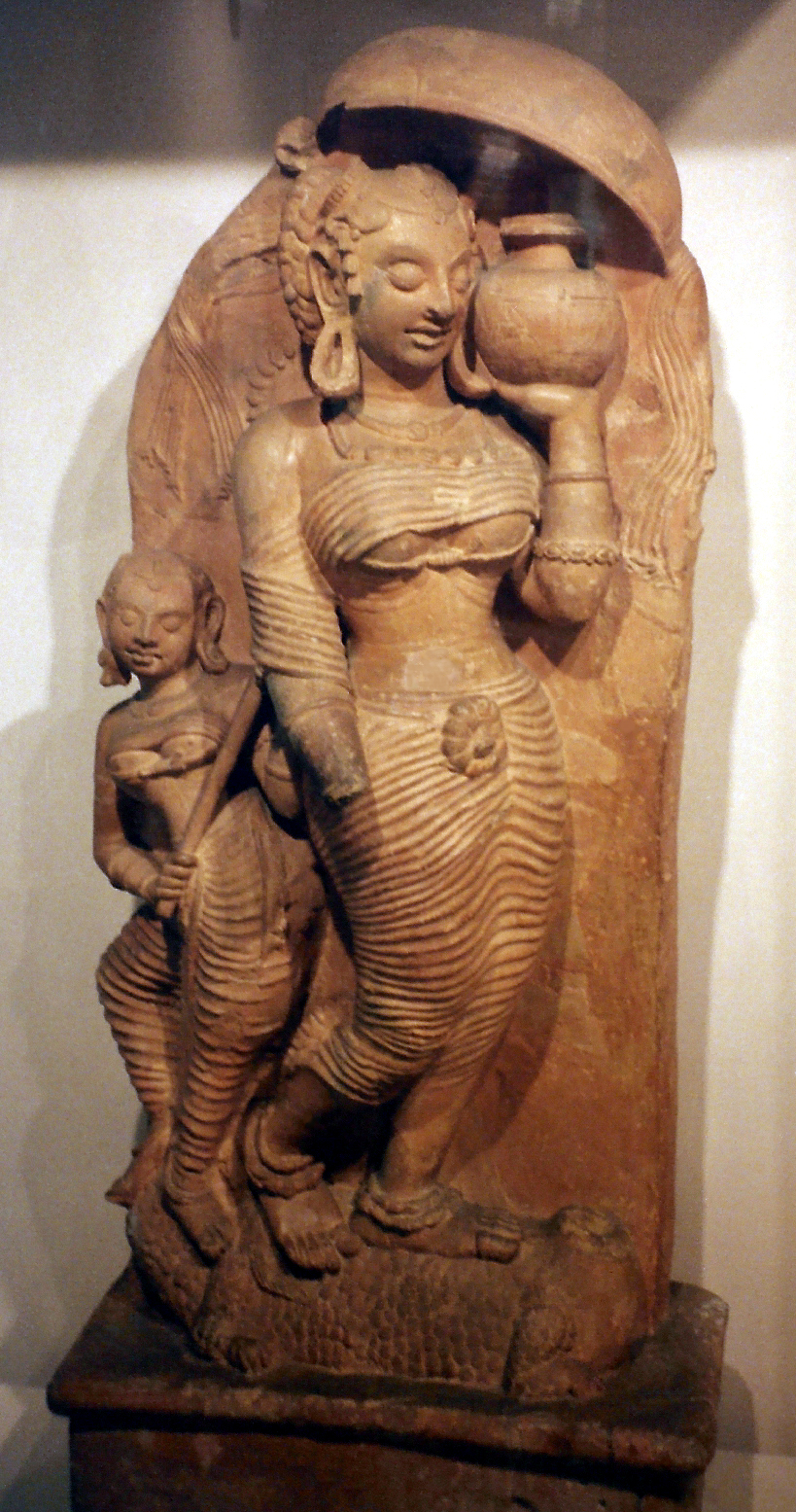
This religious consolidation is vividly reflected in the art of the period. The abstract symbolism of earlier times gave way to the confident, anthropomorphic depiction of gods and goddesses as described in the Puranas.
Conclusion
In this lesson, we have explored the twin pillars of Gupta-era cultural achievement: secular literature and religious compilation.
Key Takeaways:
- The Gupta period is considered the "Golden Age" of Sanskrit literature, characterized by royal patronage and political stability.
- Kalidasa stands as the era's preeminent literary figure, whose plays and poems (like Abhijnanashakuntalam and Meghaduta) set the standard for classical Sanskrit poetry and drama.
- The era also saw the final compilation and redaction of the Puranas. These texts made Hindu theology accessible through myths and stories, integrated diverse regional cults, and standardized religious beliefs and practices.
- This process was central to the consolidation of Puranic Hinduism and the formation of a shared cultural-religious identity that profoundly influenced subsequent Indian history.
Preview of the Next Lesson:
The intellectual energy of the Gupta age was not confined to arts and letters. The same spirit of systematic inquiry and synthesis drove remarkable progress in the sciences. In our next lesson, we will turn our attention to this field and address the learning outcome: Explain the major scientific and mathematical advancements of the period, citing the contributions of Aryabhata and Varahamihira.