Introduction
Welcome to our next lesson on the Gupta Empire. In our previous session, we explored the remarkable scientific and mathematical advancements that defined the Gupta "Classical Age," focusing on the genius of figures like Aryabhata and Varahamihira. We saw how a climate of intellectual dynamism fostered groundbreaking discoveries that would shape global science.
Today, we shift our focus from the scientific to the religious and artistic realms, which were equally vibrant and transformative. This lesson addresses the learning outcome: Describe the consolidation of Puranic Hinduism (Vaishnavism, Shaivism) and the key features of Gupta temple architecture and sculpture.
We will examine how the Gupta period witnessed a major religious shift, with the rise of what is now known as Puranic Hinduism. This new form, centered on personal devotion (bhakti) to deities like Vishnu and Shiva, was codified in new religious texts, the Puranas. We will then see how this religious evolution was given physical form through the creation of the first free-standing stone temples and a new, elegant style of sculpture. These two developments—religious and artistic—are deeply interconnected, with the art and architecture of the period serving as a powerful expression of its revitalized faith.
The Consolidation of Puranic Hinduism
The Gupta era marks a pivotal moment in the history of Hinduism. It saw a move away from the complex, ritual-heavy Vedic Brahmanism of earlier periods toward a more accessible, personal, and image-centric form of religion. This evolution is often termed the rise of "Puranic Hinduism."
To understand this transition and the development of its major sects, Vaishnavism and Shaivism, please watch the video below.
Class 12 History | Development of Puranic Hinduism- Vaishnavism & Shaivism | UPSC CSE | Pratik Nayak
The video 'Development of Puranic Hinduism' from Let's Crack UPSC CSE provides a comprehensive explanation of how Puranic traditions emerged from Vedic roots, the role of the Puranas as texts, and the growth of devotional sects.
Please watch the following segments. Focus on how this new form of Hinduism differed from earlier Vedic traditions. Introduction to Puranic Hinduism (00:23 - 05:07): This section sets the context, explaining how Puranic Hinduism developed alongside other traditions like Buddhism and how it represented a new phase in Hindu belief. The Role of the Puranas (10:50 - 24:19): Pay close attention to how the Puranas, through storytelling and simple language, made religious ideas accessible to a wider audience, including women and Shudras, who were often excluded from Vedic learning. The Rise of Vaishnavism and the Avatar Concept (24:19 - 32:39): This segment details the concept of Vishnu's ten avatars (Dashavatara) and explains how this doctrine helped integrate various local deities into a unified, pan-Indian religious framework.
As the video explains, this religious transformation was driven by several key factors:
- The Puranas: These texts, which literally mean "ancient lore," were crucial. Composed in simple Sanskrit and filled with myths, legends, and genealogies of gods and goddesses, they translated complex philosophical ideas into engaging stories. This made religion emotionally resonant and accessible to all sections of society.
- Bhakti (Devotion): At the core of Puranic Hinduism was the concept of bhakti—a personal, emotional devotion to a chosen deity. This replaced the impersonal, sacrificial rituals of the Vedic religion with a direct relationship between the devotee and the god.
- Idol Worship: The focus on personal deities led to the widespread practice of idol worship. Deities were now seen as having specific forms and attributes, which were represented in sculpture and worshipped in homes and, increasingly, in dedicated temples.
For a more detailed textual summary of this religious resurgence, you can read the following material.
The Gupta Empire - TOne Academy
The article 'The Gupta Empire' from TOne Academy provides a clear, structured explanation of the religious developments during this period.
Please read the sections under 'Religion during the Gupta Period'. Start with 'Resurgence of Hinduism', continue through 'Vaishnavism and the Rise of Bhagavatism', and conclude with 'Shaivism: Worship of Shiva'. This will solidify your understanding of the key sects and the concept of bhakti.
Vaishnavism, Shaivism, and Royal Patronage
While many deities were worshipped, two major sects gained prominence:
- Vaishnavism: This was the worship of Vishnu as the supreme deity. The Gupta emperors were themselves patrons of Vaishnavism, adopting titles like Parama-Bhagavata (Foremost Devotee of Vishnu). The doctrine of avatars, where Vishnu descends to earth to restore dharma, was central. This was a brilliant theological mechanism for absorbing local heroes and deities (like Krishna or the boar-god Varaha) into the mainstream pantheon, creating a unified religious system.
- Shaivism: The worship of Shiva as the supreme being also grew significantly. Shiva was revered as the god of destruction and regeneration, and his worship often involved the symbolic linga.
This state patronage was not merely a matter of personal faith. By patronizing the increasingly popular Puranic cults, the Gupta rulers gained legitimacy. The use of religious symbolism to reinforce political power became a key feature of Gupta statecraft. For example, the famous Varaha sculpture at Udayagiri is interpreted not just as a mythological scene but as a political allegory for Emperor Chandragupta II's victory over foreign invaders, with the king's actions mirrored in the divine act of Vishnu saving the earth.
The Architecture and Sculpture of Faith
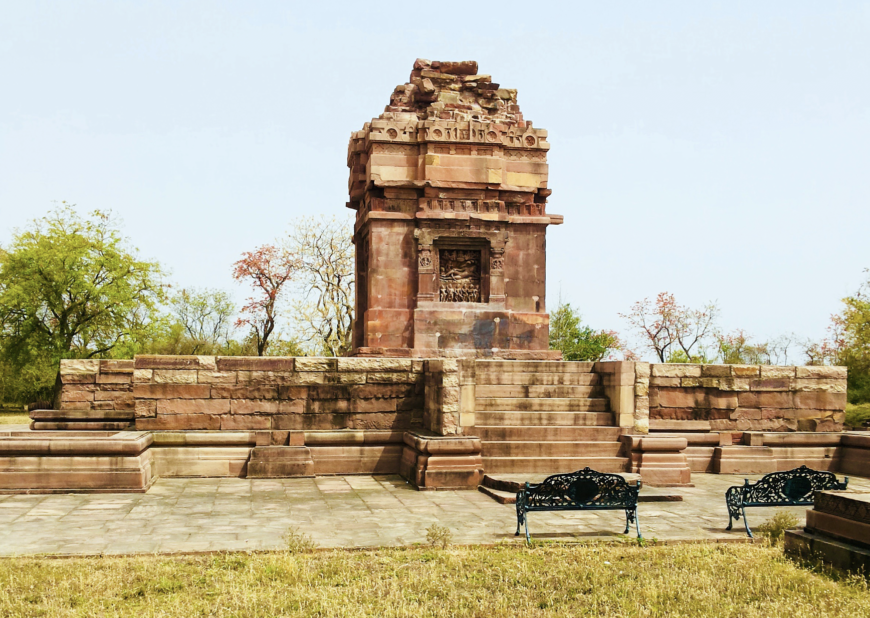
The consolidation of Puranic Hinduism, with its emphasis on image worship, created the need for a new kind of sacred space: the permanent temple. The Gupta period is precisely when the first free-standing, structural temples made of stone and brick were constructed, marking a fundamental shift from the earlier traditions of rock-cut caves or structures made of perishable materials.
The video below provides a quick overview of these architectural developments.
Ancient History of India Series | Lecture 14: Gupta Empire Economy and Art & Culture | GS History
This clip from GS History by Aadesh Singh concisely introduces the key architectural innovations of the Gupta period, including the emergence of structural temples.
Watch the following segments: Art & Architecture (04:27 - 06:18): Focus on the evolution from rock-cut to structural temples and the mention of the Nagara style, using Deogarh and Bhitargaon as examples. Sculpture (06:18 - 07:52): Note the characteristics of the Mathura and Sarnath schools of sculpture and how they differed from the earlier Gandhara school.
Key Architectural Features
The typical Gupta temple was simple in its initial form but laid the blueprint for centuries of temple architecture to come. Its essential components were:
- A small, square, central sanctum called the garbhagriha ("womb-house"), which housed the image of the main deity.
- A flat roof in the early stages, which later evolved into a soaring spire known as a shikhara.
- A small portico or porch leading to the entrance.
The article "Guptas and the Age of Legends" provides a vivid narrative of this evolution.
Guptas and the Age of Legends (4th – 6th CE) - Live History India
This article from Live History India traces the story of temple construction from its earliest forms to the sophisticated structures of the Gupta era.
Please read the sections titled 'Tracing the Story of Temples' and the description of the Deogarh Dashavatara temple that follows. This will give you a clear sense of the architectural progression and the iconography involved.
Masterpieces of Gupta Architecture and Sculpture
Several surviving structures exemplify Gupta-era temple architecture:
- The Dashavatara Temple at Deogarh (Uttar Pradesh): Considered one of the finest examples, this temple is dedicated to Vishnu. It stands on a high plinth and is one of the first temples to feature a shikhara (though much of it is now damaged). Its true glory lies in its magnificent sculptural panels depicting scenes from Vaishnava mythology, such as Vishnu sleeping on the serpent Shesha (Anantashayana Vishnu).

-
The Bhitargaon Temple (Uttar Pradesh): This is the largest and best-preserved Gupta temple made of brick, showcasing impressive terracotta panels depicting mythological scenes.
-
The Udayagiri Caves (Madhya Pradesh): These rock-cut caves, patronized by Chandragupta II, contain some of the earliest Hindu sculptural narratives, including the iconic relief of Vishnu as Varaha (the boar) rescuing the Earth Goddess.
The sculpture of the Gupta period represents a high point of Indian art. Moving away from the Greco-Roman influences of the Gandhara school, the artists of the Sarnath and Mathura schools created a uniquely Indian classical style. Characterized by serene expressions, graceful postures, and a sense of inner spirituality, these sculptures perfectly embodied the devotional ideals of Puranic Hinduism.
Conclusion
In this lesson, we have explored the profound religious and artistic transformations that took place during the Gupta Empire. The cultural vibrancy we see in the "Classical Age" was fueled as much by faith as it was by science.
Key Takeaways:
- The Gupta period saw the consolidation of Puranic Hinduism, a more personal, devotional (bhakti), and image-centric form of religion that became accessible to all levels of society.
- The Puranas were the key literary vehicles for this change, popularizing the stories of deities like Vishnu and Shiva.
- The Gupta emperors actively patronized Vaishnavism, using religion to create a unified cultural-political system and legitimize their rule.
- This religious shift led to the birth of the free-standing structural temple, with key features like the garbhagriha and shikhara. The temples at Deogarh and Bhitargaon are prime examples.
- Gupta sculpture achieved a classical perfection, characterized by spiritual grace and elegance, that brought the new Puranic theology to life in stone and terracotta.
Preview of the Next Lesson:
While the Gupta era represents a peak in cultural achievement, the empire's political and economic foundations were beginning to show cracks by the late 5th century. In our next lesson, we will examine the factors that led to the empire's eventual fragmentation: Discuss the emergence of feudal tendencies during the late Gupta period and the impact of Huna invasions on the empire's decline.