Introduction
Welcome to our seventh lesson. In our previous discussion, we analyzed the great Tripartite Struggle for Kannauj, a conflict that defined the political landscape of North India for nearly two centuries. We saw how the rivalry between the Gurjara-Pratiharas, Palas, and Rashtrakutas ultimately resulted not in a new pan-Indian empire, but in the strengthening of a multi-polar system of powerful regional kingdoms.
Today, we turn our attention south to explore one of the most remarkable of these regional powers: the Chola Empire. While the northern kings fought over the Gangetic plains, the Cholas were building a different kind of empire—one founded on agricultural surplus, bureaucratic efficiency, and unprecedented maritime dominance.
This lesson addresses the learning outcome: Describe the administrative system and maritime power of the Chola Empire, including its local self-governing assemblies (ur, sabha). We will dissect the Chola state as a highly organized enterprise, examining its internal administrative structure and its external strategy of projecting power across the Indian Ocean to control lucrative trade networks.
The Chola Administrative Machinery
The Chola state, at its peak, was a sophisticated and well-oiled machine. It combined a centralized monarchy with a remarkable degree of local autonomy, ensuring both imperial control and grassroots participation.
Central and Provincial Governance
To get an overview of the top-level structure of the Chola government, let's start with a short video segment.
Chola Empire: History of the Enigmatic World of Ancient Civilization
This video from STORIES NETWORK provides a concise summary of the Chola central administration, from the king down to the provincial level.
Please watch the segment from 06:05 to 08:00. Pay attention to the hierarchy: the role of the king, the bureaucracy, and the division of the empire into provinces (mandalams) and districts (valanadus/nadus).
As you saw, the Chola administration was hierarchical:
- The King: At the apex, the king was the supreme commander and dispenser of justice. The Cholas conducted extensive land surveys and had a well-organized revenue system.
- Central Bureaucracy: A council of ministers and a host of officials assisted the king.
- Provincial Divisions: The empire was divided into provinces (mandalams), which were further subdivided into districts (valanadus or nadus) and then into groups of villages.
While this top-down structure was efficient, the truly unique feature of Chola administration was its vibrant system of local self-government.
The Pillar of the Empire: Local Self-Government
The Cholas did not rule their villages through centrally appointed officials. Instead, they fostered a system of local assemblies that managed their own affairs with considerable autonomy. This was a key factor in the empire's stability and prosperity.

There were three main types of assemblies:
- Ur: A general assembly of the land-owning residents in ordinary, non-Brahmin villages.
- Sabha (or Mahasabha): A more complex and powerful assembly found in Brahmadeya villages—villages granted to Brahmins, which were exempt from tax. These assemblies are exceptionally well-documented.
- Nagaram: An assembly of merchants and traders, typically found in trade centers and towns.
To understand how these assemblies, particularly the sophisticated Sabha, functioned, we will turn to a foundational piece of evidence: the Uttaramerur inscription from the reign of Parantaka I (10th century CE). This inscription provides a detailed constitution for the village assembly.
[PDF] LOCAL SELF-GOVERNMENT UNDER THE CHOLA DYNASTY
This research paper, 'LOCAL SELF-GOVERNMENT UNDER THE CHOLA DYNASTY', provides an excellent analysis based on the Uttaramerur inscription. It explains the famous 'Kudaivolai' system, a method of election by lot.
Please read the sections 'Village Administration of Cholas' and 'Election of Village Assembly during Chola period'. Focus on: The description of the three types of villages and the three types of assemblies (Ur, Sabha, Nagaram). The detailed qualifications (age, property, education) and disqualifications for a person to be 'elected' to a committee. The step-by-step process of the Kudaivolai (pot-ticket) system.
The Kudaivolai system you just read about is a fascinating example of early democratic principles at work within a monarchical framework. The key takeaways are:
- Strict Eligibility: Membership in the governing committees of the Sabha was not open to all. It was restricted to property-owning, educated men of a certain age with a reputation for integrity.
- System of Disqualification: The rules for disqualification were extensive, targeting not just individuals who had committed crimes or failed to submit accounts, but also their close relatives. This aimed to prevent corruption and the formation of cliques.
- Election by Lot: The final selection was made by drawing names written on palm-leaf tickets from a pot, ensuring a degree of randomness and divine sanction in the final choice.
- Functions: These assemblies and their committees were responsible for a wide range of local matters, including managing temple lands, maintaining irrigation works (tanks and channels), collecting taxes, and settling local disputes.
This decentralized model empowered local communities and relieved the central government of day-to-day micromanagement, allowing it to focus on imperial strategy and defense.
The Chola Maritime Empire: Projecting Power Across the Seas
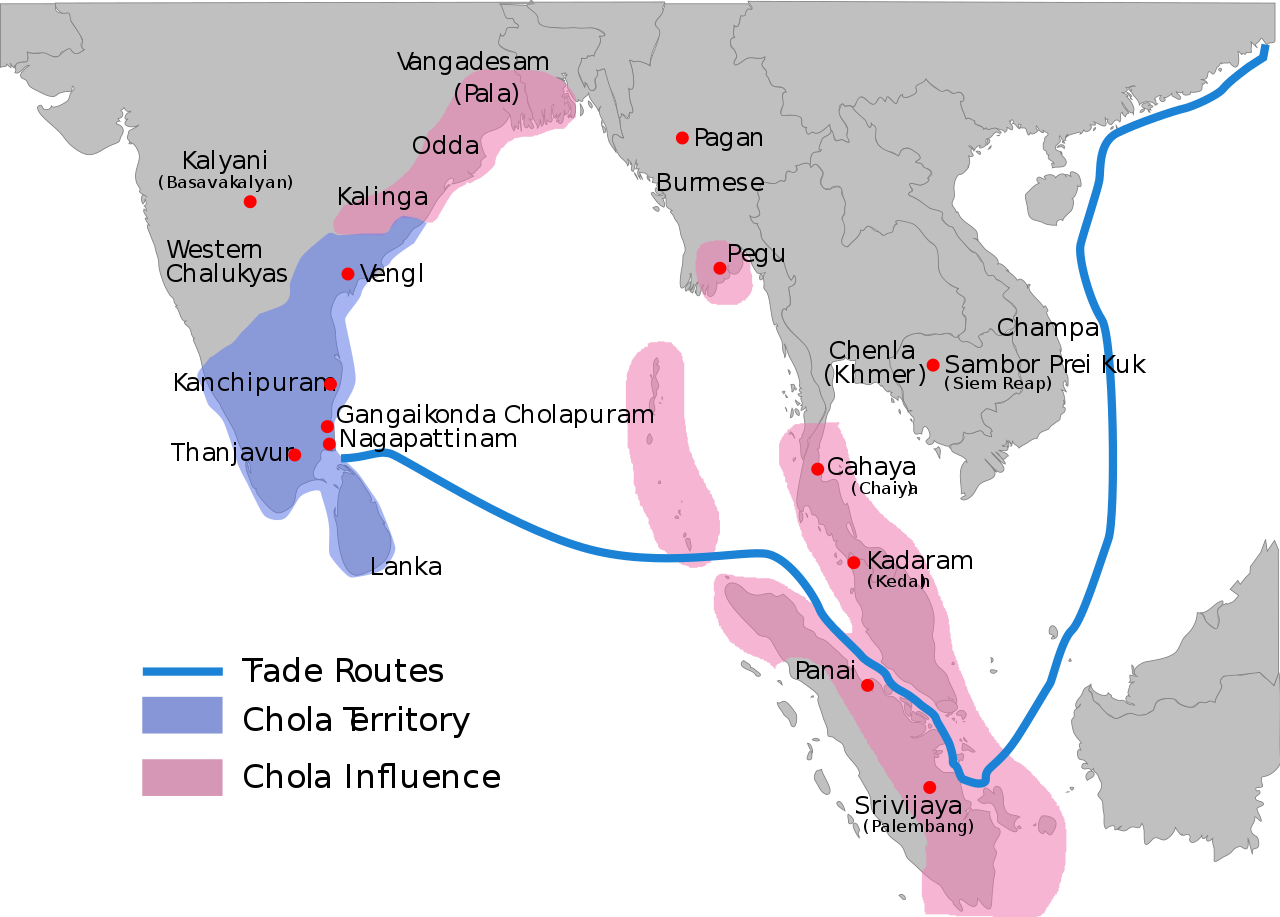
The Cholas were not just land-based rulers; they were a formidable maritime power. Their control of the sea was not an accident but a deliberate strategic choice that fueled their economy and extended their influence across the Indian Ocean.
Building Naval Supremacy
The Chola navy was the instrument of its imperial ambition. Building on the foundations laid by Rajaraja I, his son Rajendra I transformed it into the most powerful naval force in the Indian Ocean.
To understand the factors behind this naval dominance, let's explore their strategy and technology.
That Time an Indian Kingdom Invaded Southeast Asia | Rajendra Chola & the Chola Empire
The video 'That Time an Indian Kingdom Invaded Southeast Asia' from Odd Compass explains the strategic importance of the navy and the advanced technology it employed.
Please watch from 00:50 to 01:38 and from 11:01 to 13:36. The first segment sets the stage for their reliance on maritime trade. The second segment details the advanced naval technology and the brilliant strategy used in the invasion of Srivijaya.
As the video highlights, Chola naval supremacy was built on:
- Technological Superiority: They imported and improved upon shipbuilding techniques, creating large, sturdy vessels capable of long-distance voyages in rough seas. They also employed advanced navigation and incendiary weapons.
- Strategic Vision: The navy was used not just for defense but for offensive, power-projection campaigns. The most famous of these was Rajendra I's expedition against the Srivijaya Empire (based in Sumatra) around 1025 CE. This was not a raid for plunder but a strategic strike to secure control over the Strait of Malacca, the main artery of maritime trade between the Indian Ocean and the South China Sea.
Integrating Naval Power with Economic Strategy
The Chola navy was the 'sharp end' of a sophisticated economic strategy. Military control of sea lanes translated directly into commercial dominance.
For a deeper look into how this system functioned, let's read an article that frames the Chola achievement in modern strategic terms.
How Rajendra Chola Built the World's First Maritime Empire
The article 'How Rajendra Chola Built the World's First Maritime Empire' explains how the Cholas integrated military, administrative, and economic power to manage their vast sphere of influence.
Please read the sections 'Systematic Conquest of Trade Routes' and 'Administrative Genius in Managing a Water-Based Empire'. Focus on: How the Cholas systematically captured strategic chokepoints like the Maldives, Sri Lanka, and the Strait of Malacca. The administrative system for this 'water-based empire', including communication networks and the use of local governors. The development of maritime law and sustainable supply chains for their naval outposts.
This reading crystallizes the link between military power and economic prosperity. The Cholas created a system where:
- Naval power secured trade routes.
- Secure routes encouraged commerce.
- Commerce was taxed (tolls, tribute), generating vast revenues.
- Revenues funded a stronger navy and a robust administration.
This self-reinforcing cycle was also supported by powerful South Indian merchant guilds like the Ayyavole and Manigramam, which operated across Southeast Asia. These guilds, with their own private armies, were key partners in the Chola maritime enterprise, functioning almost like state-sponsored multinational corporations.
Conclusion
Today we have examined the twin pillars of Chola power: a sophisticated administrative system and an unparalleled maritime capability.
Key Takeaways:
- Chola Administration: The empire was efficiently managed through a central bureaucracy and provincial divisions, but its unique strength lay in its system of local self-government. Assemblies like the Ur and Sabha managed local affairs with significant autonomy.
- The
KudaivolaiSystem: The well-documented election-by-lot process for the Sabhas demonstrates a unique commitment to merit, accountability, and a form of representative governance. - Maritime Hegemony: The Cholas built and maintained the most powerful navy in the Indian Ocean, which they used to project power and control strategic trade routes, most notably the Strait of Malacca.
- Integrated Strategy: Chola success was rooted in the seamless integration of administrative efficiency at home with military and economic strategy abroad. Naval power was not an end in itself but a tool to secure the commercial wealth that sustained the empire.
Preview of the Next Lesson:
Having established the might of the Chola navy, our next lesson will explore its consequences. We will delve into the Chola navy's specific role in facilitating trade with Southeast Asia and examine the profound and lasting cultural exchanges that resulted from this interaction.