Hello! Welcome to the first lesson in our new module, Active Trading Strategies.
In the last module, you built a solid foundation in technical analysis, learning to use indicators like moving averages and the RSI to generate potential trading signals. Now, it's time to put those skills into context. Active trading isn't a one-size-fits-all activity. It encompasses different styles, each with its own rhythm, strategy, and psychological demands.
Your goal in this lesson is to learn to distinguish between day trading and swing trading in terms of time horizon and strategy. Understanding these two primary styles is the crucial first step toward developing a trading plan that aligns with your personality, schedule, and financial goals.
Let's begin by defining the core difference between these two approaches.
1. The Fundamental Difference: Time Horizon
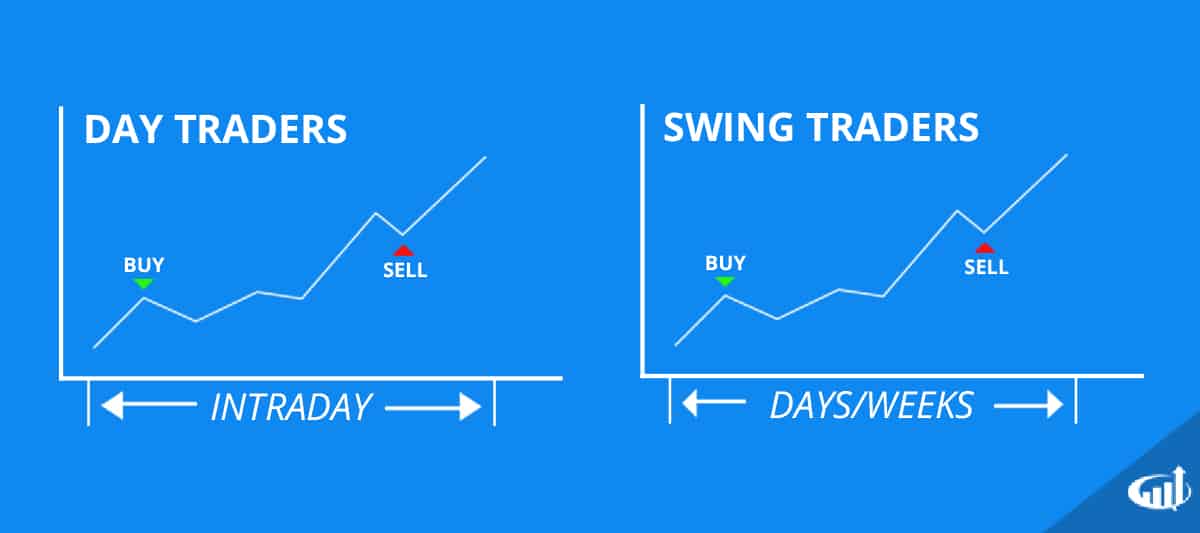
The single most important factor that separates day trading from swing trading is the time horizon, or how long a trade is held.
- Day Trading: All trades are opened and closed within a single trading day. A day trader never holds a position overnight. The holding period can be as short as a few seconds or as long as several hours.
- Swing Trading: Trades are held for more than one day, typically from a few days to several weeks. The goal is to profit from a price "swing" that unfolds over a longer period.
This simple difference in holding period has massive implications for every other aspect of trading, from strategy and risk management to the time you need to commit.
Let's get a clear, concise definition from an experienced trader.
Swing trading vs Day Trading – Which is more profitable?
This video from Markus Heitkoetter on the Markus Heitkoetter - Investor & Lifelong Learner channel provides a very clear and simple definition of the timeframes for both styles.
Watch the first minute of the video (from 00:23 to 01:09). Notice the specific holding periods he uses for his personal trading: 5-20 minutes for day trading versus 5-20 days for swing trading.
This image provides a great visual summary of this core concept.
2. A Detailed Comparison of Day Trading vs. Swing Trading
Now that we've established the time horizon, let's explore how that single difference creates two very distinct trading styles. We'll compare them across several key attributes.
To get a comprehensive overview, let's turn to a detailed guide.
Day Trading or Swing Trading? Find Your Best Fit
This article, 'Day Trading or Swing Trading? Find Your Best Fit' from TradingSim, is an excellent resource that breaks down the characteristics of each style. We'll use it as our main guide for this section.
First, read the two sections that define each trading style: 'What Is Day Trading? Definition, Characteristics, and Key Features' and 'What Is Swing Trading? Definition, Characteristics, and Key Features'. Focus on understanding the general workflow and goals of each approach.
The article you just read provides a lot of detail. Let's distill the most important differences using the comparison table from that same article. This table is your cheat sheet for understanding the two styles at a glance.
| Attribute | Day Trading ⚡ | Swing Trading 🌙 |
|---|---|---|
| ⏰ Timeframe | Intraday (seconds to hours) | Multi-day to weeks |
| 🔄 Trade Frequency | High (many trades per day) | Low to moderate (few trades per week) |
| 🛠️ Typical Tools | 1–5 min charts, Level 2, Time & Sales | Daily/4H charts, trend indicators, scanners |
| 💰 Capital Requirements | Often $25,000+ for active U.S. day traders (PDT rule) | Often $1,000–$5,000 starting capital |
| ⚠️ Risk Type | Intraday volatility, execution risk | Overnight gap risk, news exposure |
| 📈 Profit Potential | Many small gains; requires high win rate or trading edge | Fewer, larger moves; higher reward per trade possible |
Let's expand on a few of these critical points.
Time Commitment and Lifestyle
The most practical difference for many people is the time required. Day trading is like a full-time job that demands your complete attention during market hours. Swing trading is more flexible and can be managed around a different schedule.
Day Trading vs Swing Trading: Which One is Right for You? (Pros & Cons Explained!)
The video 'Day Trading vs Swing Trading: Which One is Right for You?' from the Financial Wisdom channel clearly explains the difference in time commitment.
Watch the section from 01:04 to 02:11. Notice how day trading requires active management during the day, while swing trading involves research that can be done outside of market hours.
Profit Goal and Risk Management
How you make money and manage risk is fundamentally different in each style.
- Day Trading: The goal is to compound many small wins. Because trades are so short, you use very tight stop-losses to cut any losing trade quickly. Your profit target on any single trade is also small.
- Swing Trading: The goal is to capture a much larger piece of a price move. This requires a wider stop-loss to avoid being shaken out by normal daily volatility. Your profit target is proportionally larger.
Swing trading vs Day Trading – Which is more profitable?
Let's return to the video from Markus Heitkoetter, as he gives a fantastic explanation of how the timeframe dictates your stop-loss and profit target.
Watch from 03:10 to 05:26. Pay close attention to his example of a stock that moves $2 per day. He explains why a swing trader needs a stop-loss of at least $2, while a day trader could use one as small as $0.20. This clearly illustrates the risk/reward dynamic.
Emotional and Psychological Demands
Your interest in psychology will be particularly relevant here. Each style requires a different kind of emotional discipline.
- Day Trading: Demands intense focus, rapid decision-making, and the ability to handle the stress of fast-moving markets. You must be resilient to taking many small losses and moving on to the next trade without hesitation.
- Swing Trading: Requires patience and the ability to manage your emotions over several days. You have to be comfortable holding a position through minor pullbacks and resist the urge to constantly tinker with your trade.
Day Trading vs Swing Trading: Which One is Right for You? (Pros & Cons Explained!)
The 'Financial Wisdom' video also has an excellent segment on the emotional engagement each style requires.
Watch from 03:31 to 05:05. Think about your own temperament: Do you thrive in fast-paced environments, or do you prefer to make more deliberate, calculated decisions?
Test your understanding!
A trader notices that a stock, which has been in a strong uptrend on the daily chart, has pulled back over the last two days. The trader decides to buy the stock, placing a stop-loss below the recent low and a profit target near the previous high, expecting the trade to take about a week to play out.
Which trading style is this trader using and why?
Show answer
This is swing trading. Here's why:
- Time Horizon: The planned holding period is "about a week," which is a multi-day timeframe.
- Analysis: The trader is using a daily chart to identify a larger trend and a "swing" low to enter.
- Goal: The aim is to capture a significant price move from the pullback low to the previous high, not just a small intraday fluctuation.
3. Finding Your Fit: Which Style is Right for You?
You've expressed a desire to learn both day trading and swing trading, which is an excellent goal. However, most traders find that one style ultimately suits their personality and lifestyle better. There is no "better" style, only the one that is better for you.
As a beginner, many experts recommend starting with swing trading. Its slower pace provides more time to analyze your decisions, learn from your trades, and develop discipline without the intense pressure of day trading.
Let's reflect on how to choose a path that aligns with your personal traits.
Day Trading or Swing Trading? Find Your Best Fit
Let's go back to the TradingSim article one last time. It has a great section dedicated to helping you match your personality and goals to a trading style.
Read the section titled 'How Do Personality, Lifestyle, and Goals Influence Choosing Between Day Trading and Swing Trading?' and its two subsections. As you read, honestly assess your own traits: Are you more patient or action-oriented? How much time can you realistically commit during the day? What are your initial capital constraints?
Conclusion
Great work today. You've taken the first and most important step in active trading: understanding the landscape. By learning to distinguish between day trading and swing trading, you can now start thinking strategically about where to focus your energy.
Key Takeaways:
- The primary difference between day trading and swing trading is the holding period: within one day for day trading, and several days to weeks for swing trading.
- This difference in time horizon dictates everything else: the time commitment, the tools used (short-term vs. daily charts), the risk management strategy, and the psychological skills required.
- Day Trading is characterized by high frequency, a goal of many small profits, intense time commitment during market hours, and intraday risk. It demands rapid decision-making.
- Swing Trading is characterized by lower frequency, a goal of fewer but larger profits, schedule flexibility, and overnight risk. It demands patience and conviction.
- Choosing a style depends on your personality, time availability, and capital. For most beginners, swing trading is a more forgiving starting point.
A Look Ahead:
Now that you can differentiate between these trading styles, our next lesson will focus on a critical skill: identifying characteristics of stocks suitable for active trading. We'll explore concepts like volume and volatility to understand what makes a stock a good candidate for either a day trade or a swing trade.