Hello. Last lesson showed why Bank Rate anchors overnight sterling rates without making SONIA identical to Bank Rate. A two-year market rate works differently: it depends substantially on what market participants expect overnight rates to be throughout the next two years. That means it can move today even if the Monetary Policy Committee (MPC) has not yet changed Bank Rate.
This lesson develops that distinction so you can interpret reports about rates rising or falling ahead of an MPC announcement. Allow about 35–40 minutes, including the short video and readings.
One rate today, many rates for the future
Bank Rate applies to eligible reserve balances overnight. Someone agreeing to lend or borrow at a fixed rate for two years, however, must put a price on a much longer period. One alternative to fixing a rate now would be to renew short-term lending repeatedly. The attractiveness of a two-year fixed rate therefore depends partly on the short-term rates people think will prevail during those two years.
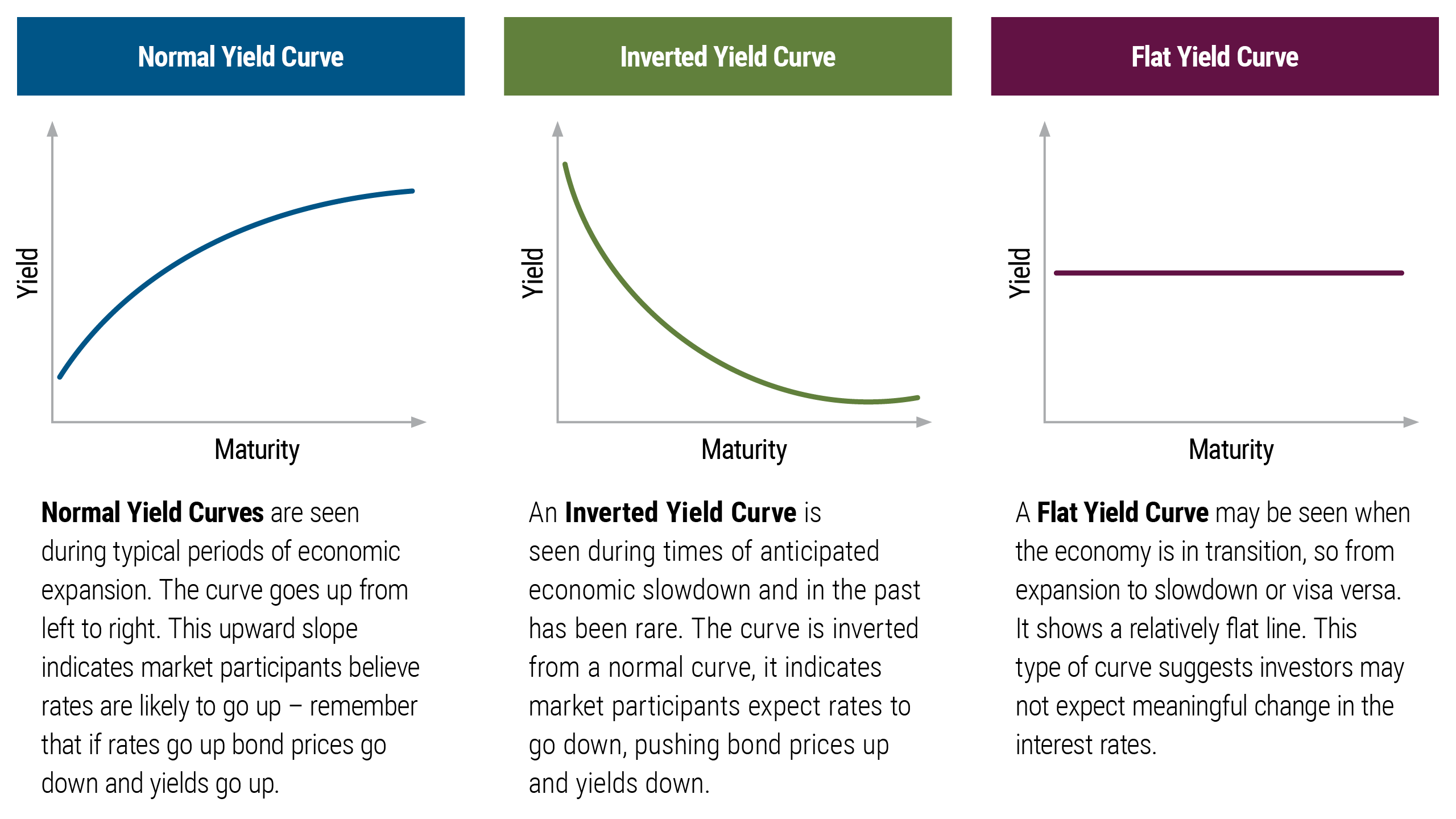
A yield curve displays market interest rates for different maturities at a particular point in time. Its horizontal axis is the time until repayment, not a timeline showing how rates have changed over past months.
Watch the expectations explanation in Edspira’s 3 Theories Explaining the Shape of the Yield Curve. Its calculation is a useful starting model, rather than an exact rule for every market rate.
3 Theories Explaining the Shape of the Yield Curve
Edspira’s 3 Theories Explaining the Shape of the Yield Curve shows how expected future short-term rates enter a longer-term yield, then adds a reason actual yields need not equal a simple average.
Watch the rate example, focusing on the two successive one-year periods used to illustrate a two-year yield. Then skip to the premium for the brief qualification about supply, demand and maturity preferences. Treat the video’s averages as simplified illustrations, not guaranteed pricing formulas.
The Bank of England makes the link to policy explicit. Its account also supplies a historical example in which longer-term yields moved by more than Bank Rate itself had moved.
Read the Bank of England’s explanation of why expectations of future Bank Rate matter beyond the overnight market.
In Section 3.1, “Transmission from Bank Rate to financial conditions,” begin with the yield-curve explanation. Continue through the historical comparison, ending just before the “Chart 1” heading. Focus on the difference between a Bank Rate change already implemented and longer-term yields incorporating expectations of further changes.
A change in expectations can change today’s price
Consider a deliberately simplified two-year market rate. Suppose participants expect the average overnight rate to be 4% during the coming year and 3% during the following year. Ignoring compounding and other pricing factors, the two-year rate would be roughly the average: 3.5%.
Now suppose new inflation figures lead participants to expect rates to remain higher for longer. Their expectation for the second year rises from 3% to 4%, while their expectation for the first year stays at 4%. The simplified two-year rate rises from 3.5% to 4%—a rise of 0.5 percentage points—although today’s Bank Rate has not changed.
The useful approximation is:
The numbers are illustrative, not a forecast or a formula that market yields must obey exactly. Actual prices reflect the timing of payments, compounding and the type of financial instrument. The central prediction survives those details: if expected future short-term rates rise, a comparable longer-term rate will generally face upward pressure, even before the MPC meets. If expectations of future cuts strengthen, it will generally face downward pressure.
Market prices can also contain an implied forward rate: a rate for a future period that is embedded in rates available today. This is one way to see that a future borrowing period can be priced before it begins.
Yield curve terminology and concepts | Bank of England – the UK's central bank
Read the Bank of England’s “Nominal forward rates” explanation to connect today’s market prices with a rate for borrowing in a future period.
Under “Nominal forward rates,” read from the definition and example, stopping before the paragraph beginning “In this example, we considered six-month forward rates.” Follow why the borrower can lock in a future-period borrowing cost using rates quoted today. The example’s figures are illustrative market rates, not Bank Rate forecasts.
An implied forward rate is not a promise that the MPC will set Bank Rate at that level. It is a rate embedded in market pricing, which can also reflect compensation for risk and other market conditions.
Before the meeting—and after the announcement
Markets do not wait for an MPC vote to process news. Inflation data, employment figures and MPC communications may change views about when Bank Rate will change and how long it will remain at a given level. As market participants revise those views and trade, longer-term rates can move before the next decision.
The reverse point is equally important: an actual Bank Rate change need not cause an equally sized move in a longer-term rate on announcement day. If a rise was widely expected and already reflected in market prices, the announcement may add little new information. A decision or accompanying explanation that differs from expectations can produce a larger move, because it changes the anticipated future path, not merely the overnight rate in force that day.
Nor can the shape of a yield curve be read as a certain MPC forecast. Investors may require additional compensation for holding a longer-term asset; demand for particular maturities can change; and government bond yields can respond to factors besides expected Bank Rate. An inverted curve may be consistent with expected future cuts, but it neither guarantees them nor guarantees a recession. For the same reason, two-year market rates and today’s Bank Rate can move by different amounts—or, for a time, in different directions.
What to carry forward
Bank Rate anchors the overnight end of sterling markets. Longer-term rates also reflect expectations of the overnight rates that will apply during their term, so news about the likely MPC path can reprice them before any vote. The direction of that pressure is predictable in a simplified example; the exact size of a real-world move is not, because other pricing factors and prior expectations matter.
Next, the course applies this distinction to mortgages: why a tracker can respond to a Bank Rate change differently from a newly offered fixed-rate deal.