Introduction
In our last lesson, we explored how competition over shared resources like river water creates deep-seated and persistent conflicts between states, straining India's federal structure. Today, we turn our attention to an even more fundamental and emotionally charged fault line in Indian politics: language. While India's constitution embraces multilingualism, the idea of forging national unity through a single language—Hindi—has been a source of recurring tension since the dawn of the Republic.
This lesson will evaluate how the recurring controversy over "Hindi imposition" fuels anti-central government sentiment, particularly in Southern and Eastern India. We will trace the historical roots of this resistance, analyze the constitutional and policy frameworks that underpin the debate, and examine contemporary flashpoints that keep this issue at the forefront of federal politics. By the end, you will be able to dissect why language is not just a medium of communication, but a powerful symbol of cultural identity, regional pride, and political resistance in India.
The Myth of "One Nation, One Language"
At the heart of the language debate is a philosophical clash. Does a vast, pluralistic nation like India require a single common language to be truly united? Proponents of Hindi have often argued in the affirmative, modeling their vision on 19th-century European nation-states that achieved homogeneity by suppressing linguistic diversity. However, critics argue this model is fundamentally unsuited for India and that true unity stems from equality, not uniformity.
A detailed analysis in The India Forum provides a compelling argument against the "One Nation, One Language" theory, highlighting how attempts to impose linguistic uniformity often backfire, leading to disunity rather than cohesion.
The Question of Language that is Straining Indian Federalism
This article provides a powerful critique of the "One Nation, One Language" concept and places India's language debate in a global and historical context. It also debunks some common myths about the prevalence of Hindi.
Please read the following sections from the article: Start with the Introduction and the section on The Erosion of India’s Linguistic Heritage. Focus on how official statistics present a misleading picture of Hindi's prevalence by misclassifying distinct languages as its dialects. Next, read the section titled The Myth of “One Nation, One Language”. Pay close attention to the historical lessons from the Soviet Union and Pakistan, which demonstrate how linguistic imposition can lead to political fragmentation. Finally, study the subsection English: A Neutral Bridge for India. This part explains the crucial argument for why English, despite its colonial origins, serves as a fair and practical link language in a multilingual federation, preventing the hegemony of one region over others.
As the article argues, history shows that nations endure not because everyone speaks the same language, but because every community feels its language and culture are respected. Imposing a single language can make other groups feel culturally and politically subordinate, transforming language from a tool of communication into a symbol of oppression.
A Century of Resistance: The Tamil Nadu Experience
Nowhere has this resistance been more organized, passionate, and politically consequential than in Tamil Nadu. The anti-Hindi sentiment there is not a recent phenomenon but a century-long movement deeply intertwined with the state's political identity, shaped by the Dravidian movement's ideology of cultural self-respect and resistance to perceived North Indian domination.
The two videos below provide a comprehensive history of these agitations, from the early protests in the 1930s to the pivotal events of the 1960s that reshaped the state's political landscape.
Tamil Nadu’s century long fight against Hindi imposition | LME 63
This video from The News Minute details the key milestones in Tamil Nadu's long history of anti-Hindi agitations.
Please watch these segments to understand the historical trajectory: The first agitation: Learn about the 1937 protests against the compulsory introduction of Hindi, led by Periyar's Self-Respect Movement. Dravidian ideology: This explains the demand for 'Dravida Nadu' and the underlying argument against North Indian cultural and economic exploitation. The Kallakudi protest: Witness the 1953 rail roko led by a young M. Karunanidhi, a pivotal event in his political career. Annadurai's argument: Listen to C.N. Annadurai's powerful arguments in Parliament against "Hindi imperialism." The 1965 uprising: Understand the massive student-led protests, self-immolations, and their political fallout, which led to the DMK's rise to power.
The agitations of 1965 were a turning point. As detailed in the video and supplemented by the historical analysis below, the violence and passionate resistance forced the central government to retreat and provide a statutory guarantee for the continued use of English.
Hindi Imposition, Tax Devolution, Delimitation | Makings Of A North-South WAR? | Akash Banerjee
This video by Akash Banerjee puts the 1965 agitations in context and explains the deep-rooted fears within Dravidian politics that fuel the anti-Hindi stance.
Watch the following parts to deepen your understanding: The 1965 flashpoint: This segment dramatically recounts the events leading up to the 1965 protests as the 15-year constitutional deadline for phasing out English approached. The Dravidian perspective: This is crucial for understanding the 'why'. It explains the fear that Hindi imposition is the thin end of the wedge, leading to the erosion of Tamil culture and loss of government jobs to Hindi speakers.
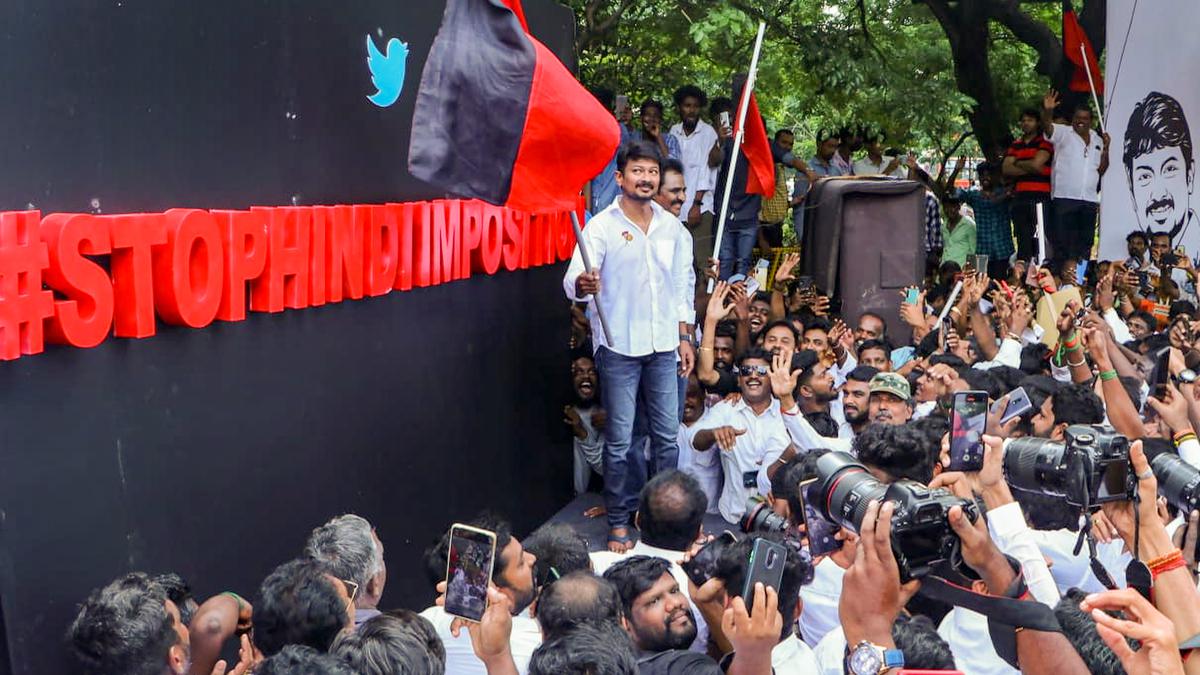
The legacy of these movements is a political culture in Tamil Nadu that is exceptionally vigilant against any perceived attempt by the central government to promote Hindi. This historical memory is a powerful mobilizing force that contemporary political leaders, like Udhayanidhi Stalin pictured below, continue to draw upon.
Constitutional Ambiguity and Policy Failures
The recurring nature of this conflict is embedded in the Constitution itself. The framers, deeply divided on the issue, arrived at what Granville Austin called a "half-hearted compromise." This compromise has left a legacy of ambiguity that fuels both the push for Hindi and the resistance against it.
Let's delve into the specific constitutional provisions and the controversial "Three-Language Formula."
The Question of Language that is Straining Indian Federalism
This part of the article dissects the constitutional articles and policy tools at the center of the language debate.
Please read the following sections carefully: Begin with In the Constituent Assembly. This will give you context on the passionate and divisive debates that led to the compromise, including warnings of 'Hindi imperialism' from non-Hindi representatives. Next, read section 4. The Three-Language Formula. Analyze why this policy, intended as a solution, has been a profound failure. Pay special attention to the subsections The Illusion of Choice, which explains how the formula often defaults to Hindi imposition in practice, and the discussion on Cognitive Science, which challenges the pedagogical basis for forcing a third language on students with weak foundations in their first two. Finally, review section 5. The Constitution and the Language Question, focusing specifically on subsection 5.7 Article 351 — Directive for Hindi Promotion. This is the most critical part. Understand how this article, which directs the Union to promote Hindi and enrich it primarily from Sanskrit, is interpreted by non-Hindi speakers as a constitutional mandate for cultural and linguistic homogenization.
The Three-Language Formula is a textbook example of a policy that looks good on paper but fails in the complex political and social reality of India. In theory, it promotes multilingualism. In practice, Hindi-speaking states rarely implement the 'third language' requirement with sincerity (often using Sanskrit as a token option), while non-Hindi states view the mandatory inclusion of Hindi as an unfair burden and a backdoor for imposition.
Article 351 remains the core constitutional engine for the central government's Hindi promotion activities. While intended to foster a link language, its directive to actively "promote the spread of Hindi" is seen by many in the South and East as a direct threat to the equal status of their own languages.
Contemporary Flashpoints: A Widening North-South Divide?
The language issue is not just a matter of historical grievance; it is a live political wire. Recent actions by the Union government have rekindled old fears and expanded the geography of resistance beyond Tamil Nadu to other states in the South and East.
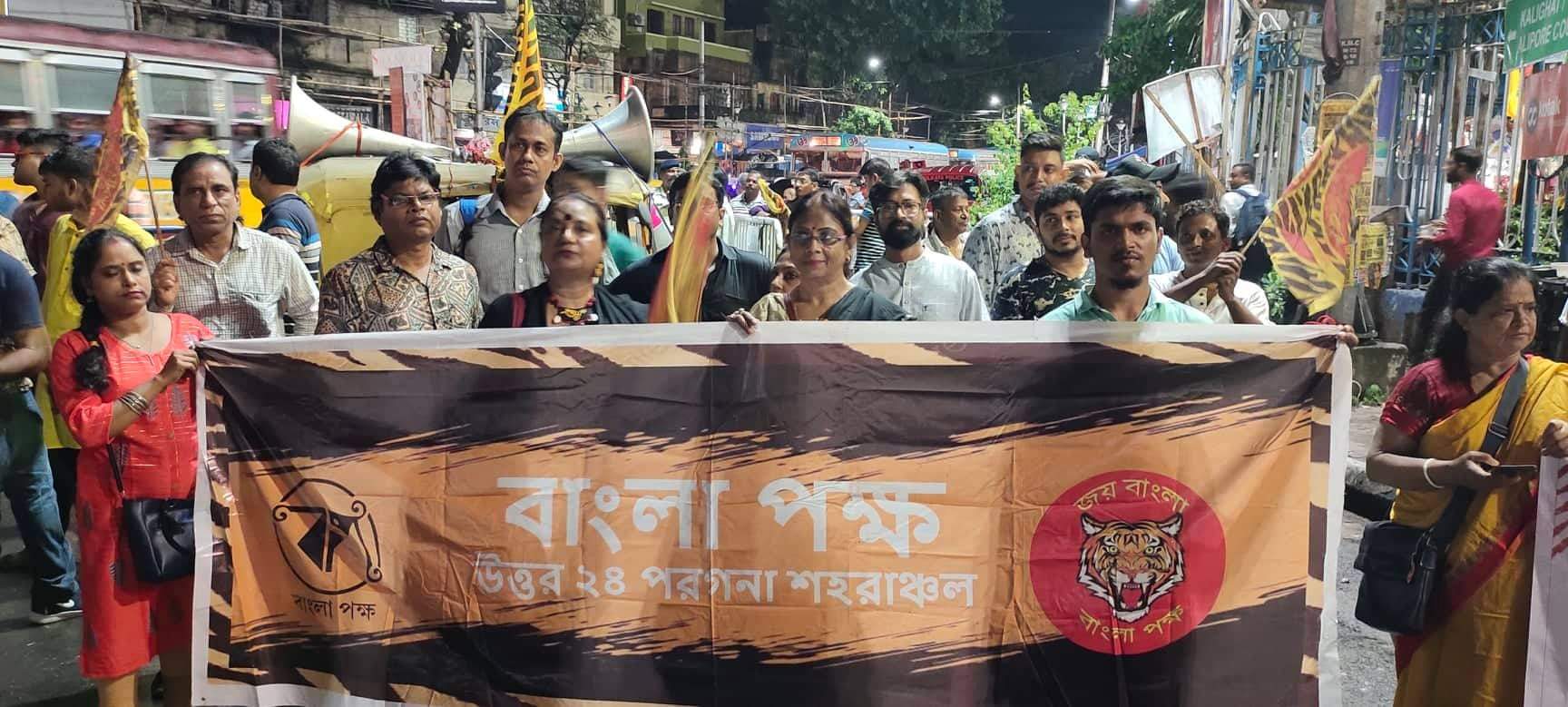
Several recent developments have been perceived as 'Hindi imposition':
- The National Education Policy (NEP) 2020 reiterated the Three-Language Formula, sparking immediate backlash in Tamil Nadu and elsewhere.
- The tendency to name central government schemes, laws, and national events in Hindi (e.g., Ek Bharat, Shreshtha Bharat) is seen as a subtle but persistent form of cultural imposition.
- Withholding central funds for education from states that do not comply with Union language policies, as alleged by the Tamil Nadu government, is viewed as fiscal blackmail.
This issue is further amplified when connected to other simmering federal tensions. The article "Reimagining Indian Federalism" highlights a crucial future flashpoint: delimitation.
Reimagining Indian Federalism - Verfassungsblog
This blog post connects language politics to broader concerns about a shift in political power within the Indian federation.
Please read these two key sections: The first is the untitled section beginning with "The seemingly technocratic exercise of delimitation". This explains why the upcoming redrawing of parliamentary constituencies based on population could significantly reduce the political representation of Southern states and shift power to the more populous, Hindi-speaking Northern states. Next, read the section Hindu Nationalism and Unitary Imaginaries of India. This explains how the discourse of "one nationism" and a civilisational conception of India reinforces a unitary, centralized vision that often clashes with regional identities.
The prospect of delimitation adds a powerful new dimension to the language debate. Southern states, which have been more successful in controlling population growth, fear they will be "punished" for their success with reduced political power in Parliament. This potential loss of representation, combined with existing grievances over fiscal transfers and perceived cultural imposition, creates a potent cocktail of anti-central government sentiment. The fear is that a demographically dominant North will use its political power to further entrench its linguistic and cultural norms across the country.
Conclusion
The "Hindi imposition" controversy is far more than a debate about which language to use in government offices. It is a proxy for a larger battle over the very idea of India: is it a unitary nation-state defined by a single dominant culture, or a federal union of diverse and equal linguistic communities?
Key Takeaways:
- Deep Historical Roots: Resistance to Hindi imposition, particularly in Tamil Nadu, is a century-old movement rooted in Dravidian ideology and the fight to preserve a distinct cultural and linguistic identity.
- Constitutional and Policy Triggers: The ambiguity of the Constitution—especially Article 351's directive to promote Hindi—and the flawed implementation of the Three-Language Formula provide recurring fuel for the conflict.
- A Symbol of Hegemony: For many in Southern and Eastern India, the promotion of Hindi is not seen as a benign effort at national integration but as a symbol of cultural and political domination by the "Hindi heartland."
- Modern-Day Amplifiers: Contemporary government policies, combined with the looming threat of reduced political representation through delimitation, are exacerbating these historical anxieties and consolidating language as a key plank of anti-central government mobilization.
The persistence of this issue demonstrates that in a country as diverse as India, unity cannot be imposed; it must be negotiated. Forcing a single linguistic identity risks alienating vast sections of the population and weakening the federal bonds that hold the nation together.
In the next module, we will shift our focus from the politics of identity to the politics of institutions. Our first lesson will examine the Indian judiciary, analyzing the contentious debate between judicial independence and accountability through the prism of the collegium system and the failed NJAC.