Introduction
In our previous lesson, we investigated the structural drivers compelling historically dominant agrarian communities—like the Jats, Marathas, and Patidars—to demand reservation. We concluded that a combination of the long-term agrarian crisis and intensifying competition for non-farm employment has fueled these movements. Now that we understand the 'why', we turn to the profound consequences.
This lesson addresses the constitutional and political dilemmas that arise from these demands. We will evaluate how these agitations challenge the foundational legal principles of India's affirmative action system and reshape the landscape of identity politics. By the end of our discussion, you will be able to analyze the complex bind facing the Indian state, caught between upholding constitutional norms and managing the political pressures exerted by powerful, numerically significant communities.
The Constitutional Tightrope
The demands for reservation by dominant castes create two immediate and critical challenges for India's constitutional framework: the breach of the 50% reservation ceiling and the contested definition of "backwardness."
1. The 50% Ceiling
In its landmark 1992 judgment in Indira Sawhney & Others v. Union of India, the Supreme Court established that total reservations should not exceed 50%. The rationale was to strike a balance between providing affirmative action for disadvantaged groups and ensuring equality of opportunity for all citizens. However, dominant communities often constitute a large percentage of a state's population (e.g., Marathas make up around 30% of Maharashtra). Accommodating their demands within the existing 50% limit is politically unfeasible, forcing state governments to create special quotas that breach this ceiling.
This inevitably leads to a confrontation with the judiciary. The Outlook India article "Quotas Against Quota System" provides an excellent overview of this legal conflict in the context of the Maratha reservation case.
Quotas Against Quota System: Maratha Reservation Verdict Dilutes ...
This article discusses the legal fallout from the Bombay High Court's decision to grant a separate quota to the Maratha community.
Read the initial section of the article. Pay attention to the legal experts' opinions, which immediately flag the breach of the 50% ceiling established in the Indira Sawhney case as the primary constitutional flaw.
As the article notes, such moves are frequently challenged and often struck down by higher courts, creating a cycle of political promises, legislative action, and judicial reversal. This dynamic undermines legal certainty and fuels further agitation.
2. The Meaning of "Backwardness"
The second, more philosophical dilemma concerns the very definition of a "backward class." Article 16(4) of the Constitution allows for reservation in public employment for "any backward class of citizens which, in the opinion of the State, is not adequately represented." The intent was to remedy the historical disadvantages faced by groups suffering from social and educational backwardness due to caste oppression.
The critical question is: can a community that has historically wielded immense social, economic, and political power be classified as "backward"?
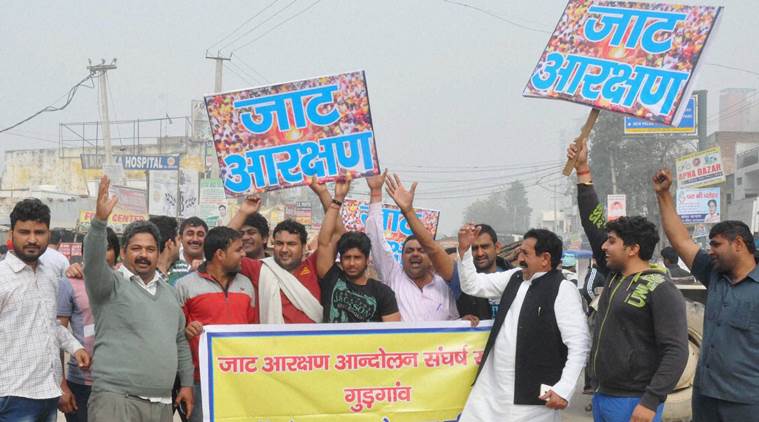
Legal experts and social scientists point out that while members of these communities may be experiencing economic distress, this is not the same as the systemic, multi-generational social backwardness that reservation was designed to address. Reservation is not an anti-poverty program; it is a tool for social representation and justice. The Outlook article again captures this debate well.
Quotas Against Quota System: Maratha Reservation Verdict Dilutes ...
The article continues by quoting legal and academic experts who challenge the classification of dominant castes as 'backward'.
In the article you just read, now focus on two specific arguments. First, read the comments from senior lawyers like Vikas Singh and K.T.S. Tulsi, who argue that the Marathas' political dominance (having their own Chief Ministers) contradicts any claim of social backwardness. Second, examine the sociological data provided by Sanjay Kumar of CSDS. He points out that socio-economic indicators show these groups are as affluent as elite castes, suggesting their demands stem from agrarian distress and a desire for secure jobs, not social subjugation.
This conflict between economic anxiety and the constitutional test of social backwardness lies at the heart of the legal dilemma.
The Political Compulsion and the Domino Effect
While the constitutional questions are complex, the political calculus for governments is often brutally simple. Dominant caste groups are powerful electoral constituencies that no party can afford to alienate.
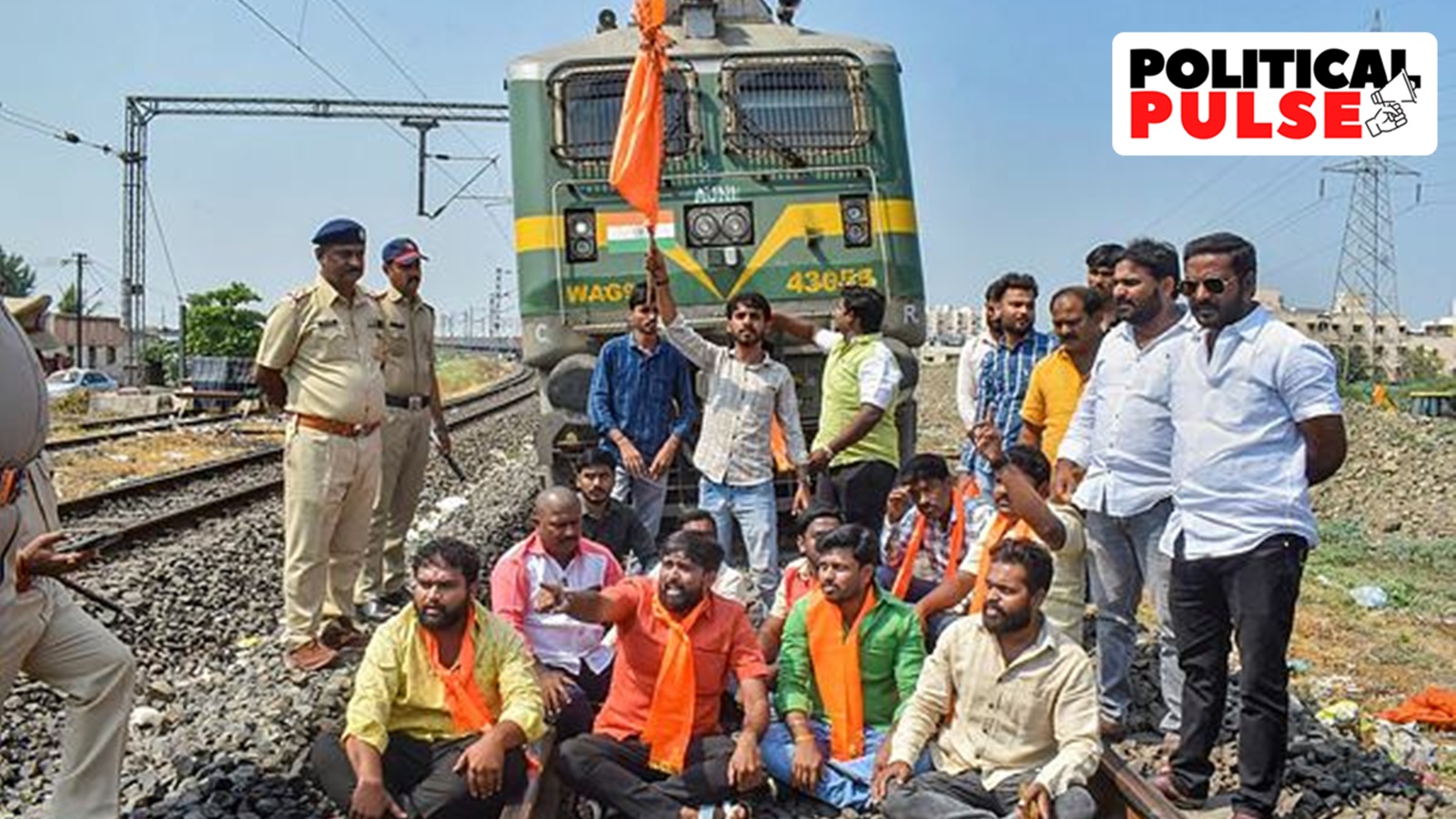
The sheer scale and organization of these protests create a political compulsion to concede to their demands, even if the resulting legislation is constitutionally suspect. This leads to a second-order political problem: the domino effect. When one state grants reservation to a dominant group, it emboldens similar groups in other states to intensify their agitations, demanding parity.
This dynamic is clearly illustrated in the Outlook article, which shows how the Maratha quota was seen as a precedent by other communities.
Quotas Against Quota System: Maratha Reservation Verdict Dilutes ...
Let's return one last time to the Outlook article to see this domino effect in action.
Read the section beginning with the line "The high court order has come as a shot in the arm...". Notice how leaders from the Patidar, Gujjar, and Jat communities explicitly cite the Maratha case to legitimize their own long-standing demands, demonstrating a clear pattern of political contagion.
This cycle turns reservation policy into a competitive field where political survival often outweighs constitutional propriety. Each concession, far from resolving conflict, simply raises the stakes for the next agitation.
From Social Justice to 'Caste Formalism'
The cumulative effect of these constitutional and political dilemmas is a fundamental transformation of the reservation system itself. What was conceived as a targeted remedy for historical injustice is evolving into a generalized system of resource distribution among competing, legally-recognized identity groups.
Scholars Sujit Choudhry, Madhav Khosla, and Pratap Bhanu Mehta have termed this phenomenon "caste formalism." They argue that reservation politics has become so entrenched that it is now the default framework for all claims of social justice and resource allocation.
Caste Formalism: The Law and Politics of Equality in India - Judicature
This academic article provides a powerful theoretical framework for understanding the long-term consequences of these reservation demands. It argues that we are witnessing a shift from reservation as a tool of substantive equality to a system of formal power-sharing among caste groups.
First, read Part II of the article. Focus on the argument that reservation has become "politically non-negotiable," narrowing the political imagination to debates within the reservation framework rather than exploring alternatives. The goal shifts from transcending caste to balancing caste groups. Next, read Part III. This section analyzes the deeper implications of this shift. Pay attention to how caste formalism transforms democracy into a "system of distribution among predefined groups" and how the law itself changes character. The authors argue the courtroom becomes less a forum for principled reason and more a "social mediator," negotiating the competing interests of powerful groups.
This concept of "caste formalism" provides a crucial analytical lens. It suggests that the demands of dominant castes are not an anomaly but the logical endpoint of a system where caste identity has become the primary vehicle for making claims against the state. Democracy risks becoming a federation of castes competing for their share of the pie, a vision far removed from the constitutional goal of annihilating caste and fostering a society based on individual citizenship and fraternity.
Conclusion
In this lesson, we have moved from the drivers of dominant caste agitations to the profound dilemmas they create. These movements push the Indian state into an almost impossible position, forcing a choice between constitutional principles and political pragmatism.
Key Takeaways:
- Constitutional Dilemmas: Demands from dominant castes directly challenge the Supreme Court's 50% ceiling on reservations and stretch the definition of "social and educational backwardness" to include economic distress, thereby diluting the original intent of affirmative action.
- Political Dilemmas: State governments face immense pressure from numerically strong and politically organized vote banks, leading them to pass constitutionally questionable laws. This creates a domino effect, inspiring similar demands in other states.
- The Rise of 'Caste Formalism': The proliferation of these demands is transforming reservation from a tool for social justice into a system for competitive resource distribution among caste groups. This fundamentally alters the nature of both politics and law, turning them into arenas for negotiating group interests rather than upholding constitutional values.
Having examined the outward expansion of reservation to include new, powerful groups, our next lesson will turn inward. We will explore the equally contentious debates about equity within the existing quota system, specifically focusing on the concepts of 'sub-categorization' and the 'creamy layer,' which aim to ensure that the benefits of reservation reach the most marginalized sections of the beneficiary communities.