Welcome back. In our previous lesson, we analyzed the BJP's highly effective strategy of winning over a large segment of the Other Backward Classes (OBC) vote. We saw how the party fractured the traditional OBC vote banks of regional parties by appealing to non-dominant caste groups and creating a cross-caste "beneficiary" class through direct welfare delivery. This political success, however, has triggered a powerful counter-movement.
This lesson explores that counter-movement: the escalating demand from opposition parties and social justice advocates for a nationwide caste census. We will unpack the reasons behind this demand and, crucially, analyze why its potential findings are considered so politically explosive. Fulfilling this lesson's objective will give you a clear understanding of one of the most contentious and defining issues in contemporary Indian politics, one that strikes at the very heart of the country's reservation policy.
The Central Anomaly: Policy Without Data
At its core, the demand for a caste census stems from a fundamental contradiction in the Indian state's approach to affirmative action. India has a comprehensive system of caste-based reservation for Scheduled Castes (SCs), Scheduled Tribes (STs), and Other Backward Classes (OBCs). However, while the decennial census has consistently collected data on SC and ST populations, it has not enumerated the population of every caste since the last comprehensive exercise was conducted by the British in 1931.
This means that the cornerstone of OBC reservation policy—the 27% quota recommended by the Mandal Commission—is based on population estimates derived from data that is now nearly a century old. This has created what political analyst Yogendra Yadav calls a "weird" and "anomalous position" where policy is implemented without contemporary, empirical evidence.
The following video explains why this data gap is so critical and how a new census would provide a solid, modern basis for reservation policy.
Fear of Mandal 2.0 Makes Modi Govt Jittery Over Caste Census Demand | OBC | Bihar | Opposition
This clip from HW News English clearly explains the historical data problem at the heart of the caste census demand.
Watch the section from the beginning, where the narrator discusses what a caste census has to do with politics. Focus on the explanation of how current OBC reservation is based on the outdated 1931 census and the argument that a new census is needed to provide a "solid basis" for reservation percentages.
The Debate: Evidence vs. Division
The call for a caste census has sparked a fierce debate, pitting the principles of evidence-based policymaking against fears of social fragmentation. To appreciate the multiple perspectives you're keen on analyzing, let's examine the core arguments from both sides.
A debate on India Today features two prominent voices: Yogendra Yadav, who advocates for the census, and Alok Bansal, who opposes it.
NewsToday Debate | Experts Clash Over Caste Census: Necessary Evidence Or Reinforcing Divisions?
This debate provides a clear and concise summary of the opposing viewpoints on the caste census, which will help you analyze the issue critically.
First, watch Yogendra Yadav's opening argument from the beginning, where he frames the census as a necessary tool to end a long-standing anomaly and monitor caste-based inequality. Next, listen to the counter-argument presented by Alok Bansal from this point. He contends that a census artificially reinforces caste identities, which he believes are diminishing in modern India, particularly among the youth. Finally, observe Yadav's rebuttal from this segment. He challenges the notion that caste is disappearing and clarifies a crucial procedural point: like with religion, citizens would have the option to declare 'no caste' in a census.
As the debate illustrates, proponents see the census as an essential diagnostic tool. They argue that to remedy the "disease" of caste inequality, one must first measure and monitor it. A census would not just provide population numbers; as Yadav points out, it would create a detailed socio-economic profile of every single community, providing the very "quantifiable data" the Supreme Court has repeatedly demanded to justify reservation policies.
Opponents, however, fear that the act of counting will re-entrench and harden caste identities, undermining the constitutional goal of a casteless society. Their central concern is that a census would be socially divisive, fueling competition rather than fostering annihilation of caste.
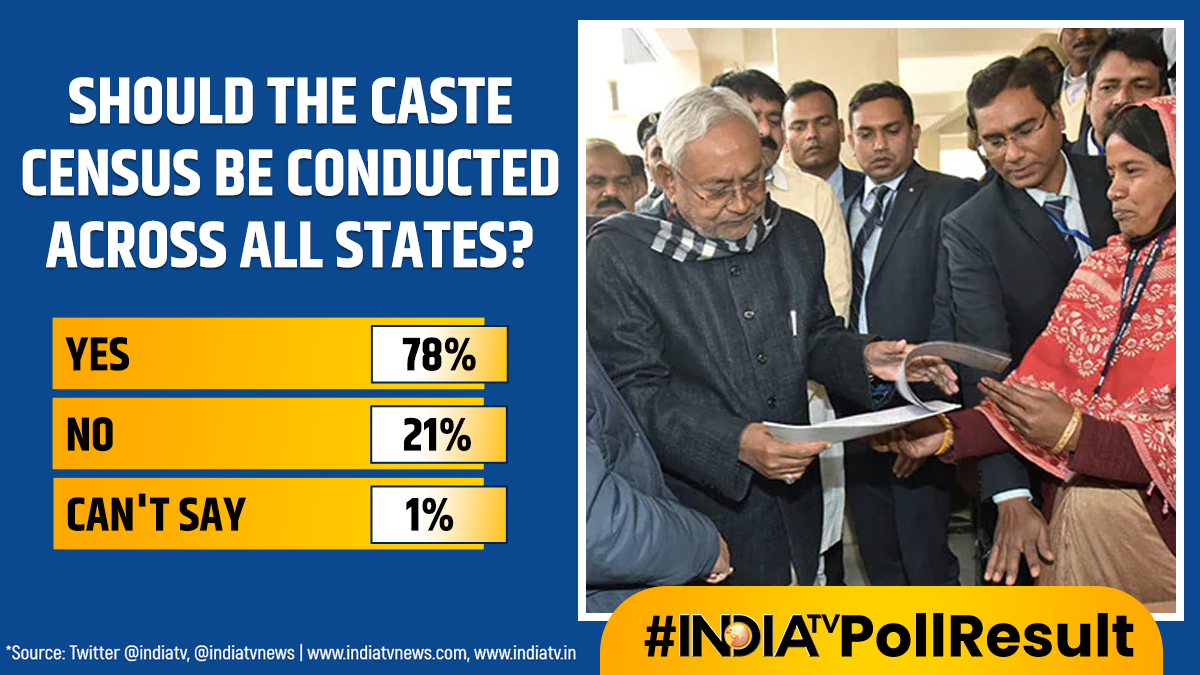
A Tool for Transformation?
Beyond the headline debate, a caste census is seen by its advocates as a tool with far-reaching implications for social justice policy. A detailed article from the Oxford Human Rights Hub outlines several ways the data could be used to recalibrate and expand affirmative action.
How a Caste Census Could Transform India's Reservation Policies
This article provides a structured overview of the policy arguments in favor of a caste census, connecting it to various ongoing debates about reservation.
Please read the article from the beginning to understand the broader context. Then, focus on the four key ways the census data could be transformative: Sub-categorisation within OBCs: This relates directly to the Rohini Commission we discussed in the last lesson. Read the first point. Sub-classification within SCs/STs: Note how the data could help target benefits to the most marginalized within these groups, following a recent Supreme Court judgment. Read the second point. Arbitrating new reservation claims: The data would provide an empirical basis to evaluate demands from powerful groups like Marathas and Jats, as well as Dalit-Christians and Muslims. This section also touches upon the 50% cap. Read the third point. Private sector reservations: The census could reveal the extent of upper-caste dominance in the private sector, fueling demands to extend reservations there. Read the fourth point.
Politically Explosive: The "Mandal 2.0" Fear
The arguments above explain the demand for a census. Now we turn to why its potential findings are "politically explosive." The fear haunting the political establishment, particularly the BJP, is that a caste census could unleash a "Mandal 2.0"—a reference to the massive political and social upheaval that followed the implementation of the Mandal Commission report in 1990.
The political logic is straightforward and creates a severe dilemma, or a "catch-22," for the ruling party.
Fear of Mandal 2.0 Makes Modi Govt Jittery Over Caste Census Demand | OBC | Bihar | Opposition
This final clip from the HW News video masterfully explains the political tightrope the BJP must walk on this issue.
Please watch the segment from this timestamp titled "what is exactly bjp's catch-22 situation". It lays out the two potential scenarios and their political consequences, which is the key to understanding why the issue is so volatile.
To summarize the political trap:
- Scenario 1: OBC population is found to be significantly higher than their 27% quota. This is the widely expected outcome. This would arm opposition parties with data to demand a proportional increase in the OBC reservation quota. Acceding to this would risk alienating the BJP's core upper-caste voters.
- Scenario 2: OBC population is found to be lower than current estimates. This is highly unlikely, but if it were the case, any move to reduce the OBC quota would enrage the vast OBC communities that now form a crucial part of the BJP's winning social coalition.
The recent Bihar Caste Survey provides a real-world preview of Scenario 1.
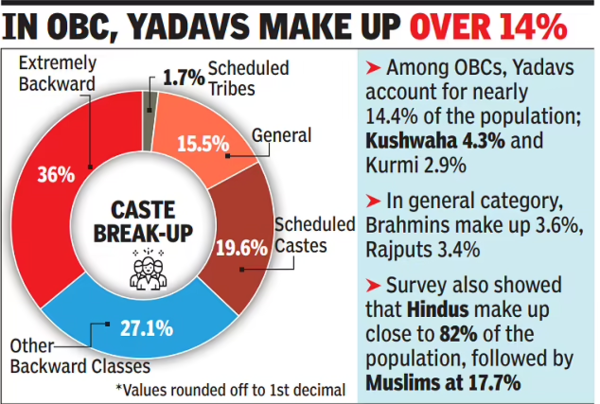
Faced with these numbers, the opposition's slogan became "Jitni abadi, utna haq" (Rights proportional to population). The political pressure was so immense that the Bihar government, including the BJP at the time, unanimously passed legislation to increase total reservations to 65%.
This action immediately ran into a constitutional wall: the 50% ceiling on total reservations set by the Supreme Court in the landmark Indra Sawhney v. Union of India (1992) case. The Patna High Court subsequently struck down Bihar's new reservation law, perfectly illustrating the conflict.
A national caste census would replicate this exact dilemma on a national scale. It would force a direct confrontation between the political demand for proportionate representation and the judiciary's 50% cap. This legal and political minefield is why the data is considered so explosive. The following article from the Harvard Undergraduate Law Review delves into this very conflict.
The Bihar Caste Census: Demystifying Its Role in the Constitutional ...
This article analyzes the legal fallout from the Bihar survey, focusing on the core constitutional tension that a national census would expose. While legally detailed, it directly addresses the central question of why the census is so contentious for reservation policy.
First, read Part IV, "Reassessing The Legitimacy Of Reservation Ceilings." Focus on the core critique that the 50% limit is an arbitrary threshold with no firm basis in the Constitution, and that it conflicts with the principle of substantive equality. Next, move to Part V, "Reading Adequate Representation as Proportional Representation under Article 16(4)." This section argues that the constitutional goal should be proportionality. Pay attention to the discussion of the original intent behind the wording in the Constitution and the argument that limiting reservations below a community's population size goes against this intent.
The analysis in the Harvard article reveals the true depth of the political challenge. A caste census wouldn't just be a data-collection exercise; it would provide the political ammunition to challenge a three-decade-old legal precedent and potentially rewrite the rules of reservation in India.
Conclusion
The demand for a national caste census has emerged as a major political fault line, representing a direct challenge to the BJP's electoral coalition and a potent counter-narrative for the opposition.
Key Takeaways:
- The Rationale: The demand is fundamentally about replacing outdated 1931 census data with contemporary, empirical evidence to design and justify caste-based affirmative action policies.
- The Core Debate: It pits the need for evidence-based policymaking against the fear of reinforcing caste divisions and causing social friction.
- Politically Explosive Nature: The findings are volatile because they are widely expected to show an OBC population that justifies reservations far beyond the Supreme Court's 50% ceiling.
- The Inevitable Conflict: This sets up a direct clash between the political demand for proportionate representation ("Jitni abadi, utna haq") and the established legal framework of the Indra Sawhney judgment, creating an immense political and constitutional dilemma.
In our next lesson, we will explore another layer of this complex issue: the growing demand for reservations from historically dominant and powerful caste groups like the Jats, Marathas, and Patidars. We will analyze the structural drivers behind these agitations and the unique constitutional dilemmas they pose.