Hello! Welcome back to your GTM course.
In our last lesson, we delved into the human side of B2B sales by mapping the buying committee. You learned how to identify the key players—from the Champion to the Economic Buyer—and understood that the decision-making process is a complex, looping journey.
Today, we'll build directly on that knowledge. Knowing who you're selling to is essential, and now we must master who you're selling against. This lesson is dedicated to helping you analyze the competitive landscape for study abroad preparation to identify your platform's key differentiators.
For a sales leader aiming for a 5 crore revenue target, this isn't just an academic exercise. A clear understanding of your unique strengths is the foundation of every winning sales pitch, marketing campaign, and strategic decision you'll make. It’s how you justify your price, persuade stakeholders, and ultimately, win deals.
1. Understanding the Competitive Landscape
Competitive analysis is the process of systematically identifying your competitors and evaluating their strategies to determine their strengths and weaknesses relative to your own business. It helps you find gaps in the market and carve out a unique space for your platform.
Let's start with a short video that defines the concept and its importance.
How To Conduct a Competitive Analysis (FREE Template)
This clip from HubSpot Marketing's video, 'How To Conduct a Competitive Analysis,' provides a concise introduction to what a competitive analysis is and why it's a critical business practice.
Watch the first minute of the video (from 00:00 to 01:02). Focus on the core purpose of competitive analysis: understanding products, sales, and marketing tactics to uncover your unique value.
2. Identifying Your Competitors: Direct vs. Indirect
A thorough analysis begins with knowing who to analyze. Your competitors fall into two main categories.
- Direct Competitors: These are businesses offering a similar solution to the same target market. For your e-learning platform, this would be other companies selling B2B test prep and language-learning platforms to study abroad consultancies and educational institutions.
- Indirect Competitors: These are businesses that solve the same core problem (preparing students for studying abroad) but with a different solution. This could include traditional offline coaching centers, individual tutors hired by consultancies, or even free resources like YouTube and prep books that institutions might curate themselves.
The following video segment explains this distinction clearly.
How To Conduct a Competitive Analysis (FREE Template)
Let's continue with the HubSpot video to see clear examples of direct and indirect competitors. This will help you map out the full competitive environment for your platform.
Watch from 01:02 to 01:40. Think about who fits these categories for your business.
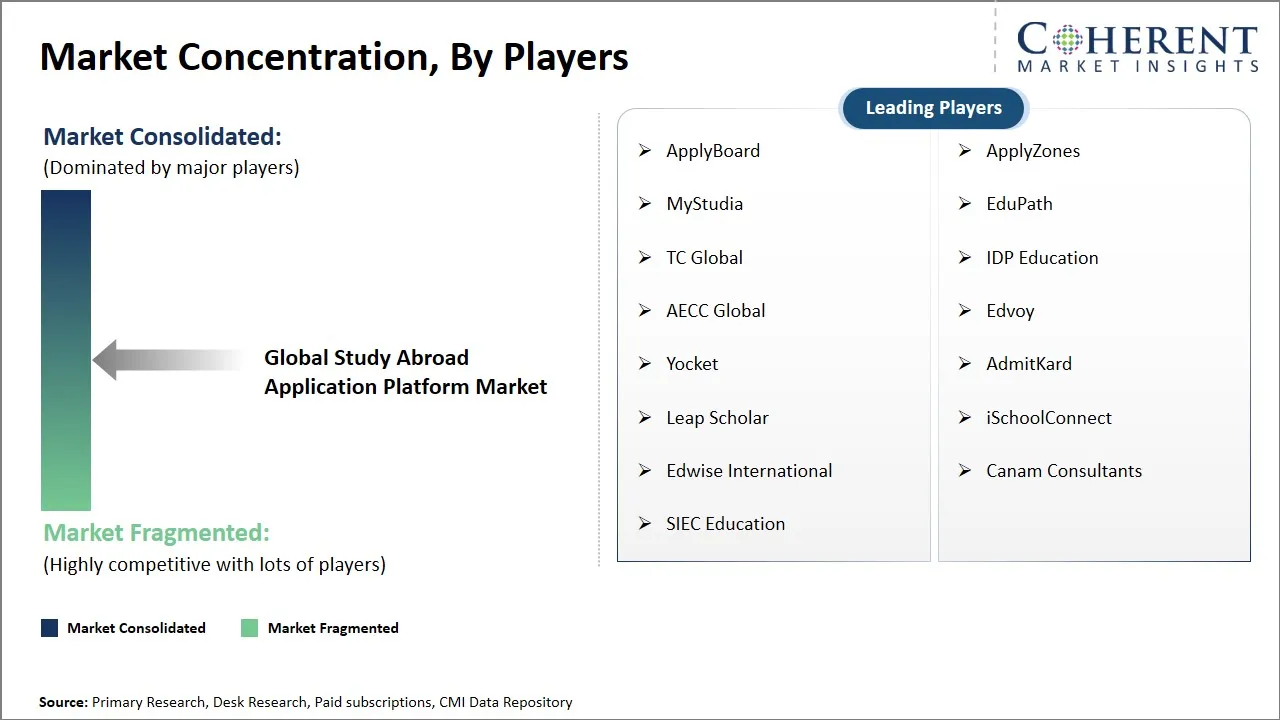
To give you a starting point for identifying direct competitors, this market analysis image lists some key players in the global "study abroad application platform" space. While not all may be direct B2B competitors, many will be, and it's a valuable list for your initial research.
3. How to Analyze Your Competitors: A Practical Toolkit
Once you have a list of competitors, you need a systematic way to research them. Your goal is to go beyond a superficial look at their homepage and dig into their strategy. The following resource is an excellent, highly practical guide for this intelligence-gathering phase.
B2B Marketing Practice Guide on Competitive Positioning ...
The article 'B2B Marketing Practice Guide on Competitive Positioning...' provides a structured, multi-phase approach to analysis. We'll focus on the competitor analysis phase.
Skim the sections 'Phase 3: Competitive Landscape Analysis' and 'Step 2: Competitor Analysis' under the Market Research section. Focus on the sub-steps listed: identifying competitors, analyzing strategies (websites, marketing materials, pricing), and benchmarking (feature/price comparison, market positioning). This will give you a high-level framework.
To put this framework into action, let's explore some powerful, low-cost methods for gathering data on your competitors.
Competitor Analysis Framework: The 5 Step Guide You MUST Follow
In his video, 'Competitor Analysis Framework,' SaaS expert TK Kader offers a five-step, hands-on guide to competitor research. This is a very tactical approach that you can start using immediately.
Watch the sections covering the five practical steps. Note down the tools and techniques he recommends for each step: LinkedIn Analysis: (04:32 - 06:55) Facebook Ad Transparency: (06:55 - 08:56) Ahrefs for SEO/Content: (09:01 - 10:35) Website Deep Dive: (12:46 - 15:26) G2 Crowd for Reviews: (16:11 - 17:02)
Your final output from this research can be a competitive analysis grid. This organizes your findings and makes it easy to spot patterns and gaps.

4. From Analysis to Differentiation: Finding Your Unique Edge
The ultimate goal of competitive analysis is to answer the question: "Why should a customer choose us?" The answer lies in your differentiators—the unique features, services, or attributes that set you apart in a way that matters to your customers.
The following resource provides an excellent breakdown of what differentiators are and the different forms they can take.
Key Differentiators That Drive B2B Growth in 2025
The article 'Key Differentiators That Drive B2B Growth' by Martal.ca is a superb guide to identifying and leveraging your unique strengths. It clearly defines what makes a good differentiator.
Please read two sections from this article: 'Unique Differentiators: Types of Company Differentiators': This will give you a menu of six potential areas where your platform can stand out (Product, Service, Price, Brand, Operations, Niche Focus). 'How to Identify Your Company’s Key Differentiators (Step-by-Step)': This provides a practical, actionable process for uncovering your differentiators.
As you read, think about your platform in the context of these six types of differentiators:
- Product: Do you have superior technology for mock test evaluation? A wider range of courses?
- Service: Do you offer dedicated onboarding and training for the teachers at the consultancies you partner with? Is your support response time faster?
- Price: Can you offer a more flexible pricing model (e.g., pay-per-student vs. a large annual license) that better suits smaller consultancies?
- Brand: Can you build a reputation for having students who achieve the highest test scores?
- Operational: Is your platform faster to set up and deploy for a new institutional partner?
- Niche Focus: Do you specialize in a specific segment, like preparation for German universities or serving only high-end boutique consultancies?
Remember the buying committee from our last lesson. Your differentiators must be framed to appeal to different stakeholders.
- An Economic Buyer (the owner of a consultancy) may be most compelled by a Price differentiator (better ROI) or an Operational one (less internal resource cost).
- An End User (a teacher) will care more about a Product differentiator (saves them time on grading) or a Service one (great training and support).
Test your understanding!
Imagine a direct competitor is known for being the cheapest option on the market. Instead of trying to compete on price, you decide to focus on a Service differentiator. What could that look like for your B2B e-learning platform? Give two specific examples.
Show answer
Here are a few possible examples of a Service differentiator:
- Dedicated Onboarding Specialist: Assigning a specialist to each new partner institution to train their teachers, help set up the first batch of students, and ensure a smooth rollout. This contrasts with a "self-serve" or "documentation-only" approach from a low-cost competitor.
- 24/7 Teacher Support Hotline: Offering immediate technical and pedagogical support to teachers using the platform, ensuring their classes are never disrupted by technical issues.
- Quarterly Business Reviews: Proactively meeting with the leadership of your partner institutions to review student performance data, suggest improvements, and align with their business goals, acting as a strategic partner rather than just a software vendor.
Conclusion
You now have a framework and a practical toolkit to analyze your competition and, most importantly, begin identifying what makes your platform uniquely valuable.
Key Takeaways:
- Analyze Systematically: Use a structured approach to research both direct and indirect competitors across their products, pricing, marketing, and sales strategies.
- Use the Right Tools: Leverage public information on LinkedIn, ad libraries, SEO tools, and review sites to gather deep insights.
- Focus on Differentiation: The goal is not just to collect data, but to find the gaps in the market and identify where your platform can uniquely win.
- Differentiators Have Many Forms: Your unique advantage could be in your product, your service, your pricing model, or your specialized focus.
In our next lesson, we will develop a clear positioning statement that communicates your unique value. The differentiators you uncover from this analysis will be the essential raw material for crafting a powerful positioning statement that will guide your entire sales and marketing messaging.