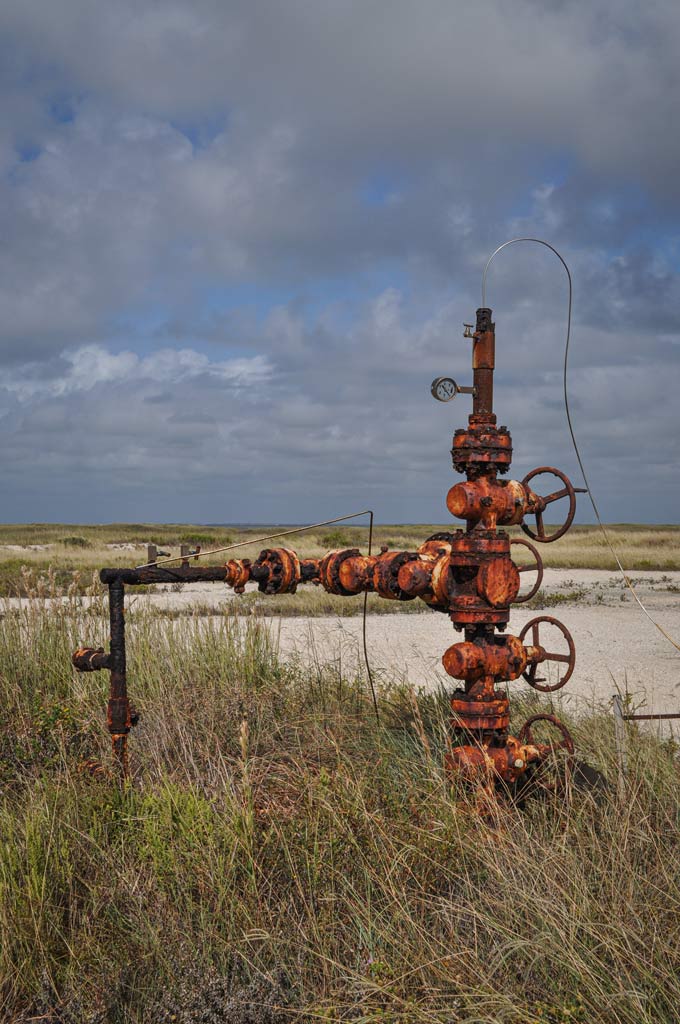
Welcome back. In the pipeline lesson, a permit, a safety responsibility, and a right to use land turned out to be different things. Nonproducing wells call for the same care with labels. A well can be idle without being orphaned, and a rusted wellhead cannot tell you who is responsible for plugging it.
This lesson gives you a way to distinguish inactive, abandoned, and orphaned wells using reported operating history and operator status. That distinction matters when interpreting Railroad Commission of Texas (RRC) records or reports about wells that have stopped producing.
Inactive describes operating history
Start with what has been reported about the well, not how it looks. In RRC guidance, a well that reaches 12 consecutive months of no reported activity becomes subject to the plugging requirements of Statewide Rule 14(b)(2), unless the Commission approves a plugging extension under Statewide Rule 15. An operator may have a reason to keep a well shut in and seek an extension rather than plug it immediately.
inactive-wells-statewide-rule-15-compliance-and-organization ...
Read this RRC presentation for the inactivity threshold and the conditions under which an operator can obtain a plugging extension.
Find the slide headed “Definition of an Inactive Well,” near the slides labeled 4–5. Read the definition. Then, on the following slide headed “Inactive Well Extension Requirements,” read the operator requirements. Focus on the difference between a well becoming inactive and an operator receiving permission to postpone plugging it; you can leave the later form-filling instructions for another purpose.
A well that stopped producing six months ago may be described conversationally as idle or shut in. That alone does not establish that it has reached the RRC guidance’s 12-month inactivity threshold. Conversely, once a well has been inactive long enough, an approved plugging extension does not make its inactivity disappear. It affects whether continued nonproduction is permitted without plugging at that point.
Keep inactive and noncompliant separate, too. An inactive well with a valid extension can comply with RRC requirements. Another inactive well may lack a required extension and be out of compliance, even though an operator remains registered and financially responsible for it.
Abandoned describes a different concern
In ordinary use, an abandoned well suggests a well left behind rather than one temporarily shut in with a credible plan for its continued operation or proper closure. The term draws attention to whether the well has been properly dealt with, not merely to the number of months since it last produced.
Be careful about turning that description into a diagnosis from a photograph. Corrosion and weeds may justify investigation, but they do not establish the well’s reported activity, whether it was properly plugged, or whether an operator still holds responsibility. Equally, 12 months of inactivity is not, by itself, proof of abandonment. An operator may have a current organization report, a continuing right to operate, and an approved plugging extension.
The RRC’s reporting sometimes uses abandoned and orphaned together, but the two words do not supply the same information. To decide whether a well is orphaned under the Commission’s reporting definition, you need a further fact: whether an operator’s financial assurance backs it.
Orphaned adds the operator-and-assurance test
The RRC’s 2025 Oilfield Cleanup Program Annual Report defines an orphaned well as an inactive oil or gas well not backed by an operator’s financial assurance represented by a P-5. A P-5 is the operator’s Organization Report. The definition therefore requires you to look beyond the well’s production history to its current operator and assurance status.
2025 - The Railroad Commission of Texas
Read the RRC’s annual report to see how its inactive-well population differs from its orphan-well population—and why an inactive well without a plugging extension is not necessarily an orphan.
On report pp. 4–5, under “Background” and “Orphan Wells in Texas,” read the population explanation, including the definition of an orphaned well. Continue on p. 5 from the changing count. Finally, on p. 13, in “4. Number of Inactive Wells Not Currently in Compliance with Commission Rules, by District,” read the noncompliance explanation. Notice that this count includes wells regardless of whether the operator’s Organization Report is active or delinquent.
The report counted 156,531 inactive wells as of August 2025, of which 10,029 were orphaned under its definition. Those figures make the distinction concrete: most inactive wells were not in the reported orphan category. The report also notes that the orphan count changes as operator reports and well statuses change. Treat such counts as dated snapshots, not permanent attributes of particular wells.
Nor does noncompliant mean orphaned. The report’s inactive-well noncompliance count concerns wells beyond the initial shut-in period without a plugging extension; it expressly includes wells whether the operator’s Organization Report is active or delinquent. A well can therefore be inactive and noncompliant while still having an operator whose assurance backs it. A previous operator’s bankruptcy or a well’s alarming appearance is reason to check the records, not a substitute for checking them.
Classify the well in two passes
When you encounter a nonproducing well, make two passes through the evidence:
- Establish the well’s history and condition. How long has it had no reported activity? Is it temporarily shut in, covered by a plugging extension, or already properly plugged? Do not assign the RRC inactivity threshold from a single observation of no production.
- Establish who backs it. Identify the operator of record and whether the well is backed by that operator’s financial assurance represented by a P-5. Do not infer this from the age of the equipment or simply from knowing the name of a past operator.
These facts support different conclusions. A well with 18 months of no reported activity, a current operator’s assurance, and an approved extension is inactive, but not an orphan under the report’s definition; its approved extension also matters to compliance. If the same well lacks a required extension, it may be inactive and noncompliant, but the current assurance still prevents you from calling it orphaned on that basis alone.
Now suppose records show a well has been inactive for years and is not backed by an operator’s P-5 financial assurance. It meets the report’s orphaned definition. Its surface condition and any leakage still need assessment; orphaned does not itself mean leaking. Finally, if you find an old, unrecorded-looking wellhead with no reliable operating history, describe it as a suspected abandoned well requiring investigation rather than declaring its formal orphan status from appearance alone.
A properly plugged well is another important boundary case. Its history may include years of inactivity, but it should not automatically be counted as an unplugged orphan awaiting routine plugging. If a supposedly plugged well shows signs of a problem, its condition and records require investigation.
Key takeaways
Inactive concerns reported activity over time. Abandoned raises the question of whether a well has been left without proper continuation or closure; it cannot be established from rust or inactivity alone. Under the RRC report’s definition, orphaned adds a specific test: the inactive well is not backed by an operator’s P-5 financial assurance. Compliance with plugging-extension requirements is a further, separate question.
The next lesson follows the consequence of that distinction: what the RRC does when operators fail to meet plugging obligations, how it prioritizes hazards, and what resources support state-managed plugging.