Hello! Welcome back to the final module of your course.
In our previous lesson, we assembled the complete architecture for your personal trading plan. You created a formal document outlining your goals, risk management doctrine, and daily routines. This was a crucial step in transforming you from a student of the markets into a professional operator with a defined business plan.
Today, we will address the heart of that plan. The learning outcome for this lesson is to define the specific ICT setups you will specialize in. You've built the framework for your "Playbook"; now it's time to choose the actual plays. A key principle of professional trading is mastery through specialization. Instead of trying to trade every pattern you see, the goal is to become an expert at executing 1-3 high-probability models flawlessly.
We will explore a menu of common ICT setups and then take a deeper look at two powerful models you've expressed interest in: the Silver Bullet and Candle Range Theory (CRT). By the end of this lesson, you will be equipped to make an informed decision about which setups you will master for both your manual trading and, eventually, your automated strategies.
1. A Survey of ICT Trading Models
Before we specialize, it's helpful to understand the landscape of available ICT setups. Each model has its own logic, timeframe, and rhythm. The following video provides a concise and effective overview of several key strategies.
Every ICT Trading Strategy Explained in 13 Minutes!
The video 'Every ICT Trading Strategy Explained in 13 Minutes!' from the Smart Risk channel is an excellent starting point. It will give you a quick, high-level tour of the most common ICT models, which will help you understand how they differ and what they have in common.
Watch the entire video (approximately 13 minutes). As you watch, don't worry about memorizing every detail. Instead, focus on the core idea behind each model. Ask yourself: Is this a reversal or continuation pattern? Is it time-based? What are the main components (e.g., FVG, liquidity sweep, OTE)?
After watching, you can see that while all models use core ICT principles, they apply them in unique ways. Here is a brief comparison of some of the models covered to help you categorize them:
| Model Name | Core Idea | Typical Timeframe | Key Components |
|---|---|---|---|
| Silver Bullet | A time-specific scalping setup aiming for a quick move after a liquidity sweep. | Entry on 1M-5M during specific 1-hour windows. | Liquidity Sweep, FVG, Market Structure Shift (MSS) |
| Optimal Trade Entry (OTE) | Entering on a deep retracement of a price swing into a high-probability zone. | Any timeframe, often used on 1H/4H swings for entries on 5M/15M. | Fibonacci Levels (62%-79%), Premium/Discount, FVG/Order Block |
| Candle Range Theory (CRT) | Using a higher-timeframe candle's range to frame a bias for reversals. | Bias from HTF (1H, 4H, Daily), entry on LTF. | HTF Candle Range, Liquidity Sweep, LTF Confirmation |
| Power of Three (AMD) | Trading the "Distribution" phase after an "Accumulation" and "Manipulation" (fakeout). | Any timeframe, often seen on daily/intraday charts. | Consolidation (Accumulation), Liquidity Sweep (Manipulation) |
This comparison highlights that your choice of model directly impacts your trading day. A Silver Bullet trader is focused on specific hours, while an OTE trader might be watching for a setup to form over several hours or days.
2. Deep Dive 1: The Silver Bullet Strategy
The Silver Bullet is one of the most popular ICT models because it's a discrete, rule-based, time-dependent setup. This makes it an excellent candidate for a trading plan, as its conditions are clear and repeatable. It was specifically designed to find high-probability scalps during periods of high volatility.
To understand its mechanics in detail, we'll turn to a dedicated guide.
Master ICT Silver Bullet Strategy – 2025 Guide
The article 'Master ICT Silver Bullet Strategy – 2025 Guide' from InnerCircleTrader.net is a comprehensive resource that breaks down everything you need to know to trade this model.
Please read the following sections: 'What is ICT Silver Bullet Strategy?': Understand the core logic of trading between liquidity pools. 'ICT Silver Bullet Times': Memorize the three specific one-hour windows. This is non-negotiable. 'Best Time Frame for ICT Silver Bullet Strategy': Note the multi-timeframe approach (e.g., 15M for bias, 1M-5M for entry). 'ICT Silver Bullet Strategy Example': Follow the chart walkthrough to see the theory applied step-by-step.
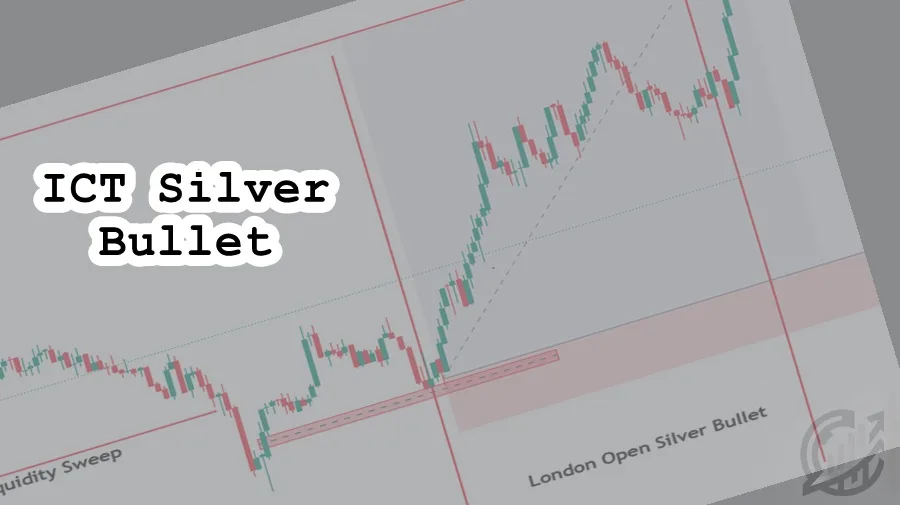
Playbook Entry: The Silver Bullet
Based on this, here is a template you can adapt for your trading plan if you choose to specialize in the Silver Bullet.
- SETUP: New York AM Silver Bullet
- Narrative: During the 10:00-11:00 AM EST window, I anticipate a sweep of a key liquidity level (e.g., Asian session high/low, previous day's high/low). After the sweep, I will look for a rapid shift in market structure on a lower timeframe and enter on a newly formed FVG, targeting the opposing liquidity pool.
- Analysis Checklist (5M/15M):
- Is it between 10:00 AM and 11:00 AM EST?
- Have I identified the nearest significant Buy-Side Liquidity (BSL) and Sell-Side Liquidity (SSL)?
- Has price swept one of these liquidity levels?
- Execution Checklist (1M):
4. [ ] Has a Market Structure Shift (MSS) or Change of Character (ChoCH) occurred after the liquidity sweep, signaling a reversal?
5. [ ] Has this move created a clean Fair Value Gap (FVG)?
6. [ ] Has price retraced into this FVG?
7. [ ] Is my stop loss placed logically above/below the swing that caused the MSS?
8. [ ] Does the trade offer at least a 1.5R target to the opposing liquidity pool?
9. [ ] Position size is calculated for max 1% risk.
3. Deep Dive 2: Candle Range Theory (CRT)
Candle Range Theory is less of a standalone entry model and more of a sophisticated framework for establishing a higher-timeframe directional bias. It's about reading the story of a single candle to predict the market's next move. Given your interest in this concept, understanding how to integrate it as a confluence factor is key.

Let's watch a trader explain how he integrates CRT into his strategy.
How I Use ICT Candle Range Theory (Complete Guide)
In this 'How I Use ICT Candle Range Theory (Complete Guide)' video, trader Justin Werlein gives a masterful explanation of CRT. He emphasizes its role as a confluence tool to build conviction, especially around key times like the 10:00 AM NY open.
Focus on these key segments: The Core Concept (02:48 - 05:02): Pay close attention to how he describes the three-candle pattern and the expected reaction after the middle candle sweeps liquidity but closes back inside the range. Using CRT as Confluence (05:02 - 08:17): This is the most important part. Notice how he's not trading CRT in isolation. He's layering it with FVGs, SMT divergence, and liquidity grabs to build a high-probability idea. Timing with CRT (13:53 - 17:01): Understand the importance of the 10:00 AM open, where the 1H and 4H candles close/open, often providing a CRT setup that frames the rest of the session.
To solidify the rules for bullish and bearish CRT models, the following text is a useful supplement.
Candle Range Theory (Explained) – CRT Trading Guide
The article 'Candle Range Theory (Explained) – CRT Trading Guide' by Writofinance provides a structured breakdown of the specific entry models for CRT.
Read the sections 'CRT Bullish Model' and 'CRT Bearish Model'. These sections provide clear, step-by-step rules for identifying and trading both long and short CRT setups, including the two entry techniques (candlestick confirmation vs. ICT market structure shift).
Test your understanding!
You are watching the 4-hour chart. A candle sweeps the high of the previous 4H candle but then closes below that previous high, forming a large upper wick. According to Candle Range Theory, what is the initial bias, and what is the primary target?
Show answer
The initial bias is bearish. The sweep and failure to close higher indicates a rejection and a potential reversal. The primary target would be the equilibrium (50% level) of the first candle's range, and the secondary, higher-probability target would be the low of that first candle (the opposing side of the range).
Playbook Entry: CRT Confirmation
Here is how you might structure a playbook entry that uses CRT for bias.
- SETUP: 4H CRT Bias with 15M OTE Entry
- Narrative: I am using the 4H chart to establish a directional bias via Candle Range Theory. After a 4H candle sweeps a previous high/low and closes back within the range, I will anticipate a move to the opposing side of the range. I will then look for a lower-timeframe entry that aligns with this bias.
- HTF Analysis Checklist (4H):
- Has the current (or most recent) 4H candle swept the high or low of the previous 4H candle?
- Did it close back inside the range of that previous candle, confirming a failed breakout?
- Does this setup occur at a key HTF level (e.g., daily order block, weekly FVG) for added confluence?
- LTF Execution Checklist (15M):
4. [ ] Aligned with the 4H CRT bias, has price on the 15M chart formed a clear impulse and is now retracing?
5. [ ] Has price pulled back into a Discount zone (for longs) or Premium zone (for shorts)?
6. [ ] Is there a confluence of an OTE (62%-79% Fib level) and a 15M FVG?
7. [ ] Is my stop loss placed logically beyond the invalidation point of the 15M retracement swing?
8. [ ] Does the trade offer at least a 2R target towards the opposing 4H candle range liquidity?
4. Your Choice, Your Specialization
You now have a detailed look at two powerful, yet distinct, ICT models. The Silver Bullet is a time-focused scalping strategy. CRT is a broader framework for generating a directional bias. Many traders combine concepts, for example, by waiting for a CRT to form on the 1H chart during a Silver Bullet window to add extra conviction.
The final task for this lesson is for you to make a choice. Review the models we've discussed and any others from the overview video.
Action Item:
- Select 1 to 3 setups you wish to specialize in.
- Open the Trading Plan document you created in the last lesson.
- Go to the section "My ICT Playbook."
- For each setup you've chosen, write a complete entry using the templates above as a guide. Be precise, be specific, and be honest about what you can execute under pressure.
This decision is the cornerstone of your trading career. Mastery requires focus. Choose the setups that resonate most with your personality and schedule, and commit to mastering their execution.
Conclusion
In this lesson, you have moved from having a generic plan to defining the specific, actionable strategies you will execute in the market. This is a significant step towards becoming a systematic, disciplined trader.
Key Takeaways:
- Professional traders specialize in a small number of setups they have mastered.
- The Silver Bullet is a time-based scalping model that looks for a liquidity sweep and reversal within a specific 1-hour window.
- Candle Range Theory (CRT) is a powerful confluence tool used to establish a higher-timeframe bias by analyzing how price interacts with a previous candle's range.
- Your chosen setups must be documented with strict, non-negotiable checklists in your trading plan.
Preview of the Next Lesson:
With your manual trading plays now clearly defined, our next lesson will bridge the gap to your goal of automation. The learning outcome will be to outline the criteria for using automated scripts for signal generation versus analysis. We will look at the checklists you just created and ask: Which of these steps are repetitive, rule-based tasks that a computer could perform for you? This is where your journey into algorithmic trading truly begins.