Hello! Welcome to the next lesson in your journey to mastering ICT trading.
In our last session, we focused on pre-trade analysis, specifically how to evaluate a setup's quality using the Risk-to-Reward (R:R) ratio. You learned that defining your risk and potential reward before you enter is crucial for filtering out low-quality trades. Now, we move from planning the trade to managing it. What do you do once the trade is live and price starts moving?
This lesson addresses the learning outcome: Develop rules for managing an open position (e.g., moving stop loss to breakeven). This is where discipline truly pays off. Having a clear set of rules for how you'll manage a winning trade prevents emotional decisions, protects your capital, and helps you systematically secure profits. For your goal of building trading bots, these rules are not just guidelines; they are the explicit logic your algorithm will follow.
The Trader's Dilemma: When to Adjust Your Stop Loss
Your initial stop loss is sacred—it's placed at the level where your trade idea is proven wrong. You should never move it further away. However, as a trade moves in your favor, you're faced with a new set of decisions:
- Do you lock in some profit?
- Do you reduce your risk?
- Do you give the trade room to reach its final target?
There are several systematic approaches within the ICT framework to answer these questions. We'll explore two primary, rule-based methods for managing your stop loss once a trade is in profit.
Approach 1: The Mechanical R-Multiple Method
This approach uses your initial risk (the "R" from your R:R calculation) as the unit of measurement for managing the trade. It is a rigid, objective system that is very well-suited for automation because it doesn't require subjective interpretation of price action.
To get the specific rules for this method, let's turn to a video that explains ICT's perspective on the topic.
ICT Explains how to manage your stop loss correctly and when to go break even.
This video, 'ICT Explains how to manage your stop loss correctly', provides a clear, rule-based framework for when to adjust your stop loss based on how far the trade has moved in your favor.
Please watch from 02:44 to 03:51. Pay close attention to the specific multiples of risk he mentions as triggers for adjusting your stop.
As the video outlines, the rules are simple and numeric:
- Do Nothing Initially: Until the trade moves significantly in your favor, you do not touch your stop loss. You must accept the initial risk you defined. Many traders make the mistake of moving their stop to breakeven too early, only to get stopped out on a minor retracement before the real move happens.
- First Adjustment (Risk Reduction): When price has moved 1.5 times your initial risk (1.5R) in your favor, you can consider reducing your risk. A common practice is to move your stop to the halfway point, cutting your initial risk by 50%.
- Second Adjustment (Go to Breakeven): When price has moved 2 times your initial risk (2R) in your favor, you move your stop loss to your entry price. At this point, you have a "risk-free" trade, with the worst-case outcome being a scratch trade (excluding commissions/slippage).
This method provides a clear, unemotional path for managing a trade. As you develop your trading bot, these rules can be translated directly into code.
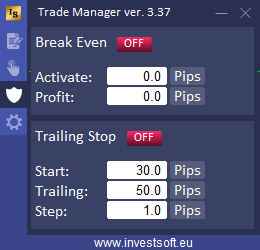
Approach 2: The Dynamic Structure-Based Method (Trailing Stop)
The second approach is more dynamic and adaptive. Instead of using fixed R-multiples, you let the market's own structure tell you where to move your stop. The core idea is to trail your stop loss behind protected swing points as the trend progresses.
This method excels at letting winning trades run as long as possible during strong, sustained moves.
Stop Losses, Placement & Trailing - ICT Concepts
The video 'Stop Losses, Placement & Trailing' demonstrates this structural approach. It shows how to move your stop only after the market has confirmed its intention to continue the trend by breaking structure.
Watch from 01:27 to 02:16. Focus on the core rule: you only move your stop after structure has been broken in the direction of your trade.
The rules for this approach are as follows:
- Identify a Break of Structure (BOS):
- In a long trade, you wait for price to break a prior swing high.
- In a short trade, you wait for price to break a prior swing low.
- Adjust the Stop Loss: Once a BOS has occurred, you can move your stop loss to just below the most recent swing low (for a long) or just above the most recent swing high (for a short). This new swing point is now considered "protected."
- Repeat: You continue this process, trailing your stop behind each new protected swing point after each subsequent break of structure.
Your trade remains open as long as the market structure is respected and ends when price finally reverses and takes out your trailed stop.

Integrating Partial Profits and Breakeven
Both of these methods can be combined with a strategy of taking partial profits. Taking partials is the act of closing a portion of your position to secure some gains while leaving the rest to potentially capture a larger move.
A very common and robust strategy combines these ideas:
- Define Targets: Identify your primary target (Target 1) and secondary target (Target 2) based on liquidity pools, as discussed in a previous lesson.
- Take Partial Profit: When price hits Target 1, close a portion of your position (e.g., 50%).
- Move to Breakeven: At the same time you take partial profits, move your stop loss for the remaining position to your entry price.
This sequence is explicitly mentioned in the "ICT Trading Strategy" guide.
ICT Trading Strategy: Complete Inner Circle Trader Guide 2025
This article provides a concise summary of ICT trade management rules. Let's focus on the section that lays out this combined approach.
Read the four bullet points under the heading 'Trade Management'. Note the sequence: hit the first target, move stop to breakeven, and then trail the rest.
This hybrid model gives you the best of both worlds: you secure a guaranteed profit, remove all risk from the remainder of the trade, and still position yourself to profit from a larger move.
Test your understanding!
You enter a short trade on EUR/USD at 1.08500 with a stop loss at 1.08600 (10 pips of risk). Your final target is a liquidity pool at 1.08100.
Price drops to 1.08300. At this point, a 20-pip profit has been made (2R). According to the mechanical R-Multiple rule, what is your next action?
Next, price continues to drop, breaking a minor swing low, and a new lower-high is formed at 1.08350. According to the dynamic structure-based rule, where could you move your stop?
Show answer
-
Mechanical Rule: Since price has hit 2R in profit (20 pips), your rule is to move your stop loss to your entry price of 1.08500. You now have a risk-free trade.
-
Dynamic Structural Rule: After the break of the swing low, you can trail your stop to just above the new protected lower-high. You would move your stop loss down from the original 1.08600 to 1.08350. This locks in 15 pips of profit while still giving the trade room to move.
Conclusion
You now have a toolbox of objective, rule-based methods for managing your trades. The key is not to improvise during a live trade but to have your rules defined beforehand as part of your trading plan.
Key Takeaways:
- Trade management is a non-negotiable part of a trading plan. It dictates how you protect capital and realize profit.
- The Mechanical R-Multiple Method uses fixed profit levels (e.g., 2R) as a trigger to move your stop to breakeven. This is excellent for consistency and automation.
- The Dynamic Structure-Based Method uses breaks of structure to trail your stop behind protected swing points, allowing you to ride trends.
- A powerful hybrid approach is to take partial profits at a first target and move your stop to breakeven on the remaining position.
Preview for the Next Lesson:
We have now covered all the individual components of a trade, from initial analysis and risk calculation to in-trade management. In the next lesson, we will synthesize all this knowledge. You will learn to create a comprehensive pre-trade checklist combining all learned confluences, which will serve as the final, rigorous filter for every trade you consider taking.