Welcome back! In our last lesson, we built a Python script to automatically detect the ICT Silver Bullet setup. That script is excellent at answering the question, "When and where might a good trade opportunity appear?"
Now, we move to an equally important question: "How do I define my risk?" A trade signal is just an idea; a concrete trade plan requires knowing exactly where you'll get out if you're wrong.
This lesson marks the beginning of our module on Systematic Risk and Trade Management. Our learning outcome is to set a stop loss based on ICT invalidation levels, such as the swing high or swing low that anchors your trade idea. This is the foundation of protecting your capital and trading like a professional.
The Core Principle: Invalidation, Not Arbitrage
In retail trading, many traders place stop losses based on arbitrary rules, like a fixed number of pips or a percentage of the price. The ICT approach is fundamentally different. A stop loss is placed at a structural invalidation point—the specific price level where your original reason for taking the trade is proven wrong.
If you are bullish, you expect the market to make higher highs and higher lows. If the price breaks below the key swing low that started the upward move, your bullish thesis is invalidated. This is where your stop loss should be.
The article from Lux Algo provides a concise rule for this.
Market Structure Shifts (MSS) in ICT Trading
This article discusses risk management in the context of Market Structure Shifts (MSS). We will focus on the section that gives a clear, rule-based guideline for stop-loss placement.
Please read the subsection titled 'Building Robust Risk Management Systems'. Focus on the paragraph that begins 'For MSS trades, stop-loss placement should align with the market structure.' This provides the fundamental rule we will build on.
As the article states, the rule is simple and logical:
- For bullish setups, place the stop loss below the previous swing low.
- For bearish setups, place the stop loss above the previous swing high.
This swing point is your line in the sand.
The Protected Swing: Your Invalidation Level
In ICT, the key swing high or low that should not be violated if your trade idea is correct is often called a "protected swing". Understanding what makes a swing "protected" is key to identifying the correct invalidation level.
The following video provides an excellent deep dive into this concept. It will explain how these swings are formed and why they are considered protected.
Protected Swings – Understanding Trend and Invalidations
First, let's understand what a protected swing is. This video from TTrades, titled 'Protected Swings – Understanding Trend and Invalidations', explains the two primary ways these crucial structural points are formed.
Watch the first two sections of the video (up to around 04:37). Pay close attention to the conditions that create a protected swing: a liquidity sweep or a move from a Fair Value Gap, followed by a confirming candle close.
Now that you understand what a protected swing is, the next step is to connect it directly to stop-loss placement.
Stop Losses in Trading: Know When You're Wrong
This follow-up video, 'Stop Losses in Trading: Know When You're Wrong', makes the connection explicit. It shows how the protected swing becomes the logical place for your stop loss.
Watch the introduction (up to 01:08) where the concept is defined. Then, watch the detailed chart example from 02:08 to 06:23. Notice how the stop loss is placed on the initial protected low and then can be 'trailed' by identifying new, higher protected lows as the trend continues.
To summarize the key idea from the videos:
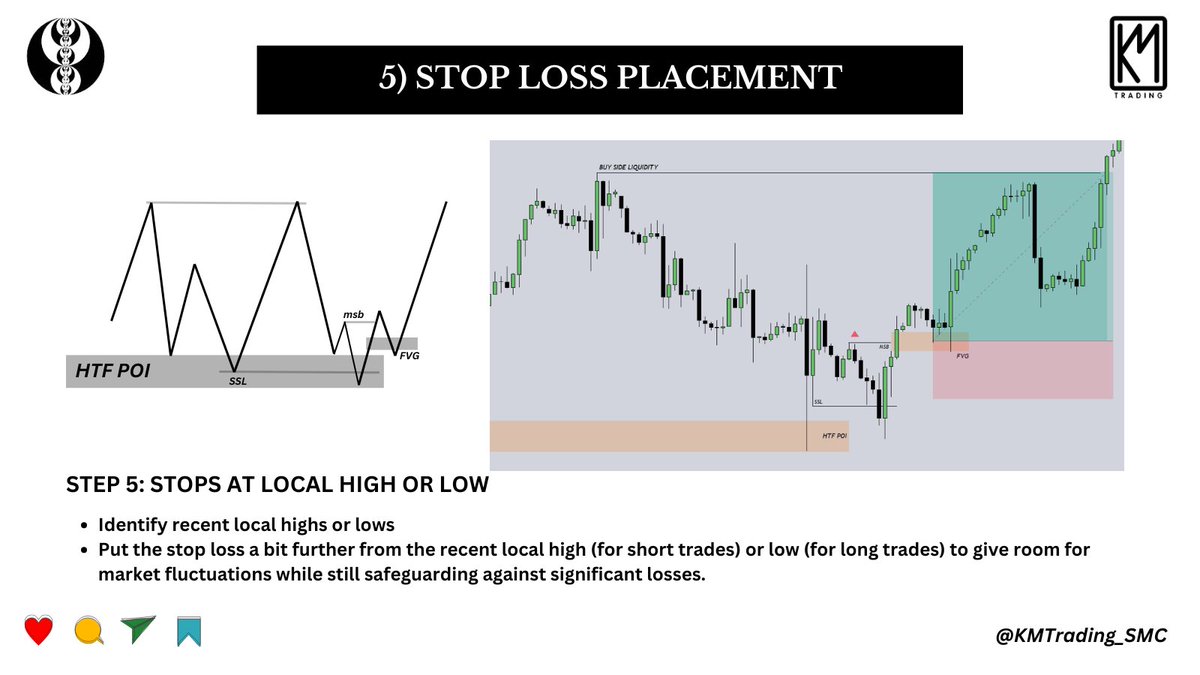
- A protected low is formed when price either sweeps sell-side liquidity or reacts from a discount area (like an FVG), and then displaces higher, closing above the down-close candles that made the low.
- If this low is truly protected, the market should not trade back down and break it if the bullish trend is to continue.
- Therefore, the logical invalidation point for a long trade is just below this protected low. The same logic applies in reverse for a protected high in a bearish scenario.
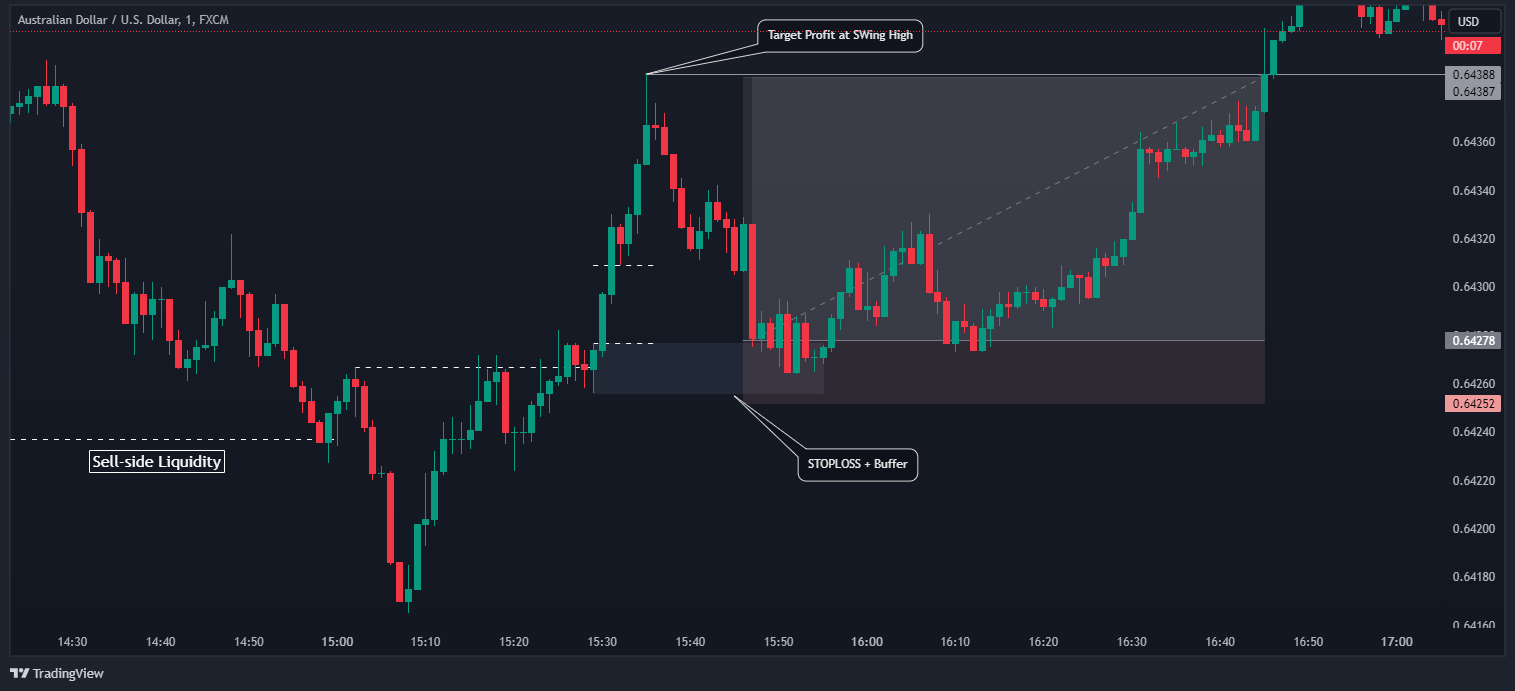
Visualizing Stop Loss Placement
Let's look at some clear chart examples to solidify this concept.
Application to Common ICT Setups
This principle applies across various ICT setups you've learned about.
Order Blocks
An order block is a primary example of a protected swing. The entire institutional move originates from that last opposing candle. If price trades through it, the reason for the trade is gone.
Order Block Trading Strategy: Complete ICT Guide for Prop...
This article on order block strategy reinforces the same rule for stop-loss placement in the context of trading from an order block.
Read the section 'Trading Order Blocks: Strategies and Techniques' and the subsection '1. Stop Loss Placement' under 'Risk Management for Order Block Traders'. Both explicitly state where to place your stop relative to the order block.
For a bullish order block, your stop loss goes just below the low of the order block. For a bearish order block, it goes just above the high.
The "Buffer" Zone
You may have noticed the term "buffer" in one of the images. In practice, traders often place their stop loss a few pips or ticks beyond the swing high/low. This buffer accounts for the broker's spread and minor price volatility that might otherwise "wick you out" of a good trade before it moves in your favor. The size of the buffer depends on the asset's volatility and the spread.
Test your understanding!
You are analyzing a EUR/USD 15-minute chart.
- Price sweeps below a significant old low at 1.07500.
- After the sweep, the price aggressively rallies and breaks the most recent swing high, confirming a bullish market structure shift.
- The lowest point reached during the liquidity sweep was 1.07450. This forms the new, protected swing low.
- Price then retraces slightly, presenting a long entry opportunity.
Where is the most logical place to set your stop loss for this long trade?
Show answer
The most logical place for the stop loss is just below 1.07450, potentially with a small buffer.
This level (1.07450) is the protected swing low. The entire bullish trade idea is based on the premise that the market has reversed after sweeping liquidity. If the price were to trade back down and break this low, the bullish thesis would be invalidated, and you would want to be out of the trade.
Conclusion
You've now learned the most fundamental rule of risk management in the ICT framework. Your stop loss isn't just a number; it's a strategic placement that defines the validity of your trade idea.
Key Takeaways:
- An ICT stop loss is placed at a structural invalidation level, not an arbitrary distance from your entry.
- This invalidation level is typically the protected swing high or low that defines your setup.
- A swing becomes "protected" after it creates a market structure shift, often initiated by a liquidity sweep or a reaction from a key price array like an FVG or Order Block.
- For a long trade, the stop goes below the protected low. For a short trade, it goes above the protected high.
Preview for the Next Lesson:
Knowing where to place your stop loss defines your risk in terms of price (pips, points, ticks). The next logical step is to determine your risk in monetary terms. In our next lesson, we will cover how to calculate the appropriate position size based on your account size and a predefined risk percentage (e.g., 1% per trade). This will connect your structural invalidation point to your actual trade execution.