In our previous lesson, we examined Claasen's Law, focusing on the diminishing returns that come from incrementally adding more technology to an existing system. We saw how both bra fitting and relationship management can reach a point where more tech adds more complexity than utility.
Today, we pivot from optimizing existing systems to embracing truly novel ones. This lesson explores Arthur C. Clarke's Three Laws, a powerful mental framework for navigating technological disruption and radical innovation. Your goal is to apply these laws to challenge expert dismissals of new lingerie technologies, advocate for purposeful experimentation in design and relationships, and demystify advanced techniques that can appear "magical" to outsiders.
Clarke's Three Laws: A Framework for Futurists
Arthur C. Clarke, the celebrated science fiction author and visionary, formulated three "laws" of prediction that serve as guiding principles for anyone working on the edge of innovation. While the previous lesson on Claasen's Law gives us a tool for quantitative evaluation, Clarke's Laws provide a qualitative mindset for dealing with the uncertainty of the truly new.
To begin, let's get a comprehensive overview of the three laws and their modern interpretation from a blog post by Daniel Becker.
Check your Ego, Push The Boundary and Reject the Magic.
This article provides an excellent modern analysis of Clarke's Three Laws, framing them as actionable behaviors for technologists and leaders dealing with rapid change, particularly in the context of AI.
Please read the entire article, from the introduction to the end. As you read, focus on the three core behaviors the author identifies: Informed Permissibility: Challenging the knee-jerk "impossible" from experts. Sanctioned Exploration: Intentionally probing the limits of what a new system can do. Demystification: Insisting on understanding the mechanics behind a "magical" output.
Now, let's dissect each law and apply it to your specific contexts.
Law 1: "When a distinguished but elderly scientist states that something is possible, he is almost certainly right. When he states that something is impossible, he is very probably wrong."
This law is a direct warning against what the article calls the "Failure of Nerve" and "Failure of Imagination." Experts, comfortable in their domain, often define the boundaries of the possible based on their past experience, making them uniquely vulnerable to dismissing disruptive ideas.
Application 1: Challenging Dogma in Lingerie Design
Imagine a veteran lingerie designer with decades of experience in cut-and-sew manufacturing. They are presented with a new technology: 3D printing for creating custom-fit, seamless garments.
Fashion tech company using 3D printing to create sustainable clothing
This NBC News segment explores a company, Variant 3D, that is using 3D printing to create sustainable, custom-fit clothing. It perfectly captures a technology that challenges the foundations of traditional apparel manufacturing.
Watch the video from the introduction of the problem to the end. Note the claims about zero-waste, digital scans for perfect sizing, and the vision of having these printers in every home.
The "distinguished but elderly scientist" in this scenario is our veteran designer. They might declare: "3D-printed bras are impossible. The material will never have the right stretch, recovery, and feel of woven fabric, and you can't create the complex support structures needed."
Clarke's First Law urges us to treat this declaration with extreme skepticism. The expert is judging the technology based on its current, nascent state, not its trajectory. Their argument is a classic "Failure of Imagination"—they cannot see how the technology could evolve to solve these problems. Your role as an innovator is not to argue, but to practice "Informed Permissibility": acknowledge the current limitations while betting on the rate of improvement.
Application 2: Challenging Relationship Orthodoxy
Consider a vee relationship (Anna, Bob, Charlie) where Bob, the husband, is the central "hinge." They seek guidance from a traditional relationship counselor trained exclusively in monogamous frameworks. The counselor, an expert in their field, states: "This arrangement is fundamentally unstable and impossible to maintain long-term. It's a symptom of avoidance and will inevitably fail. One relationship must be prioritized to the exclusion of the other."
This is a direct parallel to the elderly scientist. The counselor's model of a "possible" relationship structure is limited by their training and experience. They lack the imagination or nerve to conceive of a successful alternative paradigm. For the partners in the vee, Clarke's First Law serves as a validation of their own reality. It provides the intellectual framework to reject the expert's "impossibility" claim, recognizing it as a limitation of the expert's map, not the territory itself. They can proceed with confidence, knowing that expert pronouncements on the impossible are often the most unreliable.
Law 2: "The only way of discovering the limits of the possible is to venture a little way past them into the impossible."
This law is a call to action. It argues that progress doesn't come from theorizing, but from building, testing, and even failing. It's the principle of "Sanctioned Exploration."
Application 1: Experimenting with Morphing Fabrics
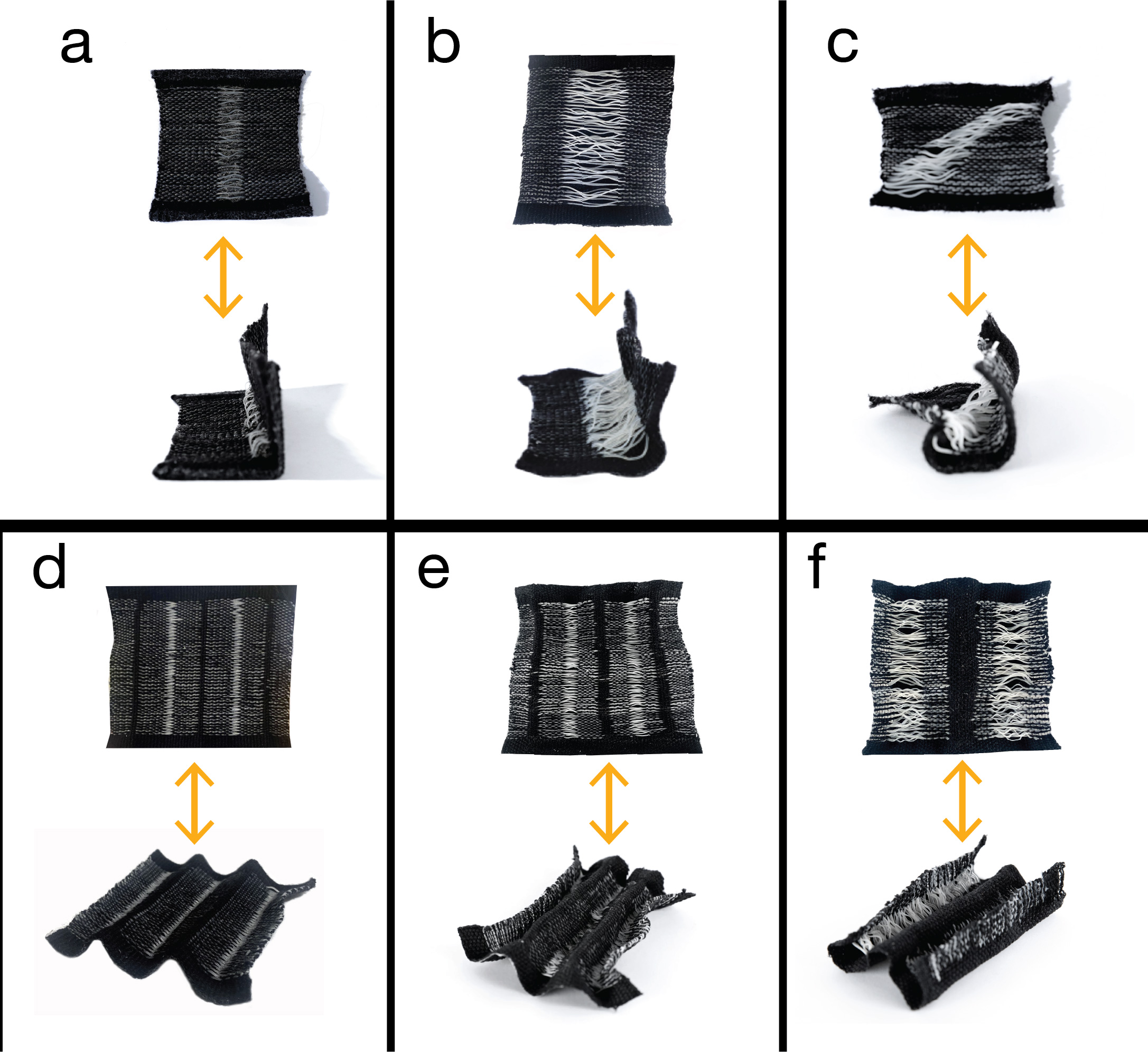
Let's look at a truly futuristic lingerie technology: shape-shifting fibers that can actuate in response to stimuli.
Shape-shifting fiber can produce morphing fabrics | MIT News
This MIT News article introduces "FibeRobo," a programmable fiber that contracts with temperature changes. It is a prime example of a technology that seems to be from the "impossible" column.
Read the first half of the article, focusing on what the fiber is (LCE), how it works (contracts with heat), and how it's made. Then, jump to the section describing the demonstration applications, particularly the adaptive sports bra and the dog's compression jacket.
A lingerie company could spend months in meetings debating whether FibeRobo could create a bra that provides more support during high-impact exercise. Clarke's Second Law says this is a waste of time. The only way to know is to try.
This means setting up a "safe-to-fail" experiment:
- Hypothesis: FibeRobo fibers, when embroidered into the band and straps of a sports bra, can contract in response to increased body heat during exercise, measurably increasing support.
- Experiment: Create a small budget to acquire the fiber and task a small team with creating a prototype.
- Measurement: Test the prototype on a user, measuring breast displacement and perceived support before and during exercise.
The outcome might be a failure—perhaps the contraction is too slow or too weak. But this "failure" is invaluable. It has discovered a limit of the possible. The team might conclude the tech is not right for sports bras, but perfect for a posture-correcting bra that provides gentle, sustained tension. You don't find the edge by imagining it; you find it by hitting it.
Application 2: Prototyping New Relationship Agreements
In the vee relationship, Anna expresses a desire for more unstructured, spontaneous time with Bob, while Bob's schedule with Anna and Charlie is meticulously planned to ensure fairness. The idea of introducing spontaneity feels "impossible" without disrupting the entire system and causing feelings of neglect.
Applying Clarke's Second Law means moving past theoretical debates and venturing into the "impossible" with a sanctioned exploration.
- Hypothesis: We can introduce one "floating" evening per week into Bob's schedule that can be spontaneously claimed by either Anna or Charlie, without causing significant logistical failure or emotional distress.
- Experiment: They agree to try this for one month. They define the rules: the floating night is announced Monday morning, and it can be claimed up to 4 hours in advance. They also agree on a "failure analysis" check-in each Sunday to discuss what worked and what didn't.
- Measurement: Did the system work logistically? How did each person feel? Did it increase spontaneity, or did it create anxiety?
Like the FibeRobo prototype, this relationship experiment discovers the actual limits. Perhaps they learn the "floating" night is too chaotic, but a "spontaneous date veto card" that can be played once a month to change a planned date works perfectly. They have pushed past the imagined boundary and found a real one.
Law 3: "Any sufficiently advanced technology is indistinguishable from magic."
This is the most famous of the laws, but also the most misunderstood. Its point is not celebratory; it's a warning. When we treat a system as "magic," we stop thinking critically about it. We cede understanding and control. The correct behavior is "Demystification."
Application 1: The "Magic" of a Perfect Fit
Imagine a lingerie brand that has perfected the use of FibeRobo or 3D printing. A client receives a bra that adapts perfectly to her body throughout the day, or one that was printed to her exact 3D scan. To her, the result is "magic."
This perception is both a marketing advantage and an internal risk. As a designer or business owner, you cannot afford to see your own technology as magic. You must be able to "pierce the veil" and explain the mechanism.
- Magical explanation: "It's a smart bra; it just knows how to fit you."
- Demystified explanation: "The bra contains a liquid crystal elastomer fiber that contracts about 15% when it warms to your body temperature. We've strategically placed these fibers in the band to create gentle tension, ensuring it hugs your torso without digging in as you move."
Only the second explanation allows for real engineering and problem-solving. If a client says the fit is too tight, the demystified understanding lets you diagnose the problem ("Perhaps we need to use a fiber with a lower actuation temperature or change its placement") instead of shrugging at a magical black box.

Application 2: The "Magic" of the Hinge Partner
In the vee, Bob successfully manages his time, energy, and emotional commitments to both Anna and Charlie. He switches contexts, remembers important details for both relationships, and provides support to two people. To an outsider, or even sometimes to Anna and Charlie, his ability to do this might seem "magical" or effortless.
Clarke's Third Law warns that this is a dangerous perception. If Bob's emotional labor is a "black box," it cannot be understood, appreciated, or supported. It becomes unmanageable. If Bob hits a period of high stress at work and his capacity is reduced, the "magic" simply fails, and the system collapses without anyone knowing why.
The solution is demystification. Bob must reject the "magic" narrative and explain his process.
- Magical perception: "Bob is just so good at this; he handles everything so easily."
- Demystified explanation: "To make sure I'm present for both of you, I have a system. I use a shared calendar for scheduling, I keep separate journals to process my feelings about each relationship, and I have dedicated time each Sunday to plan the week ahead. It's a conscious process of emotional and logistical engineering, not an innate talent."
This explanation allows Anna and Charlie to see the "wires" behind the magic. They can now participate in maintaining the system, suggesting improvements ("What if we helped with the Sunday planning?"), and understanding when the system is under strain. The relationship is no longer run on magic; it's run on shared, manageable engineering.
Conclusion
Clarke's Three Laws provide a cohesive philosophy for innovation. They compel you to remain open-minded, proactive, and analytical in the face of the unknown.
Key Takeaways:
- Law 1 (Check your Ego): Be deeply skeptical of expert claims that something is "impossible." These proclamations often reveal more about the expert's limited perspective than about the technology's potential.
- Law 2 (Push the Boundary): The only way to find the true limits and potential of a new idea—whether a new fabric or a new relationship dynamic—is through small, intentional, "safe-to-fail" experiments.
- Law 3 (Reject the Magic): When a technology or system becomes so advanced it seems magical, it's a signal to double down on understanding its underlying mechanics. Do not cede control to a black box you cannot explain or manage.
In our next lesson, we will enter the final module of the course: Power, Ethics, and Governance. We will begin by applying Acton's Law—"Power tends to corrupt, and absolute power corrupts absolutely"—to analyze the risks of concentrated authority in both a lingerie business and the power dynamics of a vee relationship.